
Chaste tree
Monk's pepper (Vitex agnus-castus) is a traditional yet very modern medicinal plant for women — with partially contradictory effects.
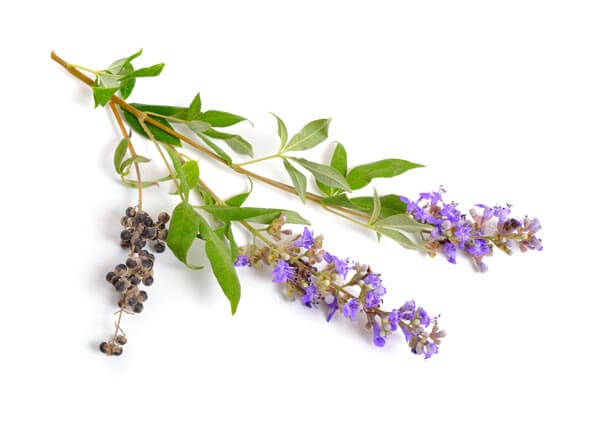
The plant from the mint family (Lamiaceae) is mainly used for women's ailments and is also known as chaste tree or monk's pepper. In literature one also finds names such as chastetree, chasteberry, Abraham's bush, tree of Athens, pepper-salt or tanis; in homeopathy the plant is also known as Agnus castus. The medicinal plant has been valued since antiquity for its traditional use in women's health.
Monk's pepper does not contain phytohormones. Its active substances rather influence the body's own hormone synthesis. They help the hormonal system to regulate the production of certain hormones, such as prolactin and progesterone. Through this regulation Vitex supports a variety of hormonal problems, such as PMS (premenstrual syndrome), cycle disturbances, difficulty conceiving or menopausal complaints. [1]
Especially for PMS symptoms, monk's pepper can alleviate symptoms. It has a positive effect on mood swings, irritability, headaches and breast tenderness. It is also used for difficulties conceiving. In this context Agnus castus promotes ovulation and thus increases the chances of pregnancy.
Aside from its effect on the hormonal system, monk's pepper also has anti-inflammatory and antioxidant effects. It is therefore used in the treatment of skin problems such as acne or rosacea.
The medicinal plant is not suitable for everyone. In general, consultation with a doctor or pharmacist is recommended before use.
The balancing effect of monk's pepper on the cycle and PMS
Premenstrual syndrome (PMS) comprises a bundle of complaints in the second half of a woman's cycle. These can occur a few days up to two weeks before the onset of the period. Both physical and psychological complaints can be described, such as breast tension, abdominal cramps, tension-related pain, malaise and more. PMS affects four out of five women.
As already mentioned, the active substances in monk's pepper can regulate the production of hormones such as prolactin and progesterone. These are important for a regular menstrual cycle. This explains the balancing effect of monk's pepper on the female cycle.
We see the effectiveness of Vitex in the reduction of unpleasant symptoms such as pain, cramps and irregularities in menstrual bleeding. Basically, it takes a few weeks before the effect of monk's pepper becomes noticeable, because this time is needed for hormone production to regulate.
Apart from PMS, this medicinal plant is also used for complaints associated with the menopause.
Vitex is also mentioned for the treatment of PCOS (polycystic ovary syndrome) in combination with other hormonally balancing plants. [2]
Premenstrual dysphoric disorder
Premenstrual dysphoric disorder (PMDD) is a severe form of premenstrual syndrome (PMS). Like PMS, PMDD occurs before the onset of menstruation. It is characterised by severe emotional and psychological symptoms that can impair daily life. These symptoms can include depression, anxiety, irritability, mood swings, fatigue, sleep disturbances, concentration problems and changes in appetite. Physical complaints such as breast tenderness, abdominal cramps or headaches also occur; these are known from PMS.
Premenstrual dysphoria thus exceeds the normal extent of PMS symptoms. It has considerable effects on the wellbeing and functioning of affected women. The exact causes of PMDD are not yet fully understood. It is assumed that hormonal changes during the menstrual cycle play a role. A clear distinction from psychiatric disorders is required; this is not yet sufficiently reflected in diagnostics in Germany. [3]
Treatment of premenstrual dysphoria can include various approaches, including medication, hormonal contraceptives, psychotherapeutic support and lifestyle changes. Appropriate diagnosis and treatment should consider the individual symptoms of each woman. These can vary greatly and require tailored treatments. [4]
Monk's pepper and its medicinal effects
Vitex agnus-castus is a medicinal plant with a variety of effects on the body. Its main actions include:
-
Regulation of the hormonal balance: Monk's pepper acts on the hormonal system and can help to regulate hormonal balance in women. It is particularly used to alleviate symptoms of premenstrual syndrome and at the onset of menopause. [5]
-
Relief of menstrual complaints: Chasteberry can relieve cramps, pain and other symptoms associated with menstruation.
-
Improvement of fertility: Another indication is increasing fertility in women. [6]
-
Alleviation of menopausal complaints: It can help to ease hot flushes, sweating episodes and other symptoms associated with the menopause. [7]
-
Calming of nerves and mind: It is attributed a calming effect and can help to reduce anxiety, stress and sleep disorders. [8]
-
Reduction of inflammation: Chasteberry contains flavonoids and other compounds with anti-inflammatory properties, thereby helping to relieve inflammation.[9]
-
Support for the digestive system: Chasteberry may help alleviate gastrointestinal complaints such as bloating, constipation and diarrhoea.
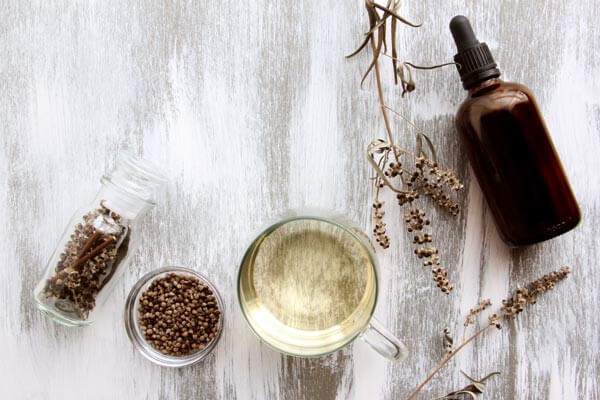
Vitex agnus-castus can be taken in various forms, including tea, tincture, capsules or tablets. Use should be coordinated with a doctor or pharmacist to ensure appropriate dosage and application.
Is monk's pepper recommended for men?
Monk's pepper is mainly recommended for women, as it acts on the hormonal system and can be helpful in regulating the menstrual cycle and alleviating PMS symptoms.
For men, monk's pepper is normally not recommended, as it has no specific effects on the male hormonal system and there is insufficient scientific data to support its use in men.
Furthermore, some of the active substances in monk's pepper can have undesirable effects in men. For example, it may lead to a reduction in libido and changes in sperm quality. It is therefore recommended that men consult their doctor before using monk's pepper.
However, a closer look reveals contradictory information. The effect of monk's pepper depends on the dosage. At the right dosage monk's pepper can also be a helpful means of improving potency in men. The following effects are attributed to it: [10]
-
It lowers prolactin levels, a hormone which, when elevated in men, can lead to erectile problems. The dosage decides.
-
It can increase testosterone levels, which leads to increased semen production and stimulates sexual desire.
-
Preliminary indications suggest it interacts with receptors associated with wellbeing and can thus improve general wellbeing.
The result: Increased sexual desire as well as improved potency and greater joie de vivre.
Monk's pepper and libido
Monk's pepper can have a positive effect on libido by regulating the hormonal system and lowering the levels of certain hormones, particularly prolactin. If this hormone is elevated, it can have a negative effect on libido in both women and men and thus reduce sexual desire.
By balancing the hormonal system, Vitex can therefore help improve libido in women and men. In addition, the plant also acts on other physical and emotional problems such as stress and fatigue, which can also affect libido.
Vitex is not to be used as an aphrodisiac and should not be a substitute for a healthy lifestyle and relationship.
How does monk's pepper lower prolactin levels?
Agnus castus is often used to regulate prolactin levels (hyperprolactinaemia). [11] The exact mechanism by which this occurs is not yet fully understood. It is suspected that certain active substances in the plant influence dopaminergic activity in the brain. This can then inhibit prolactin secretion.
Dopamine is a neurotransmitter that regulates the release of prolactin from the pituitary gland. Studies show that the terpenes clerodadienols in Agnus castus modulate dopaminergic activity in the brain by acting on certain receptors or slowing the breakdown of dopamine. This inhibits the release of prolactin and can lower the prolactin level in the blood. [12]
Consequences of a high prolactin level
A high prolactin level, also called hyperprolactinaemia, can have various effects on the body. [13]
A high prolactin level causes less gonadotropin-releasing hormone (GnRH) to be released and consequently less follicle-stimulating hormone (FSH) and luteinising hormone (LH) to be secreted. This strongly impairs the production of oestrogen and testosterone.
Some of the consequences can be:
-
Menstrual disturbances: A high prolactin level can cause rhythm disturbances and thus irregular or absent periods.
-
Galactorrhoea: An increase in prolactin levels can lead to milk discharge from the nipples, even if the woman is not pregnant or breastfeeding.
-
Infertility: A high prolactin level can impair fertility by inhibiting ovulation or disrupting egg development.
-
Loss of libido: A high prolactin level can affect sexual drive and lead to a loss of sexual desire. This is observed in both men and women.
-
Bone density reduction: A high prolactin level can lead to reduced calcium uptake by the body, which can result in loss of bone density and osteoporosis.
-
Psychological effects: High prolactin levels are also associated with mood effects such as depression or anxiety.
-
Fertility: Elevated prolactin can be the cause of male and female fertility disorders (infertility).
-
Nervous system: Even in small amounts, prolactin can provide a neuroprotective effect in the central nervous system (CNS). Anti-stress and anxiety-reducing effects are also attributed to it. These apply only when the hormone is present in normal concentrations.
A high prolactin level does not always cause symptoms and the severity of symptoms can vary from person to person.
What does monk's pepper look like and where does it occur naturally?
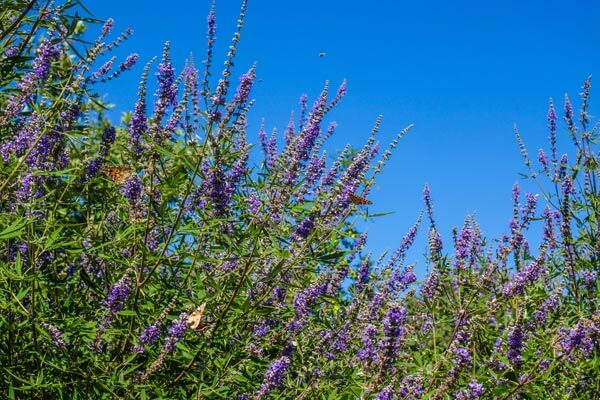
Agnus castus L. is a shrub or small tree with a height of 1 to 5 metres. It belongs to the mint family. It has dark green, hand-lobed leaves. The small purple or white flowers bloom from June to September. Its fruits resemble small black peppercorns and are about the size of a pea.
Agnus castus originates from the Mediterranean region and is now widespread in many regions of the world, especially in Africa, Asia and Europe. The shrub is cultivated in many countries and used as a medicinal plant.
Agnus castus prefers sunny to partially shaded locations. They thrive best in a sandy-loamy, well-drained soil. Owing to their undemanding nature, these shrubs can grow in dry or poor soils.
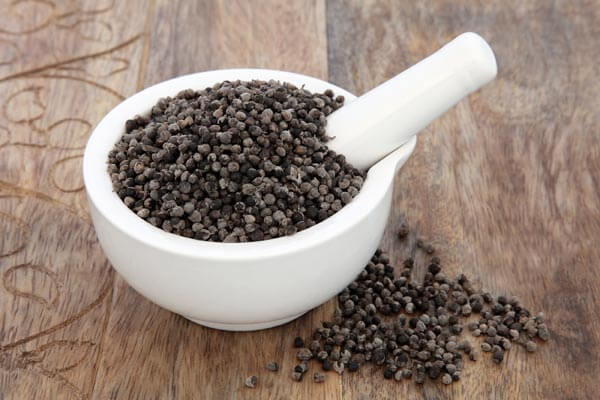
As an ornamental shrub we find Agnus castus planted in gardens and parks. In particular the fruits are used in herbal medicine and homeopathy as a medicinal plant. They are dried and processed into tea or tincture and used as remedies.
Ingredients of monk's pepper
The constituents of Vitex agnus-castus L. act synergistically and are responsible for its regulatory effect on the hormonal system as well as its anti-inflammatory and calming properties.
Among the many active plant compounds responsible for its therapeutic effect are:
-
Agnuside: A glycoside found in the fruits of monk's pepper and known for its hormone-regulating effect.
-
Flavonoids: A group of secondary plant compounds with anti-inflammatory and antioxidant properties.
-
Casticin: A bioactive component in Vitex agnus-castus belonging to the flavone group. Casticin has antioxidant, anti-inflammatory and possibly hormone-regulating properties.
-
Iridoid glycosides: A group of natural compounds that act anti-inflammatory and antioxidant and can have calming and pain-relieving effects. Here we find aucubin and agnusid.
-
Essential oils: Monk's pepper contains small amounts of essential oils, including linalool, alpha-pinene and sabinene. These are responsible for its characteristic scent and taste and are attributed a calming effect.
-
Clerodadienols: By stimulating D2 receptors, clerodadienols exert an anti-prolactin activity. This is almost identical to that of dopamine.
Where does the name monk's pepper come from?
The name "monk's pepper" probably comes from the use of the plant by monks in the Middle Ages to suppress sexual desire and encourage abstinence. It was believed that taking monk's pepper inhibited sexual activity and thus helped monks control their urges.
Another theory holds that the name "monk's pepper" stems from the plant's use to treat menstrual complaints and regulate the menstrual cycle. In the Middle Ages such treatments were often performed by nuns and female healers, known as "herb women".
In any case, the name "monk's pepper" has a historical background. It reflects the plant's use in folk medicine and healing practices.
Use of Vitex agnus-castus in medieval monasteries
Monk's pepper was already used in medieval monasteries as a medicinal plant, particularly for treating women's ailments. Monks were often the only people with access to herbs and medicinal plants and frequently served their communities as healers and apothecaries.
In monastic life the female cycle played an important role. For women in convents it was often difficult to manage menstruation discreetly and hygienically. Monk's pepper was used even then as a means of regulating the menstrual cycle and to relieve symptoms such as cramps and pain.
It was also used to treat mental disorders such as depression, anxiety and obsessive-compulsive disorders. It was believed to have calming properties and thus to soothe the mind.
Furthermore, Vitex was used to treat gastrointestinal diseases, headaches and migraines, as well as to strengthen the immune system and prevent illness.
The names chaste tree or chasteberry point to further uses. In monasteries the plant was also used to promote chastity. Taken in small doses, the plant increases prolactin production and thus lowers libido.
Treatment with monk's pepper medicinal products
Monk's pepper extract is used as a herbal medicinal product to treat menstrual complaints, PMS symptoms, cycle disturbances and menopausal complaints. Typically, monk's pepper is administered in the form of capsules, tablets or drops.
Monk's pepper is approved as a herbal medicinal product in many countries and is recommended by doctors and naturopaths. It is, however, important to coordinate the dosage and use of monk's pepper with a doctor or pharmacist to avoid unwanted effects and interactions with other medicines.
Taking Vitex agnus-castus is not a substitute for appropriate medical care. In case of serious health problems, a doctor should be consulted. Matching the dosage and the form of administration is crucial for the therapeutic goal.
In particular, chasteberry should not be used during pregnancy. Hormone-dependent tumours, hormone-dependent diseases in general and the use of hormonal medications are generally considered contraindications for monk's pepper.
Rare but possible side effects include: severe allergic reactions with facial swelling, breathing difficulties and swallowing problems, (allergic) skin reactions (e.g. rash, urticaria), headaches, dizziness, gastrointestinal complaints (including nausea, abdominal pain), acne and cycle irregularities.

Set: Menopower* - including yam root, evening primrose oil, iron and B vitamins - 2 x 90 capsules - by Unimedica
with wild yam root, evening primrose oil, red clover, valerian, iron, chasteberry, folic acid, vitamin B6 and B12

Menopower* - including yam root, evening primrose oil, iron and B vitamins - 90 capsules - from Unimedica
with yam root, evening primrose oil, red clover, valerian, iron, chasteberry, folic acid, vitamin B6 and B12

Women over 40* - with coenzyme Q10, hyaluron and OPC 90 capsules from Unimedica
Food supplement with plant extracts, vitamins, minerals, coenzyme Q10 and hyaluronic acid

Monk's pepper extract - 10 mg per daily dose - high dose - 180 capsules - from Unimedica
Food supplement with high-dose Vitex agnus-castus extract 5:1

Set: Women over 40* - with coenzyme Q10, hyaluron and OPC 9 x 90 capsules by Unimedica
Food supplements with plant extracts, vitamins, minerals, coenzyme Q10 and hyaluronic acid

Menstruation Complex - 90 capsules
With vitamin B6 to support hormonal function during the menstrual cycle

Chaste Berry Fluid plant extract - alcohol-free - 15 mg per daily dose (30 drops) - 100 ml - drops
with a highly concentrated Vitex agnus-castus extract (10:1) as drops

Set: Menstruation Complex - 2 x 90 capsules
With vitamin B6 to support hormonal activity during the menstrual cycle

Set: Monk's pepper extract - 10 mg per daily dose - high dose - 180 capsules - AND Wild Yam Extract - 180 capsules - from Unimedica

Set: Menopower + Amino - 90 Kapseln + 500 Tabletten - von Unimedica