
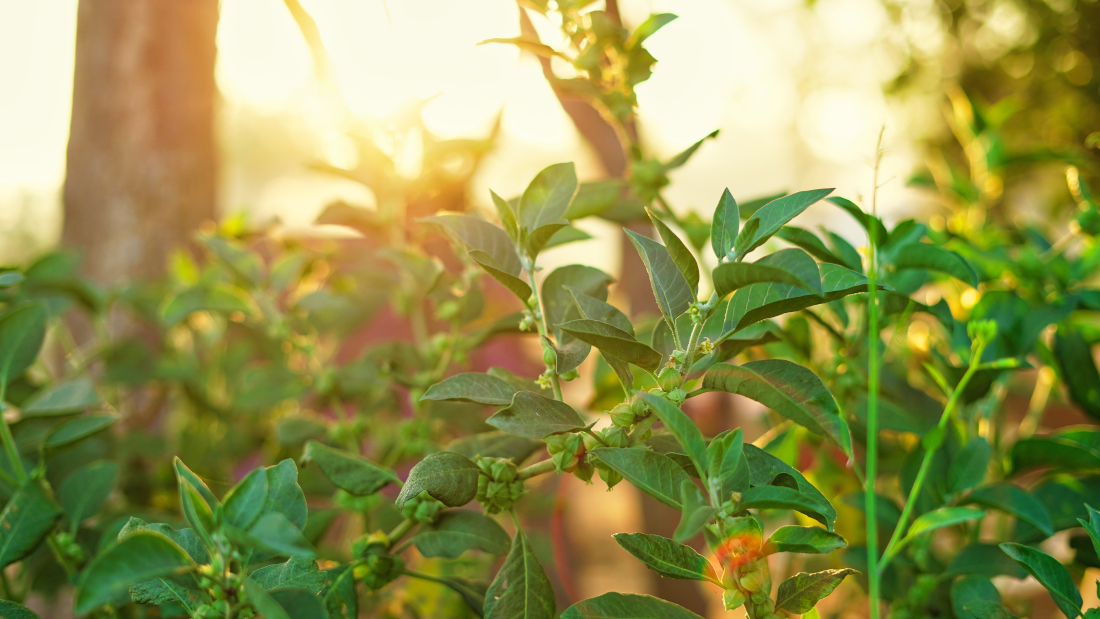
Barbara Simonsohn is a bestselling author on nutrition and health topics. Her passion is superfoods and natural foods that can optimally provide the body with nutrients. Anyone who speaks with her will quickly sense it: she possesses a special pioneering spirit that inspires many people. In her commitment and way of life she was often ahead of her time. The social scientist lived and worked in the Findhorn community in northern Scotland, which had been practising new methods in ecological gardening and agriculture since the 1960s. During that time she also became acquainted with holistic healing methods. It is important to her to continually leave her comfort zone and engage for a new consciousness. She supports projects in Africa, writes books in the field of natural medicine and promotes holistic knowledge of body, soul and spirit in her seminars.
In her latest book she describes the effects and uses of an ancient medicinal root: Ashwagandha.
1. What aspects of Ashwagandha do you particularly like?
%20Theo%20Hodapp.jpg)
I hardly know where to begin or end! The plant works holistically on body, soul and mind. As an adaptogen it optimises all bodily and emotional functions. You can imagine it like Ashwagandha looking everywhere in the body: where is there too much, where too little, what is out of balance? And it brings you “back to balance”. For me these plants are divine, as if fallen from heaven. Modern science cannot fully explain this mechanism yet. There are simply plants that help us cope better with stressful situations by enhancing the body's nonspecific defences. And all this without side effects, tried and tested for millennia! Ashwagandha activates a particular heat shock protein that downregulates cortisol and nitric oxide in stress situations and prophylactically. The mitochondria, the powerhouses of our cells, are protected, and our mental performance and physical endurance are maintained even in stressful situations. Ashwagandha, for example, raises serotonin and dopamine levels, promotes DNA repair, prevents cellular mutations and thereby reduces cancer risk. The withanolides in the plant are responsible for this effect. These are bioactive compounds from the family of triterpenoids. They act in concert with many other constituents, especially polyphenols. Polyphenols, for example, regenerate our gut flora.
2. What are your experiences with the “queen of Ayurveda”?
In the roughly 8,000-year-old Ayurvedic teaching on long and healthy life, Ashwagandha occupies a role similar to that of ginseng in Chinese medicine. It is the most effective rejuvenating medicinal plant, called Rasayana, and as “Medhyarasayana” it particularly enhances intellect, improves memory and concentration, and provides effective prophylaxis against neurodegenerative diseases such as dementia and Alzheimer’s. As a rejuvenating and strengthening agent Ashwagandha is included in more than 200 Ayurvedic recipes. Indications include, among others, diabetes, cancer, cardiovascular diseases, stress-related illnesses, a weak immune system and cognitive disorders. All these indications have been confirmed by scientific studies. Personally, I experience more cheerful composure, a good mood, I can concentrate better and for longer, and my memory has become excellent. Not that it was poor before, but my cognitive abilities have simply improved further. I cope with stressful situations even better than before, and my creativity and productivity are hardly to be stopped. In 2023 I rewrote five books, revised two, and gave 25 seminars — all at the age of 69.
3. What should one definitely look for in a product like Ashwagandha?
From my own experience I can say: do not take a product with isolated, patented ingredients. The whole is more than the sum of its parts, and the constituents of medicinal plants work synergistically together. Ashwagandha is also antibacterial and antiviral, and with an extract from the whole root bacteria cannot develop resistance. In any case, one should look for the organic seal to avoid pesticide contamination.

4. You are already 70 years old and look back on an eventful life. Other people retire. With you one gets the impression that ideas just burst out of you and that you still have a lot planned. What is particularly important to you in life, and what would you tell younger people?
I believe it is important to follow your own path. I resigned from my assistant position at TU Harburg to follow my inner calling. Writing books and articles then followed. Lao Tzu said: “If you love your work, you will never have to work a day in your life.” I experience that every day. The activities I perform fulfil me. Success follows when I allow my talents — which to me are gifts from God — to flourish. I thereby serve the whole. For me self-employment was the right path. I am my own boss and work autonomously. Voluntary work is also important to me. I am active in the NABU Altona group. We rescue amphibians, manage a conservation area for rare animals and plants, and look after hundreds of nest boxes for bats and birds. I recommend engaging in voluntary work even during your professional years. It opens the heart, and you meet many nice and committed people.
5. What is your vision and which projects do you support and why?
My vision is that more and more people allow themselves the luxury of independent thinking, do not let themselves be unsettled by the mass media — which mainly focus on catastrophes and problems — but instead create a new world for tomorrow.
I also contribute monthly, for example to a permaculture project in Ghana, “Neues Dorf Ghana”, which serves as a beacon project offering meaningful jobs and community life to Africans. Harvest products such as moringa tea and baobab fruit powder are sold to Europe. Every cent goes to the project, and there is even a donation receipt because the donation account is managed by TU Harburg under the supervision of Professor Ralf Otterpohl.
There are many great projects everywhere that one can join, and of course one can also start something oneself.
I am currently brushing up my French, with the help of a new neighbour from Niger, so that I can give lectures at a centre for regenerative agriculture in the Democratic Republic of Congo about African superfoods such as artemisia, baobab and moringa. In return I help her with applications.
In my view — and especially for the spiritual community — it is time to practise a consciousness of unity. Enlightenment will only occur when we abandon the illusion of separation and live an enlightened life in unity consciousness. We are all one family. Animals and plants are like our younger siblings. There is so much to do!
My motto: life is too short for a full stop. My father gave lectures at the age of 102. That is my aim too — to remain mentally and physically fit for as long as possible so I can contribute to the whole.
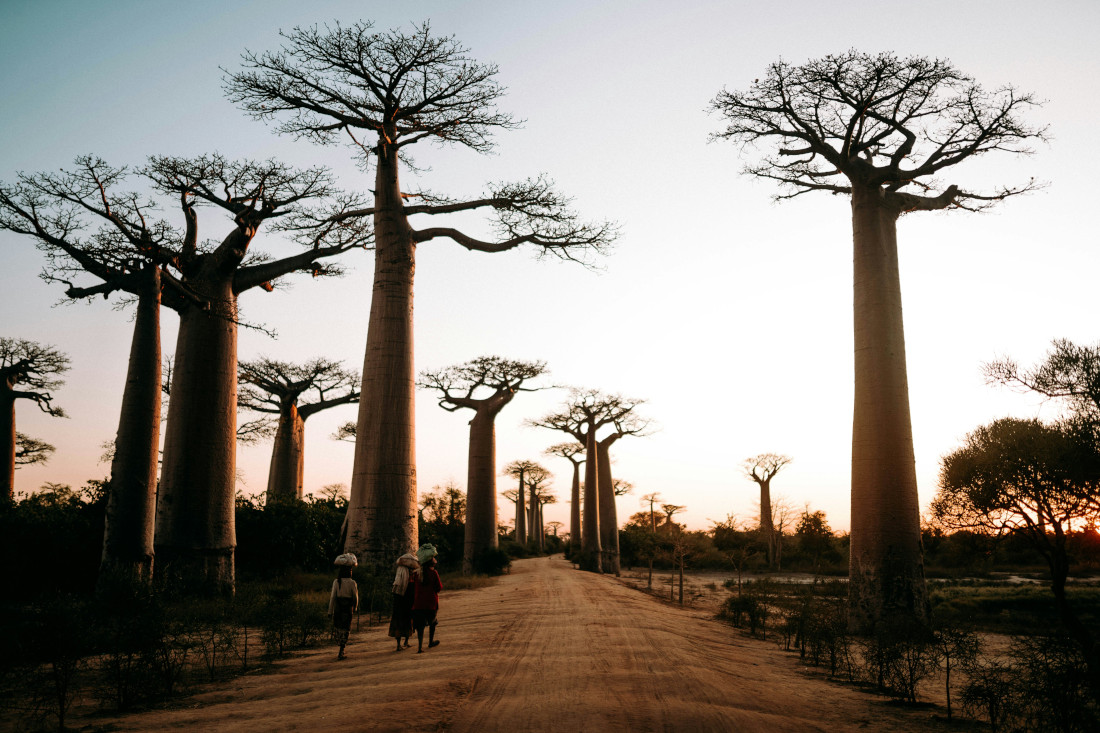
6. Do you personally have a connection to Ashwagandha, Ayurveda, India?
At the age of twenty-four I began to meditate: Transcendental Meditation after Maharishi Mahesh Yogi, an Indian who became known through the Beatles. From that moment I no longer had heart rhythm disturbances, and they never returned. I still meditate, but now in a different tradition, Zen. My Zen master and Jesuit priest Ama Samy lives in South India. I have been to his centre twice and during that time not only completed a silent retreat but also volunteered to teach English to Indian orphan children. I still donate to that school.
In 2002 I completed a yoga teacher training with the Swiss yoga teacher Remo Rittiner in Malaga. He teaches Ayur-Yoga, and the ancient Indian Ayurvedic teaching played a major role in the training. Since then I have known that I am a “Vata-Queen” — somewhat fidgety, not very grounded, prone to feeling cold in winter and with a low digestive fire or agni, especially for evening meals. Since I have known this constitution, or as they say in India, this “dosha”, I take it into account. For example, I now only eat early and something light in the evening, and it has done me a lot of good.
7. Are more books planned?
Yes, but I only want to write one to two books per year now, to have more time for other things. Recently many interviews with me have appeared on YouTube about medicinal plants such as dandelion, nettle, elder and over-acidification. Ashwagandha will of course also be covered. In just three weeks more than 100,000 people watched these videos. I thus reach more people quickly with videos than through herb walks, books or seminars. I was pleasantly surprised that many young people watch these interviews — after all, I do not belong to their generation. It moves me that people in their twenties have the courage to follow THEIR own path and to rely more on the powers of nature.
I am an Aquarius, so I am sure more ideas for book topics will come to me, with which I can inspire my readers, seminar participants and increasingly my viewers to live a healthy and self-determined life.
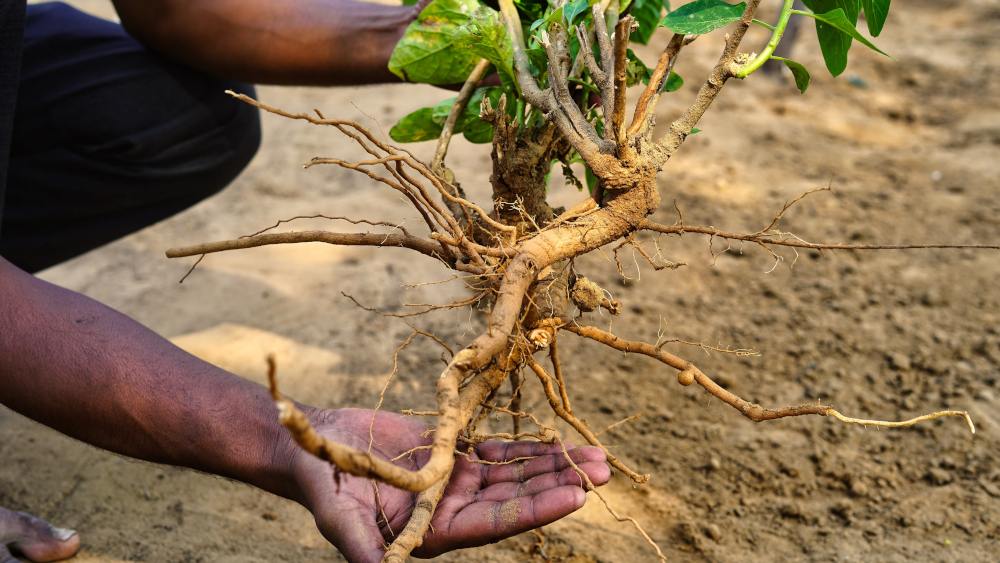
About the book:
Barbara Simonsohn, Ashwagandha: Effects and Uses of an Ancient Medicinal Root
Discover the transformative power of Ashwagandha!
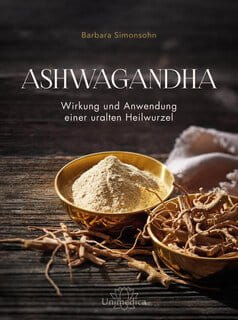
The wonder root Ashwagandha is one of the oldest medicinal plants in the world and has long held a fixed place in Ayurvedic medicine. It is therefore unsurprising that more and more people trust its healing power and use this wonderful plant adaptogen to strengthen physical and mental health. Ashwagandha is considered a secret tip against chronic stress and sleep disorders, brings energy, strengthens the immune system and can restore inner balance. The “queen of Ayurveda” is also recommended for depression, Alzheimer’s, dementia, diabetes and thyroid disorders.
This book offers many valuable tips and recipes based on scientific findings on how Ashwagandha can be used for holistic beauty care and for numerous complaints: for a balanced and healthy life with more calm, relaxation and vitality.
Photos: Shutterstock: Azay photography; Unsplash: Shruti Mishra, Noah Grossenbacher

