
Why is PCOS often a problem for women with an unfulfilled desire to have children and what holistic treatment approaches are there for affected women?
.jpg)
Figure 1: Lady's mantle (Alchemilla vulgaris) is a popular herbal remedy to support classic women's ailments such as PCOS
More and more women suffer from this cycle disorder: Polycystic Ovary Syndrome, abbreviated PCOS. In Germany alone it affects around 5% of all women of childbearing age, which is estimated to be about one million women. [1] Worldwide it is thought that as many as one in 15 women are affected. PCOS is a heterogeneous disorder that creates a hormonal imbalance in the body and can lead to a variety of symptoms. These include cycle disturbances, metabolic irregularities and infertility. The causes of the syndrome are varied; insulin resistance is also discussed as a contributing factor. [2]
What treatment options are available to women? What does conventional medicine say and what alternative approaches exist?
What is PCOS?
Polycystic Ovary Syndrome (PCOS) is a hormonal disorder that typically affects women of reproductive age. Characteristic of the imbalance is that the ovaries are enlarged and contain many (poly) immature eggs that can be seen on ultrasound.
PCOS is a chronic condition in which the eggs in the ovary grow but do not mature and be released with the monthly bleeding. Ovulation therefore does not occur, i.e. with each cycle the number of eggs increases. In this condition the ovary can grow to 2–3 times its original size, which can trigger many complaints in the body. These include, for example:
- Irregular menstruation: Infrequent, irregular or absent menstrual cycles are a common symptom of PCOS.
- Excess androgen production: High androgen levels can lead to symptoms such as increased body and facial hair (hirsutism), acne and hair loss on the scalp.
- Weight gain: Many women with PCOS have difficulty controlling their weight and tend to be overweight or even obese.
- Fertility problems: PCOS impairs ovulation and can therefore cause difficulties conceiving.
- Dark skin discolourations: Thickened, dark patches of skin (acanthosis nigricans) can occur in certain areas such as the neck, armpits and groin.
- Mood problems: Some women with PCOS experience mood swings, depression and anxiety.
The cause of these events lies in a hormonal imbalance in a female body in which male hormones predominate. [3] Factors that favour and can be seen as causal for this hormonal disorder include, among others:
- Disorders of the hormonal system: Women with PCOS often have elevated androgen levels (male hormones), which can lead to irregular menstrual cycles and other symptoms.
- Insulin resistance: Many women with PCOS have insulin resistance, where the cells are less sensitive to insulin. This can lead to elevated insulin levels in the blood, which in turn can stimulate androgen production in the ovaries.
- Genetic factors: PCOS can run in families, suggesting a genetic component. It is suspected that multiple genes may be involved in its development.
- Inflammation: Chronic inflammation in the body could also play a role and contribute to insulin resistance and increased androgens.

Figure 2: Polycystic Ovary Syndrome is also associated with mood swings, anxiety and depression.
Women with polycystic ovary syndrome (PCOS) often feel depressed, suffer from anxiety or eating disorders. [4] Physical complaints such as uncontrollable weight gain, acne, mood swings, hair loss and inflammation do not improve this state of mind. In the worst case, PCOS can lead to infertility, which often brings profound psychological burdens for the affected women, causing deep emotional suffering. [5]
Why is PCOS a problem for those trying to conceive?
PCOS is a serious concern for women who wish to have a child. One of the main causes of fertility problems in PCOS is the absence or irregularity of ovulation. In many women with PCOS the eggs do not mature regularly, which means that ovulation is either rare or does not occur at all. Without regular ovulation there can be no fertilisable egg, which makes conception difficult.
An elevated level of male hormones (androgens) can also disrupt the normal function of the ovaries and inhibit the maturation process of the eggs. Many women with PCOS also have problems with insulin resistance, which can lead to weight gain and difficulties losing weight. These metabolic problems can further disturb hormonal balance and impair ovulation. In some women with PCOS the wall of the ovary may be thickened, making it harder for the egg to be released during ovulation. [6]
Is PCOS curable? What are the causes?
Whether polycystic ovary syndrome is curable is a matter of debate. Conventional medicine generally describes PCOS as treatable, but not curable.
To balance the irregular cycle, combined contraceptive pills containing oestrogen and progestogen are prescribed in conventional medicine to reduce excessive androgen production. In addition, doctors often prescribe medications intended to improve insulin resistance or to stimulate ovulation. [7]
Naturopathic doctors and therapists have developed independent, holistic approaches. Lara Briden, a naturopathic physician focusing on women's health, writes about her clinical experience with this condition, which she has often been able to treat successfully in her many years of work in New Zealand's healthcare system. [8]
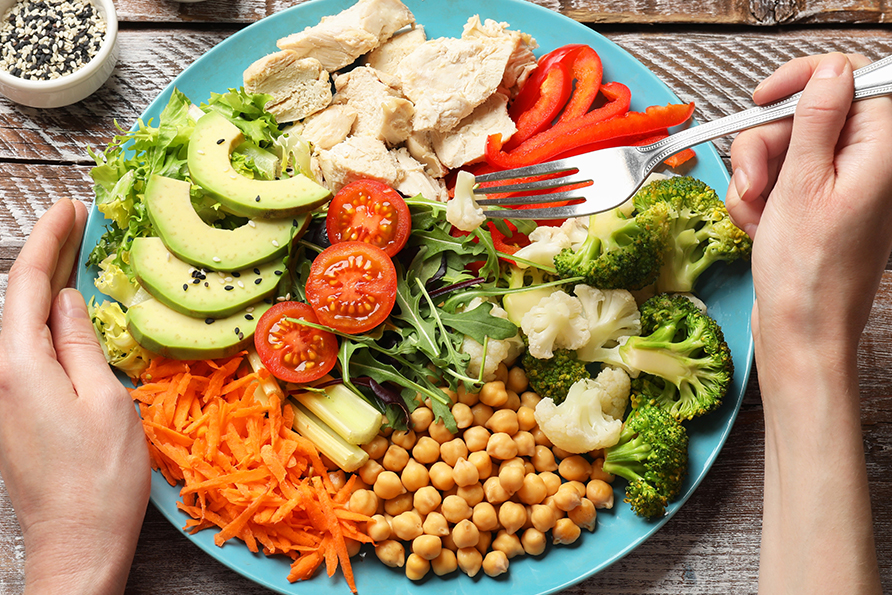
Figure 3: A change to a vitamin-rich wholefood diet can have a positive effect on metabolic balance in women with PCOS.
Various studies support this approach by showing to what extent herbs, dietary changes and lifestyle modification can actually be helpful. For lifestyle, one of the most important clinics in the USA — the Mayo Clinic — recommends, among other things, dietary measures. For overweight patients, a low-calorie diet should be implemented in consultation with a doctor, since even a small weight reduction of about 5% of body weight can improve the condition and lower insulin and androgen levels. In particular, carbohydrates should be limited so that insulin levels are not driven up. Complex carbohydrates from fruit, vegetables or wholegrain products also help to raise blood sugar more slowly. In addition to dietetics, the Mayo Clinic recommends exercising more to keep weight under control. [9]
Holistic, natural approaches to treating PCOS
To address PCOS naturally, a holistic approach has proven effective in practice. The combination of dietary change, herbal medicine, acupuncture and stress management, dietetics and exercise has already helped many women.
Multiple causes, four concepts – the treatment approach according to Lara Briden
Bestselling author Lara Briden distinguishes between four different types of PCOS.
The first is insulin-resistant PCOS, meaning there is a high insulin level that can trigger PCOS. The best way to detect insulin resistance is by measuring the hormone insulin, not blood glucose. [10]
If this measurement is negative, the PCOS may have been caused by taking the pill (post-pill). This cause is particularly likely when the cycle was normal before taking the pill.
If that is not the case either, chronic inflammation could be the third cause responsible for PCOS. Chronic inflammation can cause the ovaries to produce too much testosterone. In this case Lara Briden speaks of inflammatory PCOS, which can be accompanied by the following symptoms:
- unexplained fatigue
- gut problems such as IBS or SIBO
- autoimmune diseases such as Hashimoto's thyroiditis
- headaches
- joint pain
- a chronic skin condition such as psoriasis, eczema or hives.
The fourth cause is so-called adrenal PCOS. This is not triggered by insulin resistance or inflammation. Rather, it involves an epigenetically driven upregulation of adrenal androgens. [11]
From these four causes Lara Briden derives different treatment approaches:
For insulin resistance or a high insulin level, exercise and diet are prescribed to reverse insulin resistance. High doses of fructose should be avoided. Briden recommends taking magnesium and inositol. To treat inflammatory PCOS it is important to identify and eliminate the underlying cause. This can be food intolerances to items such as dairy or gluten. In these cases she recommends zinc and N-acetylcysteine as supplements. For post-pill PCOS Lara Briden describes a more complex approach. Dairy products that increase the hormone IGF-1 and contain the pro-inflammatory protein A1-casein should be avoided. She also recommends reducing sugar intake. Various supplements such as zinc and DIM (a phytonutrient from broccoli) are also used successfully by the author. For the treatment of adrenal PCOS Briden prescribes magnesium, zinc, liquorice, adaptogenic herbs and pantothenic acid (vitamin B5), which modulates adrenocorticotropic hormone (ACTH). [12]
Ovaries can heal – the treatment approach according to Randine Lewis
This bold statement by the American physician Randine Lewis will no doubt lift the spirits of affected women. Is there a chance for PCOS patients with infertility? Randine Lewis bases her treatment on Traditional Chinese Medicine (TCM), i.e. on the use of acupuncture, herbs and dietetics. In TCM, PCOS is considered a dampness and phlegm pattern, which can be recognised by symptoms such as:
- fatigue after eating
- cystic or pustular acne
- menstruation with sloughed tissue or mucus
- tendency to skin infections
- a wet, mucous tongue.
If a dampness pattern is present according to TCM, Randine Lewis recommends a dietary change with avoidance of sugar and refined carbohydrates. Dairy products, alcohol and caffeine should also be eliminated. Instead, the diet should consist of plant-based proteins, fresh vegetables, wholegrains such as oats and little sweet fruit.
Movement is also important in TCM! Suitable acupuncture points include, for example, Mi6, Zigong, Ren3, Ren4, Ren6 and St40 for phlegm. Important herbs are Chinese gleditsia (Zao Jiao Ci) as an expectorant, and for pain and to address blood stasis the seeds of the Chinese clematis (Chong Wei Zi). [13]
The plant kingdom offers many medicinal herbs – the treatment approach according to Margret Madejsky
But herbs that can help affected women are not only known in TCM. There are also natural approaches from traditional herbal medicine in this country to stimulate ovulation. The naturopath and author Margret Madejsky specialises in women's medicine. From her practice experience she knows that, for example, tea cures with mugwort (Artemisia vulgaris) have proven effective. Mugwort tea stimulates the hormonal axis. Mugwort tea is particularly useful when PCOS has arisen as a consequence of the contraceptive pill. In her approach Madejsky describes combining mugwort tea with other plants originally associated with the moon goddess Artemis — to which the Latin name of the mugwort plant also refers. These include, for example, damiana and rosemary. [14]
A highly valued traditional plant in women's medicine is lady's mantle (Alchemilla vulgaris). It has long been the symbolic plant of fertility. No wonder: lady's mantle stimulates ovulation, strengthens the uterus, can relieve menstrual cramps and is also very well suited for PCOS. [15]
The 21-day plan – treatment approach according to Amy Medling
The approach of health coach Amy Medling is also interesting. The successful author not only suffered from PCOS herself in the past but, because of her own experience, works with many affected women.
Taking into account recent medical findings and her personal experience, Amy Medling has developed a comprehensive 21-day plan that gives interested women valuable tips for self-help.
She relies on a step-by-step change in diet combined with daily mindset exercises and a change in lifestyle to address the causes of the disorder. [16]
Conclusion:
For PCOS a holistic approach is recommended, including a plant-based diet focusing on whole, nutrient-dense foods and plenty of exercise. This can often help regulate insulin levels and reduce possible inflammation in the body.
Plant remedies support hormonal balance and promote a regular cycle. With the right support and a gentle, natural approach, the body can often be enabled to bring the cycle back into balance on its own and possibly even fulfil the desire to have children.
According to current knowledge, the conspicuous findings visible on vaginal ultrasound on the ovary are in over 98% of cases normal, harmless changes that do not require surgery. Nevertheless, cystic processes, especially if they are visible on ultrasound from the age of 40 or in postmenopause, should definitely be further investigated. [17]
Disclaimer
This article does not replace treatment by a qualified practitioner. The basis of this article is studies and current literature. It must not be used for self-diagnosis or self-treatment. If necessary, discuss any ideas you take from this article with a practitioner you trust.
Books
https://www.narayana-verlag.de/Der-sanfte-Weg-zur-Fruchtbarkeit-Randine-Lewis/b27687
https://www.narayana-verlag.de/PCO-Syndrom-heilen-Amy-Medling/b24618
https://www.narayana-verlag.de/Praxishandbuch-Frauenkraeuter-Margret-Madejsky/b24619
Sources
[1] https://www.pcos-selbsthilfe.org/pcos/lebensqualitaet
[2] https://eijppr.com/article/natural-remedies-for-polycystic-ovarian-syndrome-pcos-a-review
[3] https://www.uksh.de/frauenklinik-kiel/Bereiche/Gyn%C3%A4kologie/F%C3%BCr+Patientinnen/Ihre+Operation/Informationen+zu+verschiedenen+Operationen/Bauchspiegelung/Eierstockzysten.html
[4] http://mayoclinic.org/diseases-conditions/pcos/symptoms-causes/syc-20353439
[5] "PCO Syndrom heilen". Amy Medling
[6] https://mediatum.ub.tum.de/doc/1326159/1326159.pdf
[7] https://www.mayoclinic.org/diseases-conditions/pcos/diagnosis-treatment/drc-20353443
[8] https://www.larabriden.com/
[9] https://www.mayoclinic.org/diseases-conditions/pcos/diagnosis-treatment/drc-20353443
[10] https://www.narayana-verlag.de/Hormone-im-Lot-Lara-Briden/b31702
[11] https://www.larabriden.com/4-types-of-pcos-a-flowchart/
[12] https://www.larabriden.com/4-types-of-pcos-a-flowchart/
[13] https://www.narayana-verlag.de/Der-sanfte-Weg-zur-Fruchtbarkeit-Randine-Lewis/b27687
[14] https://www.narayana-verlag.de/Praxishandbuch-Frauenkraeuter-Margret-Madejsky/b24619
[15] https://www.narayana-verlag.de/Alchemilla-Margret-Madejsky/b15847
[16] "PCO Syndrom heilen". Amy Medling
[17] https://www.uksh.de/frauenklinik-kiel/Bereiche/Gyn%C3%A4kologie/F%C3%BCr+Patientinnen/Ihre+Operation/Informationen+zu+verschiedenen+Operationen/Bauchspiegelung/Eierstockzysten.html
Figure 1: nnattalli/shutterstock.com; Figure 2: Ksjundra07/shutterstock.com; Figure 3: New Africa/shutterstock.com

