
The rare, unusual and peculiar elements from Stage 18 or the 'zero' group.
In the periodic table of elements (PTE) by Dmitri Mendeleev, who was the first to develop a systematic arrangement of the chemical elements, there were originally only seven main groups. When he produced the very first periodic table in 1868, the noble gases were not yet known. Shortly afterwards these were discovered as inert and peculiar elements of almost zero chemical activity and were placed by Mendeleev in Group 8 – formerly also known as the 'zero group'. Mendeleev opted for this because, due to their inertia, the elements apparently did not fit into the system he had devised. Only the atomic theory formulated much later and the quantum physics of the early 20th century were able to plausibly demonstrate that these strange foreign gases do indeed have their rightful place in an advanced periodic table (PTE) and that the designation 'zero group' aptly describes their special properties.
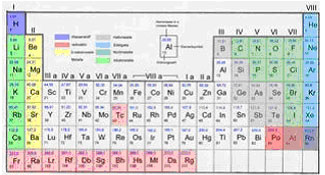
In homeopathy these groups are now referred to as 'stages'. The term was coined by Jan Scholten, who in his epoch-making work 'Homeopathy and the Elements' (1996) was the first 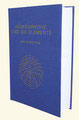 homeopath to make the hidden treasures of the periodic table accessible for homeopathic therapy. In his 'theory of the elements' all 18 stages of the modern periodic table [1] are included. Stage 18 corresponds to Mendeleev's zero group and names the last column of each series (period). Stage 18 corresponds to the 'day of rest' after the completion of a period, a well-deserved pause after the efforts and exertions that run through the series; complete standstill follows. To put it in the terms of atomic physics: in the final stage of each series there are only completely filled atomic orbitals, the outer shell of the atom is occupied by 8 electrons. This arrangement is also known as the noble gas configuration. With 8 electrons in the outer shell an element is in a state of completeness and becomes chemically inactive. In this stage there is no need to exchange electrons with other elements. The desire or even the possibility to form compounds with other elements or beings is not present. One can compare it to a time-out that ends with the completed series and then starts anew with the next series at Stage 1. This state of temporary perfection was compared to a noble condition and gave the elements of this group their name – the noble gases.
Another remarkable property of this zero group or Stage 18 is the gaseous state of the elements. Even heavy radon, heavier than lead and also part of the gold series, is still gaseous. Noble gases cannot be seen or touched, as is the case with iron, silver or gold 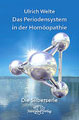 , nor can they be smelled or tasted. Under normal circumstances noble gases do not form salts or molecules nor do they enter into compounds. They simply remain as they are, temporarily detached from all relational play. They behave like gases on their own, detached orbit. The noble gas configuration of the electrons renders these atoms chemically inactive, i.e. zero activity; they remain to themselves and generally unnoticed. This cessation of all chemical activity also means complete calm, like a Sunday afternoon in a rocking chair – inertia, doing nothing. In Stage 18 or Stage Zero – both terms amount to the same – there is neither action nor reaction.
The development of the 7 series according to the stages: endpoint noble gases as the zero group
In the natural evolution of the elements one can discern a development from the simple to the complex. The first three series are simpler than the remaining four. The first series of the periodic table is very simply structured and contains only two elements: hydrogen and helium. In this case one can hardly speak of a series, because if helium is assigned to the zero group, the series consists of only one active element, hydrogen. The active components of the next two series (the carbon and silicon series) amount to seven elements each, to which an inactive eighth element is appended: neon in the carbon series and argon in the silicon series. In the seven stages of these two series the evolutionary striving is most highly expressed. The elements of these two series occur particularly frequently in nature.
Recently (2012) Jan Scholten presented his new botanical systematics for the first time at a seminar. This system, based on the periodic table, also comprises seven series and seven phases. He transfers the simple formula 7x7 in a modified form to the plant world, which seems sensible if one considers that fundamental truths are always universal. The seven stages or phases of the first three series form the core structure of the 18 stages of the higher series. The bulk of the organic, living world – from the earth's crust with its many minerals through plants to animals – is composed of a handful of elements from the first three series (up to the silicon series). The life force of living beings, the vital energy that animates each individual body, is mainly formed by hydrogen, carbon and nitrogen in combination with the other elements of the carbon and silicon series. The elements of Group 8 or the zero group of the noble gases occur only as inactive structures that show little interest in the world and its living activity.
The next higher series from Series 4 upwards – the iron and silver series – are only complete in the constellation '17 plus 1 = 18' stages. They end with the noble gases krypton (iron series) and xenon (silver series). The vital energy uses the elements of the fourth and fifth series very sparingly in all living beings. One finds traces of them in small amounts, but in central functions, for example in enzymes. Thus iron is the central atom of haemoglobin.
Next comes the most complete series of the periodic table – Series 6, the powerful gold series. Here too it presents itself as '17 plus 1 = 18' stages and ends with the noble gas radon. Inserted into the gold series is the series of the lanthanides, which stands for the development of inner power, autonomy, distinguishing it from the iron and silver series. The elements of the gold series are naturally occurring elements, partly very rare and valuable, partly radioactive but with a long half-life. Within living organisms they are found only as trace elements, and for not all of them do we know what function they perform in the body. Nevertheless they are very powerful and effective agents.
The seventh and final series, the uranium series, consists of bulky, voluminous building blocks, the dinosaurs among the elements. The further we penetrate this series the more complicated things become. As independent matter these elements are not suitable. In nuclear fission they disintegrate rapidly and become radioactive; the uranium series remains incomplete. Theoretically the uranium series finds its natural end with the noble gas 'Ununoctium' or 'eka-radon'. This 'element' was artificially created in 2006 by bombarding californium with calcium ions in the hope of finding a new, stable element. The result existed only for a fraction of a second before it decayed again: an artificial product without practical relevance, serving exclusively the academic interest of certain scientists and unsuitable for life.
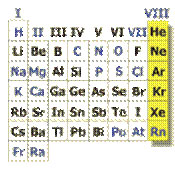
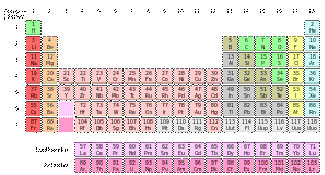
Various variants of the periodic table of the elements showing the seven series in 7, 8 or 18 stages
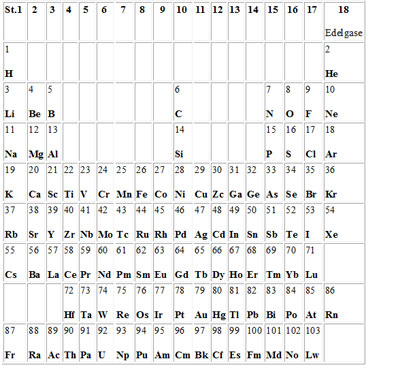
The following table is a simplified form of the periodic table (PTE) in seven stages plus noble gases:
Helium
Helium was first observed in 1868 during a solar eclipse in India. It was found in the light spectrum of the sun; the name derives from the Latin word helios = sunlight. It is believed to be produced by fusion of hydrogen atoms in the sunlight. Helium has a peculiar effect on the voice. If you inhale helium before speaking, the voice squeaks and squawks like Mickey Mouse's.
Case example
We once had a case of helium in which the typical characteristics of the noble gases described above could be very clearly observed. It vividly demonstrates how the zero-activity of Stage 18 can manifest in a person.
The patient was an elderly, friendly lady who had already reached the end of her life. She was meek and amiable and very popular with all the staff in the practice. She was completely unobtrusive, showed no selfishness and always shone like the sun on a warm and mild autumn day. Her visits were always very pleasant, but somehow bland. The woman had become a widow early and after the Second World War had to raise 13 children alone; she had even taken some in as war orphans and adopted them. Once she had asked the social welfare office for financial support, but she immediately withdrew her claim when she met resistance there. After that she somehow got by on her own.
In her old age the patient's life then took a very sad turn. None of her adult children wanted to care for their elderly mother and she was placed in a nursing home. There she literally fell silent and sank into a strange state. She no longer spoke and continually smiled to herself. No one knew exactly what she understood and what she did not. She simply no longer reacted to anything or anyone and was completely still, effortless and unstrained, as if life stood still and the voice faded away. In this state the patient did not appear embittered or hardened, she did not protest, she had simply stopped speaking.
The patient remained in this state for about six months, when Jan Scholten presented his epoch-making work on the elements in 1996. His description of the helium state was so apt for her condition that I gave the patient Helium. Within the same week the patient quite unexpectedly began to speak. She did not say much, considerably less than before, but she had re-established contact. This effect repeated after the patient relapsed and the remedy was given again.
After another six months the patient died peacefully. She departed silently and unobtrusively from life. It is tempting to think that she will return to begin a new series, fresh and full of vigour.
*******************************
Photo: The seven stages; Ulrich Welte
Category: Cases
Key terms: Noble gases, Stage 8, Helium, Neon, Argon, Krypton, Xenon, Radon, Ununoctium, periodic table, Mendeleev, noble gas configuration, stages, series, zero group
Remedy: Helium
[1] In accordance with the guidelines of IUPAC (International Union of Pure and Applied Chemistry).

