
Endometriosis: The holistic approach
Endometriosis is a condition in which tissue that normally lines the uterus is found not only inside the uterine cavity but also outside the uterus. Such tissue can occur, for example, in the bladder, the bowel, the ovaries, the fallopian tubes or the peritoneum and can lead to severe cyclical recurring pain.
Endometriosis is an illness that can deeply affect a woman’s sense of femininity by touching the most sensitive aspects of being female. The condition is accompanied by severe pain up to fainting and vomiting, sometimes associated with bowel movements, urination or sexual intercourse. The menstrual cycle is experienced as extremely unpleasant and burdensome. Because of the pain, fear of the next cycle often increases. This chronic recurrence of pain and the fears about possible consequences such as infertility have given this condition the reputation of being the “bogeyman” of gynaecology.
Many women resort to painkillers from a very young age to get through their period. Painkillers, however, often lead to further health problems — something, unfortunately, that still too few women are aware of. In addition, they are only symptomatic treatment and not causal.
- Are the fears surrounding endometriosis justified and what lies behind this condition that affects many women even in younger generations?
- Does endometriosis have anything to do with one’s own femininity?
- What role does nutrition play?
- Is endometriosis genetic or triggered by environmental factors?
- Are there possibilities for holistic treatment?
I suffer from period pain – do I have endometriosis?
First of all: it does not have to be endometriosis, even if the period is accompanied by severe pain! It may also be dysmenorrhoea. Dysmenorrhoea means severe menstrual complaints or menstrual pain. There are two types: primary and secondary dysmenorrhoea. Primary dysmenorrhoea refers to menstrual complaints without an identifiable cause and usually affects women in their teenage years and twenties. The pain is cramping and can range from mild to severe. Secondary dysmenorrhoea occurs as a consequence of an underlying condition, such as endometriosis, benign tumours (fibroids) or inflammatory conditions in the pelvic area.
What does the clinical picture of endometriosis look like?
In endometriosis, the tissue that normally lines the uterus (the endometrium) grows outside the uterus. This can affect the ovaries, fallopian tubes, the peritoneum, the bladder or the bowel — sometimes even the lungs, the pleura or the heart.
This “misplaced” tissue — the so‑called endometriotic lesions — continues to respond cyclically to the hormone production of the ovaries and therefore also causes cycle‑dependent symptoms such as abdominal pain or discomfort during bowel movements/urination, which, however, only occur during menstruation.
The cardinal symptom of active endometriosis is painful menstruation.
The endometriotic lesions grow with the cycle but cannot be broken down and expelled. As a result, the tissue bleeds into the surrounding tissue or fills cysts with blood. This bleeding irritates the tissue, which leads to inflammation and pain. In addition, the body forms fibres in the affected areas to immobilise the area. This in turn can lead to adhesions and scarring. New pain or damage can arise, such as blocked, immobile fallopian tubes, which can cause fertility problems. [1]
Is endometriosis a systemic disease?
Endometriosis affects metabolism in the liver and adipose tissue, leads to systemic inflammation and alters gene expression in the brain, which results in pain sensitisation and mood disorders. The effects of the disease extend far beyond the pelvis. [2]
How can I find out whether I have dysmenorrhoea or endometriosis?
An exact diagnosis of whether dysmenorrhoea or endometriosis is present can be made during a medical examination using an abdominal ultrasound. For a more precise diagnosis of ovarian endometriosis, a transvaginal ultrasound is usually better suited.
The more severe the pain, the more advanced the disease?
That is not the case. Pain does not correlate with the severity of endometriosis. Just because someone has severe pain does not necessarily mean the endometriosis is advanced. [3]
Does endometriosis prevent pregnancy?
Many women are wrongly told by their treating doctor, together with the diagnosis, the devastating news that they are therefore infertile. Unjustly so! This is an inappropriate generalisation. Most women can fulfil their desire to have children in a completely natural way. [4]
What are the causes of endometriosis?
Despite the relatively high prevalence — approximately 10 per cent of the female population of reproductive age suffer from endometriosis — there is still much uncertainty about the causes of the disease. Some common theories include genetic factors, immune disorders and hormonal imbalances. [5] Nevertheless, research is currently not in agreement about the causes.
Research names five potential reasons:
Immune weakness:
An immunological dysfunction is regarded as a decisive factor. At the same time, however, it is not clear whether this malfunction of the immune system is a cause or a consequence of endometriosis. [6] Symptoms of endometriosis often appear together with digestive complaints, food intolerances and/or allergies. [7]
Environmental toxins:
Various studies also show a connection between endometriosis and dioxin exposure. “Women exposed to very high dioxin concentrations suffered conspicuously often from endometriosis. Also, higher concentrations of PVC plasticisers, so‑called hormone mimics, were measured in the peritoneal fluid of endometriosis patients than in healthy women.” (Ingrid Gerhard and Annette Kerckhoff) Dioxins are a group of toxic chemical compounds that can arise as by‑products of various industrial processes or can be present in trace amounts as residues in pesticides and herbicides. Likewise, an increased environmental oestrogen burden can also trigger uncontrolled cell growth.
Autoimmune process:
A meta‑study examined a total of 26 studies, all of which establish a link between endometriosis and autoimmune diseases. Four of these studies showed an association between endometriosis and systemic lupus erythematosus (SLE), Sjögren’s syndrome (SS), rheumatoid arthritis (RA), autoimmune thyroid diseases, coeliac disease (CLD), multiple sclerosis (MS), inflammatory bowel diseases (IBD) and Addison’s disease. [8] The naturopath Margret Madejsky describes from her practice experience: “Where there is one autoimmune process, there is often a second or third.” Although the author names a variety of influences, she also clearly sees a connection to environmental toxins as one of the main causes, particularly pointing to heavy metal burden. [9]
Hormonal imbalance:
According to Margret Madejsky, endometriosis is always associated with oestrogen dominance and progesterone deficiency. [10]
Retrograde menstruation:
It is also assumed that a massive backflow of menstrual blood through the fallopian tubes occurs, whereby endometrial cells implant outside the uterus. [11]
The true cause of endometriosis remains unclear. However, a multifactorial origin of the lesions is suspected. [12]
Alternative treatment options
Conventional medical therapy is invasive, intervening in the system with hormones and medications. Surgery is also frequently performed, often followed by further medicinal therapy. [13] Everyone would like to avoid this if possible, which is why many women search for alternative solutions.
“Conventional therapy is invasive. With naturopathy and psychosomatics you can alleviate the sometimes severe complaints in a gentle way.”
Approach according to the physician Heide Fischer
Detoxification is essential
Since several studies indicate that exposure to environmental toxins is present, detoxification is one of the most important steps in the treatment of endometriosis. Gynaecologist Heide Fischer recommends a detoxification and elimination programme over 4–6 weeks:
Intestinal detoxification with:
- Algae such as chlorella — 2–4 tablets three times daily
- Healing clay — 1 tablespoon diluted in water twice daily
- Wild garlic mother tincture — 3 drops three times daily
Lymph purification with:
- Tea made from ground ivy
Detoxification via the skin:
- Elderflower tea
Elimination via the kidneys:
- Birch leaves, goldenrod (Solidago), nettle
Elimination via the liver:
- Bitter plants such as dandelion root, artichoke and yarrow
For pain relief
- Silverweed (potentilla)
- Butterbur homeopathic Petasites D6 — several times daily, 3–5 drops
- Devil’s claw
- Frankincense
Hormone regulation
Plants with progesterone‑like effects can be taken in the second half of the cycle. These include:
- Chaste tree (Vitex agnus‑castus)
- Lady’s mantle (Alchemilla)
- Yarrow
- Yam root
To soothe the uterine lining
- Calendula (marigold) or dead‑nettle
[14]
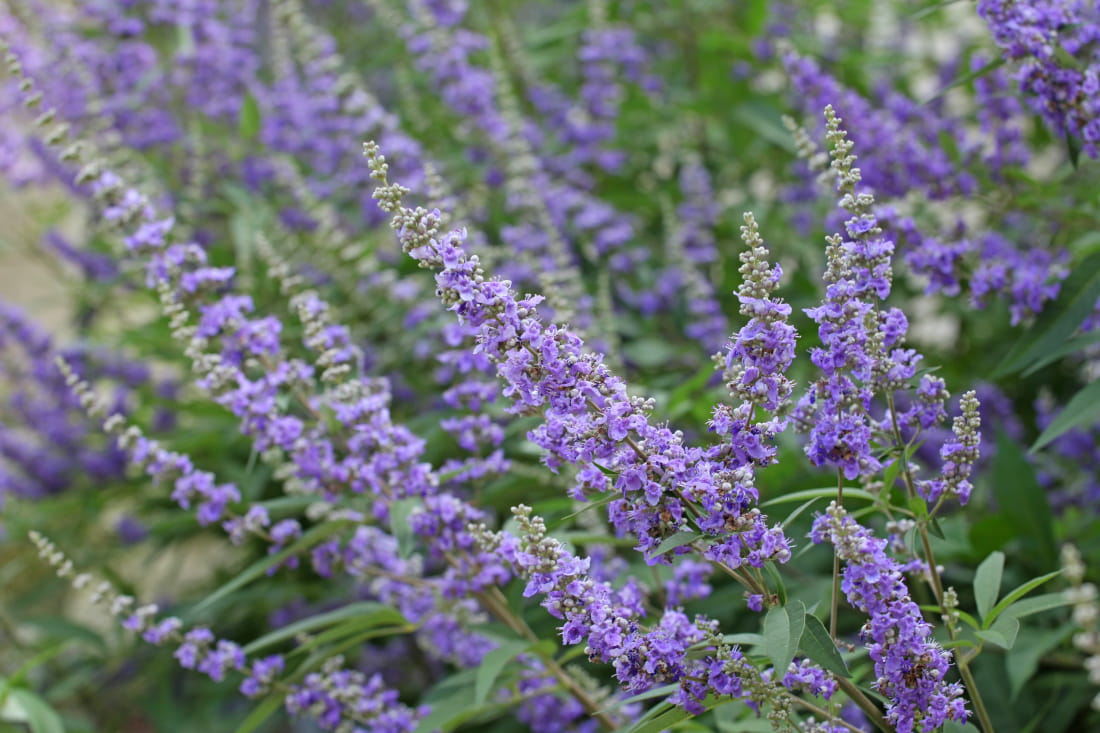
Fig.: Chaste tree — the Mediterranean plant is traditionally used for hormonal balance
Treatment approach according to the naturopath Margret Madejsky
Margret Madejsky is a naturopath and author. She has been working for many years with natural healing methods, among other things for women’s ailments.
One of the most important points for Madejsky in treating endometriosis is to dissolve adhesions. The naturopath recommends — alongside osteopathy to relieve cramps and release adhesions — also archangelica mother tincture (Angelica archangelica) or Sulfur jodatum D6. To increase fallopian tube patency she uses juices from thyme or primrose.
A relief for patients is certainly the ability to release cramps. Here Margret Madejsky recommends, among other things, lady’s mantle, potentilla and motherwort as well as magnesium.
While fibroids in the uterus can be described more as a congestion syndrome, endometriosis is a chronic inflammatory process in the lower abdomen that functions similarly to an autoimmune process.
According to Madejsky’s experience, plant resins such as frankincense can act very well on the inflammations. [15]
Madejsky also emphasises the significance of lady’s mantle as a generally harmonising medicinal plant for women’s disorders in her book Alchemilla. A holistic herbal medicine for women.
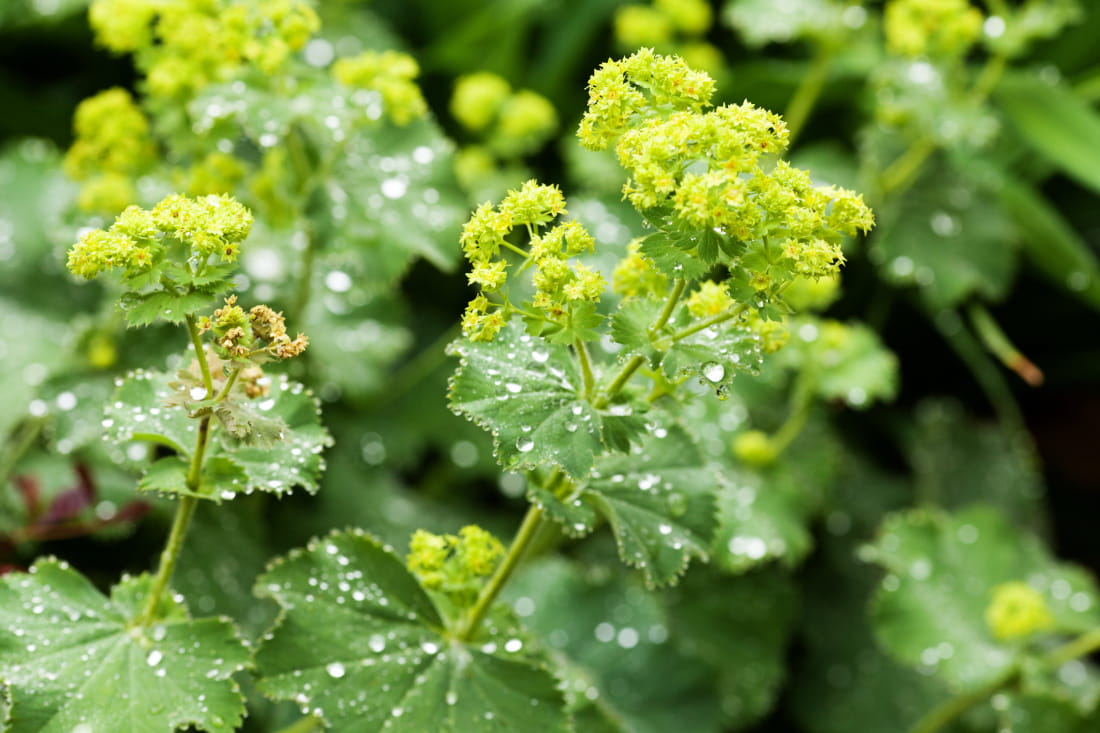
Fig.: Lady’s mantle is a harmonising women’s herb. It is known as a tonic — that is, a strengthening remedy — for the female organism.
Treatment approach according to Stéphanie Mezerai & Sophie Pensa
Stéphanie Mezerai is an author and naturopath specialising in women’s health and has specialised in alleviating endometriosis in a holistic way. Sophie Pensa is a journalist, health counsellor and yoga teacher.
In their book Endometriosis. A holistic approach to relieving the painful disease, the authors describe the positive effects of osteopathy, acupuncture, cupping and moxibustion, reflexology and homeopathic remedies. Massages with various essential oils are also described for pain relief.
Recommendations from phytotherapy
The authors recommend:
- Milk thistle, artichoke and turmeric to stimulate the liver,
- Chaste tree and lady’s mantle to balance the hormones,
- Yarrow, chamomile, ginger and guelder rose bark to relieve cramps and period pain. [16]
Dietary changes according to Mezerai & Pensa
The two authors also place great importance on dietary change: cow’s milk, gluten, red meat, saturated fatty acids and sugar should no longer appear on the plate of endometriosis patients. Likewise, alcohol, food additives, sweeteners or soy should be avoided.
Instead they recommend fruit, vegetables and the “good” fats in a balanced ratio of omega‑3 to omega‑6 (1:4). Usually the proportion of omega‑6 is too high, which is why consumption of, for example, sunflower, soybean, corn, grape seed or safflower oil should be reduced. Omega‑9 fatty acids are also important and can be taken in via olive oil, cashew nuts or hazelnuts.
There are also omega‑7 fatty acids. They are important for maintaining the moisture content of the skin and mucous membranes. Omega‑7 is found in cod liver oil, macadamia oil and sea buckthorn berries.
With this dietary approach the two authors are by now far from alone. Many doctors now recommend, above all, avoiding gluten and cow’s milk.
Micronutrients according to Mezerai & Pensa
Mezerai & Pensa present an overview in their book of micronutrients and plant remedies with which affected women can be well supported.
To reduce inflammation:
- Omega‑3 fatty acids
- Curcumin
Antioxidants against oxidative stress:
- N‑acetyl‑L‑cysteine (NAC)
- Resveratrol
- Pycnogenol (OPC)
- Green tea extract
- Magnesium (glycerophosphate, bisglycinate, malate)
To balance the hormonal system:
- Chaste tree
- Lady’s mantle
For cramps and pain:
- Ginger
- Chamomile
- Guelder rose bark (viburnum)
These and many other valuable tips as well as individual therapy plans can be found in their endometriosis book.
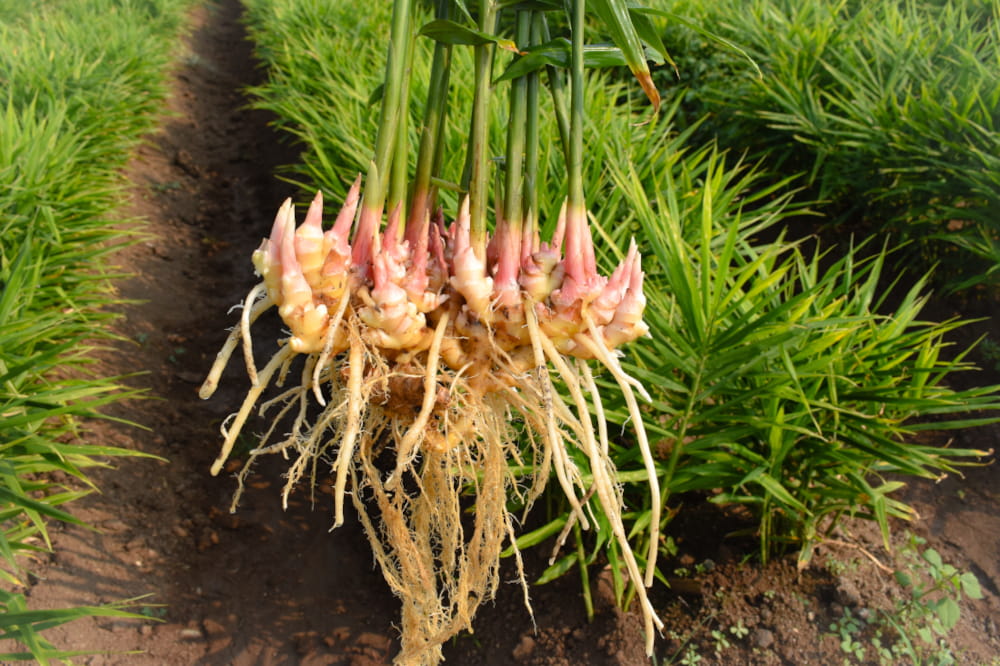
Fig.: Ginger root — an effective herbal remedy not only for menstrual pain
Recommendations for supplementation with micronutrients according to the study evidence
Studies particularly emphasise the importance of the water‑soluble vitamins C and B12 as well as a daily supply of the mineral magnesium. Significant improvements in wellbeing were observed in studies with endometriosis patients for these micronutrients. [17]
Recommended literature:
- Stéphanie Mezerai, Sophie Pensa, Endometriosis. A holistic approach to relieving the painful disease
- Margret Madejsky, Alchemilla. A holistic herbal medicine for women
- Margret Madejsky, Practical handbook of women’s herbs
- Christiane Northrup, Women’s Bodies, Women’s Wisdom
- Jörg Keckstein, Endometriosis — the misunderstood women’s disease
- Tamer Seckin, Endometriosis. More than just period pain
- Ingrid Gerhard, Annette Kerckhoff, What to do about endometriosis. Homeopathy and naturopathy
- Sylvia Mechsner, In the consultation: Endometriosis
Sources:
[1] https://www.yumpu.com/de/document/view/7238879/endometriose-zellen-am-falschen-ort-heide-fischer
[3] https://www.narayana-verlag.de/Endometriose-Stephanie-Mezerai-Sophie-Pensa/b29266
[4] https://www.narayana-verlag.de/Endometriose-Stephanie-Mezerai-Sophie-Pensa/b29266
[5] https://www.thelancet.com/journals/lancet/article/PIIS0140-6736(21)00389-5/abstract
[6] https://www.cell.com/trends/molecular-medicine/abstract/S1471-4914(18)30143-6
[7] https://jpp.krakow.pl/journal/archive/04_19/pdf/10.26402/jpp.2019.2.09.pdf
[8] https://pubmed.ncbi.nlm.nih.gov/31260048/
[9] https://vimeo.com/ondemand/myome
[10] https://vimeo.com/ondemand/myome
[11] https://www.usz.ch/krankheit/endometriose/
[12] https://www.klinikum.uni-heidelberg.de/erkrankungen/endometriose-200332
[13] https://www.klinikum.uni-heidelberg.de/erkrankungen/endometriose-200332
[15] https://vimeo.com/ondemand/myome
[16] https://www.narayana-verlag.de/Endometriose-Stephanie-Mezerai-Sophie-Pensa/b29266
[17] https://jpp.krakow.pl/journal/archive/04_19/pdf/10.26402/jpp.2019.2.09.pdf
Photos: Shutterstock: siam.pukkato, Alex Manders, speakingtomato, Alchemist from India
Disclaimer:
This article does not replace treatment by a qualified doctor or therapist. The basis of this article is studies and current literature. It must not be used for self‑diagnosis or self‑treatment. Discuss any inspirations from this article with a therapist you trust.

