
How do the mineral compounds work and how can the right salt be identified?
Here you can find the article "What are Schuessler salts? - The 12 mineral salts"
“Diseases arise from a deficiency of certain vital minerals. By supplying the missing substances, healing occurs.”
Dr Heinrich Wilhelm Schuessler
How can dynamised mineral remedies be given for everyday health complaints without having a complicated homeopathic repertory in mind? This question was already posed by the physician and homeopath Wilhelm Schuessler in the 19th century. He searched for ways to provide his patients with practical, simple self-help options suitable for everyday use. Schuessler based his work on the discoveries of the Dutch physician, physiologist and philosopher Jacob Moleschott, who first formulated the thesis that humans are composed not only of blood and humours but also of inorganic substances, the minerals. These minerals must be supplied to the body to maintain health.
“A person can remain healthy only if they possess the necessary minerals in the required quantity and in the correct proportion.”
Jacob Moleschott

Figure 1:
Schuessler salts are mineral salts in homeopathic dosage (potentisation).
What lies behind Wilhelm Schuessler's theory?
Wilhelm Schuessler developed the theory that diseases can arise from imbalances or deficiencies of certain mineral salts in the body cells. He also believed that taking these mineral salts in highly diluted form (homeopathically potentised) could restore balance and activate the body's self-healing powers.
Schuessler salts are said to support cellular function by improving the uptake and utilisation of minerals in the body. As they are available in homeopathic potencies (mostly D6 or D12), they are highly diluted and are intended to act gently to regulate without overburdening the cells.
The most important Schuessler salts at a glance
In his research Schuessler was able to crystallise a total of twelve mineral compounds that he regarded as extremely important for the treatment of illnesses. These salts are primarily found in the respective organs and tissues.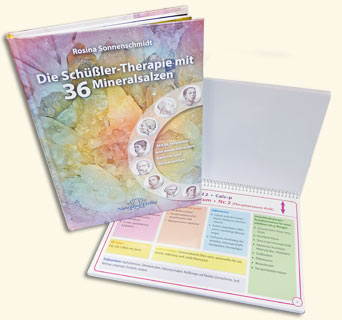
There are twelve basic salts in total, also known as "functional remedies":
- Calcium fluoratum (No. 1) – important for connective tissue, skin and bones. The mineral for elasticity of tissue and bone. It also strengthens tooth enamel and supports depressive moods
- Calcium phosphoricum (No. 2) – plays a role in bone metabolism and blood formation. Supports growth and the repair of bones and teeth.
- Ferrum phosphoricum (No. 3) – important for the immune system and inflammatory processes.
- Kalium chloratum (No. 4) – contributes to the health of mucous membranes and inhibits inflammatory processes. Supports the mucous membranes and glandular system.
- Kalium phosphoricum (No. 5) – important for the nervous system and muscles. Promotes nerve and muscle activity.
- Kalium sulfuricum (No. 6) – supports detoxification and the elimination of metabolic waste products.
- Magnesium phosphoricum (No. 7) – known as the "Hot Seven", helpful for cramps and pain. Relaxes the muscles and relieves cramps.
- Natrium chloratum (No. 8) – regulates the body's fluid balance.
- Natrium phosphoricum (No. 9) – helps regulate the acid–base balance. Supports fat metabolism and aids deacidification.
- Natrium sulfuricum (No. 10) – supports detoxification and elimination. Stimulates liver function and the excretion of toxins, also known as Glauber's salt.
- Silicea (No. 11) – important for skin, hair, nails and connective tissue.
- Calcium sulfuricum (No. 12) – promotes the elimination of toxins. Supports healing of suppurations and skin diseases.
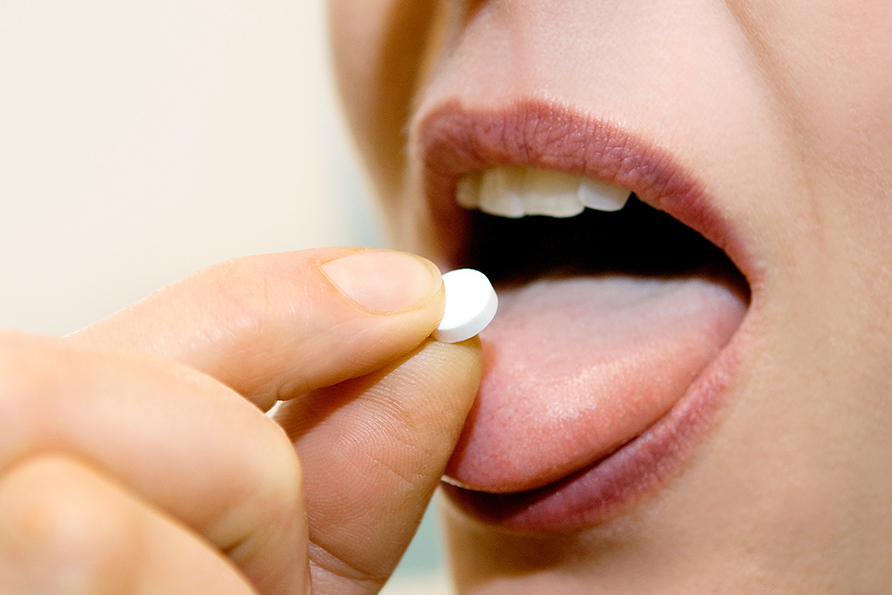
Figure 2:
There are different approaches to explaining the principle of action of Schuessler salts. One is based on the idea that each salt has an individual frequency.
Indications
Schuessler salts are used for a variety of complaints, including:
- Skin problems
- Infectious diseases
- Digestive complaints
- Muscle and joint pain
- Stress and nervousness
- Strengthening the immune system
How can the effects of the Schuessler salts be explained?
Scientific studies on Schuessler salts are sparse. It remains an empirical medicine. One of the few studies – a laboratory study from Italy – investigated Schuessler salts in the homeopathic potencies D6 and D12. Tested were Calcium fluoratum D6/D12, Magnesium phosphoricum D6/D12 and Silicea D6/D12 as a complex remedy for osteoporosis. It was shown that bone formation was stimulated again and calcium was better incorporated into the bones. [1]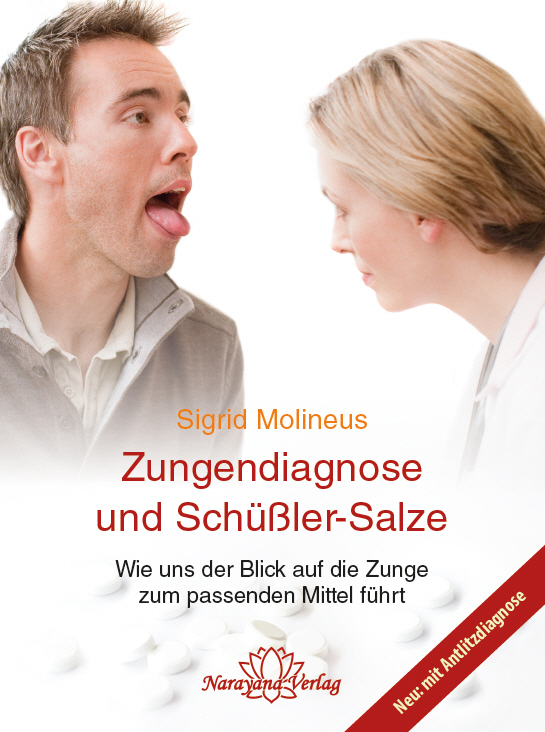
Empirically, the mineral complexes were already a great success in Schuessler's time. How can this be explained? Schuessler derived the action of the salts in the body from his knowledge of homeopathy, his experience as a doctor and the influence of contemporary scientists such as Moleschott, Virchow and von Liebig, and formulated the so-called Schuessler principles:
- Diseases are based on a deficiency of essential minerals in the cell.
- If the missing mineral salts are supplied, healing can occur.
- Minerals should only be supplied in very small amounts.
- The missing substances must be given in dilution so that the salt can pass immediately through the mucous membranes in the oral cavity directly into the blood.
In summary, Schuessler himself explains the mechanism of action of the salts by stating that each cell needs a certain proportion of minerals to control the vital processes in the cells optimally. Electrolytes such as sodium and potassium, for example, are important for maintaining the fluid balance in the cells and throughout the body. The two minerals regulate water balance and ensure that the cells can perform their normal function. Calcium and magnesium, on the other hand, play a key role in muscle contraction and relaxation; they prevent cramps or muscle weakness.
A more recent and less well-known approach to the action of Schuessler salts assumes that each salt has a specific, intrinsic frequency and can influence cells and organs via this vibration. Like any other molecule, a salt molecule is permanently in motion and thus generates electromagnetic waves. The resulting vibrations are measurable and directly detectable.
If natural vibrations, as they occur in a healthy body, are transferred to a sick body, one can strengthen it specifically. This was demonstrated by physician Dr Barbara Hendel and physicist Peter Ferreira in their investigations. [2]
Figure 3:
Different methods lead to the correct remedy choice.
Finding the right Schuessler salt for self‑use
Although you do not need to know countless remedies for Schuessler salts, it is still important to know the right remedy for the particular problem. There are different ways to find out which remedy fits when:
based on the presenting symptoms, facial and signature diagnosis, alphabetical reference works, tongue diagnosis .
Remedy selection based on symptoms
Often a disease or a main symptom in everyday life is in the foreground and leads to the correct remedy choice. Each salt is associated with various symptom patterns.
Whether intestinal colic, diarrhoea, depression, glandular swelling: the author and naturopath Rosina Sonnenschmidt distinguishes between different constitutional types that require different salts. For example, the pale constitution needs different remedies than the lymphatic, the rachitic, the scrofulous, the rheumatic-gouty, the tubercular or the nervous constitution. While a rachitic constitution often involves the salts Calcium fluoratum, Calcium phosphoricum and Silicea, Calcium carbonicum, Calcium phosphoricum and Silicea are predominantly indicated for a scrofulous constitution. [3]
Facial and signature diagnosis
Facial and signature diagnosis is also widespread. This means that certain signs on the body allow conclusions to be drawn about the suitable mineral salt.
These include skin changes (texture, colour, structure, wrinkles and dryness), but also changes to hair and nails. They indicate which minerals are missing. Using facial diagnosis, missing minerals can practically be read directly from the face.
The popular author Rosina Sonnenschmidt describes the features of facial diagnosis as follows:
There are four so-called red remedies, i.e. they are assigned to red ears, red cheeks, couperose on the cheeks (visible small red veins) or a milky-red veil on the eyelids. There are five shine remedies. These include shine on the eyelids, a polished shine on a bald head or face, greasy shine on the face, gelatinous shine on the eyelids, waxy shine on the face and on the nose. Then the three pale faces also influence the remedy selection. These include the plaster‑white face, a milky‑white eye area and the ash‑grey face. The three wrinkle signs include vertical folds in front of the ear or on the cheek, deep laugh lines or cube‑shaped folds under the eye.
There are also further signs, e.g. on the teeth, ears and colour signs around the mouth or nose, which are decisive for specific mineral salts. Which remedies are assigned to the respective signs is discussed by Rosina Sonnenschmidt in her book The Schuessler therapy with 36 mineral salts. She refers to 36 Schuessler salts as an extension of Wilhelm Schuessler's original twelve.
Tongue diagnosis
In Traditional Chinese Medicine, tongue diagnosis is used alongside pulse diagnosis to identify syndromes. These include, for example, deficiency and excess states, moisture patterns or heat conditions, which point to the respective organ according to their topography, i.e. their location on the tongue.
The time‑tested diagnostic method from Chinese medicine is combined by the author Sigrid Molineus with the Schuessler salts. In her book Tongue diagnosis and Schuessler salts the naturopath describes which Schuessler salts can be used for which syndromes according to TCM.
For example, a pale, moist, wet tongue in TCM indicates a lack of energy or yang; digestive weakness accompanied by cold. Here Kalium chloratum and Ferrum phosphoricum are recommended.
Conclusion
Schuessler salts offer an excellent option for self‑treatment. They support many everyday complaints and prevent one from reaching for medication at the slightest problem. Nevertheless, one should be aware that appropriateness plays a central role. Treating diabetes, peritonitis or cancer— to name a few serious illnesses—exclusively with Schuessler salts could prove to be a serious to life‑threatening mistake.
Recommended books
- The Schuessler therapy with 36 mineral salts. Rosina Sonnenschmidt
- The new Schuessler home pharmacy. Rosina Sonnenschmidt
- The large Schuessler repertory. S. R. Phatak
- Tongue diagnosis and Schuessler salts. Sigrid Molineus
- Facial diagnosis after Dr Schuessler. Peter Emmrich
Further articles on the topic:
Disclaimer
Treatment with Schuessler salts should always be embedded in a holistic therapy concept so that the life salts can develop their effect optimally.
This article does not replace treatment by a qualified therapist. The basis of this contribution is studies and current literature. It must not be used for self‑diagnosis or self‑treatment. Discuss any inspirations from this article with a therapist you trust, if necessary.
Sources:
[1] https://www.sciencedirect.com/science/article/abs/pii/S1065699598903122
[2] See Barbara Hendel, Peter Ferreira. Water and Salt, Source of Life. ina Verlag, 2001
[3] https://www.narayana-verlag.de/Die-neue-Schuessler-Hausapotheke-Rosina-Sonnenschmidt/b11301
Figure 1: PhotoSGH/Shutterstock.com; Figure 2: L.ON/Shutterstock.com; Figure 3: optimarc/Shutterstock.com

