
by Vasant Lad, Excerpt from The Ayurvedic Cookbook
The three body or constitutional types Vata, Pitta and Kapha form the foundation of Ayurvedic dietary theory. They correspond to the active and changeable elements air, fire and water, which are present in each person in differing proportions. They determine how optimal health can be achieved through individually tailored diet and lifestyle.
Characteristics of the Vata person
The Sanskrit term Vata derives from the verb "va" and means to carry or move. Thus Vata is the principle of mobility that governs every activity in the body, whether it is how many thoughts one may have in a minute or how efficiently food moves through the intestine. The Vata quality is responsible for joy, happiness, creativity, speech, sneezing and elimination, to name just a few functions. Vata is responsible for the indispensable life essence, that is oxygen or Prana. When Vata leaves the body, life ends.
Vata has the qualities or attributes dry, light, cold, rough, subtle, mobile and clear, with an astringent taste. How these qualities manifest in the constitution of a Vata person is shown in the table below:
|
Qualities |
Manifestations in the body |
|
Dry |
Dry skin, hair, lips, tongue; dry large intestine, prone to constipation; hoarseness |
|
Light |
Light muscles, bones, thin build, light, insufficient sleep; underweight |
|
Cold |
Cold hands and feet, poor circulation; dislikes cold and loves heat; stiff muscles |
|
Rough |
Rough, cracked skin, nails, hair, teeth, hands and feet; cracking joints |
|
Subtle |
Underlying fear, anxiety, insecurity; fine gooseflesh; fine muscle twitching, slight tremor |
|
Mobile |
Fast walking, speaking, doing many things at once; impulsive; restless eyes, eyebrows, hands, feet; unstable joints; many dreams; likes to travel and does not stay in one place; mood swings, fickle faith, distracted mind |
|
Clear |
Clear-sighted; understands and forgets quickly; clear, empty mind, experiences emptiness and loneliness |
|
Astringent |
Dry choking feeling in the throat; tends to hiccups, belching; likes oily, porridge-like soups; craving for sweet, sour and salty tastes; tendency to constipation |
|
Brownish-black |
Dark skin colour; dark hair and eyes; colour of Vata Ama, e.g. dark coating on the tongue |
This combination of qualities can account for both physical characteristics and behavioural patterns in Vata people. Physically they have a light, flexible body, large protruding teeth and may have sucked their thumb or fingers as a child. They have small, deep-set, dry eyes. Vata people have an irregular appetite and thirst and often suffer from digestive and malabsorption problems. They tend to have fragile health and therefore often few or no children.
In their behaviour, Vata individuals are easily excited. Indeed they are alert and act quickly without much thought. They may give a wrong answer but with great confidence. They have a good imagination and enjoy daydreaming. They are very loving people but may love someone out of fear or loneliness. Fear of the dark, heights and confined spaces is not uncommon in Vata people. Their faith is flexible and changeable, although change does not necessarily last long. Vatas love change. Therefore they often change furniture, apartment or place of residence so they do not become bored. They do not like to sit idle but prefer constant action. Having nothing to do is a punishment for them. Due to their active nature they earn enough money, but they spend it on trifles and have difficulty saving.
Characteristics of the Pitta person
 The word Pitta comes from the Sanskrit word "tapa", which means to heat. Pitta represents the fire principle in the body. Truly everything that enters the body must be digested or "cooked", from the sight of the new moon to a wild strawberry put into the mouth. Some foods, like rice, must first be cooked externally before the body's fire can begin the process of digestion. In addition to the stomach fire, Pitta includes the enzymes and amino acids that play an important role in metabolism.
Pitta is, among other things, responsible for regulating body heat by the chemical transformation of food and provides appetite, vitality, learning and understanding in humans. When Pitta is out of balance it can provoke anger, hatred and criticism.
Pitta is hot, sharp, light, oily, liquid and by nature spreading. It has a sour, pungent and bitter taste and a meaty odour. It is associated with the colours red and yellow. These qualities manifest in the body of the Pitta person, as shown in the table.
|
Qualities |
Manifestations in the body |
|
Hot |
Strong digestive fire; vigorous appetite; body temperature usually higher than average; dislikes heat; grey hair with forehead or scalp baldness; soft, brown body and facial hair |
|
Pungent |
Sharp teeth, prominent eyes, pointed nose, pointed chin, heart-shaped face; good absorption and digestion; sharp memory and understanding; does not tolerate hard physical work; irritable; curious mind |
|
Light |
Light/medium build; does not tolerate bright light; fair, glowing skin, light eyes |
|
Liquid |
Loose, watery stools; soft, sensitive muscles; excessive urine, sweat and thirst |
|
Spreading (mobile) |
Pitta spreads as rashes, acne or inflammation over the whole body or affected areas; Pitta people want to be known and famous everywhere |
|
Oily |
Soft, oily skin, hair, stools; may be unable to digest fried food (which may cause headaches) |
|
Sour |
Sour stomach, acidic pH; sensitive teeth; excessive salivation |
|
Burning |
Heartburn, burning sensations in general; strong feelings of anger and hatred |
|
Bitter |
Bitter taste in the mouth, nausea, vomiting; distaste for bitter tastes; cynical |
|
Meaty odour |
Foul odour under the arms, in the mouth, on the soles of the feet; socks smell |
|
Red |
Reddened skin, eyes, cheeks and nose; red colour aggravates Pitta; cannot tolerate heat or sunlight; colour of Pitta without Ama |
|
Yellow |
Yellow eyes, skin, urine and stools; may lead to jaundice, overproduction of bile; yellow colour increases Pitta; pale yellow is normal Pitta, but dark yellow is the colour of Pitta Ama |
Because of the properties listed on the right in the table, Pitta people have a moderately sensitive body with a medium build and weight. They rarely gain or lose much weight. They may have sharp, yellowish teeth with soft, sometimes bleeding gums. Their eyes are bright but often light-sensitive. Usually Pittas have a strong appetite and thirst and therefore tend to prefer spicy and flavourful food.
Pitta individuals can excel at learning, understanding and concentration. They are highly disciplined and excellent leaders. These people are blessed with wisdom, which sometimes manifests as baldness. (So much wisdom, in fact, that it "burns" their hair!) Pitta people never deviate even slightly from their principles, which can make them fanatical. Indeed they can be biased, critical and perfectionistic and tend to become easily agitated.
They like respected professions and often earn a great deal of money, which they spend on luxury goods. They like perfume and jewellery. Their sexual drive may not be overly strong. Overall, the Pitta constitution has moderate strength, average spiritual and material knowledge, average prosperity and a medium life span.
Characteristics of the Kapha person
The term Kapha derives from two Sanskrit roots: "ka" means water and "pha" means to flourish. The nature of Kapha is also that of earth, so the qualities of Kapha are defined by earth and water. Kapha comprises all our cells, tissues and organs. Kapha molecules tend to clump together to form dense masses, giving the body a rounded shape. The water function of Kapha includes lubrication of the joints and organs, strong muscles and bones, cellular secretions and memory capacity.
Water and earth give Kapha the qualities heavy, slow, cool, oily, liquid, mucous, dense, soft, static, sticky, dull, hard and gross. It has a white colour and possesses a sweet and salty taste. The listing of these qualities for the Kapha constitution is shown in the table.
|
Qualities |
Manifestations in the body |
|
Heavy |
Heavy bones, muscles, large stature; tends to overweight; grounded; deep, heavy voice |
|
Slow / lethargic |
Slow walking, speaking; slow digestion and metabolism; ponderous gestures |
|
Cool (cold) |
Cold, clammy skin; steady appetite and thirst with slow metabolism and digestion; repeated colds, mucous and coughs; craving for sweets |
|
Oily |
Oily skin, hair and stools; well-lubricated, supple joints and other organs |
|
Liquid |
Excessive salivation; mucous accumulation in chest, sinuses, throat and head |
|
Mucous / smooth |
Smooth skin; smoothness of organs; mild, gentle temperament, calm nature |
|
Dense |
Thick fat pads; thick skin, hair, nails and stools; plump rounded organs; firmness and solidity of muscles; compact, condensed tissue |
|
Soft |
Soft pleasant appearance; love, care, compassion, kindness and forbearance |
|
Static |
Loves to sit, sleep and do nothing |
|
Sticky |
Viscous, cohesive quality leads to compactness, firmness of joints and organs; likes to embrace; is deeply attached in love and relationships |
|
Dull |
Mental fog and sluggishness in the early morning; often needs coffee as a stimulant to start the day |
|
Hard |
Firm muscles; strength; rigid attitude |
|
Gross |
Causes obstruction; obesity |
|
Sweet |
The anabolic action of sweet taste stimulates sperm production and increases semen volume; abnormal function can cause craving for sweets |
|
Salty |
Helps digestion and growth, provides energy; maintains osmotic balance; abnormal function can cause craving for salt and water retention |
|
White |
Pale complexion; white mucus; white tongue coating; colour of Kapha Ama |
These qualities give people with a Kapha constitution a strong and large build, large eyes, strong teeth and thick, curly hair. They have thick, smooth, oily and hairy skin. Kapha people have a steady appetite and thirst, but rather slow digestion and a slow metabolism. These traits often lead to weight gain, making it difficult to lose weight. Sometimes cravings for sweet and salty foods lead to water retention. They enjoy eating, sitting, doing nothing and sleeping for long periods.
Kapha people are blessed with deep, stable faith, love and compassion and a calm, steady mind. They have a good memory, a deep melodic voice and a monotonous speech pattern. A Kapha person makes and saves money. It is extravagant for them to spend a little more on cheese, sweets and cakes. When Kapha is out of balance, they suffer from greed, attachment, possessiveness and laziness. Overall, the Kapha person, thanks to a strong constitution, enjoys excellent strength, knowledge, peace, love and a long life.
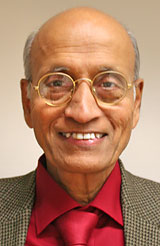
Vasant Lad
Vasant Lad, B.M.A.S., M.A.Sc., is an Ayurvedic physician. In 1968 he received his Bachelor of Ayurvedic Medicine and Surgery (B.M.A.S.) degree from Pune University and in 1980 a Master of Ayurvedic Science (M.A.Sc.) in Pune, India. He worked for three years as Medical Director at the Ayurveda Hospital in Pune. For seven years he held a professorship in Clinical Medicine at the Pune University College of Ayurvedic Medicine, where he served for many years as an educator. Vasant Lad’s academic and practical training includes studies in allopathy (Western medicine) and surgery as well as traditional Ayurveda.

