
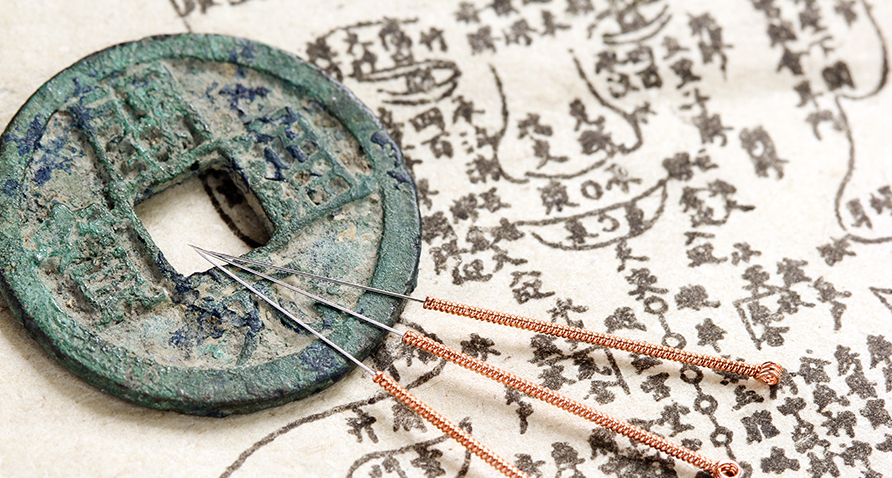
Figure 1: Traditional Chinese Medicine can draw on a rich body of experience.
Do you suffer from digestive problems, fatigue, skin conditions, back tension or frequent headaches without your doctor finding a clear cause? Many people experience such complaints that are often classified as functional disorders in conventional medicine and not further treated. But where Western medicine reaches its limits, a field opens up of an ancient healing art — Traditional Chinese Medicine (TCM). [1]
For a long time it received little attention here and its diverse concepts — from the life force Qi and its strengthening to the theory of the Five Elements — were not recognised. That is hard to imagine, since Chinese medicine has a history of more than 2,000 years. [2] Today TCM, with its holistic approach including acupuncture, Qigong, dietetics and herbal medicine, has also taken a firm place in the West. What exactly is TCM and for which conditions can this holistic system help? In this article you will learn more about the following questions:
- What made TCM successful for two millennia?
- How is diagnosis carried out?
- On which principles is TCM based?
- What are the 5 pillars of TCM?
- For which conditions can TCM help?
TCM and Western medicine: Two fundamentally different approaches
The origins of Traditional Chinese Medicine can be traced back to the 3rd century BCE, with some of its core ideas and practices even older. The foundations of TCM stem, among others, from the "Huangdi Neijing" (The Yellow Emperor’s Inner Canon), which emerged around the 2nd century BCE and counts among the oldest medical writings in the world.
European traditional medicine also has a long history. Its origins lie in antiquity, especially in the teachings of Greek and Roman physicians such as Hippocrates (5th century BCE) and Galen (2nd century CE), and it was strongly influenced by the alchemical physician and natural philosopher Paracelsus (15th century CE).
By contrast, modern medicine is comparatively very young. "Western" medicine as practised today largely developed in the 19th and 20th centuries with the emergence of scientific methodology, microbiology and modern pharmacology. Its pioneers include Robert Koch (1843–1910), who discovered the causes of tuberculosis and cholera, and Rudolf Virchow (1821–1902), who established cell theory in medicine.
Patterns in Traditional Chinese Medicine
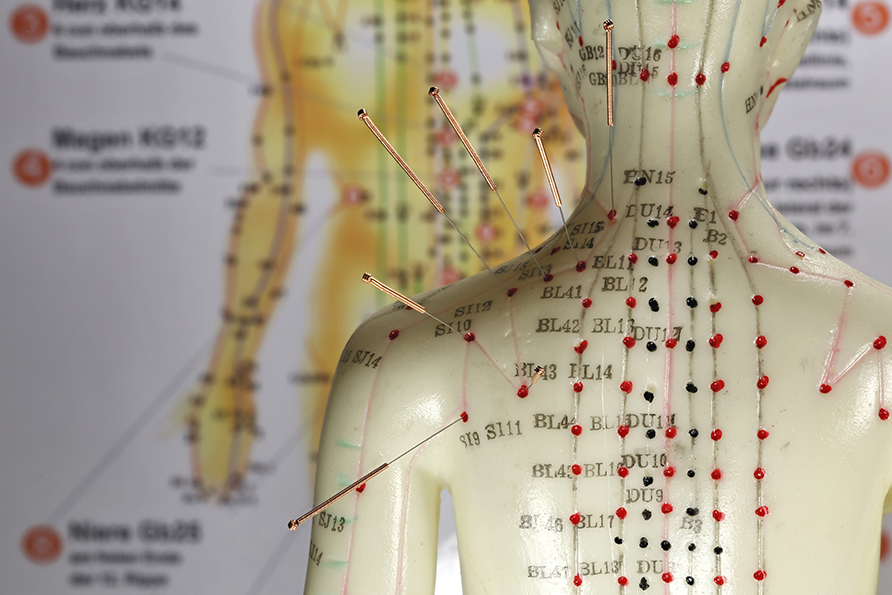
Figure 2: In Traditional Chinese Medicine the life energy Qi plays a central role. To stay healthy, Qi must flow harmoniously through the body.
The patterns or syndromes in Traditional Chinese Medicine (TCM) are primarily based on energetic imbalances in the body that can be found in dysfunctions of the organs, energy channels (meridians) or in substances such as Qi, blood and body fluids.
Central here is the life energy Qi, which pervades the body and supports all life functions. An unobstructed and even flow of Qi is important for health in TCM. Balance of Qi means that
- there should be an adequate amount of Qi, and
- Qi can flow freely without any blockages or stagnation.
Qi stagnation, according to TCM teachings, can lead to pain and illness. In contrast, a Qi deficiency leads to weakness and exhaustion.
A second concept examines the state of Yin and Yang. These are two opposing but complementary forces that influence all phenomena in nature and in the body. Yin represents aspects such as cold, rest, darkness and substance, while Yang stands for heat, activity and brightness. [3]
The main patterns that play a role in TCM are:
|
1. Qi patterns |
|
|
2. Blood patterns |
|
|
3. Yin and Yang patterns
|
|
|
4. Dampness (Shi) |
|
|
5. Wind (Feng) |
|
|
6. Dryness (Zao) |
|
|
7. Phlegm (Tan) |
|
|
8. Heat and Cold (Re and Han) |
|
These patterns serve as diagnostic tools to identify and treat the individual imbalance. TCM always considers the whole system of the body and looks for the underlying cause of complaints in order to treat them holistically.
Diagnostic possibilities in Traditional Chinese Medicine
Unlike modern medicine, Traditional Chinese Medicine does not use technical devices for diagnosis. Nevertheless, it has been successful for thousands of years. What is its secret? TCM is based on a highly refined diagnostic system that allows imbalances of energy in the body to be detected at an early stage. Multiple diagnostic methods are used — viewing the person from different perspectives to infer the overall picture.
The four diagnostic methods in TCM
Tongue diagnosis:
What for the conventional physician is a functional organ is for a TCM practitioner a small universe. The tongue is divided into different zones in TCM — for example, the heart area is assigned to the tip of the tongue. In addition to the zones, aspects such as colour, moisture, thickness and coating play a role in recognising the out-of-balance patterns (Chinese: Bian Zheng). [5] [6]
Pulse diagnosis:
The pulse is felt at different locations and depths to derive information about the state of Qi and the organs. Feeling the quality of the pulse is an art that requires practice and sensitivity. Once mastered, it is a highly developed diagnostic instrument that in many cases cannot be replaced by any machine. Pulse diagnosis is also known in Ayurveda. [7] [8]
Facial and ear diagnosis:
A red face indicates a different imbalance than a sallow-white face. From facial colour and certain features in different facial zones, a TCM practitioner can draw many conclusions about a person’s Qi and energetic state. For example, dark circles under the eyes are a sign related to Kidney Qi. [9] The ear is also divided into zones and thus allows conclusions about bodily states. [10]
Medical history:
The case history includes detailed questions about emotional and physical wellbeing, lifestyle and environmental factors. These are also assigned to the individual patterns. [11]
This type of diagnosis reveals the underlying patterns, which then allow for an individual and differentiated TCM treatment. A major advantage is that it enables effective prophylaxis. Even before a disease manifests in the body, certain tendencies can be balanced out. [12]
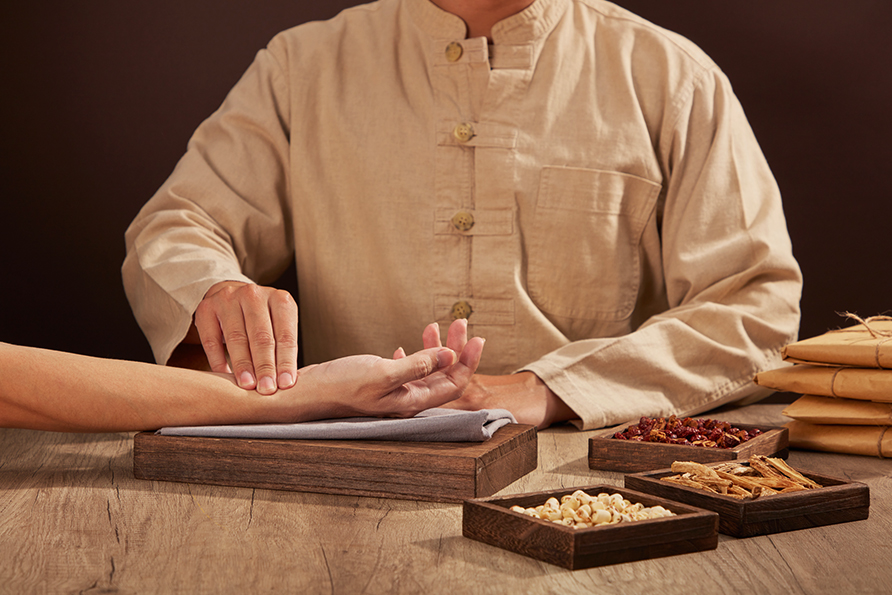
Figure 3: Pulse diagnosis is an important diagnostic instrument and requires a highly developed sensitivity.
The Five Elements in TCM
In addition to the differentiation by Yin and Yang, Traditional Chinese Medicine (TCM) recognises an overarching concept — the Five Phases (also called the "Five Elements"). Nature and humans are understood as subject to dynamic transformation. [13]
Everything is in flux and one element transforms into the next. These transitional phases possess different qualities observable in nature and are therefore called the Five Elements: Wood, Fire, Earth, Metal and Water.
Wood nourishes Fire,
Fire creates Earth,
Earth produces Metal,
Metal generates Water
and Water nourishes Wood.
The elements each have their own energy qualities (Qi) and influence all life. [14] This includes physical health as well as emotions and organ functions. If the elements are out of balance, this can lead to illness. For example, in TCM an excess of Fire (heat) can overload the Heart, while a deficiency of Earth can lead to digestive problems.
.jpg)
Figure 4: The Five Elements doctrine of TCM is oriented on the cycles of nature.
Understanding the Five Elements and their transformational phases is therefore essential to comprehending the person in terms of Traditional Chinese Medicine. Each element is assigned a Yin and a Yang organ:
1. Wood (Mù)
Yin organ: Liver (Gan)
Yang organ: Gallbladder (Dan)
2. Fire (Huǒ)
Yin organ: Heart (Xin)
Yang organ: Small intestine (Xiaochang)
3. Earth (Tǔ)
Yin organ: Spleen (Pi)
Yang organ: Stomach (Wei)
4. Metal (Jīn)
Yin organ: Lung (Fei)
Yang organ: Large intestine (Dachang)
5. Water (Shuǐ)
Yin organ: Kidney (Shen)
Yang organ: Bladder (Pangguang)
The importance of emotions in TCM
Interestingly, each element and thus each organ is also associated with emotions, because in TCM there is a close connection between the physical, mental and emotional states. [15] Emotions are not only psychological phenomena; they directly influence the organs and the flow of energy in the body. [16]
An emotional imbalance can lead to a physical imbalance:
- Wood phase:
- Emotion: Anger — harms the Liver.
- Emotion: Anger — harms the Liver.
- Fire phase:
- Joy (in excess) can weaken the Heart.
- Joy (in excess) can weaken the Heart.
- Earth phase:
- Worry and overthinking impair the Spleen.
- Worry and overthinking impair the Spleen.
- Metal phase:
- Grief weakens the Lung.
- Grief weakens the Lung.
- Water phase:
- Fear impairs the Kidneys.
Restoring balance in this context means treating both emotional and physical imbalances to achieve holistic health.

Figure 5: Qigong is applied in TCM to restore the Qi flow and the energetic balance.
The Five Pillars of TCM
The syndromes identified by the various diagnostic methods can then be balanced with different methods. These are commonly referred to as the "pillars of Traditional Chinese Medicine". All pillars share the same goal: to harmonise the Qi flow in the body. The five pillars include different approaches:
Acupuncture:
The human body is traversed by energy channels. These can be stimulated with fine needles to regulate the Qi flow and restore energetic balance.
Herbal therapy: Traditional Chinese herbs play a large role in TCM. Herbs are used in complex formulas to support the body and correct imbalances.
Dietary therapy: The right diet, tailored to the individual type and the current pattern, is an important part of TCM. Noll emphasises that foods in TCM are categorised according to their energetic properties (e.g. cooling, warming, drying).
Tuina (Chinese massage) and
Qigong: These methods support the restoration of Qi flow and help maintain energetic balance. [17]
TCM practitioners often say: Chinese medicine is 80 percent lifestyle, 10 percent acupuncture and 10 percent herbal medicine. [18]
Which conditions can TCM help with?
There are numerous scientific studies that have investigated the effectiveness of Traditional Chinese Medicine (TCM) for various conditions. Acupuncture and Chinese herbal therapy, for example, have been shown to be effective in:
Pain (e.g. back pain, osteoarthritis, migraine) [19] [20]
Asthma and allergies [21]
Menstrual problems (dysmenorrhoea) [22]
Sleep disorders [23]
These studies show that TCM — particularly acupuncture and herbal therapy — can be a supportive and sometimes primary treatment option for a variety of conditions. Research in this field is steadily growing, and TCM is increasingly being included in clinical trials to further substantiate its effectiveness.
Conclusion
Traditional Chinese Medicine (TCM) is a more than 2,000-year-old holistic healing art characterised primarily by the harmonious flow of life energy Qi in the body. Its diagnostic and treatment methods, such as acupuncture, herbal therapy, dietary therapy and Qigong, aim to correct energetic imbalances and thus prevent or treat disease. TCM considers both physical and emotional states, with the harmony of Yin and Yang playing a central role, and is increasingly helpful for various complaints and life situations.
TCM is particularly successful in treating functional disorders for which conventional medicine often reaches its limits, such as digestive problems, chronic pain, allergies or sleep disorders. Scientific studies increasingly support the effectiveness of TCM, especially in pain therapy and reproductive health issues, giving it a firm place in modern healthcare.
Books
- https://www.narayana-verlag.de/Zungendiagnose-und-Schuessler-Salze-Sigrid-Molineus/b13380
- https://www.narayana-verlag.de/Der-sanfte-Weg-zur-Fruchtbarkeit-Randine-Lewis/b27687
- https://www.narayana-verlag.de/Ayurvedische-Pulsdiagnose-Vasant-Lad/b13993
Sources
[1] https://www.narayana-verlag.de/Heilen-mit-TCM-Julia-Spenner/b33081
[2] https://classicalchinesemedicine.org/history-chinese-medicine-west/
[3] https://www.narayana-verlag.de/Das-grosse-Buch-der-klassischen-Akupunktur-Frank-Bahr-Leopold-Dorfer-Franz-Jost-Gerhard-Litscher-Sandi-Suwanda-Hans-Zeitler/b15422
[4] https://www.narayana-verlag.de/Leitfaden-Chinesische-Medizin-Grundlagen-Claudia-Focks/b23086
[5] https://www.narayana-verlag.de/Zungendiagnose-und-Schuessler-Salze-Sigrid-Molineus/b13380
[6] https://books.google.de/books-zungendiagnostik-in-der-tcm
[7] https://www.narayana-verlag.de/Ayurvedische-Pulsdiagnose-Vasant-Lad/b13993
[8] https://www.narayana-verlag.de/Leitfaden-Chinesische-Medizin-Grundlagen-Claudia-Focks/b23086
[9] https://www.narayana-verlag.de/Gesichtsdiagnostik-fuer-TCM-und-Naturheilkunde-Svenja-Schupp/b28175
[10] https://www.narayana-verlag.de/Visuelle-Ohrdiagnostik-als-Grundlage-der-Ohrakupunktur-Michael-Noack/b23442
[11] https://www.narayana-verlag.de/Leitfaden-Chinesische-Medizin-Grundlagen-Claudia-Focks/b23086
[12] https://www.narayana-verlag.de/Diagnostik-und-Therapie-Florian-Ploberger/b13060
[13] https://www.narayana-verlag.de/Akupunktur-nach-Thews-Franz-Thews/b16355
[14] https://www.narayana-verlag.de/Der-Energiekoerper-des-Menschen-Cyndi-Dale/b12677
[15] https://www.narayana-verlag.de/Psychosomatik-in-der-Chinesischen-Medizin-Klaus-Dieter-Platsch/b13021
[16] https://www.narayana-verlag.de/Psychologische-Aspekte-in-der-Traditionellen-Chinesischen-Medizin-Florian-Ploberger/b13046
[17] https://www.youtube.com/watch?v=qTx1nQ4ipoU
[18] "Die Heilung der Mitte". Georg Weidinger
[19] https://www.piedmontacupuncture.com/blog/acupuncture-chronic-pain-individual-patient-data-meta-analysis-archives-internal-medicine-2012
[20] https://web.archive.org/web/20200222080953/https://www.zora.uzh.ch/id/eprint/144283/1/Vickers_J_Pain_2017.pdf
[21] https://pubmed.ncbi.nlm.nih.gov/19203653/
[22] https://www.ncbi.nlm.nih.gov/pmc/articles/PMC6280308/
[23] https://pubmed.ncbi.nlm.nih.gov/14990755/
[24] https://pubmed.ncbi.nlm.nih.gov/11937123/
[25] https://www.narayana-verlag.de/Der-sanfte-Weg-zur-Fruchtbarkeit-Randine-Lewis/b27687
Figure 1: YueStock/Shutterstock.com; Figure 2: Bjoern Wylezich/Shutterstock.com; Figure 3: Light Stock/Shutterstock.com; Figure 4: Africa Studio/Shutterstock.com; Figure 5: Melinda Nagy/Shutterstock.com;

