

Figure 1: The neurotransmitter GABA is an important amino acid that can calm the nervous system and support better sleep quality.
Gamma-aminobutyric acid (GABA) is the most important inhibitory neurotransmitter in the human brain. One of GABA's main tasks is to have a calming effect on the nervous system and to prevent overstimulation of the brain. In this blog article you will learn what other effects are attributed to GABA and for which complaints the amino acid is commonly used. You will also find information on the symptoms of a GABA deficiency as well as on the correct intake and dosing of dietary supplements containing GABA.
What is GABA?
If you have never heard of GABA before, you are probably wondering what is behind the mysterious name. The abbreviation GABA stands for gamma-aminobutyric acid. In German the substance is often also referred to as γ-aminobutyric acid. GABA is a non-proteinogenic amino acid, i.e. it is not incorporated into proteins. As the most common neurotransmitter in the human body, GABA plays a crucial role in communication between nerve cells. Around 30% of all synapses in the brain are regulated by GABA.
GABA is produced from glutamate both in the pancreas and in the brain. Production in the brain is particularly important because GABA is not able to cross the blood–brain barrier and thus would otherwise not be able to act in the brain. Researchers have also found that γ-aminobutyric acid occurs throughout the gastrointestinal tract.[1] This suggests that GABA as a neurotransmitter could also influence the digestive system.
The important effects and uses of GABA

Figure 2: Because of its calming effect on the nervous system, GABA is often referred to as a natural anti-stress agent.
As the main neurotransmitter of the central nervous system, GABA is involved in numerous bodily functions. Below we present three important areas of application for GABA and explain how the amino acid acts on selected bodily systems.
Nervous system
GABA is commonly known above all for its calming effect on the nervous system. But can GABA really be considered a natural anti-stress agent and, if so, how does the neurotransmitter exert its relaxing effect? To understand the connection, one should first know that information is transmitted and processed in the brain by nerve cells communicating with each other via synapses. This is where GABA comes into play: the substance ensures that impulses in the nervous system are either slowed down or do not arrive at all. When GABA binds to a nerve cell, that cell can no longer temporarily transmit or receive impulses. Stress-related signals are likewise not forwarded to the motor centres of the brain, which explains GABA's relaxing effect. Many pharmacologically active substances also work via this mechanism: for example, Valium acts calmingly by stimulating the formation of GABA in the brain.
The counterpart to GABA is the neurotransmitter glutamate. While GABA has an inhibitory effect and primarily a calming effect on nerve pathways, glutamate supports the transmission of nerve impulses. For information exchange in the brain to function smoothly, a balance between GABA and glutamate is necessary.[2]
However, GABA is not only essential for the normal function of the nervous system but also for its development.[3] Researchers at Jena University Hospital were able for the first time to demonstrate the depolarising, i.e. activating, effect of GABA on immature nerve cells in the intact organism. While GABA acts inhibitory in the adult brain, it can activate immature nerve cells during early brain development.[4]
Sleep quality
As mentioned in the previous section, GABA can reduce neuronal excitability. Because of its calming effect, GABA is often recommended for people who struggle with sleep problems. Several studies have investigated the effectiveness of GABA in sleep disorders. In a 2015 study, taking a GABA preparation reduced participants' time to fall asleep by about 5 minutes.[5] In the study, GABA was tested together with an extract of Apocynum venetum. There also appears to be a link between insomnia and GABA levels in the brain. In 2008 a study found that the GABA concentration in people suffering from insomnia was up to 30% lower than in the brains of people without sleep disorders.[6]
Muscle growth
Many athletes value GABA above all for its property of promoting the release of human growth hormone (HGH). Growth hormone is produced in the pituitary gland and released into the blood. It can reduce the risk of heart disease but also stimulate muscle growth and fat loss. The latter effect makes HGH particularly interesting for strength athletes. That GABA can induce increased release of growth hormone has been demonstrated several times scientifically. In one study, participants received either 3 grams of GABA or a placebo before a rest period or a strength training session. Compared with the placebo group, growth hormone in the group that had taken GABA increased by up to 400%.[7]
Which foods naturally contain GABA?
As a rule, the body is able to produce sufficient amounts of GABA itself. However, the body's own production can be supported by consuming foods that contain GABA or natural glutamine. While pure GABA usually occurs only in trace amounts in food, many foods contain the precursor glutamate (glutamic acid), from which the body can form GABA. But beware: consumption of highly processed foods, in which glutamate is often used as a flavour enhancer, is not recommended. Instead, opt for healthy natural sources of glutamate such as meat, fish, cheese, tomatoes or various soy products.
A Korean research group, among others, investigated the GABA content of various foods.[8] The proportion of γ-aminobutyric acid was determined on a dry-weight basis. The researchers defined the following foods as particularly rich in GABA:
- Brown rice (germ): 718 nmol/g
- Spinach: 414 nmol/g
- Brown rice (sprouts): 389 nmol/g
- Barley sprouts: 326 nmol/g
- Bean sprouts: 302 nmol/g
- Beans: 250 nmol/g
- Corn: 199 nmol/g
- Barley: 190 nmol/g
- Hazelnuts: 188 nmol/g
Which symptoms indicate a GABA deficiency?
A deficiency of γ-aminobutyric acid can have far-reaching consequences. Without the inhibitory effect of GABA, nerve cells in the brain can enter a persistent state of excitation and act in an uncontrolled manner. This can, for example, lead to seizures or even symptoms of epilepsy. Other typical symptoms of a GABA deficiency include:
- Sleep disturbances (e.g. difficulties falling and staying asleep)
- Muscle tension and cramps
- Increased irritability
- Increased sensitivity to pain
- Raised blood pressure
- Reduced performance
- Reduced ability to concentrate
GABA deficiency and mental disorders: is there a connection?
A GABA deficiency is often linked to the development or worsening of mental disorders such as depression or anxiety disorders. Studies have indeed shown that people suffering from post-traumatic stress disorder (PTSD) or depression generally have lower GABA concentrations in the brain.[9],[10]
However, the relationship must be viewed more nuancedly: with symptoms such as panic attacks, anxiety or lack of motivation there is usually not only an unfavourable GABA level. Other important neurotransmitters such as serotonin, dopamine or glutamate are often also increased or decreased. Therefore, in mental disorders a holistic treatment approach should be chosen that restores the overall neurotransmitter balance to a healthy equilibrium.
GABA dietary supplements
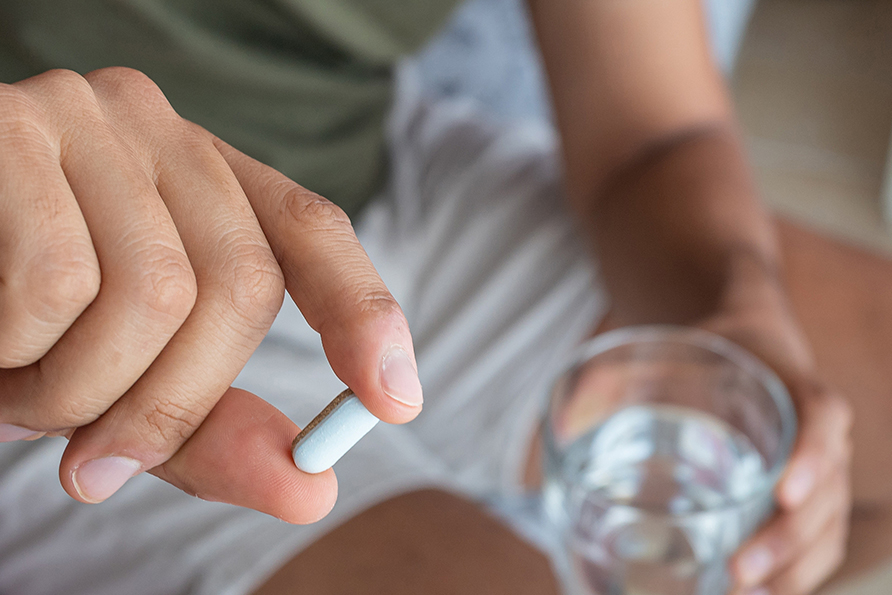
Figure 3: Some GABA preparations also contain Vitamin B6, an important cofactor for γ-aminobutyric acid.
Endogenous synthesis of GABA declines over the course of life. To prevent a deficiency, it can be sensible to use dietary supplements containing GABA in addition to dietary intake. GABA products are available, among other forms, as capsules, tablets or powders. Which form is right for you primarily depends on your personal preferences. If you are allergic to certain components of capsule shells, you should opt for powder. Many people, however, choose GABA capsules because they allow precise dosing and are particularly easy to take.
There are some active substances that can influence the effects of the neurotransmitter when combined with GABA. Vitamin B6 is an important cofactor in the synthesis of GABA. If the essential vitamin B6 is not present in sufficient amounts in the body, GABA synthesis can be reduced.[11] Many dietary supplements, such as the GABA capsules with Vitamin B6 from Unimedica, therefore rely on a combination of GABA and Vitamin B6. Vitamin B6 supports numerous bodily functions, including normal nervous system function, energy metabolism and normal psychological function.
Correct use and dosing of GABA preparations
How best to take and dose dietary supplements depends on several factors. In addition to the purpose of taking them, individual need and tolerability also play a role. It is advisable to consult your doctor before supplementing with GABA and to start with low dosages. GABA should be taken outside of meals. For sleep disorders, taking it shortly before bedtime is recommended in order to benefit from the sleep-promoting effect of γ-aminobutyric acid and to avoid daytime drowsiness.
Overdosing on GABA is rare. If the amino acid is taken in excessive amounts, temporary symptoms such as flushing, an increase in heart rate or shortness of breath may occur. In addition, a paradoxical effect can occur with overdose, where GABA produces the opposite effect and insomnia, inner restlessness or anxiety are increased. Due to the lack of conclusive studies on the effects of GABA during pregnancy and breastfeeding, pregnant and breastfeeding women should refrain from taking GABA preparations as a precaution.
[1] Hyland NP, Cryan JF. A Gut Feeling about GABA: Focus on GABA(B) Receptors. Front Pharmacol. 2010 Oct 4. https://www.ncbi.nlm.nih.gov/pmc/articles/PMC3153004/.
[2] Petroff OA. GABA and glutamate in the human brain. Neuroscientist. 2002 Dec. https://pubmed.ncbi.nlm.nih.gov/12467378/.
[3] Li K, Xu E. The role and the mechanism of gamma-aminobutyric acid during central nervous system development. Neurosci Bull. 2008 Jun. https://www.ncbi.nlm.nih.gov/pmc/articles/PMC5552538/.
[4] Kirmse K, Kummer M, Kovalchuk Y, Witte OW, Garaschuk O, Holthoff K. GABA depolarizes immature neurons and inhibits network activity in the neonatal neocortex in vivo. Nat Commun. 2015 Jul 16. https://pubmed.ncbi.nlm.nih.gov/26177896/.
[5] Yamatsu A, Yamashita Y, Maru I, Yang J, Tatsuzaki J, Kim M. The Improvement of Sleep by Oral Intake of GABA and Apocynum venetum Leaf Extract. J Nutr Sci Vitaminol (Tokyo). 2015. https://pubmed.ncbi.nlm.nih.gov/26052150/.
[6] Winkelman JW, Buxton OM, Jensen JE, Benson KL, O'Connor SP, Wang W, Renshaw PF. Reduced brain GABA in primary insomnia: preliminary data from 4T proton magnetic resonance spectroscopy (1H-MRS). Sleep. 2008 Nov. https://pubmed.ncbi.nlm.nih.gov/19014069/.
[7] Powers ME, Yarrow JF, McCoy SC, Borst SE. Growth hormone isoform responses to GABA ingestion at rest and after exercise. Med Sci Sports Exerc. 2008 Jan. https://pubmed.ncbi.nlm.nih.gov/18091016/.
[8] Oh S-H, Moon Y-J, Oh C-H. y-Aminobutyric Acid (GABA) Content of Selected Uncooked Foods. Vol. 8, Preventive Nutrition and Food Science. 2003. https://koreascience.or.kr/article/JAKO200311921590548.page.
[9] Meyerhoff DJ, Mon A, Metzler T, Neylan TC. Cortical gamma-aminobutyric acid and glutamate in posttraumatic stress disorder and their relationships to self-reported sleep quality. Sleep. 2014 May. https://pubmed.ncbi.nlm.nih.gov/24790267/.
[10] Gerner RH, Hare TA. CSF GABA in normal subjects and patients with depression, schizophrenia, mania, and anorexia nervosa. Am J Psychiatry. 1981 Aug. https://pubmed.ncbi.nlm.nih.gov/7258390/.
[11] Yoshida T, Tada K, Arakawa T. Vitamin B 6 -dependency of glutamic acid decarboxylase in the kidney from a patient with vitamin B 6 dependent convulsion. Tohoku J Exp Med. 1971 Jun. https://pubmed.ncbi.nlm.nih.gov/5566248/.

