
Speech development disorder (SES), hyperactive attention deficit (ADHD) and febrile convulsions
A contribution by Ulrich Welte, Monica Rigney and Peter Tumminello, in three parts
Female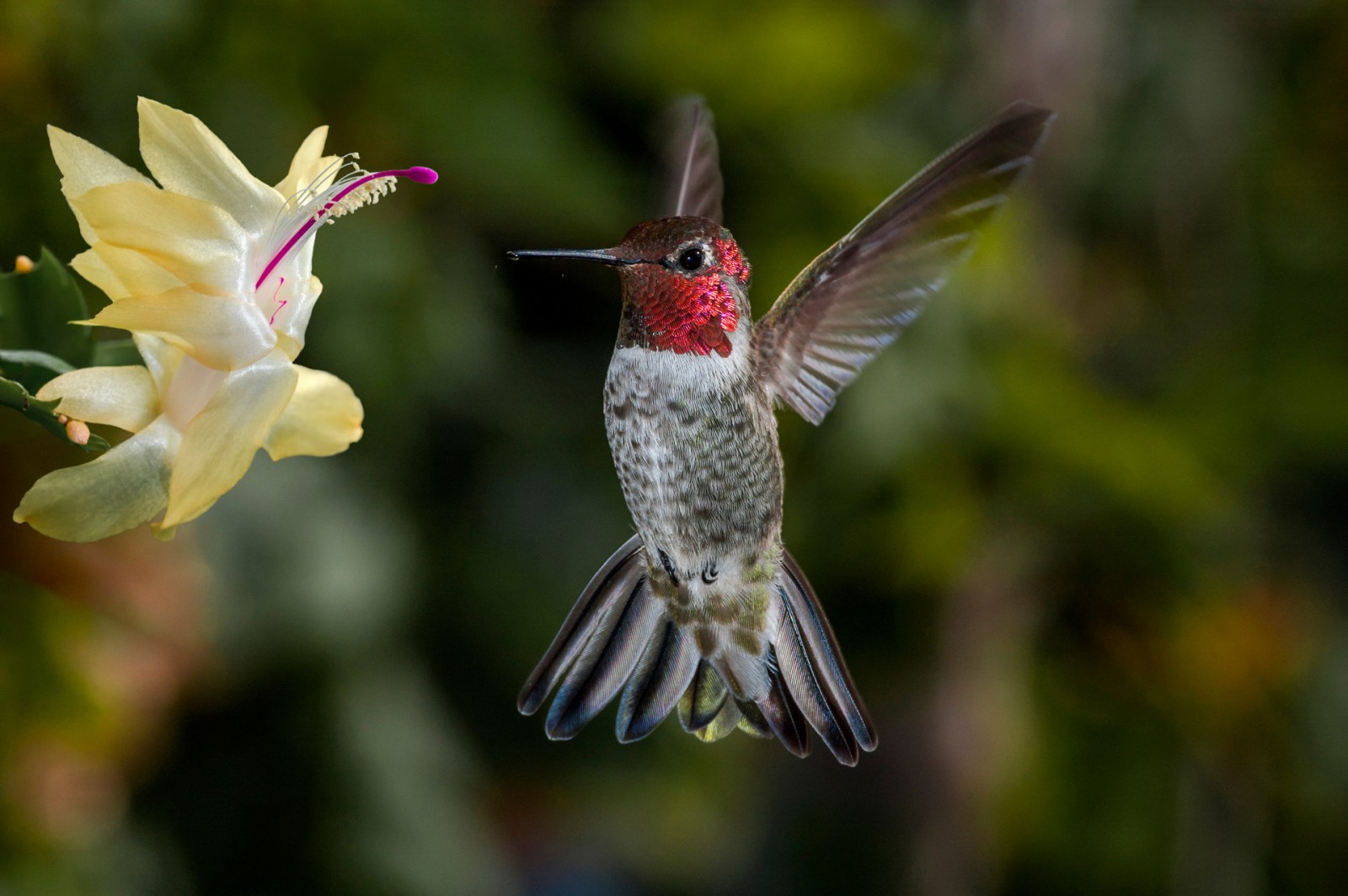 Male
Male
In brief: Years ago Peter Tumminello from Australia told me that the homeopathic remedy Calypte anna might have the colour preference blue 15 C, because this colour was repeatedly chosen by a patient he was able to heal with the Anna hummingbird. The remedy (abbr. calyp-a) was then entered in the colour repertory under the heading blue 15–16 C, initially as a single-value search suggestion. Monica Rigney from Ireland has now written to me that she has given the remedy twice successfully since 2018, and both patients chose 15 C. That makes three cases in blue, and the remedy was therefore upgraded to three-value status in this rubric. She described the impressive case of a boy with SES and ADHD whom she was able to treat successfully with this remedy because she found it in the colour repertory under 15–16 C. This case is part 1 of our article. The boy was initially a happy child, albeit always fidgety and high‑spirited, but after the usual multiple vaccinations he initially suffered febrile convulsions and then developed a hyperactive attention deficit, did not form sentences and had a strangely vacant look, as if he were not really there.
Among the many remedies in this rubric Calypte anna particularly caught her eye because she knew the remedy picture of this tiny, hyperactive bird, the Anna hummingbird, and it fitted this boy. (https://www.narayana-verlag.de/spektrum-homoeopathie/calypte-anna-der-annakolibri-in-der-homoeopathie).

See the constantly updated colour-remedy list: https://www.homeo.de/de/colorremedy.htm
The full proving of Calypte anna can be found on Lou Klein’s website Luminos Homeopathic Courses - (see there under New Provings - Calypte_Anna_Proving).
Part 2 is a case of fructose intolerance and will follow in the next Homeonews.
Part 3 is the original case by Peter Tumminello.
We will now let Monica Rigney, the author of the first part, speak — she succinctly and clearly describes the facts in plain words:
Calypte anna, first case:
“The boy was 5 years old when his mother brought him to the clinic in July 2019 because of speech development disorders. He was totally hyper and constantly like he was on charge. Even during the pregnancy he was constantly turning around in the womb and at the end was everywhere except where he should be, because at delivery the head would not go down, and due to breech position he was then born by planned caesarean section.
Once here, however, he was the happiest infant. Only in retrospect did the father notice that the eyes had already been somewhat odd back then, something he could not explain.
Until the age of 1½ years everything went well, but then he became seriously ill with sudden high fevers and seizures. He had received all the usual vaccinations. The next two years were terrible, he was continuously more or less ill, often had fever spikes with high temperatures that lasted up to five days.
He has been in speech therapy for three years and is only now beginning to string words together, so far only three words.
At the first visit he was here with his father. He could not keep still, constantly walked around, out of the room and into other rooms. He could practically wander around for days, and you could hardly let him outdoors because he also does not let himself be held by the hand. He wanted to run all the time, a constant stress with him. He does not let himself be told anything, does not listen, does not follow.
Here he first took off his shoes and played with Lego, which bored him after 1–2 minutes; he again ran off. His gaze was dull and vacant, lifeless, as if there was no life behind those eyes; no connection at that number.
The father repeated that the boy earlier, quite in contrast to now, “was an incredibly happy child” and easy to have; before his illness he had been a really “cute little chap.”
He loves to rock and likes it fast, a little Speedy Gonzales, and he likes to throw stones into the water, but he does not like to bathe or to have water poured over his head in the shower. He does not like to be hugged or to be given a kiss.
On the colour chart he clearly chose blue, 15 C, and when I checked this rubric for remedy suggestions I found Calypte anna and looked into my notes I had made earlier about this remedy:
 I am mostly so happy, simply happy. I can easily get out of control. Too much energy, almost boundless. Yet I can sit down to read and read the same book three or four times. I love listening to music. “He hums and sings all day long. He cannot even sit still for a meal, but sometimes suddenly everything stops and he daydreams, although a moment before he had been rushing through the house. Then he is suddenly frozen, somewhere in himself, lost in thought and quiet, and then something wakes him and brings him back, and off he goes again running around the place.” He can be very clever and talented, but because of lack of attention he is too distracted and dreamy to use his abilities productively. Hummingbirds cannot be constrained; they need their freedom. The remedy may help when someone no longer has (movement) freedom.
So I gave Hummingbird 1M. After a week nothing had changed, so I repeated the remedy. After that he calmed down, and so clearly that the parents could hardly believe the change. The mother can now take him shopping, go for walks with him, and he sometimes follows her instructions. He behaves decently, politely, calmly, has a very lively imagination and is making great progress in kindergarten. She contacted me in early November 2019 and said that she had discovered quite new traits in him.
He has become compassionate and does not like it when his siblings argue. He is afraid of dogs and avoids contact with strangers. He has become very sweet and now likes being hugged. He can sometimes become very loud, but the mother thinks that he is finding his own voice and beginning to discover it. The father brought him to the practice in mid-November.
After these four months you would think you are looking at a different child. He makes eye contact, is no longer afraid of me. He remembers that at his first visit he wanted to go into a locked room where my grandchildren sleep when they visit. As he passed that door he put his finger to his lips and said “shh” to us to indicate that we should be quiet. In the consulting room he first takes off his shoes and then reads his books. He is markedly calmer and then plays patiently with Lego.
This time he chooses the colour 16 C, i.e. the blue next to 15 C. So I repeat the remedy in 1M and note that his speech is also better; he now speaks in sentences. On leaving he comes and hugs me and then goes quietly up the stairs to the car.
I advised the parents to give the remedy once weekly and am curious about further development. Follow‑up a week later: his speech had become clearer, he expresses himself more distinctly. The mother had previously sometimes switched off the TV, which helps him, and will now do that more often.
A second short case
In a second email Monica writes: In 2018 I had already given the remedy for the first time as C200 to a gay patient. He had chosen 16 C as his colour. He improved considerably with it. He felt that the remedy gave him support. In his own words, “it gives me support and makes me calmer; if you take things a little more slowly, you see more.”
Reliability of the colour rubrics:
“I use the colour book for colour determination and your internet lists, which I print out anew from time to time, constantly in my practice, and in 90% of cases the correct remedy is in the rubric of the colour the patients choose. I also frequently use the gem remedies and, for example, have many excellent cases with rose quartz, who almost always choose gold as their colour preference.”
Monica Rigney, Galway, Ireland
------------------------------------------------------------------------------------------------------------------------------
Photo: Shutterstock_1258093486, Copyright: Nick Pecker, Shutterstock_1258095076, Copyright: Nick Pecker

