|
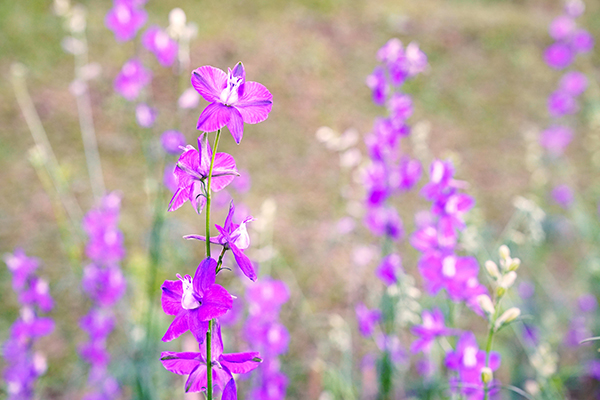
"If you look deeply into your palm you will see your parents and all generations of your ancestors. They are all alive at this moment. Each one of them is present in your body. You are the continuation of each of these people." Thich Nhat Hanh
The science of epigenetics increasingly proves that we carry the past within us. Transgenerational patterns are a very important factor influencing the "inner child". Homeopathic remedies enable us to break these patterns so that we can lead a healthier, happier and more fulfilled life. In a moment of insight a new life path can be set in motion. Our work effects a cross-generational healing that helps us understand and dissolve many of the commonly observed blockages that prevent a healthy life on a physical, emotional and mental level.
The following two cases showed me how we can recognise and dissolve these cross-generational patterns. The first case concerns a mother who suffered from depression and hypothyroidism and — very unusually in India — had extramarital affairs and several abortions. The second case is that of her autistic child, who tends towards self-stimulation. It turned out that both cases displayed a strikingly similar energetic signature.
Case 1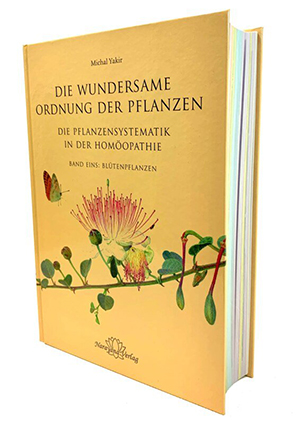
In November 2014 M. came in a state of depression, confusion and suicidal thoughts. She had filed for divorce. She has an eight-year-old child (case example 2 follows) and two lovers. She became pregnant and had had four abortions. For this reason she is tormented by great guilt and does not know what to do. She cannot decide whether to stay with her husband or with one of her two lovers. She feels trapped in this situation. She suffers from panic attacks, guilt feelings and anorexia. During these episodes she trembles and feels her blood sugar dropping; she then needs to take sugar. She feels that her husband never gave her the opportunity to develop. He always put his career first. She had to give up her job because he wanted to move far away for his work to a new city. She says that at the thought of having to care for her son alone and without her husband she collapsed. How can he be so selfish and demand that she give up her career and leave her completely without any support?
She says one gets an identity by taking things into one’s own hands because then one takes responsibility. I asked her what she seeks in her lovers.
M: "He should be a good husband. He should understand that his wife wants to develop. A wife should have her own independent identity. She should be able to devote herself to her work. If she does not work, it is very humiliating to have to ask for household money."
The sensitivity of plants
At this point it was clear that the patient needed a plant remedy. Although she speaks about identity (Row 3 of the periodic table), the most important thing is her sensitivity. She feels humiliated when she does not receive money. (She thus knows very clearly that she has her own identity.)
She works in the public service. The problem she faces there is that she must adhere to certain deadlines for her work and follow instructions. She experiences this as blackmail. She must conform to the directives of others.
She has dreams in which she speaks with her cousins. "My mother does not want me to speak with them. I am being blackmailed by my mother. She says she will not stay with me if I speak with them."
In daily life too she feels blackmailed by her husband: "You are welcome to go to your friend, but then you must leave the child with me forever."
M: "How can I leave my son? But if I take him with me, how will I cope on my own?"
Her feeling of being blackmailed appears in more than one area and becomes a general symptom. I asked her to tell me more about the blackmail.
M: "I don't like being forced into someone else's decision because then I'm not able to make decisions."
I asked her about her childhood. She replied that her parents' marriage was not harmonious. Her mother was not allowed to leave the house. Her father often beat her mother. The domestic violence terrorised her. She withdrew because she was always afraid that her parents might separate. Would she then have to remain alone? She felt helpless.
She always felt sorry for her mother. Her mother was completely unfeeling and had no connection to the outside world. Now she has a guilty conscience because she cannot do enough for her mother. She tries to make her mother happy by taking her to spiritual lectures every day, but actually harbours a deep aversion to her. She feels always controlled by her mother. She says to her: "Don't tell me to turn right when I feel I should turn left."
She is addicted to alcohol and cigarettes. She is obsessed with her appearance and often goes to the beauty salon. She loves to dance; she feels like a bird. Then she feels she exists and can do something: "Women can do things. They are free to travel and go out of the house."
The favourite film
She has a favourite film in which a young woman is left by her fiancé on her wedding day because she is uneducated and lacks self-confidence. The young woman then decides to go alone on her honeymoon to Paris — after all, the holiday had already been booked. On her trip she meets people and gains self-confidence. She finds many friends who love her for who she is. My patient says that although being left is not pleasant, life is not over if it happens. The male ego should be questioned: "One should not dump someone and then pin all the blame on them."
She cannot watch the TV channel Animal Planet because she finds the violence unbearable, for example when the tiger eats the deer.
After her marriage she had typhoid with jaundice. Her main complaint, however, was a urinary tract infection. She says the infection was so severe that she thought she would die. She experienced intense urgency, burning and chills. During the fever she was so angry with her in-laws that she threw objects. She disliked the restrictions that a newly married bride faces in the Indian family system.
She dreams of getting stuck in a muddy lake and being unable to get out. She has dreams in which she is running and trying to get somewhere. Or she sees a large car; someone drives away from her. Often she feels helpless in her dreams, similar to how she experiences life.
During the case-taking I repeatedly notice that she has difficulty expressing herself.
Analysis
Here we see a weak, fragile personality, confused and unable to decide. Her sensitive reaction to any form of control manifests in all areas of her life.
For this case I studied Mahesh Gandhi's notes on plants, which are based on the findings of Michal Yakir. This method helps us capture the patient's "inner age". In Yakir's table the columns are assigned to the botanical subclasses. The subclasses, in turn, reflect the evolutionary stages of plants, ranging from primitive to more highly developed plants.
The corresponding evolutionary process in humans is seen in the development from an initial state of original oneness and non-existent separation to differentiation, individuation and separation.
Becoming human
In this process one must first pass through the female and then the male principle before finally producing a separate, mature, individuated "I". On the transformative journey, symbolically represented by the columns, the human spirit strives to gain consciousness, uniqueness and self-being so that it can return to the source — this time as a conscious and developed soul, as an awakened witness of the wonder of creation. Within each subclass there are many botanical orders and each order can include several plant families.
The second axis (the rows) — is formed by the botanical orders. The theme of the orders — arranged in the order of evolution — reveals another aspect of human development: the "developmental stages from birth to old age", in reference to the teachings of Erik Erikson and Rolf Moss. The nine rows corresponding to phases of human maturation are as follows: prenatal; beginning of life; infancy; early childhood; school age; adolescence/puberty; young adulthood; late adulthood and old age.
Together the columns and rows form a comprehensive table of plant remedies on which psychological maturation and the stages of human development can be mapped. In each phase of human development there are certain characteristics and possible disturbances or fixations that manifest as characteristic themes.
In M.'s case the sought remedy belonged to subclass 1.
At the beginning there exists a feeling of oneness, a state of unity and wholeness. Here we stand at the beginning of the journey into individuality. The ego, which brings a feeling of separation, is not yet truly formed but still wants to develop. When separation begins, the ego is only just emerging. The remedies in this subclass correspond to the experience of not being anchored in the here-and-now, in this reality. They are in a way not yet "here".
Problems that occur at this stage include experiences of chaos, confusion, disorder and the question of one's own existence — the question of whether one exists or not. The person feels weak, dependent, easily impressed, easily influenced and dominated by the outside world, but is unable to react.
The plant family Ranunculaceae spans rows 4, 5 and 6, which correspond to early childhood, school age and adolescence.
Disturbed self-perception
Here we see problems of identity integration or confusion. In addition, people have problems with body and self-perception. This can express itself in the form of stubbornness and a sensation of being "prevented". These people often have a weak sense of duty and refuse to accept social roles.
Regarding the positioning of Ranunculaceae on the axes of the table we can assume that many questions regarding control arise: the sensation of being controlled or the rigid attempt to control everything oneself; or a lack of control over one's sexual energy. Ranunculaceae are easily irritated, sensitive and anxious. People who resonate with these remedies are in search of a healed world and security. Professionally they are naive. They can be confused and lose their way in life. They tend towards addictive behaviour, tire quickly and become stuck during times of transition.
It is always advisable to combine a modern approach with a "tried and tested" conventional method. In this way a synergy arises into which traditional homeopathic tools — Materia Medica, repertory and provings — can also flow.
In the present case confusion is the anchor. It is like a column — secure, definite and a rock-solid symptom that provides us with firm support.
The first rubric I selected was:
Mind; Confusion, mental; Identity, in relation to one's; Loss of personality: anh, carc, falco-p, halo, herin, irid, lsd, nelu, psil-s, staph, thuj
The other rubric that represents the core of the case reads:
Mind; Suppression of natural inclinations and desires; must write with right hand: staph
That exactly defines the conflict with her mother: She says to her mother: "Don't tell me to go right when I want to go left."
Other rubrics are:
Mind; Desire, craving for; full of desire; rejects what is offered, but; throws things away: cham, KREOS, SEC, staph
That is also shown in her behaviour towards her lovers. She withdraws as soon as one of them proposes.
Mind; Abuse, complaints from; gives up relationship, does not do it: bar-c, staph
Mind; Alcoholism; withdrawal, to support; for the; sweet alcoholic drinks, for: mag-c staph
Mind; Anger; throat constriction, with: staph
Mind; Sees blood or knife, cannot; sees wounds; cannot: NUX-V, staph
Mind; Sorrow, grief; lovesickness, from: AUR, ign, nat-m, ph-ac, staph
Mind; Fear; suicidal tendency, with: arg-n, AUR, bell, buni-o, carc, caust, chin, clem, DROS, HEP, MERC, nat-s, NUX-V, plat, PULS, RHUS-T, staph, thuj
Mind; Anorexia nervosa: staph
Mind; Anger; throws objects: STAPH
Prescription: Staphisagria 1M
Follow ups
For more information please click here.
- December 2014: The trembling has subsided. She has no craving to smoke or drink alcohol.
She is anxious and confused and has negative thoughts about everyone, which she calls thoughts of the devil. She wants to run away and flee to another world, which would be a kind of shock therapy for all those trying to control her.
Prescription: Staphisagria 10M, single dose
- January 2015: The trembling has diminished and the thoughts are somewhat more stable.
She still has the feeling of not existing. She cannot make decisions in her favour because she does not want to hurt anyone.
Prescription: Staphisagria 10M, single dose
- March 2015: Her thyroid values are normal. She can now make decisions without having to fear that someone will be hurt. For the first time she has the feeling of existing.
Plan: Sac lac (placebo)
- June 2015: She has acute gastrointestinal complaints, together with a renewed craving for alcohol and cigarettes. The trigger was a conflict at work.
Prescription: Staphisagria 10M, single dose
- July 2015: Her stomach complaints have subsided. Her craving for alcohol has lessened, but she still wants to smoke.
Plan: Sac lac
- August 2015: M. is now a self-confident woman. At the office she is taken seriously. She can express her opinion better. She has gained self-confidence. She says she has put her relationship problems aside for the time being. She wants to do something that will earn her respect.
Plan: Sac lac
- October 2015: She complains of fever and sore throat. The trigger was a conversation with her husband in which she expressed her desire for a divorce.
Prescription: Staphisagria 10M, single dose
- November 2015: The patient says she has stepped out of the shadows of the past. She feels she has control over her life and is no longer a puppet. She has transformed into a self-confident woman leading a fulfilled life. She has a good relationship and is employed. She is more creative and can deliver her presentations with clear expression.
Key terms: Kidney cancer; vulnerability; fearlessness; hardness; numbing reaction to pain; need to protect the family
Source: http://www.interhomeopathy.org/healing-transgenerational-patterns-two-cases-of-staphysagria
|