
What is St John's wort?
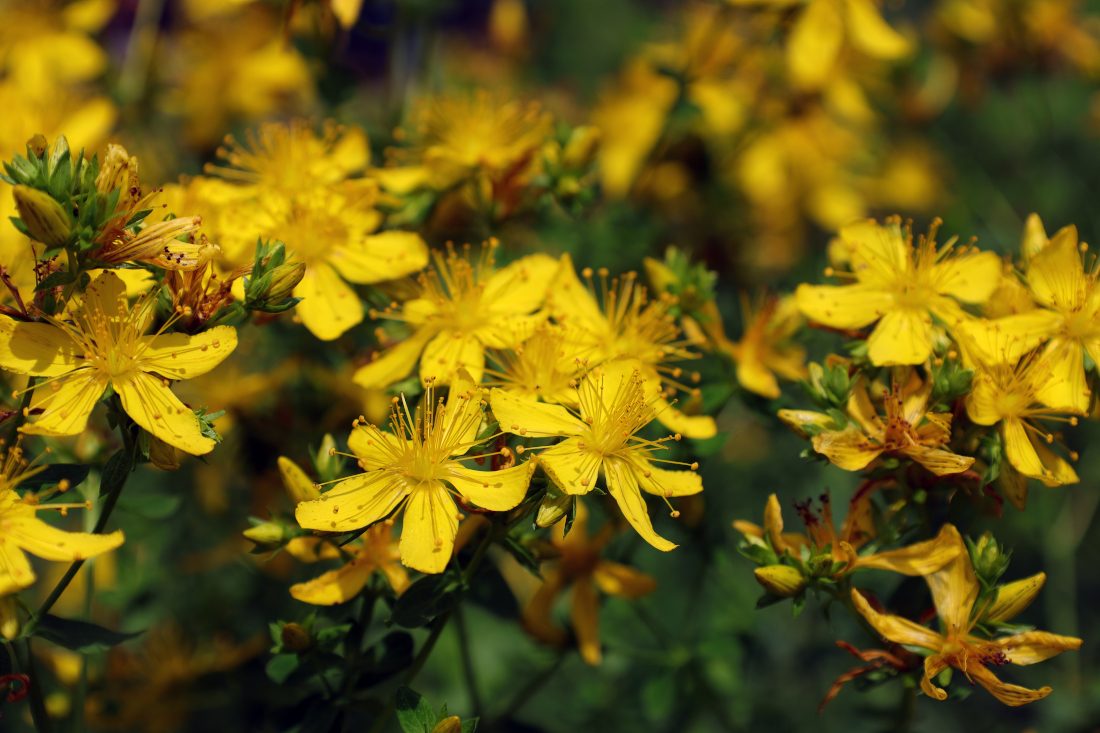
St John's wort is used as a medicinal plant.
St John's wort – botanically: Hypericum perforatum – is an important traditional medicinal plant. There are many species of St John's wort, all belonging to the family Hypericaceae. Here we write about the medicinally active common St John's wort and its properties.
For centuries St John's wort preparations have been valued in many cultures for their diverse health benefits. The genus is native to Europe, Asia and North America. Use of St John's wort extracts in traditional medicine has been documented since antiquity. Even in the Middle Ages St John's wort preparations were known for their beneficial effects on health. It is one of the most thoroughly researched medicinal plants of our time. Hippocrates already used the plant for its anti-inflammatory properties.
Common St John's wort shows excellent effects in several areas of application. Moreover, no serious side effects are known. Possible side effects can usually be avoided by correct use.
This natural mood enhancer is an effective remedy for mild to moderate depression. But the plant is also valued for its anti-inflammatory and wound-healing properties. It is especially used externally in the form of St John's wort oil.
Common St John's wort – a plant portrait
Common St John's wort, also called perforate St John's wort, grows to about 60 cm and produces so-called pseudo-racemes. The plant stands out through its bright golden-yellow flowers, which contain small oil glands that release a reddish dye when touched. The buds and, to a lesser extent, the leaves also release a red dye when rubbed.
The leaves are elliptic-ovate, opposite and about 2–4 cm in size. They also contain oil glands, which can be seen as dark dots on close inspection. The stem is two-angled and not hairy.
Common St John's wort, also called Hypericum perforatum, grows in dry habitats, on roadsides, on poor grasslands or in woodland clearings. St John's wort can also be cultivated in the garden.
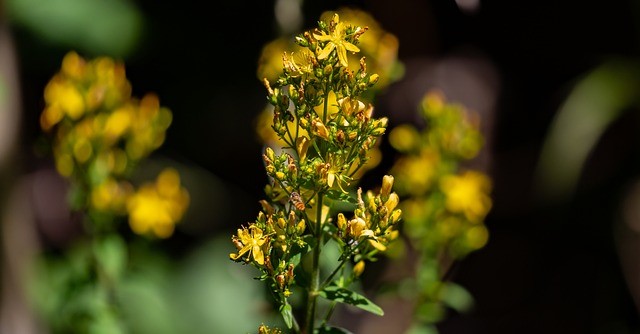
St John's wort is particularly noticeable for its yellow flowers.
St John's wort belongs to the traditional medicinal plants
Common St John's wort is popularly known by names such as Heart-of-Jesus herb, Lord's blood or St John's blood. It is a typical midsummer herb and is traditionally harvested around the midsummer solstice, i.e. on St John's Day, 24 June.
It grows during summer and can rightly be described as a sun herb. The famous pastor Sebastian Kneipp already knew this when he wrote: „St John's wort has stored summer, sun and light in its flowers. So if we prepare a tea from it, we take a little of that in and it dispels the mental darkness.“
St John's wort has been used medicinally since antiquity. It also has a firm place in traditional festivals and rituals. For example, St John's wort must not be missing at solstice bonfires, used as bedding herb or in traditional herb bunches as a protective and sun plant. It is ascribed protective effects, strengthening for the spirit, power and illumination as well as counter-magic. Alongside many other medicinal plants it is considered a potent incense herb.
The constituents of St John's wort
Like every medicinal plant, common St John's wort (Hypericum perforatum) contains a variety of bioactive constituents that give it its special effects. The most important are listed here:
- Hypericin and pseudohypericin are regarded as significant active compounds of this species. They are also known as naphthodianthrones. They are responsible for the red dye and are found mainly in the flowers and buds of common St John's wort.
- Hyperforin is considered another main active compound. It plays a role in the reuptake of neurotransmitters such as serotonin, noradrenaline and dopamine in the brain. It also shows antibacterial properties. [1]
- Flavonoids as secondary plant compounds, especially quercetin, rutin, hyperoside and others. Flavonoids occur in many plants and are characterised by their antioxidant properties.
- The biflavonoid biapigenin.
- Furthermore, proanthocyanidins from the flavonoid family. They are also attributed antioxidant properties.
These compounds work synergistically to produce the various pharmacological effects of St John's wort. The exact composition of St John's wort varies depending on location, harvest time and processing.
St John's wort - calming for the psyche
St John's wort (Hypericum perforatum) has traditionally been valued for its calming and mood-uplifting properties. The plant's effect on the psyche is very complex. It is due to its bioactive compounds, particularly hypericin and hyperforin. Hypericum perforatum has rightly made a name for itself as an alternative, natural antidepressant for the treatment of mild to moderate depression. Unlike synthetic drugs, few side effects are known for St John's wort.
Regulation of neurotransmitters
Hypericin and hyperforin, the main active compounds of the plant, are able to influence the concentration of neurotransmitters in the brain. [2] This happens by inhibiting the reuptake of these substances at the synaptic cleft. Messengers or neurotransmitters such as serotonin, dopamine and noradrenaline play a very important role in communication between nerve cells. In this way they decisively influence our mood and emotions. Studies have shown that St John's wort can affect the uptake of neurotransmitters such as serotonin, noradrenaline and dopamine. [3] This can lead to improved mood regulation, which explains its potential effect in depression. Antidepressants also work by inhibiting the reuptake of certain messengers.
Mood enhancement for mild to moderate depression
When we talk about mood, serotonin comes into focus. This hormone is also called the "happiness hormone", since serotonin levels influence our mood. [4] Increasing the availability of serotonin can help to stabilise mood swings and relieve depressive moods. As already described, serotonin levels can be positively influenced by St John's wort preparations. [5]
People suffering from temporary mood swings or mild to moderate depression could particularly benefit from this mood-enhancing effect. [6]
One advantage in the treatment of depression could be the possibility of avoiding psychotropic drugs, which are associated with significant side effects. Please discuss this with your treating physician.

St John's wort can positively influence serotonin levels.
Stress reduction and relaxation
As already described, St John's wort preparations dampen the release of stress hormones. In this way they influence the balance of neurotransmitters in the brain. [7] Taking St John's wort can help reduce stress and promote relaxation. Tension and nervousness decrease and it can be possible to reach a state of inner calm.
Sleep quality and regulation
Stress has a strong influence on our well-being. Prolonged stress phases often lead to sleep disorders, depression and other illnesses. People suffering from sleep disturbances could benefit from the calming properties of St John's wort, as it can help to promote sleep. St John's wort is particularly suitable for nervous sleep disturbances, as depression and sleep disorders often occur together.
Further benefits for mental and emotional well-being
Besides its direct calming effect, Hypericum perforatum could also indirectly contribute to a balanced psyche by improving overall well-being. People who feel better physically and mentally are often more resilient to stressors and negative emotional states.
The effect of Hypericum perforatum can vary from person to person. Some people will notice tangible improvements in their mood and emotional state, while others may experience less pronounced effects. It is advisable to combine St John's wort preparations with a healthy lifestyle, exercise and a balanced diet to enhance positive effects. Outdoor activity and physical exercise have been shown to have beneficial effects in depression. [8]
Products containing St John's wort can interact with certain medicines. Therefore it is crucial to consult a doctor before taking them to avoid unwanted side effects.
Use of St John's wort for wound healing and pain relief
St John's wort preparations are known for their wound-healing and pain-relieving properties. Here the oil is particularly important, but ointments and creams are also used. The healing effect is explained by the bioactive compounds, especially hypericin, hyperforin and the flavonoids. The following describes in detail the effects of St John's wort on wound healing and pain relief.
Wound-healing promoting properties
Common St John's wort is often applied topically in the form of oil or ointments to wounds and other skin injuries. [9] It is characterised by anti-inflammatory and antiseptic properties. Applied in this way, the plant could help cleanse wounds and prevent infections. This can in turn promote wound healing. [10]
Anti-inflammatory effect
Hypericin and hyperforin exert anti-inflammatory effects. They help to prevent or reduce wound infections. The release of pro-inflammatory molecules is inhibited, which can reduce swelling and redness.
Support for skin regeneration
Hyperforin is said to promote the regeneration of skin cells. This supports the formation of new tissue layers around a wound. As a result, the skin heals more quickly. [11]
Scar formation and skin repair
The red oil may also have a positive effect on scar formation. It promotes the formation of new collagen, a structural protein in the skin. Thus the substance could help make scars less conspicuous and the skin more supple.
Local pain relief
Applying the oil to sore areas or injured skin can contribute to local pain relief. The anti-inflammatory properties can help reduce pain caused by inflammation. [12]
The blood-red oil has long been used traditionally as an effective and soothing remedy for sunburn, muscle and nerve pain such as lumbago, trigeminal neuralgia or neck tension.
Nervous gastrointestinal complaints
The calming effect of St John's wort can also benefit the gastrointestinal tract. A calming effect always supports and promotes metabolism. Today it is known that the gut is surrounded by an intense network of nerves that can benefit from the calming effect.
Flavonoids help with gastrointestinal complaints through their anti-inflammatory action. Tannins support the gut and the intestinal mucosa positively.
St John's wort in different formulations
St John's wort is often offered as a dietary supplement in various forms such as capsules, tablets, tinctures and teas.
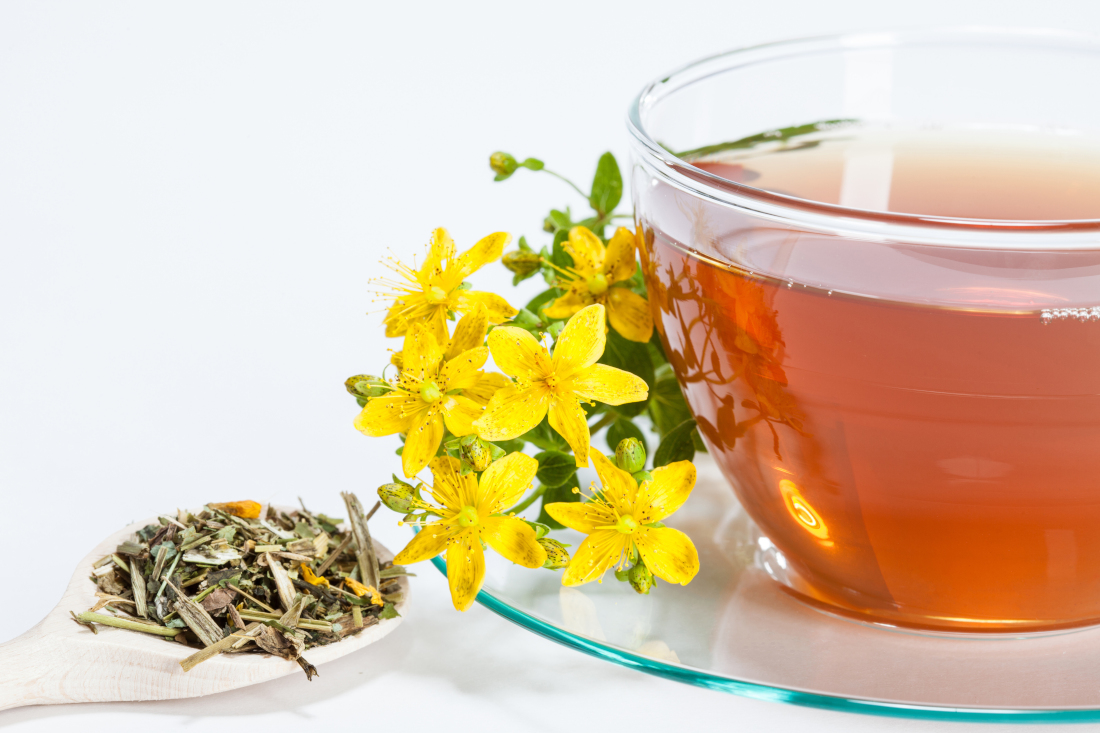
St John's wort can be brewed and drunk as a tea.
Capsules or tablets
Because of its positive effects on mood it is used particularly for temporary mood swings and mild to moderate depressive states. The plant extract is mainly administered as a capsule or tablet.
As an alternative to tablets or capsules, a St John's wort tincture can also be taken.
Dried St John's wort is also available as a tea. The flowering herb – leaves, flowers and buds – is processed for this purpose.
Dosage should be determined according to the issue and discussed with a doctor or therapist. Studies for depression report recommendations of 600–900 mg daily. For severe depression doses of up to 1800 mg are also used. [13]
Red oil
St John's wort oil, also known as red oil, is a proven remedy for topical use. It is used for wound healing and as a pain oil. The oil gets its characteristic blood-red colour from the plant's active constituents. The red dye serves as an identifying feature of the medicinal plant. Rubbing the fresh plant stains the fingers red. Red oil is used directly or processed into ointments and creams.
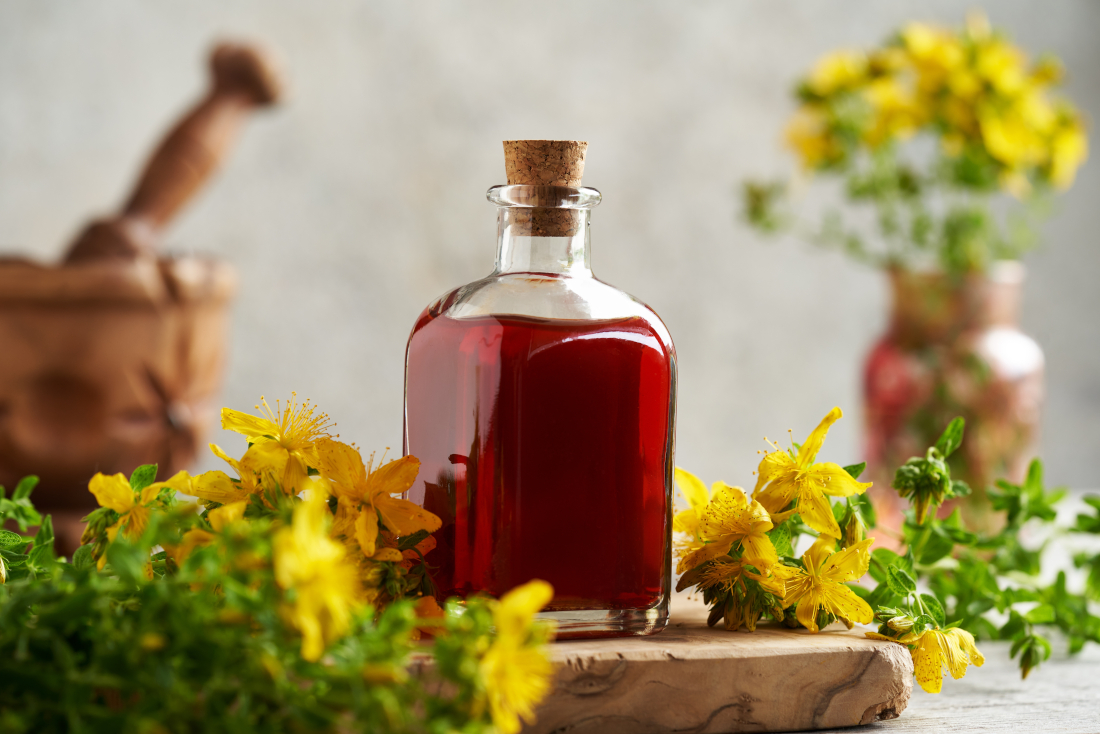
The red oil gets its characteristic blood-red colour from the plant's active constituents.
What side effects can St John's wort have?
When using St John's wort preparations, increased photosensitivity of the skin (sensitivity to sunlight) is generally warned about. However, studies have shown that at the common dosage of 900 mg for depression there is no danger. Nevertheless, one should be particularly cautious with sunbathing. [14]
If red oil is applied directly to the skin, direct sunlight should be avoided on treated areas. For deep or severe wounds it is generally advisable to seek medical advice.
Taking extracts of the plant can sometimes lead to gastrointestinal complaints. These include nausea, stomach upset, diarrhoea or constipation.
Some people report tiredness, while others have difficulty falling asleep.
Symptoms such as headache and dizziness may occur, especially at the start of treatment.
Some people may be allergic to St John's wort. This can lead to skin rash, itching or breathing difficulties.
Dry mouth and associated discomfort have also been reported.
Interactions with other medicines
St John's wort can affect the action of other medicines. In particular, if you are taking prescription medicines such as antidepressants, anticoagulants and certain cancer drugs, you should consult a doctor. It can also interact with medicines that act on liver enzymes.
Serotonin syndrome
Caution is especially advised when St John's wort is taken at the same time as other medicines that affect serotonin levels in the brain. There is a risk of serotonin syndrome, a potentially serious reaction of the nervous system. Please discuss this with your treating physician.
Combination with conventional treatments
St John's wort should not be considered a substitute for conventional medical treatments for severe injuries or deep wounds. However, it can play a complementary role in supporting the body's natural healing processes.
Overall, many traditional uses and some studies point to the potential wound-healing and pain-relieving properties of St John's wort.
Nevertheless, it is important to consult a doctor or medical professional before using St John's wort products. This applies especially for severe injuries or when used in combination with other medicines. A doctor can properly assess individual risks.
Photos: Shutterstock: Nat YS, Maryna Pleshkun, Madeleine Steinbach; Pixabay: LisaLiza, TheOtherKev

