
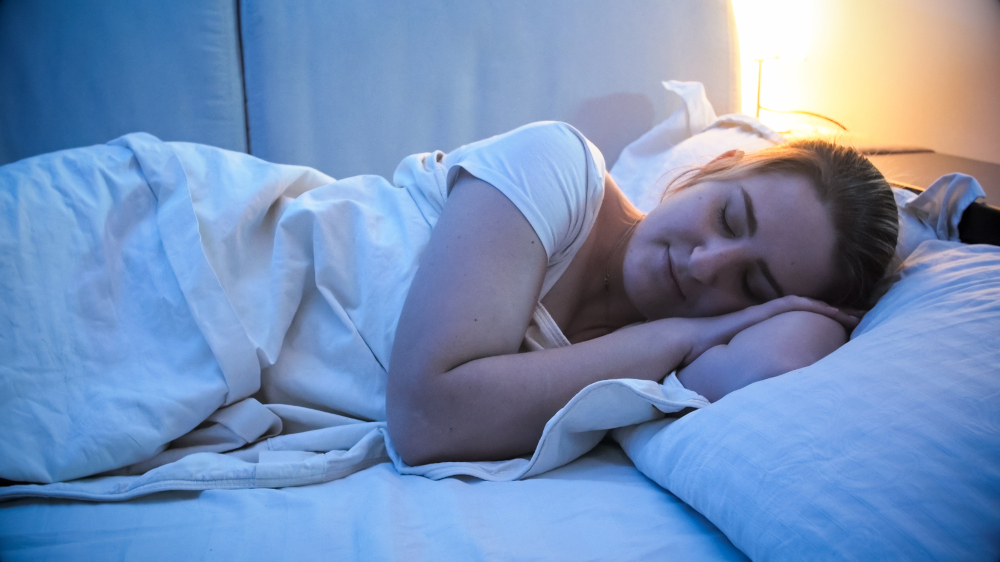
Sleep makes you happy and beautiful, strengthens the immune system, raises intelligence and helps prevent a range of chronic diseases. There are many facts and quite a few myths about sleep. But one thing is certain: sleeping well is healthy. If restorative night-time rest is disturbed, you do not always have to turn immediately to synthetic drugs. We present tried-and-tested natural remedies that help with falling and staying asleep.
Valerian for calming
The native valerian root (Valeriana officinalis) has traditionally been used to treat sleep disorders. It can improve sleep quality and shorten so-called sleep latency, i.e. the time it takes to fall asleep. Valerian can produce very good results, especially for sleep disorders during the menopause [1]. The medicinal plant is often combined with hops, lemon balm or passionflower. Valerian has an unusual aroma and is therefore commonly taken as a tincture, dragees or capsules. Its constituents include lignans and the eponymous valepotriates.
GABA (gamma-aminobutyric acid) for sleep and anxiety
GABA is a naturally occurring amino acid and, as a neurotransmitter in the brain, has a calming and anxiolytic effect. It dampens nerve signals that become overexcited due to stress and negative stimuli. In people with sleep disorders, GABA levels are on average around 30% lower [2]. Supplementation can be useful for nervous tension and stress. Incidentally, many recreational substances such as caffeine and alcohol disrupt signalling at GABA receptors.
Not just good in beer: hop cones
The climbing plant has long been prized for its sleep-promoting and calming properties. The female flowers (cones) of hops (Humulus lupulus) are processed into dragees, alcoholic extracts or tea. They contain essential oils, bitter substances, flavonoids and tannins. Studies have shown that hops act similarly to melatonin [3]. To support falling asleep and staying asleep, hops are a good partner for valerian and lemon balm. The three traditional remedies act synergistically, i.e. they complement each other in their effects [4]. Dried hops are also often sewn into herb pillows with other aromatic herbs such as chamomile, lavender and lemon balm and placed under the pillow for a healthy sleep.
Magnesium: relaxation on all levels
The mineral magnesium is important for muscle relaxation and the regulation of the nervous system. It is involved in the formation of neuronal membranes and is a component of neuronal biochemistry. A deficiency can lead to muscle cramps and predispose to the development of depressive disorders [5]. Depression is often accompanied by difficulties falling and staying asleep. It is worth keeping your magnesium level in the optimal range. The reference range in serum is 0.7 – 1.0 mmol/L. The mineral not only counteracts nocturnal calf cramps but also promotes restful sleep.
Melatonin: the sleep hormone
Melatonin is considered the sleep hormone par excellence. It is produced by the body itself to regulate the sleep–wake cycle. Stress, lack of daylight and irregular sleep times can disturb melatonin balance. As a dietary supplement it can be helpful for sleep problems, particularly for jet lag or shift work. Although the use of melatonin is controversially discussed, a meta-analysis has shown that melatonin shortens time to fall asleep in primary sleep disorders and helps people with delayed sleep phases [6].
Lemon balm: good for the nervous stomach
For sleep disturbances due to nervous digestive problems, lemon balm (Melissa officinalis) can be a good choice. It has antispasmodic and anxiolytic effects, complemented by sleep-promoting and antiviral properties. Because of its pleasantly delicate aroma, the medicinal plant is often drunk as a tea. Interestingly, there is evidence that, among numerous other health benefits, lemon balm can help with nocturnal teeth grinding (bruxism) [7]. This property can be well explained by the antispasmodic action of its constituents. The extraction of pure lemon balm essential oil is very labour-intensive. Between four and eight tonnes of raw material are required for one litre of essential oil!
Passionflower relieves inner tension
Several studies have confirmed the use of the medicinal plant passionflower (Passiflora incarnata) for nervous difficulties falling asleep. The plant's active constituents, including essential oils and flavonoids, have a calming effect on inner restlessness, irritability and nervousness. The function of passionflower as a GABA reuptake inhibitor has now been confirmed, so it acts similarly to conventional sedatives and sleep aids. With regular use, sleep quality and daytime wellbeing are significantly improved. Although its effect is comparable to conventional tranquillisers, passionflower does not impair psychomotor function and has no potential for dependence [8].
In conclusion…
A balanced lifestyle is also crucial for a healthy sleep pattern. Regular exercise, a healthy diet, strong social connections and stress management all play a major part. There are many good and holistic approaches worth exploring. And of course: a harmonious sleep environment, minimal screen use in the bedroom and avoiding too many stimulants, especially in the evening, help ensure sweet dreams.

