|

For those of you who belong to my generation, caring for ageing parents is an important concern. If you have been following me for a while, you probably know that both my parents have already passed away. I cared for both of them. My mother even lived with my husband and me in her final years.
I have already written about caring for older people in my blog post Rollentausch.
Homeopathy at the end of life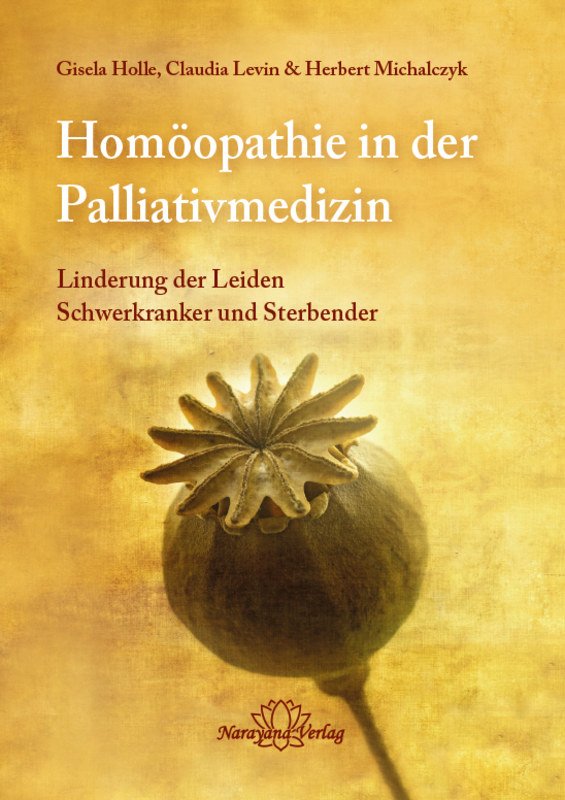
However, there is one topic a student recently drew to my attention and one I have not yet addressed:
"I would like to learn more about end-of-life care. We accompanied three of our parents as they died; I sat at their bedsides. Back then I knew nothing about homeopathy, but now, as a homeopathy student learning and studying a lot, I would like to know which remedies one should have on hand… Something that makes the transition easier and calms minds and hearts."
Palliative care at the end of life is a broad field, and we want to focus on my student's central question: How can homeopathy bring inner calm and peace in this situation?
Anxiety, nervousness and inner restlessness from a homeopathic perspective
First I want to state that the emotional turmoil experienced by the dying may at first appear unique. From a homeopathic perspective, however, this state does not differ from the fear of someone who, for example, has been shocked by witnessing a disaster; or from the inner restlessness of a child who cannot sleep at night; or from the anxiety of a pet when its owner is away.
Nervousness, restlessness and anxiety are in principle treated as such – regardless of the trigger that caused them.
Many people assume that their personal situation differs significantly from others', simply because the reasons for their worries and troubles are very individual. In my time as a lecturer in homeopathy I have found this to be a widespread misinterpretation among homeopathy students. Perhaps it is because they don't hear many people talk about it (whatever "about it" may mean). This isolation leads to the assumption that one's own condition is unusual and requires an even more specific homeopathic remedy than the ones normally used in such situations.
Symptoms as signposts to the appropriate remedy
But I can assure you that you can trust the symptoms. Symptoms are, after all, symptoms. Whatever the symptoms are – we work with those symptoms, independently of the cause that produces them.
There can be many causes for nervousness, restlessness and anxiety, from personal life circumstances to chronic physical complaints. The accompanying symptoms do not only occur at the end of life. In this situation they do, however, carry a greater urgency, and it is important to provide the person with inner calm as the inevitable transition approaches.
Aconitum 200 and Arsenicum 200 are generally two important remedies to consider. If the panic is very great, one of these remedies can be given every fifteen minutes for an hour. Afterwards you should try to reduce the frequency of dosing and give the remedy only as needed every few hours.
An example: If nervousness, restlessness or anxiety reappear three hours after the last dose, we know the remedy should be given every three hours. But we must always try to gradually increase the intervals between doses. Perhaps the next wave of emotion does not come until five hours later. Then a five-hour interval would be appropriate for dosing.
Gentle and attentive care
In any case: we always stop the remedy as soon as the condition has clearly improved. I have found that one or two doses are enough to solve the problem! This is one of the greatest qualities of homeopathy. It encourages us, through attentive observation, to always know exactly what is happening to the people closest to us.
This is far from the rules of conventional medicine, where a handful of pills are taken at set intervals without even thinking about it! I always prefer attentive homeopathy to impersonal conventional medicine!
The desire to ease a loved one's transition at the end of life is a natural and human instinct. With its very considerate and gentle manner, homeopathy helps us to give the person inner calm and to create a protected, peaceful environment in this emotionally moving and yet so valuable time.
Next week I will write about a homeopathic remedy for caregiving relatives. Please stay tuned and pass it on – homeopathy helps!
Warmly,
Yours
.png)
Source: https://joettecalabrese.com/blog/palliative-care/

|