
Figure 1: Damp-cold weather can worsen the severe pain of polymyalgia rheumatica.
I want to write today about polymyalgia rheumatica, an autoimmune condition that "can affect all the ligaments, tendons and fascia that connect soft tissues, muscles, bones and organs. Injuries, trauma, overuse, tension, certain medications and illnesses can cause such myalgia."1 That is how the renowned Johns Hopkins University in the USA describes it.
Speaking of Johns Hopkins University, here’s a fun fact for you: The famous line "Those who take medicine must recover twice, once from the disease and once from the medicine" comes from Dr William Osler — one of the university’s founding fathers.
This statement was almost revolutionary for a conventional physician who was highly respected in his time as a diagnostic specialist. Dr Osler went even further and said, "No man has done more good for the medical profession than Samuel Hahnemann."
Had I been born in the late 19th century, Dr Osler and I would surely have got on well!
But back to myalgia.
Polymyalgia rheumatica
There are different types of myalgia. Today we are talking about polymyalgia rheumatica, a condition that causes pain and stiffness in large muscle groups such as the shoulders, neck, hips, thighs and back.
Damp-cold weather can markedly worsen this form of myalgia – the kind of weather often found at more northerly latitudes. (I suspect this is one reason why so many migratory birds come to warmer climes in winter).
The symptoms are usually worse in the morning but may improve during the day with movement. (To all readers of my blog posts: Which homoeopathic remedy does this symptom remind you of? If you don’t know, just keep reading. The answer can be found further below.)
You may never have heard of polymyalgia rheumatica. The symptoms of polymyalgia can be very similar to those of the better-known fibromyalgia. Clinically, however, they differ significantly. For example, fibromyalgia patients experience pain throughout the body, not just in large muscle groups.
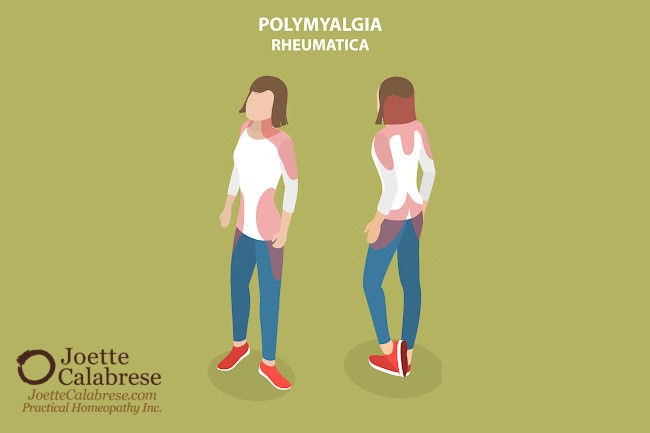
Figure 2: The large joints such as the shoulders and hips are preferentially affected.
Pain out of nowhere!
The pains of polymyalgia rheumatica can appear completely unexpectedly in the joints, tendons, bones and muscles. Suddenly and unexpectedly!
I want to tell you about an example from my practice. One of my clients (let’s call her Nancy) was well until one day she was invited to a party. At that party there was plenty of junk food which Nancy simply could not resist. She ate many unhealthy things and a lot of them!
The next morning – practically overnight – Nancy awoke with the symptoms of rheumatoid arthritis that lasted for almost a year. She was convinced that the evening of junk-food gluttony had finished her off, especially since she had previously suffered from food intolerances. Interestingly, her earlier symptoms had been associated with swelling of the lips, tongue and throat – not with muscle pain.
I’m not saying that we risk a flare-up every time we overindulge at a Christmas party, a birthday party or an Easter picnic. Of course that isn’t the case. But for Nancy it was a very personal turning point.
Look closely
In homoeopathy we do not always need to know the aetiology – that is, the cause – of a condition. Sometimes, however, it can be important to know what triggered the illness. For example, if someone says: "Since that car accident I am not the same." Or in Nancy’s case: "I never felt well again after that meal."
The reason for the present complaints is not the first priority. I always encourage my students not to get unnecessarily lost in details when trying to find a cause for their complaints. If you know what it is – the exact moment the symptoms first began – fine. If you don’t know, that’s fine too!
Often I hear my clients and students say: "It must be Lyme disease," or "It must be heavy metals," or "I probably have parasites." No. We do not select our homoeopathic remedies by relying on possibilities or guesses. Only after we have logically considered everything and still come up with no conclusion may we try to approach the matter via probabilities or assumptions. But until then: "Just the facts and nothing else."
We need the name of the condition (from a conventional diagnosis) and/or the symptoms that actually occur. Everything else often only leads to the wrong medicine being chosen.
I cannot tell you how often someone says to me: "I tried homoeopathy once and it didn’t work. I followed the protocol for eczema but it didn’t help at all." Then it turns out that they did not have eczema but psoriasis. Or:
"The arthritis protocol didn’t work for me! Homoeopathy doesn’t work." Then it may turn out that they didn’t have arthritis at all but polymyalgia rheumatica.
Do you see what I mean? Many people blame homoeopathy even though their assumptions were wrong. This happens very often.
Homoeopathy works!
So let’s talk specifically about how we would proceed homoeopathically with a diagnosis of polymyalgia rheumatica.
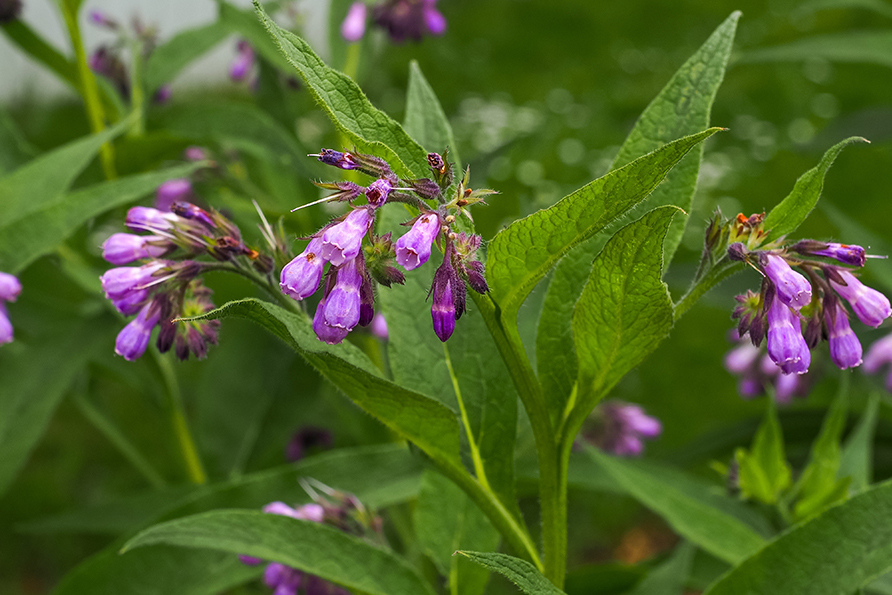
Figure 3: Comfrey (Symphytum officinale) is a traditional herbal remedy for muscle and bone pain. It also works in homoeopathic dilution.
For muscle, tendon and bone pain due to polymyalgia rheumatica, homoeopaths have long recommended Symphytum officinale C200, taken together with Calcarea phosphorica D3. (If it is not available in a D3 potency, Calc phos C3 or even Calc phos 6 will do. More information on dosing and potency can be found here https://www.narayana-verlag.de/spektrum-homoeopathie/d-oder-c-potenz-das-ist-hier-die-frage.). This combination is usually taken twice daily until a noticeable improvement occurs.
Because movement during the day can lead to an improvement in pain (homoeopathic symptom: better by movement), Rhus toxicodendron C200 is usually included in the treatment plan.
Hypericum perforatum C200 can be used as an emergency remedy. That is to say: if the pain is acute and crippling, you may need a few doses of this reliable homoeopathic remedy to steer the body in the right direction.
Choose the remedy that suits you
Homoeopathy is very individual. If your diagnosis is not polymyalgia rheumatica but arthritis, then read here about Wonderful Symphytum or homoeopathy for back pain and co.
Homoeopathy helps – spread the word!
Yours sincerely,
Yours
.png)
Book recommendations
First Aid with Homoeopathy - Manuel Mateu i Ratera
Source: https://joettecalabrese.com/blog/pain-practical-homeopathy-polymyalgia/
Figure 1: Joette Calabrese; Figure 2: Joette Calabrese; Figure 3: LifeCollectionPhotography/shutterstock.com
20 March 2025

