

Figure 1: Melatonin is regarded as a natural alternative to sleeping pills. The hormone can help shorten the time it takes to fall asleep and reduce the subjective feeling of jet lag.
In Germany alone, around 43 percent of people regularly struggle with sleep problems. [1] Those who do not sleep well or do not sleep through the night in the long term feel less rested and are less able to perform the next day. The so‑called sleep hormone melatonin can help shorten the time it takes to fall asleep and improve sleep. In this blog article you will learn, among other things, how this fascinating hormone controls the day‑night rhythm and what you should consider if you take melatonin as a food supplement.
What is melatonin?
When we get tired in the evening, melatonin is largely responsible. This endogenous hormone is a metabolic intermediate. It is mainly produced in the pineal gland (epiphysis) in the midbrain from serotonin. Small amounts of melatonin are also produced in the gastrointestinal tract, in the retina of the eye and in the skin. The bodily processes set in motion by melatonin make us feel sleepy and help us fall asleep more quickly.
However, there are numerous aspects of our daily lives that can throw the natural biorhythm out of balance. Stress and watching television in the evening are among them, as are late meals, shift work or long‑haul travel. In addition, the body’s own production of melatonin decreases with age. By the end of puberty, melatonin production has on average already decreased by around 20 percent.
How much melatonin is produced can also be influenced by factors such as light, stress or physical exertion. Because it gets dark earlier in winter, the body releases melatonin for a longer period at that time of year than in summer. For this reason many people experience typical winter tiredness.
How melatonin affects the day‑night rhythm
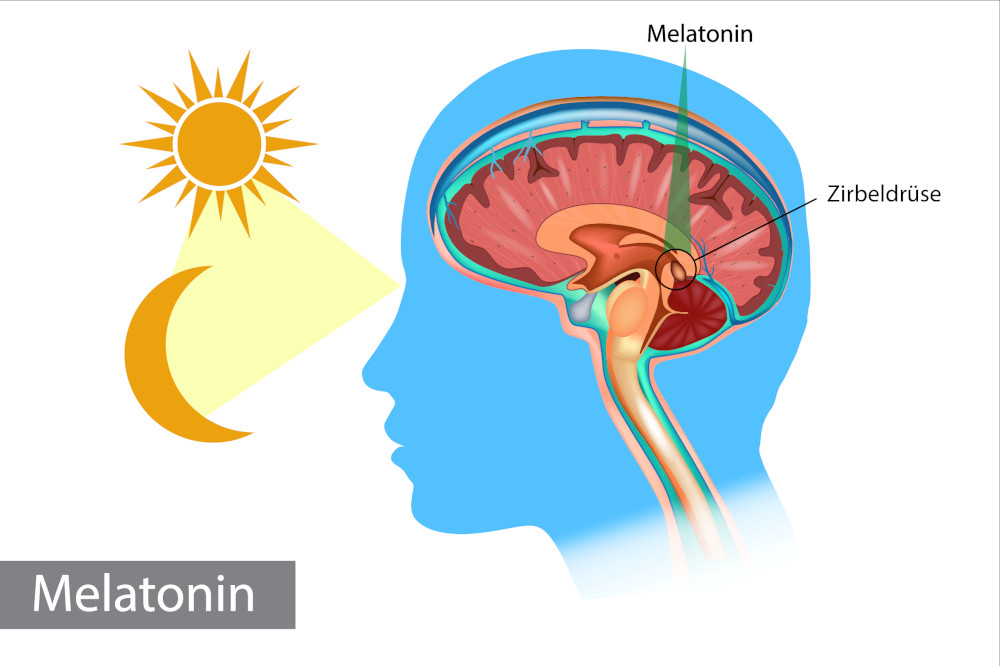
Figure 2: Melatonin is produced in small amounts in the gastrointestinal tract, in the retina of the eye and in the skin, but above all it is produced by the pineal gland.
The day‑night rhythm, also called the circadian rhythm, is one of the most fascinating mechanisms of the human body. Colloquially, people often speak of the “internal clock” that wakes us in the morning and signals in the evening that it is time to go to sleep. Our biological clock functions like a pacemaker, influencing which kinds of activity we carry out at which times. The hormones involved send activating or deactivating signals to the organs responsible for certain tasks.
When it gets dark in the evening, the amount of light entering the eyes is reduced. The pineal gland then begins to release more melatonin, and we become increasingly sleepy. Melatonin slows down the metabolism and reduces energy consumption as well as blood pressure and body temperature. The melatonin level reaches its peak between two and four o’clock in the morning. Afterwards the pineal gland scales back secretion until it is completely stopped between 8 and 9 am. [2]
Cortisol, the antagonist of melatonin, then takes over. This hormone, produced in the adrenal glands, ensures that we become active in the morning and start the day full of energy. During the day the hormone serotonin, which is also very important for the day‑night rhythm, is produced. The so‑called “happiness hormone” is activating and has a considerable influence on our mood.
The remarkable effects of melatonin

Figure 3: Melatonin not only supports restorative sleep. As a powerful antioxidant, the hormone can also help protect cells from free radicals.
As already described, melatonin supports and stimulates the natural sleep‑wake rhythm. In the evening the hormone increases sleep pressure and helps shorten the time it takes to fall asleep. The sleep‑promoting effect is by no means the only effect melatonin can have on the organism. Below we present some additional areas of action.
Antioxidant effect
As an antioxidant, melatonin helps to neutralise free radicals and combat oxidative stress in the body. [3] This can prevent or reduce cell damage. The antioxidant effect of melatonin is even up to fifty times higher than that of vitamin C. In the USA, in particular, the hormone is therefore also used as an anti‑ageing agent intended to slow the ageing process. Some scientists also consider it possible that melatonin may support cancer prevention by preventing the development of cancer cells.
Effects on other hormones
When melatonin secretion is increased, the production of thyroid hormones is simultaneously inhibited. As a result, the metabolism slows down and energy consumption and body temperature fall. The production of leptin, a hormone that suppresses appetite, is also reduced by melatonin. On the other hand, melatonin can also stimulate hormone production: for example, it promotes increased production of somatropin during deep sleep phases. The growth hormone is important, among other things, for cell renewal.
Protection of nerve cells in the brain
Melatonin is able to cross the blood‑brain barrier. [4] This means that not only the melatonin produced in the brain but also that obtained from the diet is present in the brain. Melatonin can protect nerve cells in the brain from damage. The neuroprotective effects can prevent inflammatory processes and the development of neurodegenerative diseases such as Alzheimer’s or Parkinson’s.
In which foods is melatonin found?
Most foods contain melatonin only in small amounts at most. For example, sour cherries are a good natural source of melatonin. However, there are a number of foods that contain nutrients which stimulate melatonin production. Tryptophan, vitamin B6 and magnesium are particularly relevant in this context. The amino acid tryptophan is first converted into serotonin and from this – together with the cofactors magnesium and vitamin B6 – melatonin is produced.
Foods rich in tryptophan, magnesium and/or vitamin B6 that can stimulate melatonin production include:
- Cheese
- Fish (e.g. tuna, mackerel, salmon)
- Meat
- Pulses (e.g. lentils, chickpeas)
- Potatoes
- Eggs
- Nuts (e.g. peanuts, almonds, cashews)
- Tofu
- Oats
- Bananas
- Mushrooms
- Quinoa
- Cocoa
The difference between melatonin products and sleeping pills

Figure 4: Unlike prescription sleeping pills, melatonin products are not addictive. They contain a maximum of 1 mg melatonin per daily dose.
The press often describes melatonin as a miracle cure for problems falling and staying asleep. It is therefore no surprise that people with sleep problems consider taking melatonin as an alternative to sleeping pills. However, it is important to distinguish between prescription medicines and food supplements. For many years there has been debate about which of the two categories melatonin products should be classified in.
If a product contains up to 1 mg melatonin per daily dose, it may be described and marketed as a food supplement. Most prescription medicines contain 2 mg melatonin. They are, however, prescribed exclusively to people aged 55 and over, because the positive effect of melatonin for this age group has been confirmed by clinical studies. Short‑term use is intended to counter sleep problems arising from the age‑related decline in melatonin production by the pineal gland.
A major advantage of melatonin products is that, unlike many prescription sleeping pills, they do not cause dependence. In addition, melatonin is rapidly eliminated from the body. Hangover‑like symptoms the day after taking some sleeping pills, which can occur as a side effect, do not occur with melatonin products.
Melatonin food supplements
Melatonin is available as a food supplement in many forms. Melatonin sprays, which are sprayed directly onto the oral mucosa before going to bed, are particularly popular. There are also capsules, drops and lozenges containing melatonin. In addition to people with sleep problems, many night and shift workers opt for melatonin supplementation. People who frequently travel across several time zones can also benefit from taking the sleep hormone, as melatonin can help alleviate the subjective feeling of jet lag.[5]
When selecting a melatonin product you should pay attention to the amount of melatonin per daily dose. The Einschlafspray Melatonin von Unimedica contains 1 mg melatonin per spray. If you use the spray shortly before going to bed, it can shorten the time it takes to fall asleep and promote a more restorative sleep.
If you prefer to take tablets, you should choose a product such as the Nachtruhe tablets from Unimedica. The product is, like the Nachtruhe spray from Unimedica, vegan as well as lactose‑ and gluten‑free. Our Nachtruhe spray contains, in addition to melatonin, vitamin B1 (thiamine) and vitamin B6 (pyridoxine). Both vitamins contribute to normal energy‑yielding metabolism, normal function of the nervous system and normal psychological function and can support healthy sleep.
Correct dosage and administration of melatonin
Melatonin products should be taken after the last meal and about 60 to 30 minutes before going to bed. Make sure that the timing of intake and bedtime remains as consistent as possible. If you use melatonin supplements to alleviate the symptoms of jet lag, you should take at least 0.5 mg melatonin on the first day of travel shortly before going to bed and on the first days after arrival at your destination.
Some people react sensitively to melatonin. It is therefore advisable to start with a low dose. If well tolerated and needed, the dose can be increased at a later time. As the long‑term effects of melatonin supplementation have not yet been sufficiently researched, the products should not be taken long term. People aged 55 and over who have been prescribed a medicine containing melatonin are recommended to use it for a short term of up to a maximum of 13 weeks.
Is melatonin suitable for children?
There is considerable debate in the specialist community about whether melatonin products can also be taken by children with sleep problems. To date there are no clinical studies proving that melatonin is unreservedly suitable for children.
In Germany melatonin is therefore only approved for children and adolescents who suffer from a sleep disorder in connection with an autism spectrum disorder or Smith‑Magenis syndrome. Even for these children and adolescents, melatonin should only be administered after medical consultation.
The administration of melatonin to children should only be considered once all other sleep‑promoting options such as a bath, being read to or singing before bedtime have been exhausted.
Possible side effects of melatonin
Melatonin is generally well tolerated when taken short term. Occasionally, however, side effects such as dizziness, headache, nausea or restlessness may occur. Often these symptoms are due to incorrect or unfavourable use of the products. Never take melatonin during the day; always take it before going to bed and adhere to the manufacturer’s dosage recommendations.
Because the effects of melatonin during pregnancy and breastfeeding have not yet been sufficiently researched, pregnant and breastfeeding women should avoid taking it as a precaution. People with a severe mental illness or an autoimmune disease should only supplement melatonin after medical consultation. Concomitant use of medications such as antidepressants may possibly lead to interactions.
Sources:
[1] Statista (2023): 43% of Germans have sleep problems. https://de.statista.com/infografik/29586/befragte-die-unter-schlafstoerungen-leiden/ (accessed: 13.06.2024).
[2] Arendt J, Aulinas A, Physiology of the Pineal Gland and Melatonin. Europe PMC. 17 Dec 2019. Physiology of the Pineal Gland and Melatonin - Abstract - Europe PMC (accessed: 17.06.2024).
[3] A. Purushothaman et al., Hydroxyl radical scavenging activity of melatonin and its related indolamines. Free Radical Research. 2020 May. Hydroxyl radical scavenging activity of melatonin and its related indolamines - PubMed (nih.gov) (accessed: 17.06.2024).
[4] Dun‑Xian Tan. Melatonin and Brain. Current Neuropharmacology. 2010 Sep. https://www.ncbi.nlm.nih.gov/pmc/articles/PMC3001209/ (accessed: 14.06.2024).
[5] Herxheimer A, Petrie KJ. Melatonin for the prevention and treatment of jet lag. Cochrane Database Syst Rev. 2002. https://pubmed.ncbi.nlm.nih.gov/12076414/ (accessed: 13.06.2024).
Photos: Gregoire Jeanneau, Susan Wilkinson, Getty Images
Figure 1: Gregoire Jeanneau/unsplash.com; Figure 3: Susan Wilkinson/unsplash.com

