What is homeopathy?Homeopathy is a method of healing based on natural laws. It holds that the substance that causes certain complaints is also the best medicine to cure those or similar complaints. |
||
|
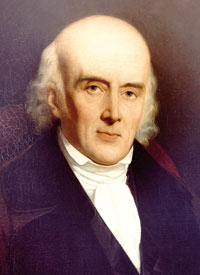
This law was already described in antiquity in India and in Europe by the Greek physician Hippocrates, and later again by the famous medieval physician Paracelsus. In 1790 this law was rediscovered by the German physician Samuel Hahnemann, who gave it the name homeopathy. He developed the method into the healing practice that is still used today. He wrote several works, the theoretical volumes Organon der Heilkunst and Die chronischen Krankheiten Bd.1 as well as several practical volumes, which were reissued together under the title Hahnemanns Arzneimittellehre by Narayana Verlag. |
|
How did homeopathy originate?Samuel Hahnemann in searchHomeopathy as an independent method of healing was founded by the German physician, pharmacist and chemist Dr Christian Friedrich Samuel Hahnemann (10 April 1755 – 2 July 1843). At that time physicians believed that diseases were caused by bodily forces or fluids that had to be expelled from the body. Common methods were bloodletting, cupping or administering blistering agents – even to children and elderly or very weakened people. Hahnemann recognised and protested against the excessive use of these measures, for which he was accused of heresy. At the same time he condemned the way medicines were prescribed, since up to 50 different ingredients were sometimes mixed for a single remedy. This also earned him the bitter enmity of the guild of apothecaries. When one of his daughters finally became seriously ill and he could not help her, he turned away from medicine in disappointment. He gave up his practice and limited himself to translating medical works. However, he did not lose sight of his life’s aim to find out “whether God had not perhaps established some law by which the diseases of humans could be cured.” Thanks to his excellent language skills (including Latin, Greek, English, French and Italian) he gained a broad overview of the medical and philosophical literature of his time. The cinchona bark experimentWhile translating the "Lectures on the Materia Medica" by the Scottish medical professor William Cullen in 1790, he found the note that cinchona bark, because of its astringent and bitter properties, could be used to treat marsh or intermittent fever (malaria). At that time malaria was widespread in Europe, and one of the few successful treatments was the administration of large doses of cinchona bark, which often produced serious side effects. Cullen's explanation did not convince Hahnemann, as he knew other similarly bitter and astringent substances; so he tried to research the mechanism of action of cinchona bark and to reduce the side effects. When he took a larger quantity of cinchona bark he developed symptoms typical of malaria. Therefore he added a footnote to his translation of Cullen's "Materia Medica" in which he describes his experiment: “The active principle of the cinchona bark, which had not previously been discovered, is not easy to find. As an experiment I took for several days twice daily each time four quentchen (note: 1 Quentchen = 1.67 g) of good China; my feet, fingertips etc. first became cold, I grew weak and drowsy, then the heart began to beat, my pulse became hard and rapid; an intolerable anxiety, a trembling (but without chills), a fatigue through all the limbs followed; then a throbbing in the head, redness of the cheeks, thirst, in short, all the symptoms usually present in intermittent fever appeared in succession, but without actual fever chills. This paroxysm lasted each time two to three hours and recurred when I repeated this dose, otherwise it did not. I stopped, and I was well.” The principle of similarsThis self-experiment prompted further tests, which Hahnemann carried out until 1796; he then published his paper "Essay on a new principle for discovering the curative powers of drugs, with some views on the previous" in the medical journal "Hufeland's Journal". In this work he described "treatment by similarity", the basis for the simile rule. He formulated his newly discovered natural law roughly as follows: “If among the symptoms produced by a medicine in a perfectly healthy body there are unmistakable signs of a certain disease, then that medicine is capable of curing that disease very quickly, thoroughly and permanently.” Typhus and cholera help homeopathy to its breakthroughUntil the winter of 1812/13 Hahnemann did not yet have sufficient evidence for the success of homeopathic treatments. At that time, during the retreat of Napoleon's armies after the lost Battle of Leipzig, typhus broke out among the soldiers. Hahnemann treated 180 sick soldiers with his method, of whom only two died. In 1831 a pupil of Hahnemann treated 154 cases homeopathically during a cholera epidemic in Hungary, and only 6 people died; that corresponds to 3.9%. In contrast, 54.7% of patients treated by conventional medicine died. These therapeutic successes of homeopathy on such a large scale could no longer be dismissed as mere coincidence. Until his death in 1843 at the age of 88, Hahnemann carried out experiments with around 100 substances. Today more than 3,000 homeopathic remedies are known. PotentisationOnce Hahnemann was convinced of the usefulness of the similarity rule, he strove for a gentler application. Initially he reduced the dosage of his medicines simply by diluting them, usually with the help of water and alcohol. But they eventually lost their effect. As a chemist he wanted to ensure that the components of his solutions were really well mixed. For this purpose he shook them by forceful blows on a soft surface. The results were incredible. Now the diluted remedies not only worked, but their healing effect even seemed stronger than that of the concentrated preparations. Hahnemann called his method of preparing medicines, in which dilution and shaking were performed simultaneously, potentisation. Hahnemann suspected that the effect of the potentised remedies was probably not a biochemical one – i.e. not based solely on the material body. He rather assumed that they acted on a more "energetic", immaterial level – which he called the "vital principle" or "vital force". Therefore Hahnemann also used the term dynamisation for the process of potentisation. Today, centesimal, decimal and LM potencies are most commonly used. You can read more about this in Unheilbar? Das faszinierende Heilpotenzial der Homöopathie by Amy Lansky.
Homeopathy today
|
||
|
||
|
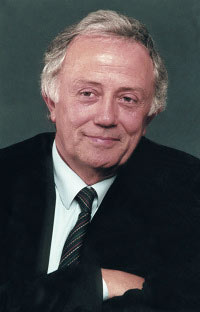
George Vithoulkas |
George Vithoulkas is the initiator of the new upswing of homeopathy. Like Kent in his materia medica lectures, he was able to bring many new and old remedies to the point so that they can be better imagined and thus more easily remembered. His students referred to them as essences and initially published them without authorisation. Whoever understands a large number of remedies in their core will achieve success more quickly in practice, because they have many points of comparison and can already recognise them during the case-taking. Of course this "essence" must not be mere speculation, and it should be as short and concise as possible. Most well-known contemporary homeopaths have emerged from George Vithoulkas's Greek school on the Ionian island of Alonnissos.
|
|
|
||
|
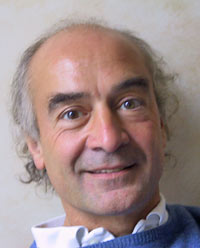
Jan Scholten |
The group analysis of minerals by Jan Scholten and the shortly thereafter brilliant idea of a homeopathic interpretation of the periodic table of the elements has since been confirmed so often worldwide that there is no serious doubt about its validity. His fundamental work Homöopathie und die Elemente shows the mineral remedies in natural order. The periodic table thus gives us a new possibility for the homeopathic application of the elements and their compounds. This work should not be missing in any modern homeopathic practice. Even untested remedies such as rubidium, technetium and scandium can be understood in their homeopathic core message by their position in the periodic table as interfaces of "series and stages", and on that basis they can also be prescribed successfully. |
|
|
||
|
The iron series |
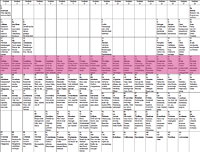
For example, there is an iron series, a silver series and a gold series. Each series represents a major life theme. The iron series, with elements such as calcium, manganese, cobalt or gallium, stands for the duties of everyday simple work in a workshop or company. The silver series with remedies such as ruthenium, palladium or cadmium represents the realm of problems related to creative activities in the public sphere, e.g. in advertising, among artists, scientists or idea brokers and generally among people who stand in the limelight and to whom publicity matters. The gold series contains, with elements such as hafnium, mercury or thallium, remedies and approaches that can help with problems of power and other difficulties of people in positions of responsibility. | |
|
||
|
Stage 3 |
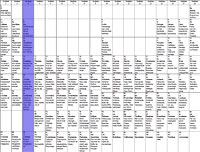
They describe 18 archetypal stages: the initial phase of the budding idea of the respective series with the following first uncertain tentative attempts (Stages 1–3), through a learning phase (Stages 4–9) to mastery (Stages 10–12) and the subsequent decline (Stages 13–17). These stages are nothing more than the groups of the periodic table in which elements with the same number of electrons in the outer shell have similar chemical bonding behaviour. | |
|
||
|
Rajan Sankaran |
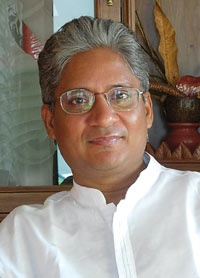
It is striking that his classification, extended to ten miasms, shows so many correspondences with Scholten's stages that one can rightly assume that both authors have here traced the same universal natural law. Sankaran approached this law in the form of disease pictures (mostly infectious diseases) and the miasmatic reactions to the respective pathogens. Scholten discovered it via the periodic table, which is a rather mathematical approach to the problem. Much is still in flux here, and one gets the feeling of being able to contribute to a great new discovery that is at least as groundbreaking for homeopathy as the discovery of the periodic table was for chemistry or the development of atomic theory for modern physics. |
|
|
||
|
|
||
|
|
||