
Homeopathy for people with spinal cord injury
Impressive contribution from the work
of Mohinder Singh Jus
Contribution from the journal Similia No. 93 - 1/2015.
The Swiss Paraplegic Centre (SPZ) Nottwil is expanding its services with an additional complementary medical offering: from 15 January 2015, a consultative service for homeopathic treatment will be established in Nottwil during a six-month pilot phase in close cooperation with the SHI Homeopathic Practice Zug.
Homeopaths from SHI will, during a pilot phase initially until June 2015, offer homeopathic treatments for patients with spinal cord injury in Nottwil. If this service attracts interest, the offering will be continued. "This represents an important expansion of our comprehensive range of treatments, especially for chronic health disorders; homeopathy is therefore an ideal complement to our therapeutic offerings," explains Prof. Dr. med. Jürgen Pannek, Head of Neuro-Urology at the SPZ.
Positive experiences show effectiveness
Very good experiences have already been made in the SPZ’s Neuro-Urology department in the treatment and prevention of urinary tract infections in patients with spinal cord injury. Those affected also report improved bowel function and reduced spasticity (muscle cramps). A prominent supporter of this approach is the former ski racer Silvano Beltrametti, who was injured in an accident; his urinary tract infection has steadily improved through homeopathic treatment by Dr Mohinder Singh Jus of the SHI Homeopathy School in Zug. "I believe in the effectiveness of homeopathy; it has restored my quality of life." In addition, homeopathic treatment can be used, for example, for urological diseases, for pressure sores (decubitus), for sexual dysfunctions, susceptibility to infections or for mood disturbances. Often it is precisely these problems that are harder for people with spinal cord injury to bear than the fact that they can no longer walk.
An additional benefit in rehabilitation
The service will initially be set up from January 2015 for all inpatients who wish to receive homeopathic treatment. If there are appointments available on the consultation days at short notice, outpatients may also benefit from the new offering. Costs during the pilot phase will be covered by the Dr B. K. Bose Foundation.
The homeopathy clinic takes place on Thursdays from 13:30 to 17:30 in the Centre for Pain Medicine: 15 January, 26 February, 12 March, 26 March, 16 April, 30 April, 7 May, 28 May and 18 June 2015.
Holistic and interdisciplinary
A holistic therapeutic approach is indispensable for optimal acute treatment, rehabilitation and lifelong medical care. Patients at the SPZ have a wide range of conventional medical as well as complementary medical options to choose from. Interdisciplinary cooperation between the various specialties is crucial during the rehabilitation of people with spinal cord injury, so that those affected can quickly regain independence and self-determination in their own lives. Homeopathy is used at the SPZ as a supportive measure alongside conventional medical offerings.
Prof. Dr. med. Jürgen Pannek, Head of Neuro-Urology, advocates a holistic therapy approach at the Swiss Paraplegic Centre Nottwil.

Dr Mohinder Singh Jus from the SHI Homeopathy School in Zug will be one of the consulting physicians at the Swiss Paraplegic Centre Nottwil.
Applications of homeopathy in neuro-urology
Jürgen Pannek, Susanne Pannek-Rademacher*, Martine Cachin Jus*, Mohinder Singh Jus*
Neuro-Urology, Swiss Paraplegic Centre, Nottwil, Switzerland, and SHI Homeopathy Practice*, Zug, Switzerland
Introduction
The lower urinary tract is subject to complex neural control. An intact innervation is a prerequisite for control of storage and emptying function. A spinal cord injury results in a partial or complete loss of central control of the urinary tract [Stöhrer]. Therefore, almost all people with a spinal cord injury (spinal cord injury: SCI) develop a neurogenic bladder dysfunction (nBFS). Depending on the severity of the dysfunction, nBFS is associated in the long term with objective risks (e.g. kidney damage due to obstruction of urine flow or reflux) and/or subjective risks (e.g. reduced quality of life due to incontinence or symptomatic urinary tract infections). In patients with suprasacral spinal cord injury, urological complications were long the most common cause of death. Only through understanding the pathophysiology and establishing appropriate diagnostics could efficient therapy be initiated and mortality substantially reduced [Stöhrer].
The most important risk factors for damage to the upper urinary tract are an elevated detrusor pressure during the storage phase (>40 cm H2O), reduced elasticity (detrusor compliance < 20 ml/cm H2O), vesicoureteral reflux and the presence of detrusor overactivity in combination with detrusor-sphincter dyssynergia (DSD) [Gerridsen].
Through bladder pressure measurement (urodynamics), the functional risk factors for the upper urinary tract can be quantified and the form of the bladder dysfunction determined [Nosseir].
The main therapeutic goal is protection of the upper urinary tract. The greatest danger of kidney damage lies in a persistently elevated intravesical pressure. Since the damaged nerves in the spinal cord cannot be restored to date, treatment of nBFS aims to reduce bladder pressure as much as possible. Available treatment options include drug therapy (antimuscarinics), minimally invasive procedures (Botox®) or surgical procedures (e.g. bladder augmentation with bowel segments, implantation of a bladder stimulator). By completely resting the bladder, intravesical pressures are kept sufficiently low to protect kidney function, but voluntary emptying is usually no longer possible; patients must learn to catheterise themselves (intermittent self-catheterisation; ISC) [Stöhrer].
Possible uses of homeopathy
Urinary tract infections
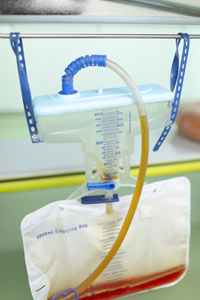 Urinary tract infections (UTIs) occur more frequently in people with nBFS. Possible causes include unbalanced storage and emptying of urine. The risk of infection is also increased by intermittent catheterisation for bladder emptying. When morphological causes have been excluded, drug prophylactic measures are used. Unfortunately, there is no evidence-based proof of efficacy for long-term antibiotic administration, acidification of urine or phytotherapy (e.g. nasturtium and horseradish, cranberry extracts); some therapies, however, have significant side effects [Pannek].
In a retrospective case series, the infection rate could be drastically reduced by an additive constitutional homeopathic therapy with single remedies in 8 patients with more than 3 symptomatic UTIs per year. All patients suffered from a neurogenic bladder dysfunction with at least 3 UTIs/year despite standard urological prophylaxis. Homeopathic remedies were chosen according to the principles of classical homeopathy, i.e. based on the totality of the individual patient’s symptoms a single remedy in a high potency (mostly LM1) was selected [Linde]. Although the treatment was constitutional, remedies with a tropism for the lower urinary tract and catheterisation, such as Staphysagria and Lycopodium, were used most frequently. For UTIs occurring under therapy, an intervention with, for example, Berberis, Benzoicum acidum or Oleum Terebinthinae drops often made antibiotic treatment unnecessary; in patients with a long history of antibiotic therapy, Nux vomica was often used successfully [Pannek Jus].
At a 15-month follow-up, the UTI rate fell from a mean of 7.2 UTIs/year to 1.3 UTIs/year. Five patients were infection-free, and three patients showed a reduction in UTI frequency.
Based on these positive experiences we have initiated a prospective, randomised, controlled study, the final results of which are still pending.
Case examples
Bladder emptying in a 24-year-old man with incomplete paraplegia below Th4 since 2008 was by ISC. For 2 years he had suffered recurrent UTIs (11/year) with E. coli and Klebsiella. He reported burning pain and increasing spasticity in the lower extremities, was exhausted despite good sleep, and had fears of dogs and operations. In 03/2011 he received Staphysagria LM3. In 06/2011 he suffered a recurrent UTI but reported more energy and old symptoms returning; therefore the remedy was not changed. In 10/2011 another UTI occurred; he also complained of nosebleeds, was exhausted, withdrew and was noticeably impatient. After Phosphorus LM1, no further UTIs to date.
OR
A 45-year-old man with incomplete tetraplegia below C7 since 1999 had suffered for 9 years from 12 UTIs/year, sometimes febrile, with varying pathogens. Bladder emptying was by ISC. He suffered from a fear of heights and could not cry, and was therefore initially given in 04/2011: Lycopodium clavatum LM1. Under this treatment there were fewer UTI recurrences, each of which was treated with Benzoicum acidum drops or Oleum Terebinthinae drops. In 03/2012 he developed prostatitis, which was treated with Lycopodium clavatum LM4; otherwise no further UTIs. In 01/2013 more UTIs occurred after psychological stress; after Staphysagria LM1 there has since been only 1 UTI.
OR
A 34-year-old man with complete paraplegia below Th6 since 2001, who emptied his bladder by ISC, reported 10 UTIs/year, each with E. coli, since 2003. He also had increased spasticity. In 04/2011 he received Staphysagria LM3. Only under stress and massive physical strain did he suffer a recurrent UTI in 04/2012; since then no further UTIs.
Perioperative complications
Before surgical procedures in patients with known bleeding tendency and anxiety about the intervention, we have had good experiences with Arnika montana C200, given directly pre- and postoperatively. In one patient who, after transurethral prostate surgery, developed recurrent dark venous bleeding despite all urological interventions, this was successfully treated with Hamamelis.
(Case 1:
In a 67-year-old patient with incomplete tetraparesis from multiple sclerosis and Parkinson’s disease since 1998, urinary drainage was via a suprapubic catheter. Due to recurrent pulmonary emboli the patient was permanently anticoagulated with a vitamin K antagonist. When the suprapubic catheter was changed a mucosal lesion occurred, leading to bleeding that could not be controlled conservatively and resulted in bladder tamponade. After medical normalisation of coagulation parameters, transurethral evacuation of the tamponade and coagulation were performed. This was only partly successful. After administration of Arnika C200 the bleeding ceased.
Case 2:
In a 40-year-old patient with complete tetraplegia below C5 for 11 years, a sphincterotomy was performed because of sphincter sclerosis with residual urine and autonomic dysregulation; due to marked postoperative bleeding on day 7 a re-coagulation was necessary. Three days later another dark venous postoperative bleed occurred. Under treatment with Hamamelis C200 the bleeding stopped; the patient was discharged 2 days later; no further postoperative bleeding occurred.)
In cases of postoperative prolonged paralytic ileus, rapid improvement was achieved with Opium.
In all treatments of acute urological problems it was important for us not only to consider the local symptoms but also the emotional symptoms. An impressive example of this is described in the following case report:
A 37-year-old patient with complete paraplegia below Th5 since 2004 developed a neurogenic bladder dysfunction with a small-capacity, low-compliance bladder and massive detrusor overactivity. After neither antimuscarinic therapy nor injection of onabotulinumtoxin into the detrusor had shown sufficient success, an ileal bladder augmentation was performed in November 2013. Due to a perforation of the augmentation caused by mucous-induced occlusion of the catheter, a revision with oversewing of the perforation was performed on postoperative day 11. After the two operations, with pre-existing massive neurogenic bowel dysfunction, a massive paralytic ileus developed. As there was no improvement after 2 days under intensive care therapy with intravenous medication (Neostigmin 2 mg/24 h, Dexpanthenol 2000 mg/24 h and Metoclopramide 50 mg/24 h), an accompanying homeopathic therapy was initiated. Based on the clinical symptoms (wound very sensitive to touch, generally sensitive to cold, nausea), the appearance (blond, slim, athletic, warm eyes), the general and mental symptoms (worried; reserved; uncertain; friendly, cooperative, mild but sometimes explosive; very impatient; without thirst, no sweating, restless, sleepless) and the local findings, the patient received Staphysagria. Already the next day there was a significant improvement in general condition; with otherwise unchanged therapy, bowel peristalsis gradually increased so that the nasogastric tube could be removed the following day and diet advancement begun. The patient is currently free of bowel complaints [Pannek2].
Special indications
In selected cases a homeopathic treatment can also help to avoid definitive surgical therapy.
Case report:
A 35-year-old man with complete tetraplegia below C6 since 2001 presented with fever and swelling of the left testicle. Self-medication with norfloxacin had produced no improvement, although the pathogens were sensitive to it.
Ultrasound examination showed a pronounced epididymal abscess. The patient declined the proposed surgical removal of testis and epididymis. As there was no improvement in the findings or laboratory inflammatory parameters after 3 days of antibiotic and supportive local therapy, a homeopathic treatment with Hamamelis virginiana C30, three times daily for 4 days 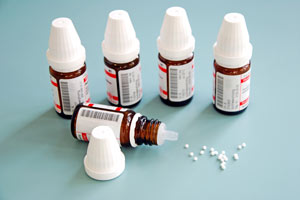 was initiated, followed by Hamamelis C200 twice daily for a further 5 days. Under this treatment the abscess gradually reduced and the inflammatory parameters normalised. The abscess drained subcutaneously and could be completely evacuated through a small skin incision. Thus an organ-preserving treatment was possible in a condition that would normally lead to immediate surgical removal of the organ.
Discussion
Treatment of neurogenic bladder dysfunction is extremely important for patients with spinal cord injury to protect kidney function, but also to preserve the best possible quality of life. Studies have shown that nBFS and its consequences can have a massive impact on patients’ quality of life [Akkoc]. Incontinence and urinary tract infections in particular have strongly negative effects on patients’ wellbeing. Unfortunately, the currently known treatment measures for urinary tract infections are only of limited effectiveness. Cooperation between homeopaths and urologists, based on our experiences described above, can provide a significant therapeutic benefit for patients with spinal cord injury and recurrent UTIs.
Many patients with spinal cord injuries suffer from complex health consequences of the injury. The increased risk of thrombosis often makes anticoagulation necessary, which in turn increases the bleeding risk during surgical procedures. Other perioperative complications are also more common in these patients (e.g. postoperative bowel paralysis due to neurogenic bowel dysfunction). Here too, our experiences with homeopathic treatment are encouraging.
Homeopathic therapy is carried out according to the principles of classical homeopathy [Hahnemann]. Remedy selection for acute medical problems takes into account not only the acute local symptoms but also the emotional symptoms.
Reports in the homeopathic literature on the treatment of patients with spinal cord injury are rare. Our initial experiences suggest that patients with spinal cord injury respond somewhat more cautiously to homeopathic remedies. Daily administration of LM potencies provided repetitive stimuli that seem to lead to better effectiveness and fewer initial reactions.
In summary, cooperation between homeopathy and neuro-urology can benefit patients not only with chronic disorders but also with acute postoperative problems effectively and with few side effects. Homeopathic therapy is also a promising treatment option for complex postoperative bowel dysfunctions that do not respond sufficiently to conventional treatment.
Correspondence address:
Professor Jürgen Pannek, Head of Neuro-Urology
Swiss Paraplegic Centre, Guido A. Zäch Strasse 1
CH-6207 Nottwil, Switzerland
Phone: +41-41-939-5924
Fax: +41-41-939-5923
Email: juergen.pannek@paraplegie.ch
Category: Cases
Keywords: Homeopathy – spinal cord injury – neurogenic bladder dysfunction – urinary tract infections
Source: Similia No. 93 - 1/2015
Photos: Swiss Paraplegic Foundation: Prof. Dr. med. Jürgen Pannek; SHI Homeopathy AG, Zug: Dr Mohinder Singh Jus, globules; Shutterstock: Close-up of male hand on wheel of wheelchair during walk in park_155587316 © Pressmaster; System for the collection and counting of urine_114519994 © sfam_photo
References
Akkoç Y, Ersöz M, Y?ld?z N, Erhan B, Alaca R, Gök H, Zinnuro?lu M, Özçete ZA, Tunç H, Kaya K, Alemdaro?lu E, Sar?gül M, Konukç? S, Gündüz B, Bardak AN, Özcan S, Demir Y, Güne? S, Uygunol K; Neurogenic Bladder Turkish Research Group: Effects of different bladder management methods on the quality of life in patients with traumatic spinal cord injury. Spinal Cord. 2013;51:226-231.
Gerridzen RG, Thijssen AM, Dehoux E: Risk factors for upper tract deterioration in chronic spinal cord injury patients. J. Urol. 1992;147:416-418
Hahnemann S: Organon of the Healing Art. 6th ed. Heidelberg: Haug; 1996.
Linde K, Clausius N, Ramirez G, Melchart D, Eitel F, Hedges LV, Jonas WB: Are the clinical effects of homeopathy placebo effects? A meta-analysis of placebo-controlled trials. Lancet 1997;350:834-843.
Nosseir M, Hinkel A, Pannek J: Clinical usefulness of urodynamic assessment for maintenance of bladder function in patients with spinal cord injury. Neurourol Urodyn. 2007;26:228-233.
Pannek J: Prophylaxis of urinary tract infections in people with spinal cord injury and bladder dysfunction - current clinical practice. Aktuelle Urol. 2012;43:55-8.
Pannek J, Pannek-Rademacher S, Jus MC, Jus MS: Usefulness of classical homeopathy for the prevention of urinary tract infections in patients with neurogenic bladder dysfunction: A case series. Indian J Res Homoeopathy 2014;8:31-6.
Pannek J, Pannek-Rademacher S, Cachin-Jus M: Organ-preserving treatment of an epididymal abscess in a patient with spinal cord injury. Spinal Cord. 2014;52 Suppl 1:S7-8.
Stöhrer M, Blok B, Castro-Diaz D, Chartier-Kastler E, Del Popolo G, Kramer G, Pannek J, Radziszewski P, Wyndaele JJ: EAU guidelines on neurogenic lower urinary tract dysfunction. Eur Urol 2009;56:81-88
Further information
The Swiss Paraplegic Centre (SPZ) was opened in 1990 by Dr med. Guido A. Zäch. The SPZ is a private, nationally recognised specialised clinic for initial care, acute treatment, holistic rehabilitation and lifelong care of people with spinal cord injury as well as people with syndromes similar to spinal cord injury. The SPZ has 140 beds including an intensive nursing unit. The annual bed occupancy rate is 99%. In 2013 the SPZ provided around 50,500 care days for 933 inpatients, 191 of them in initial rehabilitation. The SPZ employs around 1,100 staff from 80 professions. The specialised clinic belongs to the Swiss Paraplegic Group (SPG), which forms an integral network for holistic rehabilitation of people with spinal cord injury. The network is sponsored by the Swiss Paraplegic Foundation (SPS).
Information from:
Anita Steiner, Head of Media, Swiss Paraplegic Foundation, Nottwil
Phone 041 939 61 12, anita.steiner@paraplegie.ch, www.paraplegie.ch
The SHI Homeopathy School was founded in 1988 and is the only state-recognised homeopathy school in Switzerland offering the HF diploma. It is a renowned school that trains and further educates homeopaths: training in human homeopathy, animal homeopathy, further training for homeopaths and public lectures are part of the offer. The SHI Homeopathic Practice is a national and international centre of competence for classical homeopathy. It is led by Dr Mohinder Singh Jus, a globally recognised authority. He was born in 1947 in New Delhi, studied at Calcutta Homoeopathic Medical College and Hospital. He came to Switzerland in 1985, worked as a therapist and began teaching homeopathy according to B. K. Bose in 1988.
www.shi.ch
The Dr B. K. Bose Foundation was founded in 1993 by the internationally known homeopath Mohinder Singh Jus in honour of his teacher, the great homeopath Dr B. K. Bose. The foundation carefully applies its available funds to selected projects that all serve to promote and disseminate classical homeopathy. Various projects in research, training quality and public relations are supported. The Dr B. K. Bose Foundation initiates or supports clinical studies that document and scientifically evaluate the use of classical homeopathy in chronic diseases. Such research projects are realised in close cooperation with the SHI House of Homeopathy and Swiss clinics.
www.shi.ch/bkbose

