
Why Gotu Kola is a unique dietary supplement
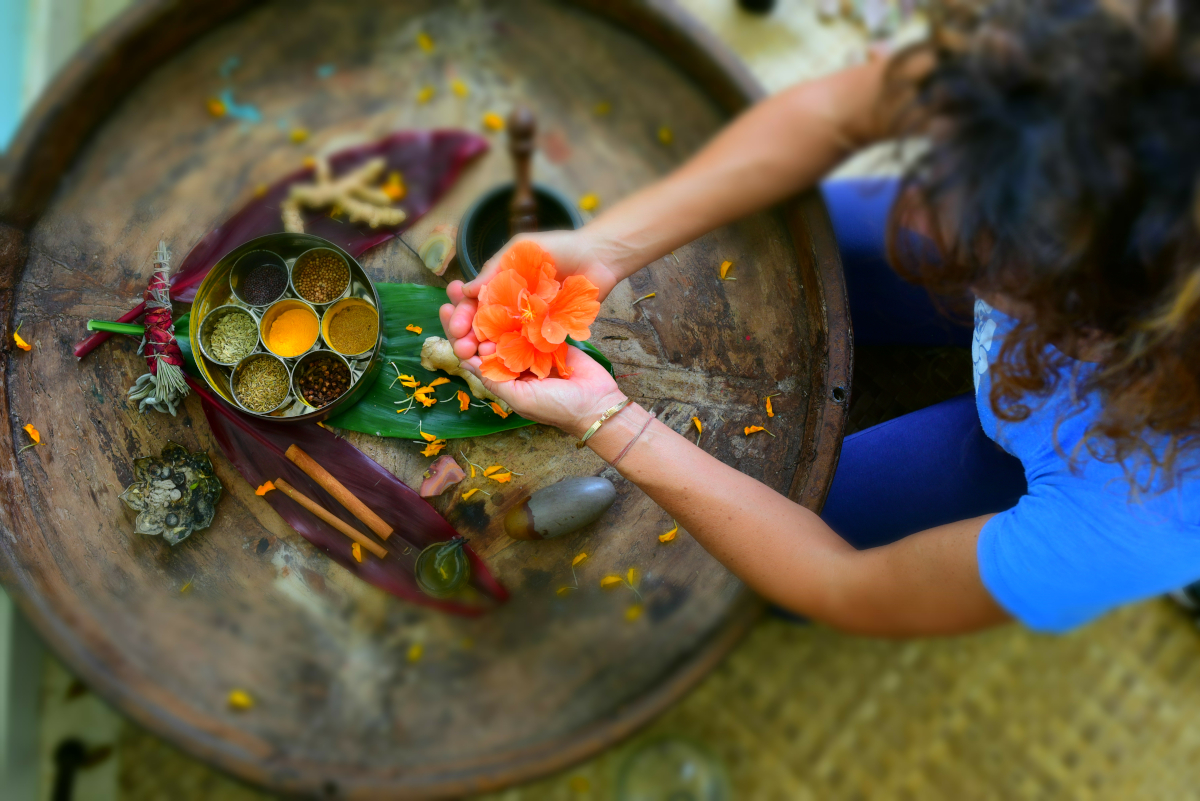
Gotu Kola is a popular plant in Ayurveda.
Gotu Kola - botanically: Centella asiatica - is a unique botanical dietary supplement with a variety of health benefits. It has been used for centuries to support physical and mental health. It is also used for skin health. Its long history goes back in particular to the healing system of Ayurveda and to Chinese medicine. In Ayurveda Centella asiatica is known as Mandukaparni. In Traditional Chinese Medicine (TCM) the name Jixuecao is used. In the German-speaking region Gotu Kola is also called Indian pennywort.
Gotu Kola belongs to the group of adaptogens, plants that make the body more resilient to stress. As a medicinal herb, Centella is also valued for its beneficial effects on the brain.
Other health-promoting features of this plant include its antioxidant effects, its anti-inflammatory properties, its positive influence on circulation and its strengthening effect on connective tissue. In addition, it is a useful remedy for skin health.
This makes Gotu Kola a natural option for important problem areas of our time. [1] The leaves or the whole herb are used.
Gotu Kola - the "wonder plant" for body and mind
Small and unassuming in appearance, the wonder plant grows abundantly in its natural environment. Gotu Kola contains valuable constituents that make it so useful for health care.
Origin and traditional use
The plant Gotu Kola is also known as Indian pennywort, Asiatic pennywort or tiger grass. It is native to the wet regions of South Asia and plays an important role in traditional Ayurvedic medicine. There the leaves have been used for centuries to promote health and well‑being.
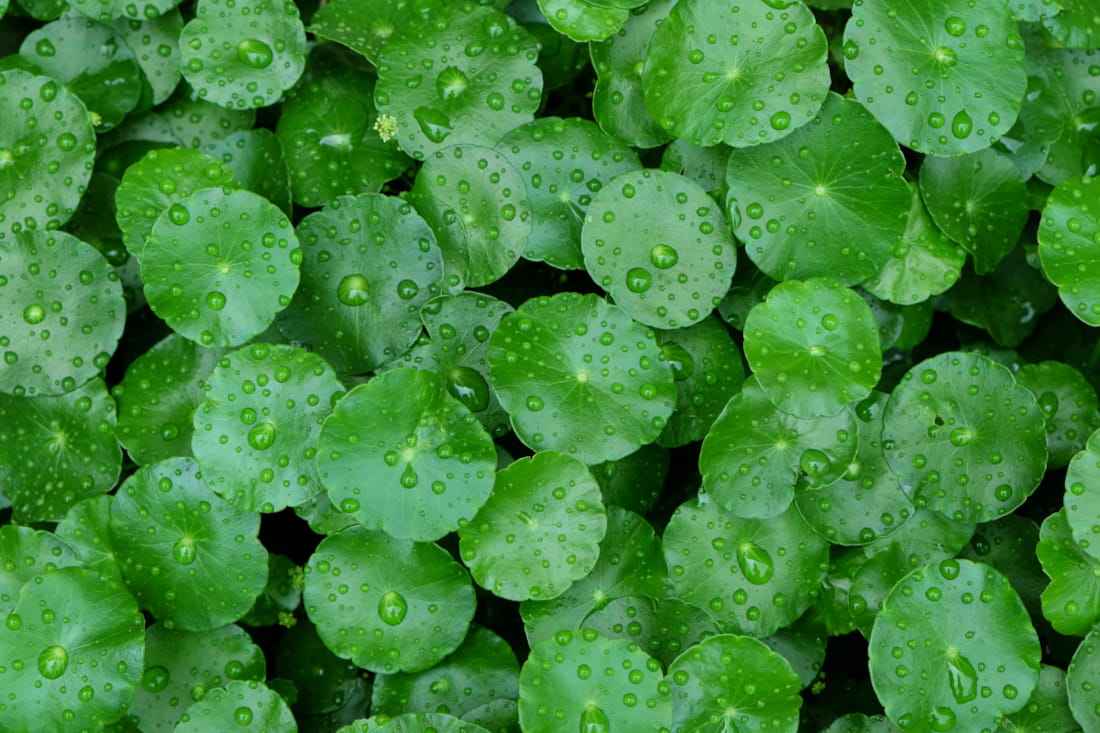
The leaves of Gotu Kola resemble small umbrellas.
Botany
Indian pennywort is a perennial herbaceous plant that spreads by creeping. It is sensitive to frost and requires a warm environment to thrive. In its natural habitat it is found mainly in very wet to marshy areas. Pennywort grows vigorously and can be regarded as a neophyte (invasive plant).
Originally Gotu Kola is found in the tropical and subtropical regions of East and South Asia. However, the plant is now present throughout much of the tropical world, especially in India, China, Indonesia, Sri Lanka, South Africa, Malaysia and parts of South America.
Appearance
With its round leaves and notched edges, pennywort at first glance resembles the ground ivy common here. The leaves have a diameter of 2–4 cm and feature a navel‑like indentation which gives the plant its name. They are stalked with long, thin petioles. The shape is somewhat reminiscent of small umbrellas.
Pennywort belongs to the Apiaceae (umbellifer) family, like our native culinary herbs dill, coriander and anise. The flowers are small and range in colour from white to reddish. They grow in umbels on long stalks above the leaves. With a diameter of 2–4 mm they are very small, inconspicuous and in their tropical home flower throughout the year.
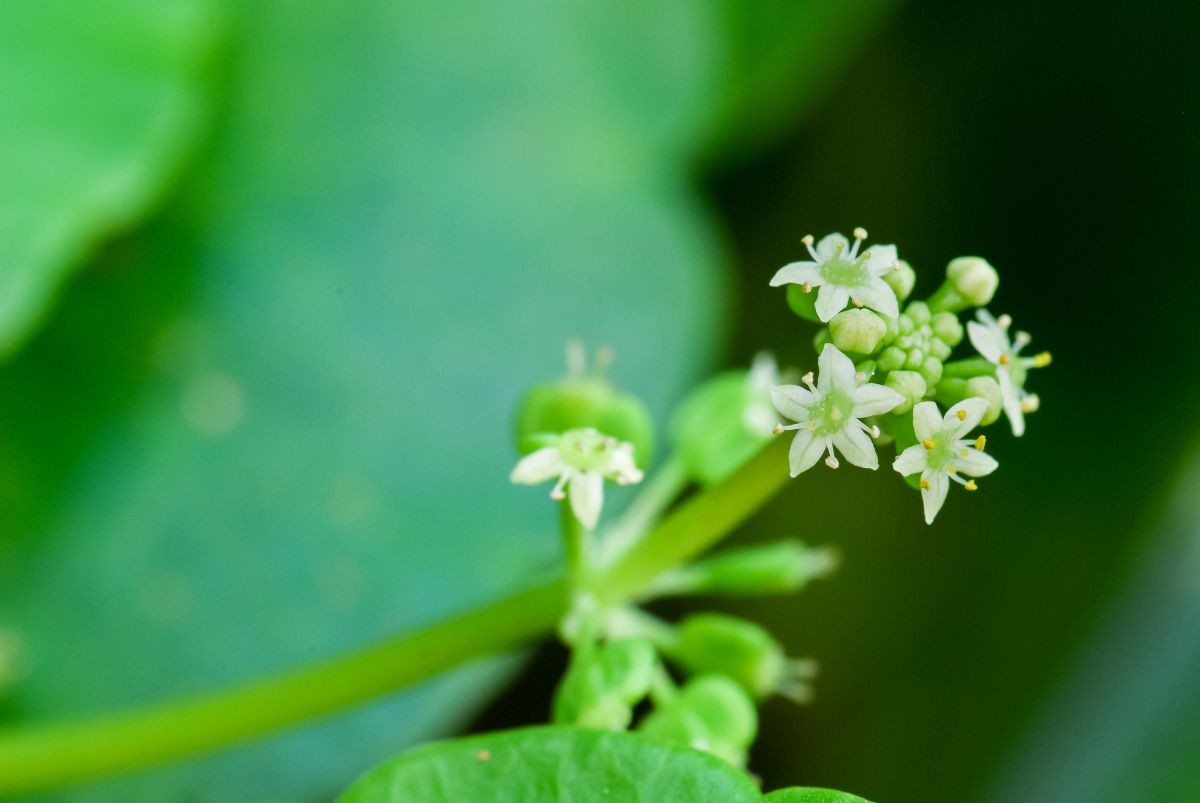
Pennywort usually has small, white flowers.
Typically pennywort grows to a height of up to 10 cm, but can occasionally reach up to 20 cm.
The plant has no true roots but rhizomes that usually run horizontally underground, although in Centella asiatica they can also grow vertically. The rhizome also serves as a storage organ for starch.
Constituents
The leaves of the plant contain various active compounds, so‑called secondary plant metabolites such as triterpenes, triterpenoid saponins (e.g. asiaticoside and madecassoside), flavonoids and phenolic acids, which are responsible for the medicinal benefits of the herb.
Triterpenes
Triterpenes are small biochemical building blocks found in certain plants and herbs. More than 4,000 compounds are known in the triterpene class. They are tiny molecules that perform specific functions in plants and medicinal herbs. These beneficial effects can also manifest in the human body.
The following effects are attributed to triterpenes [2]:
Anti‑inflammatory
Some of these compounds can reduce inflammation in the body. They help to reduce redness and swelling and to alleviate associated pain.
Antioxidant action
As antioxidants they act like tiny shields against so‑called "free radicals" — harmful molecules that can damage cells in the body.
Healthy skin
The triterpenes in Indian pennywort are beneficial for skin health. Their positive effects are particularly evident in the treatment of acne. Due to its wound‑healing properties, pennywort is often incorporated into skincare products.
Good for the immune system
Triterpenes support the immune system by helping the body defend itself against invaders such as bacteria and viruses.
Anti‑ageing and increased vitality
Many triterpenes — including those from Centella asiatica — slow the ageing process. The positive effect is attributed to the antioxidant and neuroprotective properties of the constituents. [3]
Asiaticoside — the notable triterpenoid glycoside
One of the most important constituents of Centella asiatica is asiaticoside, which stands for many of the plant's health benefits.
The leaves of pennywort contain particularly high amounts of asiaticoside, although the content can vary greatly between plants. The triterpenoid glycoside is known for its anti‑inflammatory, blood pressure‑lowering, immune‑stimulating, antibiotic and antioxidant effects, as well as for its skin‑care qualities. It is one of the main active principles responsible for the traditional use of Gotu Kola in Ayurveda and Traditional Chinese Medicine.
Asiaticoside for skin health
Asiaticoside has positive effects on skin health. It can promote collagen production, support skin elasticity and improve the stability of connective tissue. It has wound‑healing properties and reduces scar formation. [4] In addition, it generally strengthens skin structure and helps to keep the skin supple. For this reason the leaves of Centella asiatica are used in many skincare products.
Support for cognitive functions
There is some evidence that asiaticoside may also offer benefits for cognitive performance. In particular it has been observed that it can promote mental clarity and concentration. This would make it an interesting dietary supplement for people wishing to enhance their cognitive abilities. [5]
Flavonoids
Flavonoids are a large group of compounds that plants use to protect themselves from external factors such as weather influences, parasites and predators. These natural plant compounds can also be of great benefit to human health. They are one of the reasons why consuming fruit, vegetables and plants is so healthy.
Firstly, these plant compounds help us — just as they help the plant — against free radicals. Thus they provide protection against possible illnesses. Also noteworthy is the ability of flavonoids to bind metals. This makes them useful in heavy metal detoxification, an important issue of our modern society.
In naturopathy, flavonoid‑rich herbs and plants occupy an important place. They are used, for example, to support heart and liver complaints and circulatory disorders. They are also used for allergies, venous disorders and depression.
Minerals and vitamins in Gotu Kola
- Protein approx. 9 – 23 mg / 100 g
- Calcium approx. 1,150 – 2,200 mg / 100 g
- Iron approx. 20 – 70 mg / 100 g
- Potassium approx. 3,000 – 6,300 mg / 100 g
- Magnesium approx. 240 – 840 mg / 100 g
- Sodium approx. 1,100 – 2,600 mg / 100 g
- Copper approx. 2.5 – 6.5 mg / 100 g
- Zinc approx. 11 – 20 mg / 100 g
In the fresh plant one finds, besides beta‑carotene, vitamins A, C and E, also some B vitamins. Among the amino acids, Centella scores particularly with arginine.
The health benefits of Gotu Kola
Traditionally Gotu Kola is used in Ayurveda and Traditional Chinese Medicine. It also has a firm place in traditional European naturopathy. Above all the leaves and flowers are used here, although sometimes the whole plant is processed.
The plant is used both externally and internally, with three major areas of focus.
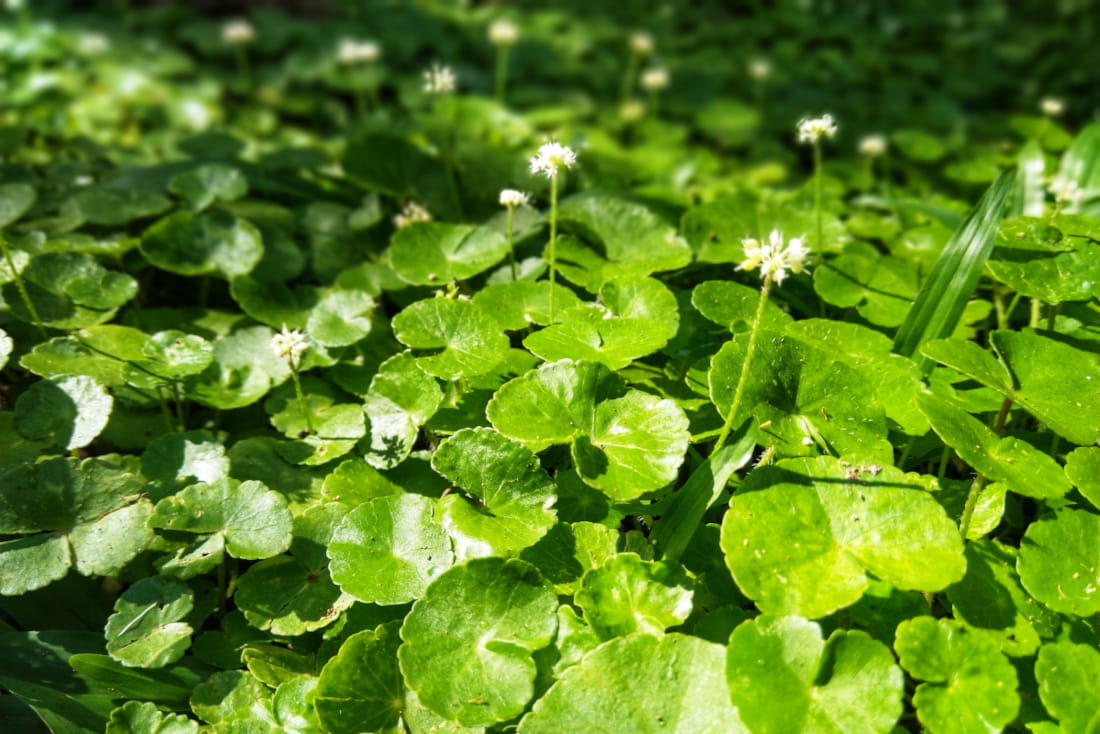
Especially the leaves and flowers of Gotu Kola are used in TCM.
Promotion of brain function and concentration
The effect of Gotu Kola on concentration and memory has a long tradition in Eastern medicine. Today this plant is an interesting field of research that still needs further study. There are some promising approaches and mechanisms that could explain which positive effects the plant might have on cognitive functions.
Pennywort is highly valued in India and it is said that elephants particularly like to graze in areas where pennywort grows. This is believed to contribute to their exceptionally good memory.

It is said that Indian elephants also make use of Gotu Kola's effects on memory.
Improvement of circulation and oxygen supply
Centella asiatica is often associated with improved circulation. Good circulation ensures that the brain is well supplied with both oxygen and nutrients — an important prerequisite for good concentration. Thus Gotu Kola is also a useful option in the fight against atherosclerosis. [6]
Promotion of collagen formation
Gotu Kola contains compounds such as triterpenes, which are known to promote collagen production. Collagen plays an important role in the health, elasticity and stability of tissues, which is also noticeable in the brain. Healthy brain tissue can help neuronal connections function more efficiently. This can be very beneficial for memory and concentration. [7]
Protection against oxidative stress
The antioxidant properties of Gotu Kola can help reduce oxidative stress in the brain. Oxidative stress can damage brain cells over time.
Influence on neurotransmitters
It is suspected that Gotu Kola may influence the activity of certain neurotransmitters. The neurotransmitter acetylcholine is of particular interest here, as it affects memory and the learning process. Gotu Kola could help to increase the concentration of this neurotransmitter in the brain. [8]
Stress management
Gotu Kola is regarded as an adaptogen. The extract of the plant helps prepare the body better for stressful situations and to moderate the stress response. Stress is always a disruptive factor for the body. Adaptogens are able to act regulatory on the stress system. Thus they can normalise the release of stress hormones such as cortisol and balance the nerves and nervous system.
Less stress leads to a more efficient brain. Concentration and memory both benefit from this.
These effects are primarily known from traditional Eastern medicines. Research into the cognitive effects of Gotu Kola is not yet complete. There are promising indications from animal experiments and laboratory studies. Further clinical trials in humans are required to confirm the exact mechanisms and effects on concentration and memory.
Support for the nervous system and stress reduction
The effects of Gotu Kola on nerves, the nervous system and stress are an interesting field of research. Stress is one of the main causes of modern diseases. The potential effects of tiger grass/pennywort on nerves, the nervous system and stress are promising.
Calming effect
Also noteworthy is the calming effect of Gotu Kola on the nervous system. This helps to relieve tension and restlessness. This effect can be explained by a possible interaction with neurotransmitters such as GABA, which are important for relaxation and calming.
Anti‑inflammatory properties
Stress is known to promote inflammation in the body, which can also adversely affect the nervous system. The anti‑inflammatory properties of Gotu Kola could help reduce inflammation in the body and thus protect the nervous system.
Skincare and anti‑ageing effects
The effects of Gotu Kola (Centella asiatica) on skin health and anti‑ageing arise from both internal and external use. Extracts from Indian pennywort are common ingredients in skincare products. The extracts also show effects in the treatment of skin diseases, scars, burns and injuries.
As already described, Gotu Kola supports collagen production and skin elasticity. This leads to improved skin structure and counteracts wrinkle formation. It slows skin ageing by compensating for the natural decline in collagen production.
In India and China Gotu Kola is used for skin regeneration and scar reduction. [9]
Its antioxidant action also protects the skin externally from free radicals. Thus Gotu Kola promotes skin health and opposes the ageing process.
The anti‑inflammatory properties of Centella asiatica help with skin problems such as redness, irritation and acne. This strengthens skin health. Pennywort's ability to retain moisture supports a youthful complexion.
Gotu Kola as a dietary supplement
Having outlined the many health benefits of the plant, the following questions arise: In what forms is Gotu Kola (Centella asiatica) offered and which dosages are recommended?
Capsules/Tablets
Gotu Kola extract is available as a dietary supplement in capsule or tablet form. Dosages can vary, typically ranging between 300 and 500 mg per capsule/tablet. Daily intakes of 1–5 grams are recommended depending on the concern.
Tea and powder
Dried Gotu Kola leaves can be used to make tea. They are also often offered in powdered form. The powder can be used for tea, in smoothies or simply as a seasoning. The dosage depends on the amount of leaves used. The taste is rather bitter to astringent.
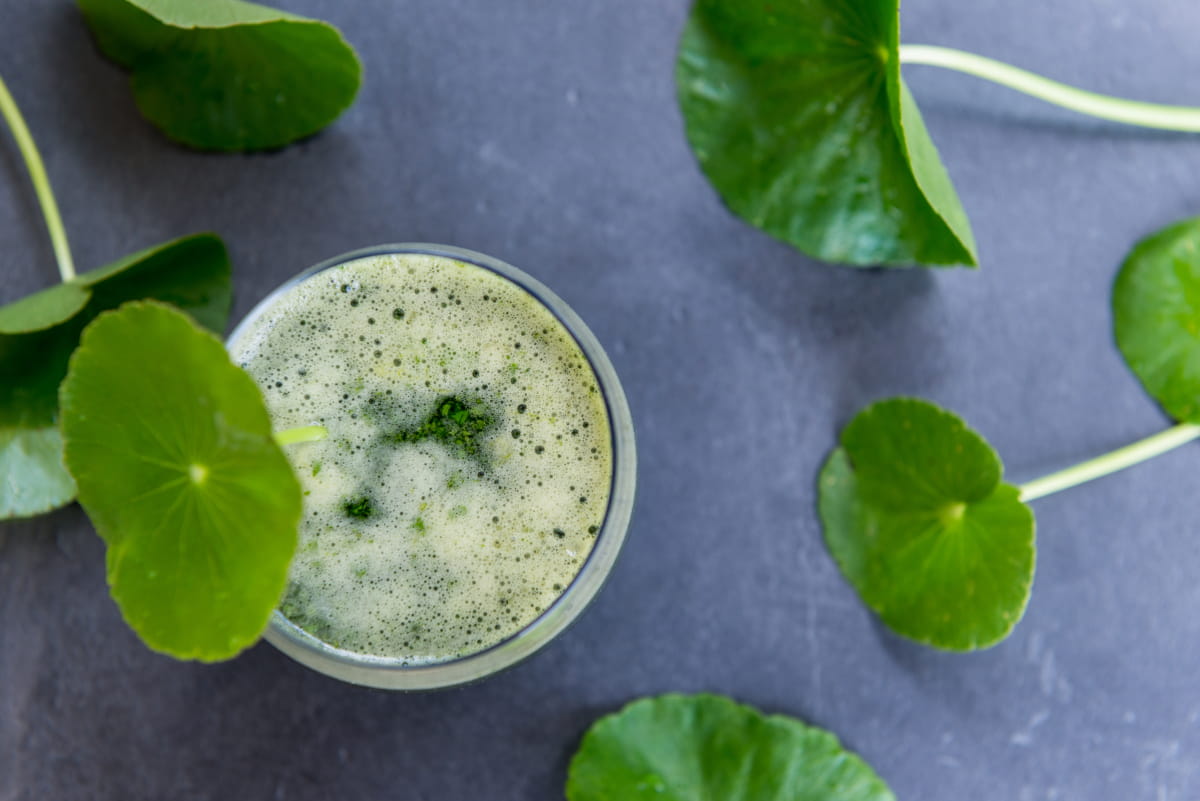
Powdered Gotu Kola is suitable for preparing beverages.
Liquid extracts
Liquid Gotu Kola extracts are available in tincture form. Dosage may vary depending on the product, so it is important to follow the instructions on the packaging.
Tinctures can be applied both internally and externally.
Ointments/Creams
Finally, Gotu Kola is found in the form of ointments or creams for external use. These are often used for skincare and skin problems. It is listed as an ingredient in numerous skincare products.
Dosage
Dosage should always be individual and tailored to one's own needs. Please consult a qualified health adviser, naturopath or physician.
Side effects and contraindications
If you adhere to the recommended dosage, side effects are unlikely. High doses, however, could lead to nausea, dizziness, stomach complaints and headaches. Very high doses can cause drowsiness up to loss of consciousness.
- Pregnant women are generally advised not to take it, as there are insufficient studies.
- People with liver damage should avoid Gotu Kola. In rare cases side effects in the form of liver damage have been observed.
- Pre‑operatively, Gotu Kola should be discontinued about two weeks before surgery. Interactions with other medications may occur.
Quality
Gotu Kola is mainly cultivated in countries such as India, Sri Lanka, China and Indonesia, and partly also in Europe around the Mediterranean. The goods are therefore usually imported. Significant quality differences and contaminations can occur.
For this reason you should pay attention to the reputation of the supplier when purchasing Gotu Kola. Certificates for organic cultivation or other quality certificates also provide insight into the quality of the goods.
Can you grow Gotu Kola yourself?
In general Gotu Kola can be grown well at home. However, the plant requires a rather subtropical, warm climate and a nutrient‑rich, well‑draining soil. It can be grown from seed and needs a good water supply, while waterlogging should be avoided.
Sources:
[1] Boju Sun et al., "Therapeutic Potential of Centella asiatica and Its Triterpenes: A Review", Frontiers of Pharmacology, Vol 11, 2020, accessed 08.04.2024 at https://www.frontiersin.org/journals/pharmacology/articles/10.3389/fphar.2020.568032/full
[2] Ibid.
[3] Nur Amalia et al., "Update Review: Extraction, Purification, and Pharmacological Activities of Gotu Kola Terpenoids", Letters in Applied NanoBioScience, Volume 13, Issue 1, 2024, accessed 08.04.2024 at http://nanobioletters.com/wp-content/uploads/2023/08/LIANBS131.006.pdf
[4] Ibid.
[5] Ibid.
[6] Gianni Belcaro et al., "Pycnogenol® and Centella asiatica to prevent asymptomatic atherosclerosis progression in clinical events", Minerva Cardioangiologica 2017 February;65(1):24-31, accessed 08.04.2024 at https://pubmed.ncbi.nlm.nih.gov/26505327/
[7] Akhilesh Dubey et al., "Cationic biopolymer decorated Asiatic Acid and Centella asiatica extract incorporated liposomes for treating early-stage Alzheimer’s disease: An In‑vitro and In‑vivo investigation", accessed 08.04.2024 at https://f1000research.com/articles/11-1535/v1
[8] Zeba Firdaus et al., "Centella asiatica Alleviates AlCl3-induced Cognitive Impairment, Oxidative Stress, and Neurodegeneration by Modulating Cholinergic Activity and Oxidative Burden in Rat Brain", accessed 08.04.2024 at https://pubmed.ncbi.nlm.nih.gov/34984596/
[9] Lúcio Ricardo Leite Diniz et al., "Centella asiatica and Its Metabolite Asiatic Acid: Wound Healing Effects and Therapeutic Potential", Metabolites, 2023 Feb; 13(2): 276, accessed 08.04.2024 at https://www.mdpi.com/2218-1989/13/2/276
Image sources: Rain Shore Magyar, G_Syriyaraks, Piyawan Tantibankul, ipungcpt, Wisutti, Regreto

