
by Joette Calabrese

If you're a pufferfish, then being bloated is, of course, a good thing. But as a human... perhaps less so.
Dear readers, the homoeopathic remedy presented this week should be a staple in every homoeopathic household medicine cabinet and is a true specific for bloating.
Bloating or Buddha belly?
But before we talk about the remedy itself, I want to be clear about what I mean by "bloating". I mean something quite different from what some people think. It should not be confused with what is commonly called a "Buddha belly". With a Buddha the body is not only plump in the abdomen but also the face, chest, arms and legs. Let's be honest: when we look at a Buddha statue, we see an obese person!
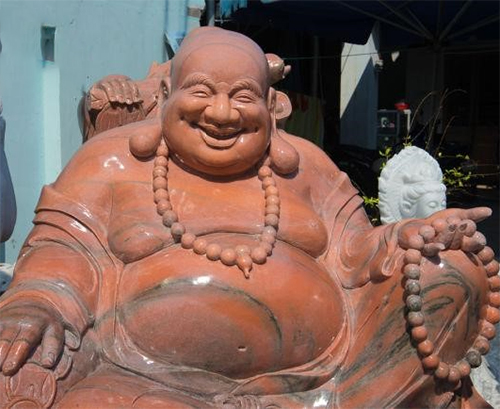

But bloating is not a general weight problem. Rather, it is a feeling of fullness in the lower abdomen, originating from the gastrointestinal tract, that causes the stomach to bulge outward. This sensation is often accompanied by wind, belching and reflux.
Some people have chronic bloating no matter when or what they eat. It sadly just seems to be the way they are. Some people bloat when they drink carbonated beverages. Others suffer fullness when they eat vegetables from the cruciferous family, such as cabbage, cauliflower or broccoli. Some people even experience bloating in the gut after only a glass of water. And of course bloating can also be due to food intolerances. But not always. Essentially, a bloating is a bloating.
Lycopodium clavatum – a true polychrest
Now, with regard to our wonderfully versatile polychrest – that is, a remedy with a broad and varied spectrum of action – we do not necessarily need to know the precise cause. We can simply consider Lycopodium clavatum 200.
Occasionally there are situations in which this remedy can be used as an emergency treatment for acute bloating. Generally, however, bloating follows a chronic pattern – in that case we would take it twice daily until a marked improvement occurs.
To test or not to test?
Many sufferers believe they must be tested to find a culprit. At this point I want to stress again that, at least at the start of this journey, we do not need to know the exact cause. It doesn't matter whether the bloating is due to an intolerance to gluten, dairy, citrus fruits or something else entirely; this remedy is known to work.
Of course, investigations can be helpful if one is intent on simply avoiding the offending foods. But my focus is different: it always makes me very, very sad when people have to give up good, high-quality foods even though we can actually correct the underlying condition.
Don't get me wrong. I am not advocating a careless or negligent approach to this issue! I do not support homoeopathy so people can easily survive on prepackaged muesli and low-fat milk, on enormously large and unhealthy sandwiches, and on beer packed in aluminium cans.
Lycopodium in the Banerji Protocol and the home medicine cabinet
But if good, healthy food causes bloating, then perhaps we should consider whether Lycopodium 200 could remove that condition. Further information on dosing and potency can be found here.
However, if there is no improvement within about a week, Lycopodium is probably not the right remedy for the person. In that case Lycopodium should be discontinued and further information obtained to find a more specific remedy.
The Banerji protocol for constipation with dry, hard and difficult-to-pass stools, for example, recommends Lycopodium 200 in combination with Plumbum metallicum 200. The same Banerji protocol has also proven useful for hernias (see here).
It is therefore no surprise that we should include this versatile remedy – Lycopodium clavatum – in our well-stocked homoeopathic home and travel medicine kit.
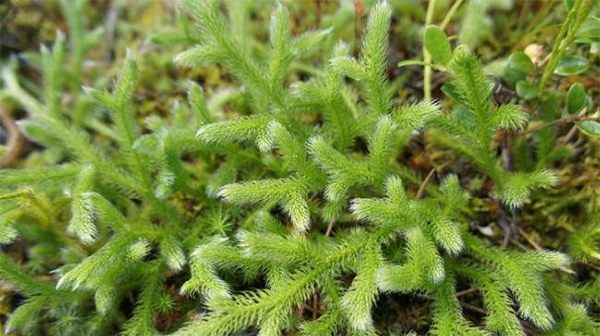
What you always wanted to know about Lycopodium
And here are a few interesting background facts about the homoeopathic Lycopodium. Did you know that the raw material from which it is made – the clubmoss – is one of the oldest plants on Earth? I find it fascinating that the very first humans had access to a plant that could help with bloating – if only they had known the homoeopathic method of potentisation back then!
Thank goodness for Dr Samuel Hahnemann in the late 18th century. His genius gives you the opportunity, at your next picnic, not only to bring a broccoli-cauliflower bake but also to spread the good news of homoeopathy!
Homoeopathy helps – spread the word!
Warmly,
Yours
.png)
Source: https://joettecalabrese.com/blog/bloating/

