
D‑Mannose: Natural support for bladder infections
.jpg)
Figure 1: D‑Mannose is regarded as a natural and well tolerated alternative to antibiotics. It is frequently used, above all, for bladder infections.
The simple sugar D‑Mannose is often recommended to treat or prevent bladder infections. But is the monosaccharide actually an effective natural alternative to antibiotics? In this blog article we take a look at the various effects and uses of D‑Mannose. You will also receive helpful advice on choosing, taking and dosing D‑Mannose preparations.
What is D‑Mannose?
D‑Mannose (often simply called "mannose") is a simple sugar structurally related to glucose. It is a natural, purely plant‑based substance that is generally well absorbed by the body. In small amounts the body can also produce D‑Mannose from glucose or fructose. Another peculiarity of D‑Mannose is that the substance is hardly metabolised by the body. Instead, the sugar is excreted via the kidneys in the urine.
D‑Mannose: effects and common uses
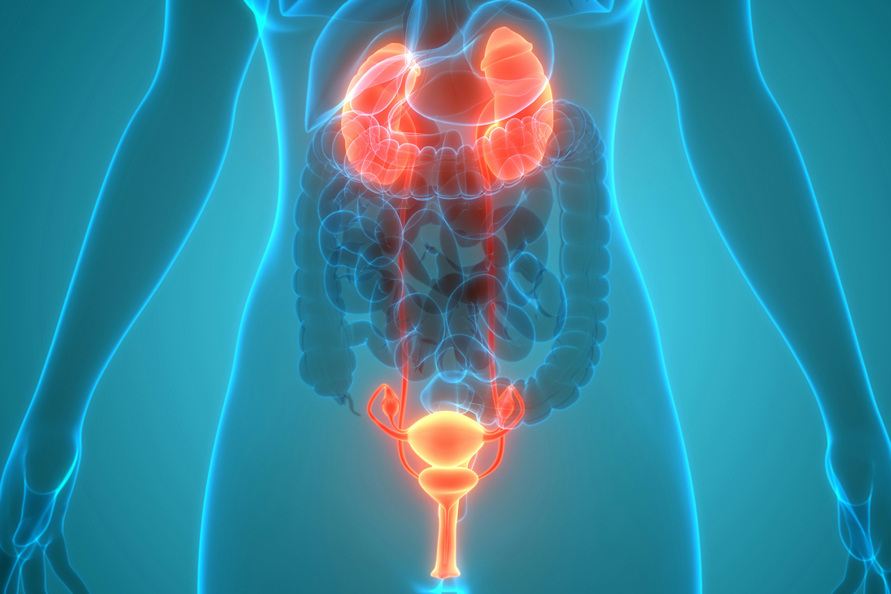
Figure 2: Urinary tract infections are among the most common uses of D‑Mannose. The simple sugar can have both soothing and preventive effects in bladder infections.
D‑Mannose is still relatively unknown in medicine. Because the effects of the sugar have only been investigated more intensively in recent years, the body of studies is so far insufficient. Nevertheless, many people swear by taking D‑Mannose to fight or prevent urinary tract infections. Below we present the most important effects and uses of D‑Mannose.
Urinary tract infections
A bladder infection (cystitis) is usually extremely unpleasant: frequent urges to urinate and painful urination are typical symptoms. Bladder infections are usually caused by bacteria that ascend through the urethra into the bladder and multiply there. Bladder infections often occur during sexual intercourse, because bacteria can easily enter the urethra due to mechanical friction. The female urethra is shorter than the male, which is why women are significantly more often affected by cystitis than men.
In about 80 per cent of cases, Escherichia coli bacteria are responsible for an acute bladder infection. These bacteria, originating from the gut, can easily reach the bladder via the urinary tract. There they attach to the bladder lining and cause inflammation. This is where D‑Mannose comes into play: the sugar forms a sort of coating around the E. coli bacteria so that the single‑celled organisms can no longer adhere to the cell membrane. Instead, they are excreted together with D‑Mannose in the urine and thus rendered harmless.
Because D‑Mannose binds to the lectins of E. coli even better than the bacterial lectins bind to human cells, D‑Mannose can be effective even when the bacterium has already established itself in the bladder. Lectins are proteins that specifically bind to carbohydrates and play an important role in the interaction of bacteria with their host cells. In E. coli, lectins are crucial for their ability to adhere to host tissue, which is the first step in colonisation and infection. D‑Mannose can both support healing in urinary tract infections and act preventively. In an existing infection the E. coli bacteria detach from the bladder wall, are coated by D‑Mannose and subsequently excreted.[1] When D‑Mannose is taken prophylactically, it coats the inner walls of the urinary organs, preventing E. coli bacteria from adhering in the first place.
Increased skin moisture
If the skin lacks moisture, its natural protective barrier is weakened. The result is often skin problems such as itchiness, tightness, flaking and redness. Because D‑Mannose has the ability to bind a lot of water, the substance can have a positive effect on the skin's moisture content. The moisturising and soothing properties of the simple sugar benefit especially dry and sensitive skin.
Intimate care
As a specialised gel, D‑Mannose is also suitable for external use in the intimate area. The natural skin barrier here can likewise be weakened for various reasons, making inflammation and irritation more likely. D‑Mannose helps protect against bacteria and fungi in the intimate area by supporting moisture balance and the restoration of the natural skin barrier.
Is D‑Mannose a suitable alternative to antibiotics?
If you go to the doctor for a bladder infection, in the vast majority of cases an antibiotic will be prescribed. Many women, however, reject taking antibiotics because of possible side effects and prefer a natural and well tolerated alternative.
A popular home remedy for urinary tract infections is the bog berry – also known by its English name cranberry. Although the berry's juice does contain D‑Mannose, not enough is present to produce a significant effect. The medicinal effect of the bog berry is mainly attributable to phenolic compounds such as flavonoids, anthocyanins and proanthocyanidins.
D‑Mannose is now regarded as an effective option for fighting urinary tract infections. A study investigating the preventive effect of D‑Mannose included 308 women with an acute bladder infection. After the usual antibiotic treatment, the women were divided into three groups: the first group took 2 grams of D‑Mannose daily for six months, the second group received an antibiotic and the third group served as a control. During the study period 98 women developed a recurrent bladder infection, 62 of whom belonged to the control group.[2] From this the researchers concluded that D‑Mannose is well suited for preventing urinary tract infections – particularly in people who suffer from recurrent bladder infections.
Compared with an antibiotic, D‑Mannose also has the major advantage that its use does not lead to the development of resistance. However, you should note that the sugar can only be effective against bladder infections caused by E. coli bacteria. If you are unsure whether E. coli is responsible for your infection, you can ask your doctor for a urine culture to have the pathogens identified in the laboratory.
Which foods contain D‑Mannose?
.jpg)
Figure 3: If you want to obtain D‑Mannose from food, you should mainly choose fruits. D‑Mannose is also found in yeast and maize.
Among foods, fruit and berries are the best sources of D‑Mannose. If you immediately think of high calories at the word "sugar", you can be reassured: D‑Mannose is not metabolised by the body but excreted via the kidneys in the urine. The energy content of the sugar is therefore not relevant to your personal calorie balance.
D‑Mannose occurs naturally in the following foods:
- lingonberries
- cranberries
- apples
- yeast
- maize
- blueberries
- peaches
- oranges
- mango
- pineapple
- dates
- stone nuts
Dietary supplements containing D‑Mannose
The most common form of D‑Mannose as a dietary supplement is D‑Mannose powder. Less commonly the sugar is taken as granules or in the form of D‑Mannose capsules. For external use, specialised gels or creams containing D‑Mannose are suitable.
Before selecting a preparation, you should check the D‑Mannose content and verify whether the product contains no additional additives. D‑Mannose from Unimedica contains 2000 mg D‑Mannose per daily dose (2 g). The powder is vegan and free from any additives. In addition to pure D‑Mannose powder, combination products containing D‑Mannose are also popular. Uni Blase Plus from Unimedica is a highly dosed complex that, alongside D‑Mannose, also contains cranberry and MSM as well as other valuable vitamins and minerals. The product was developed to support the normal function of the bladder and urinary tract.
How to take D‑Mannose correctly
The dosage of D‑Mannose mainly depends on the intended purpose. For acute bladder infections, taking half to one teaspoon of D‑Mannose powder is usually recommended, to be repeated every two to three hours. The powder can simply be stirred into water and drunk. Intake should be continued for a few days even after the bladder infection has subsided.
If you want to prevent recurrent urinary tract infections, D‑Mannose preparations can also be taken long term. Adhere to the manufacturer's recommended daily dose or ask your doctor to recommend a suitable dosage. The timing of intake is also important: for D‑Mannose to bind the harmful E. coli bacteria, it should act in the bladder for at least one hour. During this time you should refrain from urinating. Also maintain a one‑ to two‑hour interval to your last or next meal.
To prevent urinary tract infections after sexual intercourse, it is advisable to take one teaspoon of D‑Mannose powder about one hour before intercourse and another teaspoon immediately afterwards.
What side effects does D‑Mannose have?
As a natural sugar that the body also produces itself, D‑Mannose is generally very well tolerated. If the recommended dosage is observed, D‑Mannose is considered safe for children, pregnant and breastfeeding women. Mouse studies have not shown negative effects from long‑term intake of D‑Mannose.[3] Combined intake of D‑Mannose and antibiotics is also possible without impairing the effect of the medication.
An overdose of D‑Mannose can lead to side effects such as gastrointestinal complaints, bloating or diarrhoea. If you experience these or other symptoms, you should stop taking D‑Mannose for the time being and seek medical advice.
[1] Bouckaert J, Berglund J, Schembri M, De Genst E, Cools L, Wuhrer M, Hung CS, Pinkner J, Slättegård R, Zavialov A, Choudhury D, Langermann S, Hultgren SJ, Wyns L, Klemm P, Oscarson S, Knight SD, De Greve H. Receptor binding studies disclose a novel class of high‑affinity inhibitors of the Escherichia coli FimH adhesin. Mol Microbiol. 2005 Jan. https://pubmed.ncbi.nlm.nih.gov/15659162/.
[2] Hayward G, Mort S, Hay AD, Moore M, Thomas NPB, Cook J, Robinson J, Williams N, Maeder N, Edeson R, Franssen M, Grabey J, Glogowska M, Yang Y, Allen J, Butler CC. D‑Mannose for Prevention of Recurrent Urinary Tract Infection Among Women: A Randomized Clinical Trial. JAMA Intern Med. 2024 Jun 1. https://pubmed.ncbi.nlm.nih.gov/24215164/.
[3] Davis JA, Freeze HH. Studies of mannose metabolism and effects of long‑term mannose ingestion in the mouse. Biochim Biophys Acta. 2001 Oct 3. https://pubmed.ncbi.nlm.nih.gov/11687298/.
Figure 1: EKramar/Shutterstock.com; Figure 2: Magic mine/Shutterstock.com; Figure 3: Mila_22 79/Shutterstock.com

