A Case Study
In 1991 a well-dressed 35-year-old man came to my clinic because of chronic sinusitis. He had had the complaints for about a year. The sinusitis was diagnosed by a specialist but got progressively worse after an episode of flu. Symptoms included dizziness and a sensation of shortness of breath and tightness in warm rooms and when speaking. He had previously smoked heavily, but because cigarettes aggravated his complaints he had recently stopped smoking. In the last 12 months he had had to take antibiotics three times, had surgery on his nasal septum and had medications injected into the maxillary sinus. None of the treatments had been effective.
At present the patient feels blocked, cannot think clearly, is very tense and suffers from sleep disturbances. He has regular pain in his left shoulder. "Perhaps my complaints were triggered by a movement, the end of a relationship or stress at work." In recent months he becomes quickly irritable, but he is not violent.
Ambitious and Alone in the World
His work is very important to him; he is ambitious and gives his best professionally. Together with a friend he runs his own advertising agency. He writes the copy and brings new ideas to the firm. Interpersonal contact matters to him and he also enjoys the financial benefits. At grammar school he did not have to make much effort and university also went smoothly.
He has difficulty falling asleep because he thinks about his work for so long that he eventually has to take a sleeping pill. Sometimes he can feel the muscles around his heart contract. His relationship broke down because his girlfriend wanted a child and he did not. "She already has a child and I could not form a bond with him. They say I am selfish and perhaps they are right."
He is a sociable person and world events affect him deeply. He tries to show understanding when someone makes a mistake and rarely loses his temper. He has difficulty concentrating. Although he tries to keep weekends free, he often has to think about problems at the company.
Despair
He used to be distinctly nocturnal, but now he is tired in the evenings and often gets headaches. His hobbies are music — he writes songs — and he plays tennis. He wonders how his career will progress in the coming months and whether he can manage it all. He is very insecure. He finds it hard to be alone at home. He feels that he needs to be a bit tougher in the business world.
When he is nervous he talks a lot and feels the need to vent about his problems.
Notably, he asks me questions several times in an almost desperate tone and expects an answer.
Observation
The patient finds it easy to speak; he is friendly and communicates well. He exudes a certain "joie de vivre" when he is not talking about his problems. When he talks about his adventures in the dating scene he does so with a naivety that is quite charming. He is colourfully and elegantly dressed, almost extravagant. It suits him. In contrast, he seems almost desperate when he talks about his problems. He appears convinced that he cannot cope with them and expects me to offer solutions. One example: "What do you think, should I take a few days off?"
I was reminded of what Vithoulkas writes in his Materia Medica Viva about Actaea spicata: "... these are people who want to be the centre of attention and need someone to talk about themselves to. They are very communicative, especially regarding the opposite sex, and they feel better, happier and more content when they have company. But when they are alone they become unhappy; they fear being alone because then anxious thoughts arise that can develop into an anxiety disorder.
In general they are very relaxed and do not overexert themselves. When physical, emotional or intellectual tension becomes too great, he tires quickly, becomes confused and is no longer able to make even the smallest decisions. His memory is impaired and ultimately he is convinced that nothing will succeed for him. He becomes increasingly despondent and one can hear him sigh more and more often."
Rubrics in the Repertory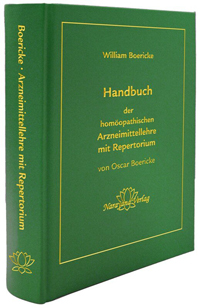
Indecision — difficulty making decisions
Desire for company
Fear — of being alone
Delusions — failing, to fail; everything will be
Weariness of life
Despair — over small things
In the Materia Medica
Boericke: Cardiovascular spasms
Hering: pressing sensation in the heart; heart symptoms after fever. Was prescribed as a rheumatic remedy particularly for the small joints; rheumatism of the wrist is to be highlighted here as a key symptom; relatively marked swelling and pain in the joints after slight exertion. Worse in cold and on motion.
Follow-up
After administration of Actaea spicata 200K the patient's complaints resolved on all levels. He took the remedy as needed when he felt he required it and especially whenever he again suffered from sleep disturbances.
A few years later I met him by chance again and he told me that he was doing very well, although he sometimes experienced stress. He was in a stable relationship and his first child was due to be born in a few weeks.
Actaeae spicata — the remedy
Actaea spicata — or Christophskraut — belongs to the buttercup family (Ranunculaceae) with the overarching theme: alone in the world, must survive all dangers and problems. Tries to find help and support or is completely on his own.
Banished from paradise. Delusion that he is damned, that he is far from home. Helplessness.
Anxiety; <<< fear, fright, shock; <<< anger, vexation; <<< on exertion, emotional strain, satiety.
Fears: death, illness, pregnancy, childbirth; of evil, misfortune, animals, danger, ghosts; of crowds, trains, the public, strangers, of shadows; feels weak and powerless, mental derangement.
Alone, abandoned; desire for company; homesickness.
Gentle and yielding; coquettish, clingy.
Flattering; compassionate.
Emotional; excited, <<< agitation; neurasthenia.
Overwhelmed by the world, by emotions; hysterical, changeable, restless.
Suicide by drowning.
Sensitive; - sad; - delusion of heavy, dark clouds.
Anger; destructive, abusive, immoral, irritable.
Delusions — body — parts — large;
Feeling of dependence like that of a child; needs comfort and support; must be protected by others; not strongly sexual. The theme revolves around growing up, one must leave parental care.
- Sankaran assigns the remedy to the Ringworm miasm.
Jan Scholten places it in Stage 5 (malaria stage).
Category: Remedy
Keywords: Actaea spicata, Rajan Sankaran, Jan Scholten, Vithoulkas
Source: http://www.interhomeopathy.org/actea_spicata_in_chronic_sinusitis_sleeping_problems_ao
Photo: 756899950 by Tero Vesalainen

|