
Seminar with Ulrich Welte in Japan, November 2010 |
|||
Ulrich Welte |
|||
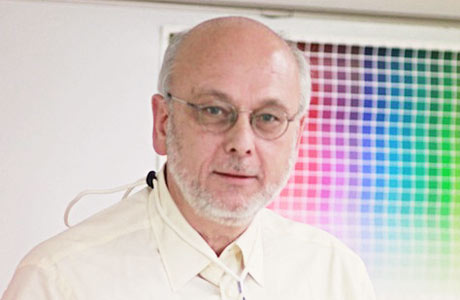 |
Ulrich Welte gave a 3-days-seminar by the end of November 2010 at the Japan Royal Academy of Homoeopathy. Topics were the periodic table, botanic families and color in homeopathy. |
||
|
|||
 |
|
 |
|
| Center in Tokyo | Torako Yui & U. Welte | Torako Yui gives the introduction | |
 |
The seminar lasted three days, the first two in Tokyo and the third in Nagoya. | ||
All eight Japanese centres and the London centre were linked live, giving about 300 people the chance to listen in. Every morning, the programme began with chanting sutras in the lecture room, watched over benevolently by a statue of Buddha. Next came six hours of presentations, all followed with keen attention. The technical perfection of the “College of Holistic Homoeopathy” blended harmoniously with the technical perfection of this culture, which for all its precision and discipline welcomes foreigners warmly. |
|||
 |
 |
 |
|
| The seminar covered the mineral remedies according to Scholten’s interpretation of the periodic table – focusing on stages 11-15 and presenting a number of case studies of nitrogen, phosphorus, arsenic, antimony, thulium and bismuth. The Asteraceae were also covered, with case studies of cichorium, lactuca and scorzonera. The third day featured an introduction to the identification and meaning of colour preferences with live case histories and colours taken from volunteers, in some cases by video without the person being directly present. | |||
|
 |
 |
 |
This intensive week included many trips and interesting events. These included a visit to the institute in Atami which produces homoeopathic and phytotherapeutic remedies, and the trip to Nagoya, where the third day of the seminar took place. If Nagoya is the iron heart of Japan with its Toyota factory, then Ise is the spiritual heart of Japan, a breathtaking simply, archaic shrine to the sun goddess of Shintoism. |
|||
 |
 |
 |
We arrived there early in the morning and were deeply moved by the primal forces of nature tangible on this spot. |
|
 |
 |
 |
 |
 |
On to Osaka to the workshop of a Buddhist artist and his wife, who create marvellous statues from camphor and cedar wood and exquisitely detailed inlay work of rare beauty for the region’s temples | |
|
 |
From here to Kyoto, Japan’s ancient capital, attractively located near mountains glowing with autumnal foliage and a great inland sea. | |
|
 |
 |
|
|
 |
 |
The temples of Nanzen-ji with their Japanese gardens, nestling at the foot of the mountains on the city outskirts, were especially lovely and full of atmosphere. |
|
 |
 |
|
|
 |
 |
|
 |
 |
Afterwards we returned to Tokyo by Shinkansen, probably the most beautiful and punctual high-speed train in the world, before going back home to good old Germany. | |
| This was an intensive week full of interesting impressions and a seminar which provided a lot of inspiration for the Japanese homoeopaths (only a few of whom were men). There was much positive feedback about the usefulness of the information, which will now be put into practice. It was pleasant to see that most of the participants were young, between 20 and 35 on average. Maybe Japan really is the land of the rising homoeopathic sun? | |||
|
 |
 |
|


