
.jpg)
Figure 1: Reclaim your voice – homeopathy can help with laryngitis.
A common saying goes that silence is golden — but I'm fairly certain that proverb is not referring to losing your voice because of laryngitis.
Especially during cold and flu season, laryngitis can come with quite unpleasant symptoms. One of my students recently asked me how to treat this common condition homeopathically. Laryngitis most often occurs alongside acute respiratory illnesses. It's an annoying condition, but generally not particularly serious.
I have often mentioned that in homeopathy there are many routes to the same goal. For that reason I recommend that anyone interested work with a good materia medica. A materia medica is always a good option when there is no specific protocol for a condition. In a materia medica you can look up which remedies are indicated and then choose the most appropriate one.
In fact, several homeopathic remedies can be indicated for loss of voice. Therefore we should consider the whole picture — that is, the totality of symptoms — in order to distinguish between the three main remedies most commonly considered.
Laryngitis with excessive salivation
When excessive salivation is a problem, Mercurius solubilis 30 or 200 (depending on severity) is often the best choice. (Note: Mercurius vivus and Mercurius solubilis are generally considered interchangeable.) Other accompanying symptoms that point to Mercurius sol in laryngitis are bad breath, pustules in the throat/on the tonsils, or even ulcers in the mouth and throat. Further information on dosing and potency selection for this remedy can be found here.
Laryngitis with involvement of the lower respiratory tract
When aphonia or dysphonia occurs with lower respiratory symptoms – meaning the illness is not confined to the neck and throat – we can consider Phosphorus C30 or C200 (depending on severity). This would be our primary remedy when laryngitis arises as a consequence of bronchitis.

Laryngitis with painful sore throat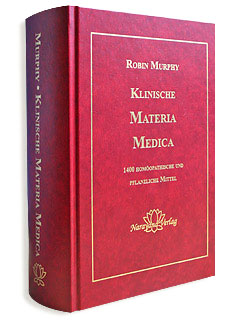
Occasionally loss of voice is accompanied by agonising throat pain. The throat may even feel as if a stick or splinter is lodged there. In these cases the lymph nodes beneath the ear and the tonsils are often markedly swollen. These symptoms are a clear indication to consider Hepar sulfuricum calcareum (Hepar sulfuricum) 30.
Why? Read more about this powerful homeopathic remedy in my blog post Hepar sulfuris – the homeopathic antibiotic?
How often should I take the homeopathic remedy?
In any acute situation (i.e., not a chronic illness that has been present for months or longer) the homeopathic remedy is best taken at a frequency that matches the severity of the condition. That may sound a little cryptic, but it means that for a truly severe illness — and I mean really severe — the remedy can be taken very frequently. More often than is usually recommended for homeopathic remedies. Once the condition improves, the remedy is taken at longer intervals.
An example: Someone has a slight nosebleed that can be stopped with a tissue. In that case the appropriate homeopathic remedy would be taken only twice a day. (And probably only for one day in total.)
However, if the blood is pouring from the nose — i.e., it does not stop with a tissue — the remedy may need to be taken every 15 minutes or even more frequently to resolve the acute problem!
Similarly, for a mild laryngitis that is annoying but not severe, the indicated homeopathic remedy can be taken twice a day.
For serious symptoms — severe pain and/or difficulty swallowing — the patient may take their chosen remedy every 3 to 6 hours, depending on severity.
Doesn't that just make common sense? That's one of the advantages of homeopathy — one of many benefits, I might add. After all, it is a sensible and down-to-earth medical paradigm. We use homeopathic remedies only to treat the complaints as they present to us. We observe carefully and rethink when the illness changes.
Homeopathy helps — spread the word!
Warm regards,
Yours
.png)
Source: https://joettecalabrese.com/blog/laryngitis-reclaim-your-voice-homeopathy/

