|
17 August 2021
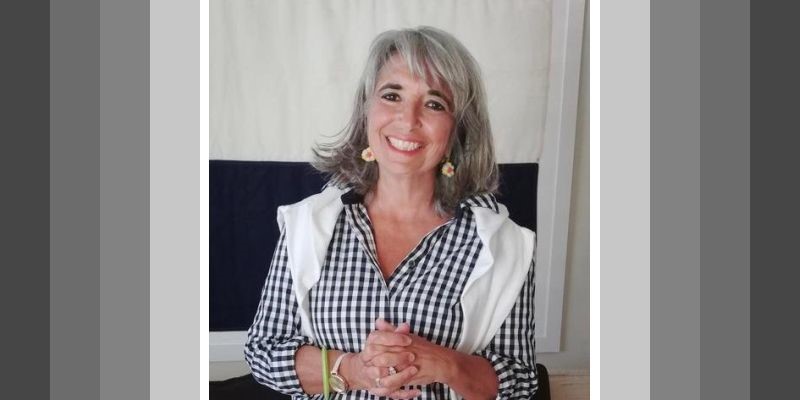
Homeopath Joette Calabrese in interview with Alan V. Schmukler. Joette is a lecturer at the British Institute of Homeopathy, moderator of the annual meeting of the National Center for Homeopathy and a member of the Prasanta Banerji Homeopathic Research Foundation in Calcutta, India. Joette Calabrese, HMC, CCH, has been a practising homeopath since 1997. After successfully completing the North American Homeopathic Master Clinician Course and studying at the Dynamis School of Advanced Homeopathy, she further trained with, among others, Lou Klein, Jeremy Sherr, Jan Scholten, Andre Saine and A. U. Ramakrishnan. AS: What originally drew you to homeopathy? JC: Where shall I begin? If I go back to the very beginning, we'll still be sitting here in a few weeks! Most people who find their way to homeopathy generally have a long journey with many detours behind them. I'll try to keep my story short. If your readers get bored, they can feel free to fast-forward. When I was six weeks old I had my first vaccination and afterwards developed a chronic eczema all over my body that stayed with me for 14 years. My mother took me to the doctor, which led to my being treated with steroid creams and injections for my allergy. My mother was warned about the side effects of the cream and told to use it sparingly. But since she had no alternative, she applied it every time my skin became severe. Originally my complaints appeared together with recurring ear infections, for which I was prescribed antibiotics. For years I was treated with various medications and other interventions that brought no improvement. Then my mother decided on an alternative approach: there were chiropractors, herbal remedies, dietary changes and reflexology. I can well imagine that many readers will find this story very familiar. It can be applied to other illnesses as well. In such cases you can describe the countless experiences people around the world have had over the centuries: the failure of conventional medicine to treat chronic illnesses and — worse still — the long-term side effects of those approaches. My own story began in 1952 and the list of my ailments was long. I had asthma, food intolerances, migraine, panic attacks, urinary tract infections and was chronically tired. I swallowed and smeared medication daily, sometimes for weeks on end. It didn't matter whether something was prescribed or not. Over time I grew increasingly sceptical of conventional medicine, but I knew nothing else. At about 32 I made a bold move and embarked on something that took my life in an entirely new direction. I decided to stop taking all medications. After relying on and being dependent on medications for many years, this represented a fundamental change in mindset for me. I didn't know anyone who shared my thoughts or had done anything similar, but I simply had to change my life. What I had been doing wasn't working; my health was getting worse. I suspected that I felt so miserable because of all the medications. I had the impression that the more drugs I took, the worse I felt — although my doctors vehemently denied this. Not a single doctor even remotely considered that the medications could be responsible for or at least worsening my poor health. A bold step But I had a faint hunch and, recklessly, defiantly and overnight, I stopped taking all the medications I had dutifully taken every day. I simply didn't take them any more. I emptied my handbag, tipped out the drawer of my bedside table and threw all prescription and pharmacy medicines in the bin. I was brave. I resisted. It was almost frightening. But at the same time it was liberating. Shortly afterwards I replaced the medicines with vitamins and nutritional supplements. It didn't take long before I grew distrustful of those too. I learned that most vitamins are made synthetically and sold by the same companies that produced my hated medications! Later I discovered that the manufacturer of numerous vitamins, supplements and drugs had also released my first vaccine — the vaccine that set my health complaints rolling at the tender age of six weeks. In that moment I also decided against vitamins. Then I learned a lot about medicinal plants and began picking my own herbs at home. It got warmer… I was about 35 when I finally found my calling: homeopathy. A single dose of Nux vomica, prescribed by a homeopath, gave me 50% relief from all the complaints that had plagued me for 35 years despite conventional "care". This initial improvement occurred in less than four weeks. The remaining 50% took a little longer, but within about twelve months I felt so well that I decided to train in homeopathy. How would you describe the way you practise homeopathy? How did you arrive at that point? JC: I'll fast-forward a bit now: I had already been working full-time as a homeopath for 15 years when I became aware of how frustrating that can be. The strict rules of classical homeopathy in particular caused me problems. I always explained to my patients that they should take the constitutional remedy I prescribed only once. From the first administration of the remedy until the next appointment with me they were to refrain from all other remedies — even homeopathic ones — because these could interfere with the effect of the well-chosen classical single remedy — the simile. Although my patients assured me they would follow my instructions, many came to me during their treatment, guilty, and reported that they had "cheated". Some had had a cold and taken a homeopathic combination remedy, or sprained an ankle and treated it with Ruta graveolens. Often they took, in addition to the single remedy I had prescribed, another homeopathic remedy they had chosen themselves. Frequently those remedies worked very well and sometimes I had the impression they supported the effect of the remedy I had selected for the chronic complaints. Even more important to me was that these patients were more convinced of the effectiveness of homeopathy than those who followed my rules and took only the constitutional remedy! And why? Because they had seen how well homeopathy works in practical application instead of using the usual let's-see-what-the-single-remedy-does method. When I first encountered these "non-compliant" patients in my practice, I braced myself for either the single remedy to fail or for their unauthorised use of remedies to thoroughly confuse the case. But no! The exact opposite happened. Each of the homeopathic remedies seemed to positively influence the case and accelerate the healing process. At first I was astonished, then delighted. But soon my joy turned to irritation — irritation at my own classical training. I had been hammered with the idea that the world would end as soon as several homeopathic remedies were given at the same time! Reproducible homeopathy In fact, it became clear to me that the opposite was true. Case courses were not confused and symptoms were not suppressed. In many cases it was precisely right to give several remedies at the same time and to take them more frequently (sometimes even daily). I learned this from my patients! It was obvious. A remedy could be given for the same complaint elsewhere and produce good results. Over time I learnt to prescribe, in addition to my hopefully well-chosen classically analysed single remedy, an additional remedy for the current acute situation when necessary. Sometimes I chose a remedy that matched the miasm or a Schuessler salt for extra support. At the same time I could recognise a pattern. I noticed that for head injuries not only Arnica montana and for sprains not only Ruta graveolens needed to be given without conducting a full case taking every time. I realised that organ-specific remedies became standard therapy in chronic cases in my practice. Sepia for mothers and Pulsatilla for young girls became indispensable for hormonal disorders. Many of my male patients benefited greatly from Nux vomica or Lycopodium clavatum. Aurum metallicum was also popular among the men. Instead of spending hours working out the essence of a case — that hard-to-grasp simile that resonates with a person on a very deep level — I moved in the direction of (how shall I put it?) "superficiality". I focused on the obvious. I only recorded the key symptoms — what the patient "tells me to my face" — and left aside everything unspoken, hidden. No more esotericism. No simile. And then the following happened: my success rate rose from around 50% to almost 70%. That alone would have made me very happy, but in addition my patients also recovered significantly faster! A very big advantage was also that I now only needed a few minutes for an anamnesis and didn't have to repertorise every time. I no longer needed 90 minutes for the case taking, but could help my patients after 15 or 30 minutes. I simply had to focus on the main complaint and note the accompanying symptoms. Thanks to this time saving I could treat more patients each day. A paradigm shift The more significant result of this paradigm shift, however, was that I could pass on these simple methods to other people! When this change of mind occurred, I was teaching classical homeopathy at a college in Buffalo, New York. A single homeopathy course was not sufficient to impart practical skills to my students. In that course I could only teach the management of acute complaints. Most of them were working in nursing and had a strong interest in chronic illnesses. They were very frustrated every time I explained that it takes many years of classical homeopathy study to treat chronic illnesses. I could literally see the veil lift from their eyes. I painfully realised that once again I had missed an opportunity to train genuine homeopathic professionals and to enthuse people about homeopathy. I longed for the day when I could teach what I myself was learning in my practice — namely that many complaints can be treated with a relatively small selection of homeopathic remedies. The constitutional remedy was rarely required and in many cases even constituted an obstacle to cure. The Banerji protocols in my homeopathic practice A few years later my thoughts were further consolidated when I met Drs Prasanta and Pratip Banerji. Their treatment protocols elegantly linked together all the observations I had until then only touched on superficially. I was awarded a scholarship at the Prasanta Banerji Homeopathic Research Foundation in Calcutta, where I was able to learn for several months each year over eight years. Everything I had suspected was confirmed by the Drs Banerji: the search for the constitutional remedy is tedious and often unnecessary. In their clinic I could see how even the most severe chronic illnesses can be treated successfully without the classical approach playing a role. They treated difficult cases of tuberculosis, leprosy and AIDS. But I also witnessed them curing common conditions like autism, depression, irritable bowel, arthritis and eczema. Long story short: I observed them successfully treating health complaints with methods that a mother or grandmother could learn in a relatively short time. In short, I observed one hundred case takings every day — six days a week. Over eight years I learned what the whole world should know: much in homeopathy can be learned at home, including chronic illnesses. You don't necessarily have to struggle with the arduous study of classical homeopathic doctrine. I am fully aware that there are diseases and circumstances that require the expertise of a professionally trained homeopath. Nevertheless, in every family there can be one person who trains to a level where all family members can be cared for healthwise, without having to resort to certain conventional treatments that tend to be unpleasant.
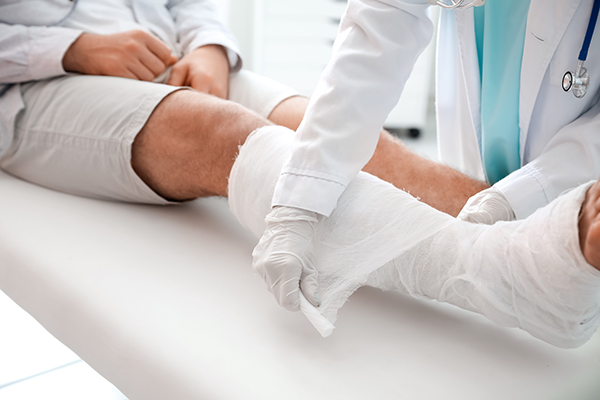
This is my mission: to show others that homeopathy is not as difficult, bizarre and elitist as its reputation suggests. A classical homeopathic education is fascinating and certainly useful if you want to run a practice. But it is not necessary if you want to treat yourself and your family. To return once more to 1952: the hospital in which I was born was originally a homeopathic hospital and had only been converted into a conventional clinic five years earlier. Had homeopathy still been practised there when I was born, my life course would have been entirely different. Indeed, in hospitals and busy doctor’s surgeries (as in the Prasanta Banerji Homeopathic Research Foundation) there is never enough time for a 90-minute case taking. But it still has to be very precise. And the effect has to set in quickly. That is why several remedies are prescribed simultaneously and there are numerous conditions that have been successfully treated with this strategy. AS: You worked for two years as a scholar for the Prasanta Banerji Research Foundation. The treatment protocols there, such as Calc-phos and Ruta for brain tumours, override the classical homeopathic explanation. The foundation's current protocol for prophylaxis against Covid-19 calls for Thuja. Can you give us an insight into how these protocols come about? JC: I travelled there eight times in seven years and each time stayed between nine and thirteen weeks. I even came home with an accent! But joking aside: the logic for using Thuja 30 is that this remedy has a very good reputation in the treatment of viruses. Once the disease has manifested, of course other remedies are considered. But Thuja is the remedy the Banerjis have used as prophylaxis and adjunct therapy for a number of viruses until the picture of a specific remedy emerges. As for Calc-phos and Ruta, we can only speculate. I did not often ask how a protocol was developed, because I early learned that the usual answer was: "Because we found it works." Sometimes there were interesting stories behind individual protocols. For example, a stiff right shoulder is treated with Symphytum 200, whereas a stiff left shoulder is treated with Syphilinum 200! Why? Because many decades ago a patient in the clinic was treated with Syphilinum 200 for a syphilis infection and during the treatment his stiff shoulder also disappeared. Since then the protocol has been used successfully again and again … but only for left-sided stiff shoulders! I love the quote from Finding Nemo where the dad says: "You think you know Nemo, but you don't." Modern medicine and other similar therapeutic approaches believe they can find a suitable remedy solely with physiological and pathological knowledge. Based on blood results and the question "Why?" And maybe they can, but there are answers that simply aren't accessible to our small earthly minds. In short: the genius of the Banerjis rests on cumulative clinical experience with an enormous number of patients and cases. This only shows how important it is to take as many case histories as possible every day. Interestingly, I have just received a "censure" and a summons from NASH (North American Society of Homeopaths) because I "violated the homeopathic professional code and taught disease-specific protocols" and because I "inappropriately advocate the use of the Banerji protocols." Pratip had warned me early on that it would probably not be the conventional medics after me, but the classicalists. He was, once again, right. AS: You evolved from a disciplined classical prescriber to a rather pragmatic approach. We would like to understand your approach better. Could you give us an example of how you use your current methods? JC: In classical homeopathy we choose a single remedy and nothing else. The theory behind this is that the remedy specific to the patient acts so profoundly that it will cure all the health complaints of that person. Equally important is that the chosen remedy is not repeated, except perhaps the following day. Another credo of classical homeopathy is to treat the person, not the disease. That means the same flatulence can be treated with different remedies in different patients. This method not only severely limits options but is, in my opinion, unnecessarily complicated and hard to implement. I worked full-time as a homeopath for 15 years and even taught at a nursing school. But in the many years of my professional activity I had to accept that life usually doesn't work like that. Although one can often detect a common thread from the many different health complaints a person may have, there are just as many people for whom that is not possible. The story of John, which I will now tell you, will sound familiar to some readers. John's odyssey It is a summer day and John has just eaten lunch. He knows very well that he shouldn't eat wheat because it gives him severe stomach pain and bloating. But, as usual, the bloating also occurs when he eats something else. Although his constant digestive complaints (most likely a leaky gut) slow him down, John is a responsible person. He has resolved to quickly mow the lawn before his wife returns from her "girls' weekend" in Las Vegas. John has always suffered from chronic dizzy spells and a feeling of fullness in the ears — which always occur when he comes into contact with freshly cut grass — but no explanation has been found! John is a very dutiful and considerate husband. He does what needs to be done. After mowing two neat lines on the lawn in front of the house, he makes a wide turn with the lawnmower to create the next neat strip. Because he feels a little light-headed in the head, John walks too far out onto the road when turning. At that moment a post van comes racing around the corner. An accident with consequences The two men's glances meet fleetingly and for a brief, strange moment John has the impression that the postman is deliberately pressing the accelerator! The van clips John and hurls him against the trunk of the coconut palm he had planted the year before. In no time at all John is in the hospital emergency department: with a multiple fracture of the shinbone, a cracked kneecap and several bruises the size of coconuts. In the emergency department a nurse wants to give him a painkiller and John cannot help but notice that she does not look healthy either. She even appears extremely ill. She confesses that she very likely has a respiratory infection and should actually be in bed. But she assures John that he is "her last patient and then she'll go home". A few days later John is still in hospital and has surgery on his shin. The bone is fixed with two plates. When he wakes from the anaesthetic hours later he is not only conscious again but continuously vomiting — probably a side effect of the anaesthetic, but possibly also a "gift" from the lung-sick nurse from whom he may have caught something. The next morning the surgeon calls in to see how John is doing. Unknown to them both, a multi-resistant germ adheres to the surgeon's hands, infecting John's fresh surgical wound with highly virulent bacteria. A few days later John is finally back home without having fully recovered from his newly acquired complaints. He drags himself into bed — along with his chronically blocked hayfever ear and severe pain in the operated leg. His usually bloated stomach is now replaced by endless nausea, thanks to the many medications and the pain. And to top it all, alongside the bacterial infection in the leg — MRSA — a proper bronchitis is brewing. But at least he is home now! Soon his wife will return from her trip and be able to take care of him. In his misery he is just about to lie down when he sees an envelope on his pillow with his name on it. John is barely able to concentrate but just manages to sit up enough to read the letter: "Dear John, I have left you. If you are reading these lines, the postman and I are getting married in Las Vegas." At first he wants to fall to his knees from grief, but he cannot. And why? Because John, due to the plates in his leg, not only has unbearable pain but also an infected surgical wound; vomiting in reaction to the medications; a respiratory infection; bloating and nausea; and blocked ears with dizziness. Have I forgotten anything? So I ask you: if you want to apply the classical homeopathic paradigm here, which remedy is "John's remedy"? Does John's story sound extreme? No. Unfortunately life often unfolds exactly like this. Complaints rarely present so neatly packaged that you immediately find the appropriate and only remedy. John needs several remedies; some of them only for a few days; some remedies he will have to take for weeks and months. Practical and life-oriented homeopathy With a practice-oriented homeopathy — specific protocols for specific complaints — I begin John's treatment with a carefully drawn-up plan. The first step of this plan begins with:
Over time this treatment plan will be adjusted depending on John's current condition and the symptoms he presents. Individualised treatment One example: once the bronchitis has subsided, the corresponding remedy will be stopped. If John's grief turns into jealousy, perhaps followed by outbursts of anger, that remedy choice must be re-analysed. Over time John will recover. Not only will his surgical scar heal, but his broken heart will too. His bones will knit and the bronchitis along with the MRSA will disappear. In general, these complaints are self-limiting conditions. If we follow this course closely and can see that the indicated remedies are no longer needed, we change our homeopathic prescription accordingly and discontinue those remedies. As for John's bloating: this is very likely to recur after an antibiotic course or an emotional shock. But the long-term use of Lycopodium 200 should put an end to this condition. Gentle and rapid healing So, what could we really do for John? We helped him recover quickly from multiple complaints. As an absolute plus, we neither suppressed his symptoms nor had to treat his pain with synthetic medications that carry devastating side effects when used in such numbers. Would he have recovered without homeopathic support? Certainly the self-limiting complaints would have subsided. But at what cost? Very likely he would have taken more painkillers, more antibiotics against the resistant germ, antacids for the leaky gut and perhaps an antidepressant for the low mood — and each of these drugs comes with devastating consequences of side effects. Instead, we steered John's healing process in the right direction and ensured he recovered faster. More importantly, we protected him from the consequences of chronic medication abuse, since some of these drugs have a very high addiction potential. Once John has fully recovered he will trust homeopathy and be enthusiastic about its potential. This will also give him the confidence to pursue his own path in life. (Although I would not be surprised if John developed a lifelong and understandable aversion to postal vans and their drivers. Unfortunately I could find no rubric for this specific aversion.) (Note: points 4, 5, 6 and 7 above are Banerji protocols for these complaints.)
Source: https://hpathy.com/homeopathy-interviews/homeopath-joette-calabrese-is-interviewed-by-alan-v-schmukler/
|