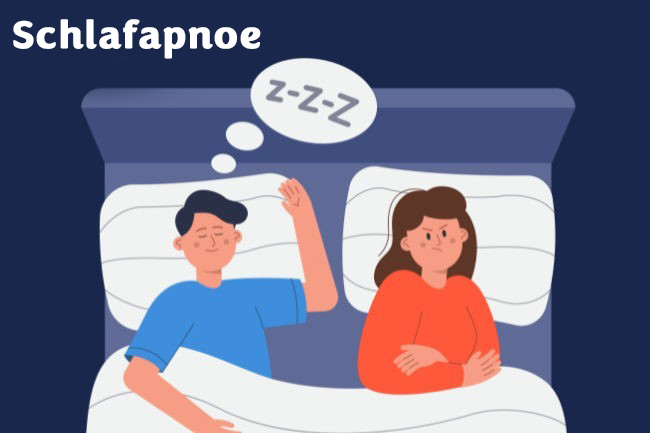
Isabelle could not sleep. No matter what she did – she kept waking up at night and her workdays were beginning to suffer as a result.
Izzy knew about homoeopathy and had already tried a few common remedies for sleep problems. But unfortunately neither Nux vomica, Coffea cruda nor even Ignatia could improve her sleep quality.
One night she was once again jolted awake, lying awake in bed and thinking about what to try next. As her thoughts ran through her head, she heard the rhythmic snoring of her husband James. Then the sound stopped for a moment and the room was deathly still. A little later the breathing resumed and he began to wheeze, gasp, stammer and moan again.
A Homoeopathy Lesson
In that moment Izzy learned an important homoeopathic lesson. You must not only choose the right remedy, but also treat the right PERSON!
Yes, because the problem was not with Izzy at all! Her body was merely reacting to the dissonance of her husband’s sleep apnoea, which caused her to wake several times during the night!
The next day they talked about it and discovered that neither of them had slept well! Apparently James’s sleep apnoea was more disruptive than they had previously thought.
Spot on!
At last Izzy had the right diagnosis for the right person. Now she just had to choose the right homoeopathic remedy for James. She had learned in one of my courses that one of the main remedies for sleep apnoea is Sanguinaria C200. It is taken twice a day.
S for Sanguinaria and Snoring
Sanguinaria is one of the chief remedies for a range of sinus and throat complaints. It can help, for example, with snoring, constant dust-induced clearing of the throat, burning mucous membranes, heavy phlegm, post-nasal drip and sinus pain that radiates from above the right eye.
But aside from the appropriate homoeopathic remedy, I want to leave Izzy and James — and all my students — with something else.
When using Sanguinaria (as with any other homoeopathic remedy given for a chronic condition), it is up to the patient to recognise the nuances of their recovery.
Impatient people tend to begin “evaluating” their symptoms after only a few days.
For chronic conditions I advise against making an assessment immediately after starting a remedy. As I teach in my courses, we generally wait to assess chronic conditions until two full months after starting a remedy. At that point one should be able to recognise a change in the condition.
Did James from our example say after two months: “Sanguinaria hasn’t helped because I still snore and the apnoea is still there”?
No, he did not!
James did note that he still snored occasionally, but not as often. Occasionally he still had an apnoea, but it was not as severe. He had also noticed that his sleep quality had improved and he had more energy during the day. And Izzy noticed a change too, mainly because she no longer woke several times a night due to James’s sleep apnoea.
For that reason James continued taking Sanguinaria, precisely because he could see an improvement.
Patience Pays Off
He did not expect perfection, because nothing in life is perfect! If someone expects a chronic ailment to disappear completely within a few days, they are reading the wrong blog!
Undoubtedly acute illnesses and infections can be cured relatively quickly with homoeopathic help. But chronic conditions need more time — and sometimes they fade into the background rather than being completely eradicated. And that is our goal: to alleviate a chronic condition until it no longer impairs our ability to lead a fulfilling and productive life.
Is the illness so severe that you suffer from it? Or has the condition receded to the point where it only appears occasionally with mild symptoms?
I myself have had this experience with my severe allergies! Homoeopathy freed me from the paralysing days when I had to live life as if in a bubble. Today I only very rarely have short allergic attacks with swollen, itchy eyes, and only during very heavy pollen days. But I can live my life freely and no longer have to think about allergies every day.
Please remember that you must not expect perfection. The use of homoeopathic remedies for a chronic condition can be considered successful when you no longer have to think about the illness constantly. The complaints recede and move from an overwhelming catastrophe to an indisposition that only shows itself occasionally.
Because homoeopathy helps — pass it on!
Warmly,
Yours,
.png)