|
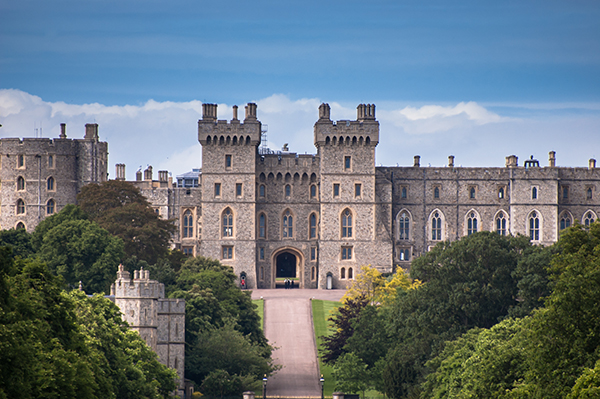 Windsor Castle Windsor Castle
Prince Charles – now King – made headlines in May 2014 in the United Kingdom for his support of homeopathy. The Prince had a private meeting with then Health Secretary Jeremy Hunt to advocate for funding of alternative therapies, including homeopathy, within the National Health Service.
Opponents of alternative medicine had urged the Prince to stay out of the debate and were frustrated by his repeated attempts to influence Hunt, who shares the Prince’s appreciation for alternative medicine.
However, the Prince holds a clear view on this subject. Both he and his mother, Queen Elizabeth II, are strong supporters of homeopathy and attribute their good health to the healing method. The Queen was even patron of the Royal London Homeopathic Hospital in London. (And yes, there are still homeopathic hospitals in England!)
Royal Remedy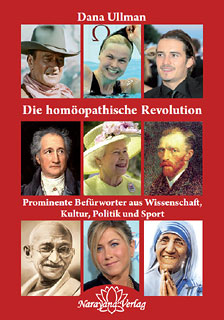
Royal support for homeopathy is nothing new. European royal families have endorsed homeopathy since Samuel Hahnemann opened his practice in Paris in the 1800s and significantly contributed to its growing popularity. At that time, homeopathy was very fashionable and the preferred medicine among the nobility, clergy and military.
The royal families of Germany, Belgium, the Netherlands, Denmark, Sweden, Norway, Austria, Portugal, Spain, Greece, Russia and England were all related by blood and marriage, so it is perhaps unsurprising that they shared their successes with homeopathy among themselves.
Homeopathy first came to Britain in 1835 when Queen Adelaide – the wife of King William IV – suffered from a severe illness that her royal physicians could not cure. She turned to a long-time colleague of Hahnemann’s, Dr Johan Ernst Stapf, who treated her with homeopathy. The Queen’s public support for the new medicine helped establish homeopathy’s popularity within the British upper class.
The First Homeopath in Britain
The first doctor in Britain to train in homeopathy was Dr Frederick Hervey Foster Quin. He was himself a nobleman and the son of the Duchess of Devonshire. He often dined with King Edward VII and also served as physician to Prince Leopold and Princess Adelaide before Leopold became King of the Belgians.
Sir John Weir was the most famous royal homeopath, serving a total of six monarchs: George V, Edward VIII, George VI and Elizabeth II of England, King Gustav V of Sweden and King Haakon VII of Norway. He was knighted by George V in 1932.
King George VI was so fond of homeopathy that he gave one of his racehorses the name Hypericum.
For two centuries kings and nobility promoted the founding of homeopathic organisations and hospitals across Europe, many of which are still operating today.
Why Was Homeopathy So Popular with Royals?
Well, it may have had something to do with the fact that orthodox medicine at the time favoured practices such as bloodletting, leeches and the administration of heavy metals. Royal families could afford to seek out better, safer and gentler methods. It is very likely that a personalised, individualised treatment appealed particularly to nobles and monarchs, who were more accustomed to being treated as individuals than the poorer social classes.
Convincing Homeopathy
The most important reason, however, was that homeopathy worked. It produced impressive results in treating the infectious diseases of the time—such as scarlet fever, yellow fever, cholera, typhus and influenza—as well as numerous chronic illnesses that orthodox medicine could not cure. In other words: homeopathy was popular with the nobility for the same reason people turn to it today: it is safe, easy to use and effective.
And another interesting fact: homeopathy is not a fad, a trend or a medicine that falls out of favour when its side effects outweigh its benefits. The same homeopathic remedies that worked in the 1800s are still being used successfully today.
Would you like to learn about the healing method that has been valued by monarchs and many others for more than 200 years? Read here the essentials about homeopathic remedies for pain. It is very likely that these exact remedies were also taken by the nobility over the past two centuries, and they should not be missing from any household medicine cabinet. And every time you take one of these remedies, you may remember that royal pains were once treated with them!
Homeopathy for Pain – Not Just for Royals
Arnica montana 200 - Arnica is used for head injuries, bruises, contusions, sprains and bone injuries and is the first remedy to reach for after an accident or trauma. It relieves pain, reduces inflammation and bleeding, and promotes healing. It can also be used for muscle soreness from overexertion.
Belladonna 6 or 30 - Can be given for sharp, throbbing, shooting and stabbing pains, especially when accompanied by redness. It is also used for high fever and is an excellent remedy for many childhood illnesses. The sufferer often has cold hands and feet and a craving for lemons or lemonade.
Bellis perennis 30 - An important remedy for bruises, contusions, lacerations and internal injuries, especially to the soft tissues of the trunk. Bellis is similar to Arnica but acts deeper. It is also ideal to support recovery after childbirth and after mechanical injuries to the breast, e.g. following mammography or injury from a car seatbelt.
Calendula tincture - Applied as a tincture to cuts, grazes and burns, this remedy speeds the healing process. It stops bleeding, relieves pain and also has antiseptic properties. Repeated application of sterile dressings soaked in Calendula on wounds and cuts has been shown to help prevent impending infections.
Hypericum 200 - The best remedy for puncture wounds, cuts, lacerations and penetrating injuries, especially in nerve-rich areas of the body. When the pain is excessively severe and the tissue is extremely sensitive to touch, Hypericum may be the answer. It is also excellent for injuries to the brain, back and spine as well as the coccyx. Hypericum is also known for its ability to help prevent tetanus infection.
Ledum palustre 200 – Relieves pain from puncture wounds, insect stings or bites and animal bites. This remedy can reduce swelling and inflammation. If the person feels cold or the injured area feels cold, these are important indications for Ledum. Ledum is also known as a homeopathic remedy for tetanus prophylaxis.
Magnesium phosphoricum (Mag phos) D6 - An excellent remedy for cramps, especially menstrual cramps, toothache, writer’s cramp, migraine and colic. Mag phos should be considered for any neuralgia that is relieved by heat and pressure. It is often most effective when a dose is dissolved in hot water and then sipped.
Ruta graveolens 6 or 30 - Indicated for sprains, bone bruises or injuries to cartilage, tendons or periosteum. The remedy is also useful for eye pain from strain and for the pain of a bunion (hallux valgus). Consider Ruta whenever injuries to deep muscle tissue feel bruised and sore, especially in the wrists and knees. It is also effective for repetitive strain injuries such as golfer’s elbow, tennis elbow and carpal tunnel syndrome.
Further information on dosing and potencies of the remedies can be found here.
Homeopathy helps – spread the word!
Warm regards,
Yours,
.png)
Source: https://joettecalabrese.com/blog/homeopathy/royal-pains/
|


