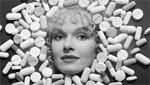
Stripping away the layers of medication |
|
| by Patricia Maher | |
|
In September 2012 a patient named N. came to my clinic with depression and anxiety. The 47-year-old woman arrived with her husband. She appeared dazed and found it difficult to make eye contact with me. She could barely answer my questions and repeatedly lost her train of thought mid-sentence, with her husband having to speak for her. |
| Over the next two hours her husband helped me piece her story together bit by bit. A few months earlier she had suffered from insomnia due to stress caring for her elderly parents and following the death of her mother-in-law. She had a long history of depression and had been taking various antidepressants for ten years, although she had never stayed on any of the conventional drugs for longer than a year because they then “stopped working”. At the time of the consultation she was withdrawing from Effexor, Xanax and Latuda. Both she and her husband were worried because she was drinking too much alcohol and smoking too much. A few months before she had seen a psychopharmacologist who prescribed Geodon to address her sleep problems. N. and her husband said she had changed dramatically on Geodon, becoming “superficial and emotionless”. She didn’t know what to do and had lost touch with her family. Her husband reported that she often switched off completely during supper with the children. |
|
| Recently she had visited her GP to get support with stopping Geodon. The GP stopped the Geodon but put her on Latuda, another conventional drug closely related to Geodon. | |
| Although I had obtained some information about N.’s life from the patient interview, it was practically impossible to assess what was really going on. I recognised that the effects of Geodon and Latuda were clouding the picture and that I could not prescribe a constitutional remedy until I had found the woman behind the empty stare. | |
| On closer inspection of the drugs I discovered that Geodon and Latuda are antipsychotic medications. They are actually prescribed for schizophrenia. Although I am not a psychopharmacologist, I saw no sense in giving such drugs to this woman. | |
| As I could not determine a homeopathic type, I contacted a psychopharmacologist I know (1) and obtained some Geodon tablets from him. I triturated these to C 3 and then potentised them using the Korsakov method to C 15. I then asked N. to take one dose daily and instructed her to tell her GP to stop the Latuda. | |
| Two weeks after taking the homeopathic Geodon she reported that she felt much more like herself; she was still struggling but was more anxious than depressed. She continued the daily dose until I saw her again a month later. At that consultation she was completely different – I could see N.’s true personality. She had presence – amid tears and suffering I could sense her ironic sense of humour and warmth. She was no longer absent-minded; she was anxious and agitated and crying, but this time she could tell me why. She was able to tell me more of her life story in her own words without her husband speaking for her. |
|
| As her story emerged it became clear that this strict Catholic mother of six felt abandoned by her own parents: “No matter what I do, I cannot win my parents’ love.” | |
| And, perhaps more importantly, she also felt abandoned by her God. She had previously attended church daily and prayed, but now felt forsaken by God and hardly prayed at all. The last time she said the rosary she had to vomit because she was withdrawing from Xanax. She felt guilty because she had had an abortion before the birth of her last child. At the time she felt she could not physically carry another pregnancy. After the abortion she described herself as a wreck and could not stop crying. She had been brought up strictly Catholic and remained a practising Catholic as an adult. She deeply regretted the abortion, and at that time the doctor had begun prescribing her antidepressants. N. said she felt she had sinned even though she had gone to confession at the time. | |
| Prescription: Kalium bromatum C 12 daily | |
| I am waiting for N.’s story to reveal itself in more detail. I suspect there are further layers of medication to uncover. | |
| ************************************************************************** | |
| (1) Psychiatrist specialising in pharmacological treatment | |
| Photo: Wikimedia Commons Martine Bijl; TROS |
|
| Category: Cases Keywords: Depression, anxiety, antidepressants, medication, superficial, emotionless, abandoned, God, guilt Remedy: Kalium bromatum |
|