
by Joette Calabrese
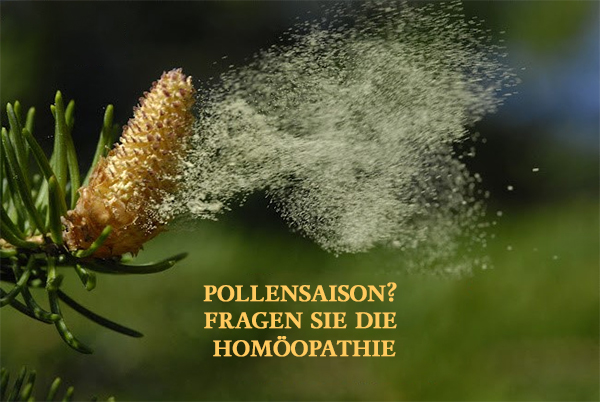
I'm fed up with all the pollen again!
It seems as if, wherever I look, a dusty film of yellow-green pollen is settling on pavements, cars, balconies and windows. If I stood still long enough, the pollen would probably coat me in a thick layer of powder.
I used to have severe hay fever that caused allergic reactions with itchy, watery eyes. If you watch my older videos, you've probably noticed me apologising for my swollen eyes.
Tackling the problem at its root
These symptoms have largely disappeared for me recently — at least not as regularly as before. It began with our move to Florida. I believe that homeopathy has addressed my allergies so much at their roots that I now only suffer symptoms on very few days of the year, when pollen counts are particularly high. Then one or two doses of the homeopathic remedy I choose are enough, and I'm healthy again for months... even for up to an entire year! That's what I mean when I say that homeopathy tackles the illness "at the roots", rather than merely suppressing symptoms temporarily.
I bet you're wondering exactly what I take, aren't you?
The homeopathic list – small but select
Well, I'll get to my preferred homeopathic remedy for allergy-related eye problems shortly. But first I'd like to mention a few single remedies that have proven useful for allergic symptoms:
- Euphrasia officinalis for abundant, irritating tears
- Galphimia glauca for itchy nose and sneezing due to hay fever
- Histaminum hydrochloricum for allergy symptoms in general, including hay fever and hives
Please bear in mind that these are just the main homeopathic remedies. There are others that need to be chosen according to your individual symptoms.
Euphrasia officinalis – eyebright
Okay, back to your question. What did I take for my itchy, watery and swollen eyes when my allergy flared up again?
Well, I actually used the first remedy listed above: Euphrasia officinalis 30. Euphrasia is known as an eye-specific remedy. It has also been shown to support the whole structures of the sinuses with hay fever, including the nose and ears.
So with itchy, swollen eyes and heavy tearing, I immediately think of Euphrasia. Whenever my symptoms were really severe, I might have taken it two or three times a day. As soon as there was improvement, I reduced it to once or twice daily. When my symptoms then developed into what we would call "much better," I stopped the remedy. Remember that homeopathy is a form of medicine. We don't take it at random; we only use it when we really need it. More information on dosing and potencies of the remedy can be found here.
In homeopathy, the symptoms present are of utmost importance. They serve as signs... as reminders. If the symptoms are gone and no longer remind us that we need the remedy, we stop taking it! It's that simple.
And if we absolutely see no improvement, we also stop the remedy. No improvement — not even the slightest — usually means we've chosen the wrong homeopathic remedy for our complaints. So we switch to another remedy.
Strengthening the body's natural defences
Homeopathy stimulates the body's natural defences against allergies and is therefore the optimal choice compared with over-the-counter antihistamines and decongestant nasal drops, which suppress symptoms and can have unintended consequences (drowsiness, dry mouth, urinary retention, headaches, etc.).
Euphrasia officinalis 30 should be in every home medicine cabinet. If a loved one then comes to you with red, watery and itchy eyes, it'll be easy to pass on the good news about homeopathy!
Homeopathy helps — spread the word!
Warmly,
Yours
.png)
Source: https://joettecalabrese.com/blog/allergy-season-meet-homeopathy/
