
A short course by Heiner Frei - with a video case study on Covid-19
Introduction
Homeopathy, as defined by Hahnemann in the Organon of the Healing Art (ORG), is a time-consuming art.1 As the most successful medical therapeutic method in the 19th century, it was very popular, which meant that homeopathic physicians soon had to treat many patients — so many that they often lacked the time to take long case histories. Clemens von Bönninghausen, a homeopathic physician in Münster and a close friend of Hahnemann, therefore defined with his agreement an efficient technique of case-taking that focused on the patient’s main complaint. Remedy selection was based on localisation, sensation and signs, modalities and accompanying symptoms, with the greatest weight given to the modalities (ORG § 133).
Bönninghausen also always tried to match the characteristic patient symptoms with the genius of a remedy. The genius is the individual, characteristic quality that distinguishes one remedy from another. It is evident in the symptoms that repeatedly appeared in proving and in different localities, and which were also cured clinically by the remedy. In Bönninghausen’s Therapeutic Pocketbook 1846, the first repertory of homeopathy, genius symptoms are listed in high degrees (degree 3 to 5), whereas non-characteristic symptoms have low degrees (degree 1 and 2).2 Bönninghausen's gradation is still the most reliable today; it is not matched by any other repertory (Table 1).
|
Table 1: Bönninghausen’s grading of symptoms |
|
|
Degree 1 |
Symptom observed once in the proving. |
|
Degree 2 |
Symptom observed several times in the proving. |
|
Degree 3 |
Symptom observed in the proving and clinically cured. |
|
Degree 4 |
Symptom observed in the proving and often clinically cured. |
|
Degree 5 |
Symptom of the fourth degree that was highlighted by Bönninghausen in the repertory by underlining. |
In an effort to match the characteristic patient symptoms with the genius of a remedy, the polar symptoms play a central role: any symptom that can also have an opposite is polar, e.g. thirst / lack of thirst, better by warmth / worse by warmth, desire for fresh air / aversion to fresh air. There are about 160 polar symptoms of significance.
The patient can only exhibit one pole of a polar symptom: he or she is either thirsty or not thirsty. By contrast, remedies, whose proving symptoms are compiled from observations of several provers, often show both poles. Five provers may, for example, have observed the symptom thirst, and one prover the symptom lack of thirst. If thirst was also cured by the remedy, the symptom appears in the repertory in the third degree, while lack of thirst appears in the first degree.
To cure a patient with the symptom thirst, it is important that the remedy covers this symptom in a high degree (degree 3 to 5), and that the opposite pole is in a low degree (degree 1 or 2). If lack of thirst were in the third degree, the remedy’s genius would not correspond to the patient’s symptomatology and, in our experience, it would not cure the patient. Bönninghausen called such a constellation a contraindication. When we analyse non-cured cases in which the administered remedy covered all symptoms, we almost always find overlooked contraindications as the cause of failure.
Polarity analysis
In the Polarity Analysis (PA), Bönninghausen’s insights are applied systematically to all polar symptoms, on the one hand by excluding remedies with contraindications, and on the other by determining the polarity difference: to calculate it, for each candidate remedy you add the degrees of the patient’s polar symptoms and subtract from that the degrees of the corresponding opposite-pole symptoms.
The higher the polarity difference, the more the remedy corresponds to the characteristic patient symptomatology, provided there are no contraindications. 3
For the analysis, if possible at least five polar symptoms should be used. To record these, the usual homeopathic case-taking is supplemented with checklists (for acute illnesses) and questionnaires (for chronic illnesses), on which patients can underline symptoms they have observed in themselves. These focus on polar symptoms.
The procedure, which may seem complicated in theory, is simple and efficient thanks to appropriate software based on Bönninghausen’s Therapeutic Pocketbook 1846.9
It becomes immediately understandable when we illustrate it with case studies.
Case study: Homeopathy in Covid-19 — 26-year-old female patient
In this video Heiner Frei demonstrates homeopathic case-taking in acute illnesses using a case study of a patient with Covid-19.
Case study: Reto N, 6 years, Hand–Foot–and–Mouth disease
Reto has had a fever of 40° for one day, drooling and severe mouth pain that prevents him from eating and sleeping. He can drink, but only in small amounts. In addition there is a rattling cough, a blocked nose and the child has abdominal pain. This morning a painful blister-like rash appeared around the mouth, on the palms and on the soles. The parents are very worried because they associate the illness with a tick bite ten days earlier. They come to the practice as an emergency.
On examination a suffering, high-fever child with a markedly reduced general condition is seen. A look into the mouth shows the main finding: the mucosa is covered with painful blisters. All findings are typical for hand–foot–and–mouth disease, an illness similar to foot-and-mouth disease in animals, often epidemic in children and lasting on average ten days. Apart from analgesics there is no conventional medical treatment for it.
From the checklist for acute ENT and eye diseases the mother notes the following symptoms:
Mouth pain, stuffy nose, cough without expectoration, abdominal pain, insomnia between 22:00 and 02:00.
- Worse from eating -P*
- Worse after eating -P
- Worse from touch -P
- Increased salivation -P
- Lack of thirst -P
- Difficulty inhaling -P
- Worse sitting bent -P
- Better outdoors -P
- Better from getting cold -P
- Worse from room warmth -P
*P = Polar symptoms
This patient has many polar symptoms. We first carry out the repertorisation using only these. They are often sufficient for an accurate remedy selection.
Table 3: Repertorisation (CLICK - for a larger view)

Notes on Table 1: Symptom reliability: Green = high, Yellow = medium, Red = low; < = worse from; > = better from ... Patient symptoms: are found below the blue and above the red line. Opposite poles: are italicised and are found below the red line. Calculation of the polarity difference: The degrees of the remedy’s polar patient symptoms are added. From this sum the degrees of the opposite poles are subtracted: the result is the polarity difference (examples: Sabina 28-3=25, or Spongia 17-12=5). The higher the polarity difference, the better the remedy fits the patient symptomatology, provided it has no contraindications. Contraindications, CI: The opposite poles in the genius range (degrees 3–5) are compared with the grading of the patient symptom. If the patient symptom has a low degree (1–2), but the opposite pole a high degree (3–5), the genius of the remedy does not correspond to the characteristic patient symptomatology; the remedy is therefore contraindicated. (Example: In Bryonia the patient symptom lack of thirst is in degree 1, but the opposite pole thirst is in degree 4, i.e. thirst is a genius symptom of Bryonia. This remedy therefore does not fit the patient symptomatology perfectly and will not cure the patient). Columns with contraindications, CI, and relative contraindications, (CI), are shaded grey so they can be recognised at a glance.
Fourteen remedies cover everything, but twelve of them have contraindications. Practically only Sabina is a possibility, with an outstanding polarity difference of 25, thereby covering the symptoms highly specifically.
Remedy given and outcome
Reto is given a dose of Sabina C 200.
A rapid improvement follows: the fever falls within a few hours, the pain subsides and the general condition normalises the same day. The next day the blisters in the mouth and the skin rash are practically gone.
Case study: Frederik I, 4 years, enlarged tonsils
Frederik is brought to the practice because of severe snoring. His nose has long been poorly patent, although he does not have a cold. He sleeps with his mouth open and repeatedly has pauses in breathing. At night Frederik also sweats so much that his pillow and sheet become very wet. His problems cause him to be often tired during the day. Otherwise he is a content child who is rarely ill.
On examination it is apparent that he has a very narrow nose; inhalation is therefore noisy. His palatine tonsils are markedly enlarged (tonsillar hyperplasia). We conclude that the pharyngeal tonsils are also enlarged and that the obstructed nasal breathing is mainly caused by these.
From the questionnaire for chronic ENT and eye diseases the parents note the following symptoms:
Snoring, blocked nose, excessive sweating
- Worse lying down -P
- Worse after getting up from bed -P
- Worse sitting -P
- Worse by physical exertion -P
- Worse from warm food -P
- Rattling respiration
As we do not have many polar symptoms in this patient, we also include the non-polar symptoms in the repertorisation.
Table 4: Repertorisation (CLICK - for a larger view)

Eleven remedies cover all symptoms, but only Lachesis, Phosphorus and Causticum have no contraindications. Because Lachesis has the highest polarity difference it is the first choice.
Remedy given and outcome
Frederik therefore receives Lachesis C 200.
A month later the amazed parents report that their child now sleeps with his mouth closed and that snoring and breathing pauses have disappeared. The improvement is about 90%. A look in the mouth shows that the palatine tonsils have also become noticeably smaller.
Case study: Celine Z, 8 years, acute otitis media
Celine has had a fever of 38° for three days, a runny nose and a sore throat. Last night severe left ear pain developed, which was only moderately relieved by a poultice of onion. Tearful and overtired, she comes to the practice.
On examination we find a child with nasal congestion, a reddened palate and a bright red left tympanic membrane. The remainder of the status is unremarkable.
From the checklist for acute ENT and eye diseases the mother notes the following symptoms:
Stuffy nose, sore throat, ear pain, desire for company
- Ear left -P
- Better by being wrapped up -P
- Better lying down -P
- Better by rest -P
- Worse on waking -P
- Thirst -P
- Warm food improves -P
- Worse swallowing -P
- Worse from eating -P
- Sadness -P
Due to the many polar symptoms we can again perform the repertorisation with these alone.
Table 5: Repertorisation (CLICK - for a larger view)

Twelve remedies cover all symptoms, only two have no contraindications. Patients of Natrium muriaticum want to be alone, but this patient has an increased desire for company. Therefore Graphites is the first choice.
Remedy given and outcome
Celine receives Graphites C 200 immediately in the practice, and Natrium muriaticum as a reserve in case the ear pain has not significantly reduced within six hours.
Fever and ear pain disappear very quickly, so Celine does not need to take the second remedy. The stuffy nose lasts two more days and then resolves. Follow-up after 10 days shows completely normal ENT findings.
Effect of homeopathy or placebo?
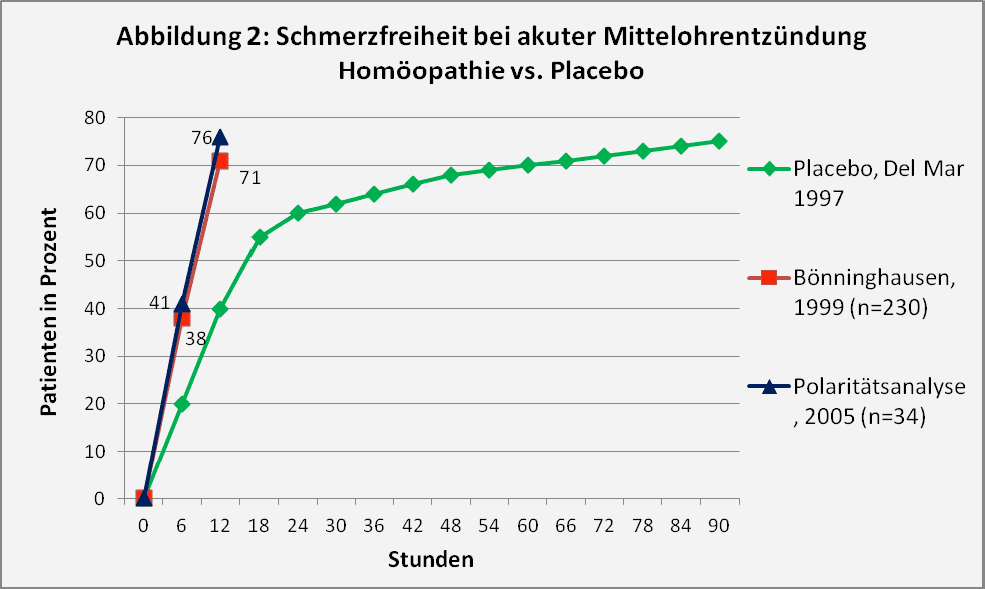
If we want to know whether homeopathy produces an effect in acute illnesses, we must demonstrate that its effect differs from a placebo treatment (sham treatment) in the speed of healing or the extent of improvement. From conventional medicine it is known that 60% of patients with acute otitis media are pain-free under placebo after 24 hours and 86% within seven days. Homeopathy must therefore act significantly faster if it is to be distinguishable from placebo.
To investigate this we conducted two studies in our practice in which patients received an individually determined first homeopathic remedy in the practice. Additionally, we gave the parents a homeopathic reserve remedy to administer if the ear pain had not clearly lessened after six hours (procedure as in case study 3). In the first group we treated 230 patients according to the Bönninghausen method, without polarity analysis, and in the second group 48 patients with the help of polarity analysis.
Results
In the Bönninghausen group 39% of the children were pain-free after six hours. A further 33% achieved pain relief with the reserve remedy after 12 hours. 28% showed no response to the remedies.
In the polarity analysis group 41% of the children were pain-free after six hours, a further 35% with the second remedy after 12 hours. 24% showed no response to the remedies. (Figure 1).
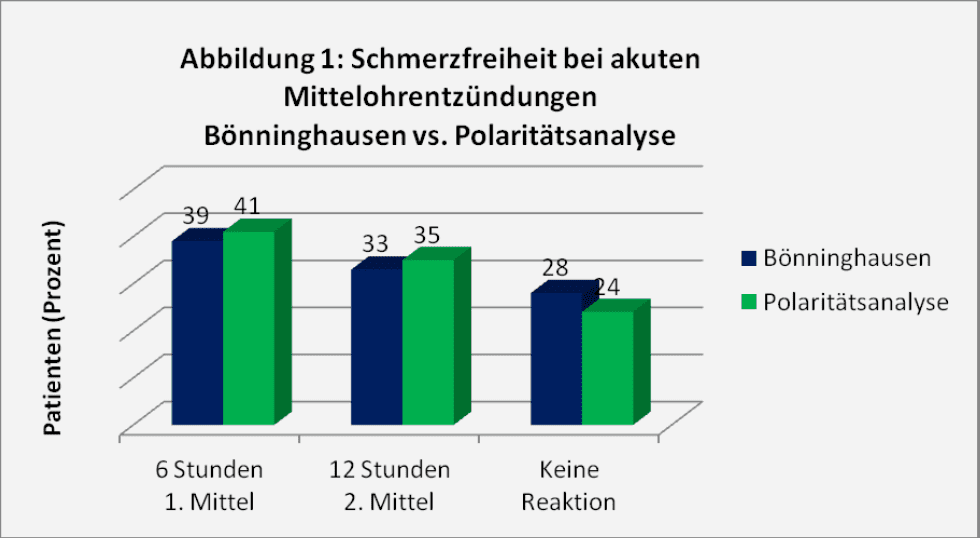
Figure 2 shows that the improvement in the polarity analysis group is 2.4 times faster than that under placebo.
Discussion
Polarity analysis is a simple, precise and reproducible method of remedy selection that yields very good treatment results. The prerequisite is that the patient is well observed and that the symptom formulations we use for repertorisation are accurate. One cannot mechanically enter the findings underlined on a questionnaire into the program, but must ask the patient how they experience their symptom wherever there is any uncertainty. — Despite this caveat, remedies can be identified quickly, which is why polarity analysis is well suited for use in a busy primary care practice.
Experienced homeopaths may perhaps express reservations about how one can treat successfully with Bönninghausen’s Pocketbook, which contains only 125 remedies. In fact this works very well. In an earlier study we were able to show that the hit rate of remedy selections decreases with the size of the repertory: the more remedies available, the lower the probability of finding the right one at first sight. Apparently the old homeopathic masters already had the most important remedies available and thus achieved many cures.
The study on acute otitis media shows that homeopathy, when applied correctly, is highly effective and far superior to a placebo treatment.
References
- Hahnemann S, Organon of the Healing Art. 6th edn. Ed. JM Schmidt, Haug-Verlag, Stuttgart, 1999.
- Boenninghausen Cv, Bönninghausen’s Therapeutic Pocketbook 1846, Revised edition 2000, Ed. KH Gypser, Sonntag-Verlag, Stuttgart, 2000, p. XXXIII.
- Frei H, Polarity analysis, a new approach to increase the precision of homeopathic prescriptions. Homeopathy (2009) 98, 49–55.
- Frei H, The Polarity Analysis in Homeopathy – A precise approach to the homeopathic remedy. Narayana-Verlag, Kandern, 2014.
- Frei H, Everts R, von Ammon K, Kaufmann F, Walther D, Hsu-Schmitz SF, Collenberg M, Fuhrer K, Hassink R, Steinlin M, Thurneysen A: Homeopathic treatment of children with attention deficit hyperactivity disorder: a randomised, double blind, placebo controlled crossover trial. Eur J Pediatr (2005) 164: 758–767.
- Frei H. Homeopathic treatment of children with ADD/ADHD – A systematic therapeutic concept. 3rd edn. Haug-Verlag, Stuttgart, 2011.
- Frei H. Homeopathic treatment in acute and chronic illnesses – Efficient remedy finding with polarity analysis. 2nd edn. Haug-Verlag, Stuttgart, 2011.
- Frei H. Homeopathic treatment of multimorbid patients – Safe remedy choice through polarity analysis and the Bönninghausen method. Haug-Verlag, Stuttgart, 2011.
- Frei H, Hubele J, Polarity Analysis Software from Boenninghausen’s Therapeutic Pocketbook 1846 (German, English, Spanish), Austin, 2016 (see: http://polarity-analysis.com).
- Del Mar C, et al. Are antibiotics indicated as initial treatment for children with acute otitis media? A meta-analysis. BMJ 1997, 314:1526–1529.
- Frei H, Thurneysen A. Homeopathy in acute otitis media in children: treatment effect or spontaneous resolution? Brit Hom J 2001, Oct, 90 (4): 180–182.
--------------------------------------------------------------------------------------------------------------


