|

Homeopathy works!
I see every day how it helps with a wide variety of complaints. My students regularly report their remarkable successes. By "remarkable" I don't mean "fantastic" treatment outcomes, but simply things worth telling others about.
The American pokeweed
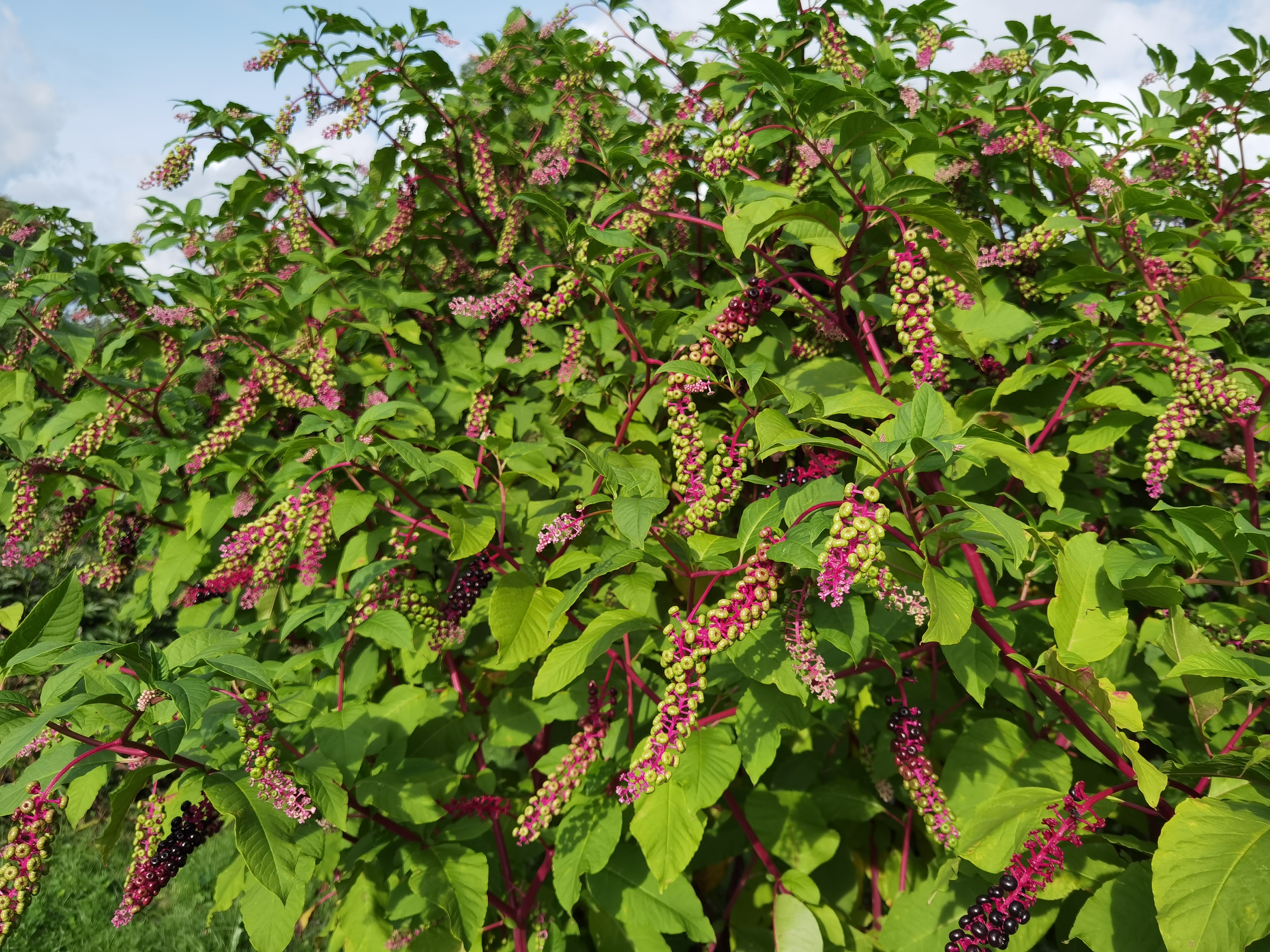
Today I want to write about Phytolacca decandra. The homeopathic remedy Phytolacca is made from the American pokeweed, a well-known poisonous plant. Do you remember the Elvis Presley hit "Polk Salad Annie"? Well, it is this much-sung pokeweed (Phytolacca) that we're talking about here.
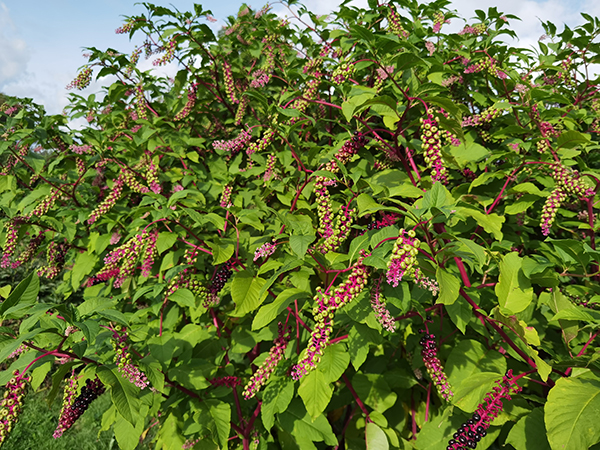
(An interesting aside: in the southern states of the USA the young leaves are harvested and cooked in a special way before the plant bears berries. The cooking makes the plant edible. The recipe for the traditional preparation is passed down in rural areas from one generation to the next, ensuring you don't accidentally poison your family. If you'd like to read more about the traditional use, click here.)
From poison to healing medicine
You will surely remember: substances that are inedible or poisonous in their raw form can be transformed into some of the most wonderful remedies in the world once they are diluted and succussed according to the homeopathic method. And good luck to anyone who can replicate that. (See also: I love everything that is poisonous — but only in high dilution, because then it becomes a remedy that heals).
Let me now report how one of my students fared with Phytolacca. To protect her privacy I will call her Annie, after Elvis Presley's hit.
Phytolacca for the breast and glandular tissue
Annie had to undergo breast surgery. Unfortunately, the breast tissue did not retract normally after the procedure. Instead something developed in the breast that Annie described as "strange" — hardened, contracted and thickened tissue, quite different from the other, healthy breast.
Once Annie was certain it was not malignant, she used the healing power of homeopathy. I have often written in my blog about remedies that act on breast tissue. In "Sore Breasts (Mastalgia): When even an embrace is too much" I explain the roles of Bryonia and Bellis perennis in breast pain. And in "When mammography is painful" you learn how Arnica can help with soft tissue trauma.
None of those homeopathic remedies, however, matched Annie's specific symptoms. Fortunately Annie knew there are many roads to Rome and found Phytolacca to be the indicated remedy.
The key symptom for Phytolacca is involvement of the glands, and it is one of the best remedies for bodily pain and inflammation in glandular tissue. Moreover it is one of my favourite remedies for mastitis because it addresses the problems in the breast tissue at the root and also acts on the surrounding lymph nodes.
Phytolacca after breast trauma
Phytolacca is a perfect choice after breast traumas such as surgical procedures, injuries or infections. Of course it is not the only remedy for such cases, but it is a very important one.
Annie took Phytolacca 30 twice daily (read more about potency and dilution levels here "D- or C-potency: that is the question here"). After two weeks she was absolutely astonished, because the "strange" breast tissue was soft again and no longer thickened and contracted. The breast looked normal again, like the other uninjured breast.
Homeopathy gave Annie's self-healing powers the impetus they needed to restore the tissue. Now that's powerful medicine!
For moments like these we like to use the word "miracle". But we know that homeopathy does not perform miracles; it is a well-documented, scientifically grounded and reproducible medical therapy.
Admittedly, the results are often so comprehensive and astonishing that they appear almost miraculous. And besides, these stories are wonderful to tell to spread the good news: homeopathy helps!
Warm regards,
Yours,
.png)
Source: https://joettecalabrese.com/blog/phytolacca-and-breast-tissue/

|