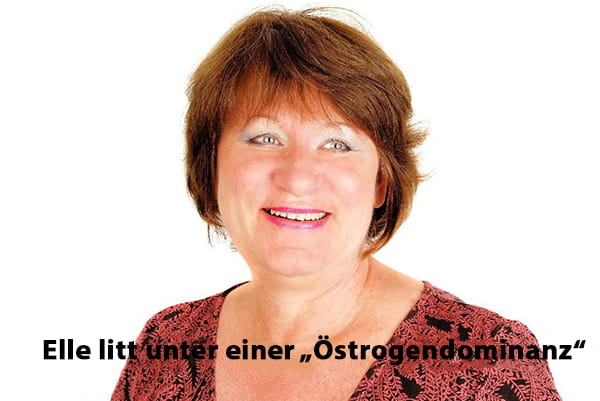
She suffered from "oestrogen dominance", a diagnosis given by a functional medicine doctor.
Actually, I'm glad we have functional medicine doctors at all. Finally there is a medical specialty that takes a holistic view and considers the interaction of all the body's organ systems.
But as welcome as they are, I still believe that homeopathy has a major advantage over functional medicine, traditional naturopathy and other medical approaches.
I'll explain why in more detail, but first I'd like to tell you Elle's story:
Elle was in her late 40s when she decided to stop using her bioidentical progesterone cream. She wanted to try to rebalance her hormones without replacement products. She had also noticed that some of the problems that had led her to start the treatment were still present.
She had had extensive blood and saliva tests carried out.
But – which may surprise some of you – in a homeopathic treatment this information is actually superfluous.
Oestrogen dominance – or not?
The treatment approach I practise and teach in my courses ignores the concept of "oestrogen dominance" entirely. Instead, various factors are considered: the conventional diagnosis with all its complaints, a detailed description of how these feel and all other symptoms that do not necessarily fit under the heading "oestrogen dominance"; things like food intolerances or warts.
After we set the oestrogen concept aside, it became clear that Elle's main complaints centred on her irregular cycle, including heavy menstrual bleeding, vaginal pain, leucorrhoea and fatigue.
Now we're getting closer to the information we actually want.
It is widely acknowledged that the underlying cause of problems such as PCOS, endometriosis, hot flushes, vaginal dryness, PMS, dysmenorrhoea, cyclical acne, mood swings and many others can be a hormonal imbalance.
Recently the term "oestrogen dominance" has increasingly been used to explain most, if not all, of these complaints.
The question that is often not answered is: "What actually knocked the hormonal balance out of kilter?"
Hormones and the environment
The reason many women consult a functional medicine doctor is that most conventional doctors cannot answer this question, and apply methods that do not address the root cause but simply suppress the symptoms, which can lead to entirely new, disheartening problems.
Naturopathic therapists, functional medicine doctors, chiropractors and other alternative practitioners do often consider this question, but usually have no solutions to offer.
Proposed explanations include the effects of toxic, hormone-active environmental influences, medications and medical interventions (particularly hormonal contraception), nutritional deficiencies (especially low-fat diets) or dietary excesses (notably foods that contain phytoestrogens, such as soy, or polyunsaturated fatty acids).
Treatment usually involves expensive dietary supplements (which often contain questionable additives), synthetic hormone replacement therapy, strict and hard-to-follow diets plus many costly and time-consuming follow-up tests to monitor progress.
Hormones and homeopathy
Now let's look at homeopathy.
Considering that homeopathy has been practised for more than 230 years in Europe, the USA, South America and India – long before there were theories about which hormones were responsible for what – it must be acknowledged that it has long treated these complaints effectively and without much fuss.
In other words: homeopathy addresses the causes without needing to explicitly know the cause.
And why? Because symptoms never lie … they always present in the same way, regardless of the explanatory model. It doesn't matter whether they present as "oestrogen dominance", "progesterone dominance" or even as "hysteria", as it was called a century ago.
The Banerji protocols for hormonal disorders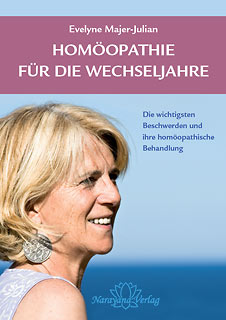
With the Banerji protocols – or Practical Homeopathy® as I call it – we need no more than the (conventional) diagnosis and a few symptoms.
Everything that follows is practically paint-by-numbers.
I am not a medical doctor and therefore do not make diagnoses. But a medical diagnosis is often needed to make a good remedy selection.
In Elle's case the diagnosis was clear: she suffered from leucorrhoea, fatigue, vaginal pain and heavy menstrual bleeding.
Here are the homeopathic remedies she took:
- Kreosotum C200 every other day for the leucorrhoea
- Sepia C200 every other day for her menstruation, fatigue and vaginal pain
- Ammonium carbonicum C200 every other day for the complaints related to the synthetic replacement hormones and to ease her transition into menopause without aids.
Within a few months Elle was off the synthetic, bioidentical hormones; the leucorrhoea had disappeared after about two weeks. Her periods became more regular and lighter; the vaginal pain persisted but had visibly decreased.
Her energy was noticeably higher and, with a laugh in her voice, she confirmed that she felt as fit as she used to. Elle continued taking the homeopathic remedies for a few more months but was then able to stop them because she was well on her way through the menopause – without drugs and without tormenting symptoms.
Homeopathy treats the presenting symptoms and the diagnosis, regardless of the theory behind the cause and whether we understand which hormone causes which symptom. Instead, it helps the body to heal itself.
Just as these homeopathic remedies worked well in the 1700s, 1800s and 1900s and into the 21st century, the same remedies will still work excellently today to correct hormonal disturbances, irrespective of modern explanatory models that seek to justify the use of synthetic, bioidentical alternatives.
For this reason I love the Banerji protocols (or my Practical Homeopathy®). They are neither capricious nor dependent on the latest iteration of medical theory ... AND they can be learned and applied with a little knowledge.
Spread the word – homeopathy helps!
Yours,

.png)

