
|
“The sea is a symbol of the dynamics of life. Everything comes from the sea and everything returns to it. It is a place of birth, transformation and rebirth. With its tides the sea symbolises a transitory state between formless potential and outer reality, an ambivalent situation of uncertainty, doubt and indecision.” Robbins [1] |
|
| The sea is regarded as the source of all life; it covers over 70% of the earth’s surface and contains almost all known elements [2]. Given its great importance for life on Earth, only a small number of sea-derived homeopathic remedies are commonly prescribed: Natrium muriaticum, Calcium carbonicum, Sepia, Ambra grisea and Spongia, although almost 100 marine remedies are currently available. The sea is the habitat of 230,000 known species. It is estimated that only 5% of the ocean has been explored, and biologists believe there are over two million species of marine life! | |
| More than in any other kingdom of nature there is enormous healing potential here, lying dormant in untested marine animals and plants as well as in seldom-prescribed, already available marine remedies. This has led me over the past 10 years to devote myself to the study of sea remedies, initially by setting up the "Sea Remedies Project" [3]. Recently I have run a series of workshops on sea remedies, including short provings of remedies [4]. | |
| SEA REMEDY THEMES | |
|
Through the work of Massimo Mangialavori [5] and my own research [6], several characteristic themes of sea remedies have emerged: |
|
| Sea & Water Water-affine language, for example “flowing; drifting; sinking down; swimming”. AFFINITY TO WATER: People who need a sea remedy often spend much time near water or at the sea; they have hobbies such as swimming, diving, surfing, sailing, or enjoy walking coastal paths. Water appears frightening to them, with hidden, invisible depths and threats; for example, they fear drowning or are afraid of sharks. |
|
| Vulnerability & Protection VULNERABILITY: They feel VULNERABLE and have a need for PROTECTION. Fear of being hurt or touched, or of someone intruding into them, including the sexual intimate sphere; need for security: “I stay in my shell!” Withdrawal as a result of bad experiences; they try to hide or escape, and withdraw emotionally. Physically there may be contractions, cramps and numbness. |
|
| Sensitivity SENSITIVE to pain and suffering, sensitive to mental impressions, to MUSIC, sounds, smells, FEELINGS; BEING HURT. NUMBNESS, emotional indifference, INSENSITIVITY, numbness of the extremities. |
|
|
Relationship Problems |
|
| Need for Privacy They have an intense desire for PRIVACY. They prefer to be alone, in their own space and do not want to be disturbed. VIOLATION OF PRIVACY. CLAUSTROPHOBIA; AGORAPHOBIA. Feelings of ISOLATION, they keep people at a distance. |
|
| Inhibition, Guilt & Shame INHIBITED, not spontaneous. Cannot be themselves; inhibited by feelings of guilt and a SENSE OF RESPONSIBILITY, feels pressured, heavy, burdened, depressed. Complaints from reproach. Ashamed, poor self-image. Desire for recognition. |
|
|
Eating & Nourishment |
|
| Immaturity & Dependence DEVELOPMENTAL PROBLEMS; emotional and psychological. Immaturity; reluctant to leave home, inner conflict between self-sufficiency, dependence and independence. |
|
| Sexuality SEXUAL AMBIGUITY; homosexuality. Reversal of male/female roles and responsibilities. |
|
|
Movement/Development |
|
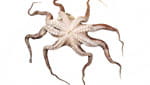
| Physical Affinities Hormonal changes: menopause, premenstrual syndrome, uterine prolapse (especially Calc. carb, Sepia, Murex, Octopus) |
 |
|
Glands: all, especially: |
|
| Heart and Circulation Palpitations, fast or abnormal pulse, high or low blood pressure. Varicose veins, feeling of tension in the blood vessels; sluggish circulation, heart pain. (Especially Nat. mur, sea salt, also Octopus, cephalopods, eel serum). |
|
| Lungs Asthma, breathing difficulties, shortness of breath, wheeze; congestion in chest and lungs; tightness and pressure on the chest. Coughing, choking attacks, or dry and spasmodic, asthmatic cough. (especially Spongia Tosta, Calc. Carb., Sepia, Scallop). |
|
| Water Retention Discharge by weeping |
|
|
Dryness |
|
| Skin Allergic skin reactions, burning, itching, stinging. Herpes; urticaria; blisters; ulcers. Dry skin (especially cnidarians, jellyfish, sea urchins, corals and sea salt) |
|
| Cancer Cancerous ulcers. (Especially Calc. carb, Sepia, sea salt, Ambra grisea, Asterias, Murex) |
|
| Autoimmune Diseases especially cnidarians, corals, jellyfish |
|
| LANGUAGE commonly found in SEA REMEDY cases: | |
| Patients needing a sea remedy often use the ‘sensation language’: | |
| Sea at sea, adrift, floating, ebb and flow, flowing, seasick, salty, clear, murky, gusty, swirling, changeable, alive, wild, storm |
|
| Depth depth, from the depths of my inner being, hidden depths, dark, sinking down, submerging, under water, invisible, drowning, gasping for breath, suffocating, diving, timeless, vast space, immense |
|
| Swimming being flung around, like a ship on the high seas, swimming, swimming about, rocking on the water, capable of swimming, balance, air bubbles, light, dance |
|
| Waves It comes in waves, tides, up and down, time periods, rhythm, tidal wave, tsunami, cycles, moon, full moon |
|
| Fish fishy, limp, slippery, slimy, oyster, mermaid, Neptune, crab, whale, shark, dolphin, prawn, squid |
|
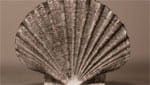 |
Shell Protection: I stay inside, my home is important to me, in my shell, soft, vulnerable inside, hard shell, spiral, I close up, half and half (= bivalve), I build a wall, I withdraw, I hide, to thwart something, I retreat into a cave, intrusion by drilling, breaking, ramming in, destroying, smashing |
| Sea the sea, beach, coast, land, stick one’s head in the sand, shells |
|
| Desert Island lost, ostracised, exposed, stranded, secluded, separated, alone, alienated, distant, on an island |
|
| Water river, liquid, pressure, weight, energy, movement, overwhelming, powerful, frightening, flooding, inundation, danger, being engulfed, flooded, cold |
|
| GUIDELINES for the PRESCRIPTION OF SMALLER MARINE REMEDIES | |
|
Salt is the most important mineral component of seawater (3%). Since Natrium mur. is a well-known homeopathic polychrest, it is often prescribed in cases where another sea remedy might be a better fit. |
|
|
The fact that Natrium mur., Sepia and Calc. Carb. often appear among the top six remedies on repertorisation encourages consideration of further sea remedies for the treatment of a case. Themes or animal-kingdom language in a case that looks like Natrium mur. can point to other marine remedies. |
|
|
If we have a Natrium mur. case with sea themes (but no animal-kingdom themes or language), one might also consider whether Aqua Marina (deep-sea water), sea salt (from beach water) or Himalayan salt could be relevant. |
|
|
Patients who need remedies from shells or other calcareous material of marine creatures often use words and phrases that point to the mineral kingdom. |
|
| If a patient responds well to a sea remedy but the effect is less than hoped for, other remedies from the same biological group should be considered. For example, if Sepia helps to some extent but not enough, other cephalopod remedies might be considered: Octopus (lonely, hides in a cave) or Nautilus (‘up and down’), or Squid (ten-armed cephalopod, lives in a shoal as a social group and has drive, whereas Sepia is solitary and stagnant). | |
| New sea remedy provings and information on the materia medica are gradually becoming available via the internet, as well as in the welcome new publications of Jo Evans [7] and Rajan Sankaran [8]. Yet our knowledge of sea remedies—just like our knowledge of the sea itself—is still in its infancy, and much remains to be done. The cases presented in this issue of Interhomeopathy will hopefully shed a little more light on a vast, little-explored healing potential. | |
| ************************************************************************** | |
| Notes, Sources: | |
|
[1] From the proving of Aqua Marina by Robbins (1999) |
|
| [2] The main elements found in the sea are (in order of abundance): chlorine, sodium, magnesium, sulphur, calcium, potassium, bromine (also iodine, another halogen) and carbon. Other important elements in the sea essential for organic life are phosphorus, oxygen and nitrogen. Seawater contains 3% sodium chloride. | |
| [3] The "Sea Remedies Project” was founded in 2004. It comprised a group of about 20 local homeopaths and homeopathy students who researched lesser-known and newly proved marine remedies and then presented them to other project members at the bimonthly meetings in Bristol. The project ran for 5 years. | |
| [4] The proving (trituration) of Sea Otter (Enhydra lutris). Short meditation provings of Moon Jelly (Aurelia aurita), Pearl (pearl immersion), Seahorse (Hippocampus kuda) and Olive Ridley Turtle (Lepidochelys olivacea - eggs). | |
|
[5] “Staying in a safe environment: the sea remedies” - seminar notes of the course by Massimo Mangialavori by Vicky Burley. |
|
| [6] A computer-assisted repertory comparison program of all rubrics containing marine polychrests. The rubrics were grouped and themes extracted. | |
| [7] ‘Sea Remedies: Evolution of the Senses’ by Jo Evans | |
| [8] 'Survival: the Mollusc' by Rajan Sankaran and Sudhir Baldota | |
|
|
|
| Photos: Bangalley Head, Australia, Nigel Howe Scallop, Jürgen Weiland |
|
| Category: General Keywords: sea remedies, gliding through water, drifting, sinking down, swimming, vulnerability, sensitivity, protection, privacy, relationships, inhibition, immaturity, sexuality, movement |
|

