|
J. is a fine-boned, elegantly dressed woman in her 40s with a liking for strong colours. J. first consulted me in November 2009 after she witnessed a terrible incident in her neighbourhood which had a profound effect on her. |
|
|
|
|
|
She responded well to Opium for several months and returned to see me in spring 2010. |
|
|
She presents with exhaustion and anxiety. Her long-term relationship is breaking down, and she is afraid of how she will cope alone. |
|
| As she is an architect, J.'s anxiety focuses on houses. She carries out renovation work on her own home and worries: Is the roof all right? | |
| Prescription: Opium 1M. | |
|
After 10 weeks: "I feel sick in my stomach. My head hurts. I have great anxiety!" |
|
| How is it? | |
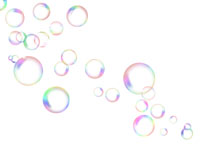
| "I feel completely trapped. Instinctively I want to curl up. Gripping, paralysing fear." "The negative plays the music. I am outside, somewhere, in a much larger space. No problems. I cannot delineate my body. Purple bubbles rise. Clarity and light." |
 |
| Tell me more about what it is like to be trapped? | |
|
"Immobile. I am held fast in a bubble. I cannot pierce it. It is flexible, but I cannot get out. I cannot bring the air inside and outside together. I can move, but I cannot free myself, I am like in a large thick soap bubble." |
|
| Dream: "I dreamed of a large house. A large part of the house is cordoned off, and I am the only one who knows about it. I occupy only part of the house. It is very black and very bright, a strong contrast. There is a wild commotion in the part I do not use, but I ignore it. I know I have opened so much. I feel that I live in a completely different world to many other people. Most of the time I cannot get to the bright part. It is all there, but I cannot get to it or use it fully." | |
| What is the worst feeling? | |
|
"Shrinking. Being squashed, squeezed out. I can break out, but I am caught again. Everything is pulled in. It is not big, but tight. It is deeply rooted, like a fossil. |
|
|
What does freedom mean? |
|
|
"No boundaries. A bird that does not live in a cage. Airy, completely in the air, like an air bubble. Moving through it. I don't like sand heaps." |
|
| At this point I was no longer searching for a marine remedy but rather gases. The language of gases and the corresponding themes were present, including heavy / light, expansion vs. restriction; combustion; liveliness, flow, bubbles. | |
|
Prescription: Hydrogen C 200, in September 2010 |
|
| "I like being in or by the water. I need to go into the water every day. I become part of it. I have a terrible fear of it. Enormous depth and darkness." | |
| And if you cannot go into the water? | |
|
"Trapped. There is no freedom. I cannot cleanse things. Clean my head. Wash things away. I must be able to rise up. I cannot bear living on one level. |
|
| Understanding the case: | |
| Patients who need a marine remedy as well as gaseous elements use the language of buoyancy and flow, heaviness and lightness, bubbles. They may be strongly drawn to water or fear water. We see themes of captivity and restriction vs. freedom and boundlessness. | |
| Molluscs that live in shells use language that describes their experiences within the shell: they can break out but are drawn back into the shell. Everything is drawn in. It is not large, but dense. It is deeply rooted, like a fossil. Fossilised nautilus shells have been found. | |
|
Physiological functions such as water being cleansed by flowing through a siphon: "I cannot cleanse things. Clean my head. Wash things away." |
|
|
Home and security are strong mollusc themes, as the shell is vital for life but vulnerable. |
|
|
|
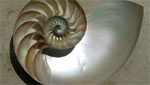
The nautilus shell is a cephalopod (like Sepia). Its shell is coiled and internally divided into chambers. New chambers grow as it matures and moves into the new, larger spaces; the smaller inner chambers are abandoned as it grows. |
|
DREAMT of a large house ... "I only occupy part of it." |
|
| One of the various themes of this mollusc class is the supple movement, speed and agility. J. tells me: "I move quickly and smoothly, but I don't feel like I am. It seems to me that I am very slow." |
|
|
The contrast between light and darkness is characteristic: "It is very black and very bright, a strong contrast." This reminds me of the contrast between the deep sea and the colourfully iridescent surface. |
|
| For J., rising up means freedom ... energy, life, light, brightness ... Being able to expand because there is no pressure; being below is frightening ... heavy and oppressed. | |
| The nautilus avoids the sea surface during daylight hours. However, predators lurk in the deeper regions of the ocean, making the dark a dangerous place. | |
|
The nautilus moves through the water by drawing water into the chambers of its shell and expelling it again; it swims by jet propulsion. It controls its buoyancy by osmosis, enabling it to move up and down through the sea. The nautilus can withstand the extreme hydrostatic pressure of deep water down to depths of up to 800 m; beyond this depth they implode and die instantly. |
|
| "I cannot bring the air inside and outside together... I must be able to rise up." | |
| The nautilus is very close to the earliest cephalopods that appeared about 500 million years ago, and they have not evolved much since. Extinct relatives of the nautilus are the ammonites. Individual nautilus shells are unusually long-lived for cephalopods, sometimes living for more than 20 years. | |
|
J. finds being fixed in time, having a particular age, uncomfortable - she did not want to tell me her date of birth. "I do not place myself into an age bracket." |
|
| Prescription: Nautilus C 200, in November 2010 | |
| Follow-ups | |
| After 8 weeks: "My life has completely changed. I am more connected. Everything is running noticeably well. Bubbling along nicely." | |
| Over the next months J. described how she began to accept her spirituality and her clairvoyant abilities: "I am much more myself." | |
|
She is no longer panicky or aimless and can settle without wanting to flee or lose control. The terrible fear has gone. She says that everything now seems more meaningful to her. |
|
| Up to summer 2012 she continued to do well with Nautilus, taking the remedy regularly as needed, increasing up to 1M and later to 10M. | |
|
Looking back to the start of the case, I had been searching from the outset for clues pointing to a marine remedy and in particular to the nautilus shell, since words like fluidity, floating and gliding repeatedly appeared. |
|
|
J. told me that colours were very important to her (a strong pointer to a marine remedy). Part of the original complaints was a fear of dark places because of the black figures that lurk there (one of the symptoms for which I prescribed Opium): |
|
| Perhaps an early indication of the predatory octopus waiting in the depths? | |
| ************************************************************************** | |
| Photo: Soap bubble; Fotolia_39040603_XL_Seifenblasen_© chris - Fotolia.com Halved nautilus shell. The chambers are clearly visible and arranged in a logarithmic spiral |
|
|
Category: Cases |
|