|
|
|||
|
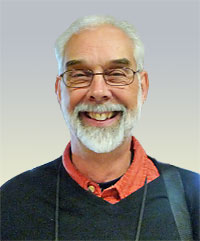
Welcome to Hpathy, Dr Pitcairn! We are pleased to have the opportunity today to welcome you — one of the best-known veterinary homeopaths — and to share in your inspiring thoughts and experiences. KS: You are a very happy man. Please tell us why that is! |
||
I "discovered" homeopathy and it helped me — together with nutritional therapy — to realise that dream. KS: Like Hahnemann, you were disappointed by the poor results of conventional treatments. You tried many therapeutic approaches and ultimately chose homeopathy. Why is homeopathy superior to other healing methods? RP: At first I knew nothing of the superiority of homeopathy. I had studied medicine for seven years and gained a PhD in immunology and virology. Before that I had completed six years of veterinary training and was thoroughly familiar with the then-standard therapeutic methods. Homeopathy was for me an extension and deepening of other healing methods. KS: You are firmly convinced that homeopathy always helps, even in serious illnesses. What gives you this certainty? RP: I have treated homeopathically for 30 years and have experienced astonishing things. Our advantage in veterinary practice is that we can treat very serious physical illnesses that we might not be allowed to treat in humans — at least not officially. For example, I can treat cancer, severe immune system disorders and life-threatening infections solely with homeopathy. Seriously ill animals (at least in the USA) always receive homeopathic treatment in connection with conventional treatment. No wonder that this is not so effective. As a veterinarian I have this advantage and see what immense effect a single remedy can have. I have seen how quickly bacterial and viral infections as well as severe injuries were resolved by homeopathy alone.
|
|||
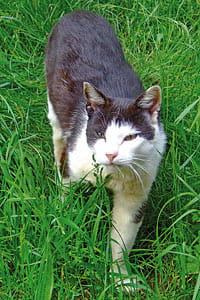 Cat |
KS: Could you present a case example? RP: My own cat had been bitten on the front leg, and I had not noticed until the leg became gangrenous. By that I mean the affected tissue on the leg had turned black, smelt bad and discharged. A single dose of Lachesis solved the case. The skin healed and did not slough. That is a spectacular result in veterinary practice — that such damaged tissue normalised again. When I tell a conventional veterinarian this, he thinks I am mad. |
||
Another personal story is that a few years ago I had a torn and trapped meniscus in my right knee so that the knee joint was locked and would not move for a day. I learned some chiropractic tricks to release it. But over time it became worse and locked 10–15 times a day. That went on for several years. Then I finally found the right remedy and took it in the MM potency, and after a period of inflammatory reactions the knee returned to normal after a few months. It never locked again, and now I can sit cross-legged or in any position without difficulty. KS: Thanks to homeopathy! There are plenty of case reports that demonstrate the effectiveness of homeopathy in animals too, where neither suggestion nor placebos can influence the outcome. Veterinary practice has changed a lot over the years. It is no longer as laborious and idyllic as in James Herriot's times, when so‑called miracle cures appeared, promising rapid healing and completely changing veterinary practice (James Herriot was a British country vet who practised before and after World War II. His semi‑autobiographical stories are bestsellers in Europe). RP: It was not so idyllic for me. The book may give that impression, but driving through the mud in the middle of the night to help a calf into the world is anything but romantic. KS: ... everything has two sides … RP: Since I converted my practice to homeopathy and nutritional therapy everything has changed. I see animals recover from illnesses that conventional medicine considered incurable or hopeless. Of course not every patient can be helped. It depends how much damage has already been done. However, a much larger percentage of chronically ill animals recover than one could ever expect with conventional medicine, in our experience. KS: Was Hahnemann right when he said more patients die from conventional treatment than from the disease? What role do iatrogenic (1) diseases play in veterinary medicine? RP: Allopathic remedies are very effective at suppressing but they do not cure. Most people confuse suppression with the actual restoration of health. In veterinary medicine almost every patient receives cortisone, regardless of the diagnosis. Why? Because cortisone acts strongly suppressive, it suppresses almost every symptom. It suppresses the immune system so that symptoms no longer appear. The wonder is that people do not recognise these connections. KS: Earlier veterinarians had great faith in vaccinations for animals. What is your view? RP: There are some problems with vaccinations that anyone interested in a holistic health concept should know about. Vaccines are not always effective and they can cause long-term health disturbances. People believe vaccines are one hundred percent effective. This belief can be so strong that even a vet will tell you: "Your dog cannot have distemper (or parvovirus, hepatitis, or whatever) because it was vaccinated against it. It must be something else!" From my PhD in immunology I have learned that vaccines are by no means one hundred percent effective. The injection of the vaccine alone is not sufficient to confer immunity; the critical factor is the reaction of the individual animal. The effectiveness of vaccinations is a complex phenomenon depending on many factors such as health and lifestyle. The actual protective effect is far below previous estimates. At the same time there is increasing evidence of how much harm is caused especially to children. Other vaccines, such as the leukaemia vaccine, seem not to induce the disease they are supposed to prevent but rather create conditions for another, also serious disease. The most common example in my experience is the occurrence of infectious peritonitis (FIP) a few weeks after vaccination. Such disorders that are "implanted" into an individual by injection of foreign disease agents are called vaccinoses and can be associated with major problems. Vithoulkas describes the case of a woman with terrible anxiety that arose as a consequence of a rabies vaccination she received as a child. She suffered for almost 40 years until she was cured by a homeopathic treatment. Most often I have to give a homeopathic remedy first that reverses the effects of previous vaccinations before I can make progress with the difficult chronic cases that are often brought to me. I had a number of cases where the health of the dog or cat inevitably deteriorated whenever the animal was vaccinated. From my 30 years of homeopathic experience I find that most animal skin allergies (and similar skin conditions) are the result of repeated annual vaccinations. I also suspect that the widespread increase in autoimmune diseases (e.g. hyperthyroidism, chronic inflammatory bowel disease, lupus and pemphigus) is caused by increased use of vaccines, particularly multiple vaccinations. These vaccinations are highly unnatural for the body. Under normal conditions an animal is also exposed to pathogens, but its body has the opportunity to defend itself at the usual entry points (nose, mouth or other mucous membranes). When a combined vaccine is administered, a massive invasion of several pathogens quickly enters the bloodstream, bypassing the external defences. Is it any wonder that the immune system becomes confused and "panics" and begins to attack the body itself? Fortunately many other veterinarians are now recognising this problem. Newspaper reports document vaccination‑related diseases such as clotting disorders, bone and joint inflammation, tumours and cancers in cats etc. Most veterinarians regard these illnesses as anomalies. It will probably take years before they realise that the negative effects on health occur in the majority of the vaccinated. KS: Hopefully the harmful effects of vaccination will be increasingly recognised. What can pet owners do in the meantime? RP: What they can do depends on whether they have a qualified holistic veterinarian. Nosodes are available for many animal epidemics, but particularly useful to me are those for the "acute miasms" as described by Hahnemann. Some diseases such as parvovirus, feline leukaemia and feline peritonitis often occur on a psoric basis. Distemperinum always acts reliably, Parvovinum sometimes — and Lyssinum — who knows? We cannot legally treat rabies correctly and we have no control groups. The best thing to do for an animal is to work with a homeopathic veterinarian who first checks whether there is an underlying chronic disease or a miasm (which occurs increasingly). If that is the case, we do not give nosodes, because this would unnecessarily activate the underlying disease. In that case we treat constitutionally first. If the animal is healthy and is not to be vaccinated, nosodes can be an effective alternative. KS: When do you use "homeopathic vaccines"? RP: Homeopathic nosodes are not simply a replacement for vaccines. They are used only temporarily at times of likely exposure. For example, I was able to stop a parvovirus epidemic in a kennel by giving the nosode for parvovirus for only one week so that the disease did not occur in the puppies. All the pups remained healthy. KS: And if someone cannot find the right vet or is afraid not to vaccinate? RP: I suggest a modified approach that can at least minimise vaccine problems. Do single vaccinations instead of multiple vaccinations. That means always vaccinating against one disease only, not several at once. Most vets recoil at such a suggestion because they would then have to buy each vaccine separately in bulk to vaccinate one patient and therefore would incur higher costs. That is why they usually offer the "simpler" combined vaccination. For dogs this is the distemper–hepatitis vaccine and for cats a triple vaccine against panleukopenia, feline rhinotracheitis and calicivirus. Although this is by no means a perfect solution, this triple vaccine is still better than mega‑mix vaccinations against distemper, hepatitis, leptospirosis, parvovirus, parainfluenza, Bordetella, rabies, borreliosis, brucellosis (dogs) or against panleukopenia, rhinotracheitis, calicivirus, feline leukaemia, rabies, chlamydia, feline infectious peritonitis etc. (cats) that are all administered to the animals at the same time. Use preferably only killed (inactivated) vaccines and no live vaccines with "attenuated" viruses. These vaccines cannot replicate in the body and are generally safer (although they are more likely to cause hypersensitivity reactions). Use a reduced vaccination schedule for young animals. It is not true that more vaccine leads to more protection. Usually puppy vaccination is sufficient for several years or even provides lifelong protection.
KS: Good to know — this probably applies equally to humans. Vaccine damage and suppression have made homeopathic treatment and cure increasingly difficult in recent decades. Our challenge remains the treatment of chronic diseases and miasms. Do you also see a shift towards more destructive miasms in animals, similar to humans? RP: In the last 20 years vaccines and strong biological drugs have been used increasingly. This has led to a shift towards sycosis and syphilis as active miasms. There is much more cancer, autoimmune disease, allergies, arthritis, urological problems — the typical diseases of these miasms. KS: Hahnemann wrote that the help we seek lies in the remedies we already possess. We do not need more remedies but must rediscover the value of those already in use. RP: I also believe Hahnemann in his Chronic Diseases refers to the remedies he considered best for treating the miasms, particularly psora. I have applied his advice with great success in my practice. In the last 15 years all my chronic cases have improved with remedies from Hahnemann's "list of about 50 remedies". I have tried some newer remedies, but they did not act curatively in the homeopathic sense, rather palliatively. I do not understand why so many practitioners have moved away from Hahnemann in this respect. As for the polychrests, they are the great gift of the old practitioners to us. When Hahnemann and other homeopaths began with provings, they did not know which remedies would be most important; the polychrests crystallised out only over 200 years of clinical experience. They are the remedies that should be mainly used in practice. The lesser known remedies can occasionally be prescribed, but mainly for complicated, severe cases that have taken a bad course. In my experience they are not constitutional remedies. KS: Do you work with a special veterinary repertory or a veterinary materia medica? |
|||
RP: Thirty years ago I started with Kent's Repertory and used it for many years. As further repertories appeared I worked with them, e.g. with the Synthetic Repertory by H. Barthel. Then with Synthesis, which I used for several years in my training programmes, afterwards the "Complete Repertory by Roger van Zandvoort" (because that runs on my MacRepertory). But I had problems. The books became ever thicker, the rubrics larger, which made my analyses no longer as precise as before. In my view unsuitable material was included in the repertories — e.g. from "cured" cases (that were not really cured), meditation provings and nonsensical provings (like mobile phone and positron). Therefore I returned to the tried and tested and began to work with the Boenninghausen repertory (Boger edition). I reworked cured cases with different repertories (including historical cases from Kent and also my own) to determine which repertory is the best, most reliable and most user‑friendly. KS: How is your new veterinary repertory progressing? RP: It has been in progress for 12 years now. There were several attempts that I was not satisfied with. Now I have decided, based on the Boenninghausen repertory, to incorporate rubrics from other sources for symptoms particularly useful in veterinary practice. We mainly use rubrics from Kent, Jahr and Boger's "Synoptic Key", but for some symptoms I am preparing a new revision of the materia medica. We hope to complete the work in the next months and publish it as a computer repertory. KS: We look forward to your repertory! It fills a gap in the market and will facilitate successful treatment of animals. RP: Commercial pet food is mostly made from leftovers and waste from the human food industry, so it is not of good quality. Some brands use better quality ingredients. But the fact that they are processed at all is the problem. The best results are obtained with pet food prepared fresh at home. KS: Yes, fresh food is of course much better! Hahnemann was very strict about dietary rules and handed his patients a diet plan along with the prescription. How much worse is it today with all the processed foods and canned goods that contain no vital energy at all! There is a huge choice of foods, but most of what we eat does not truly nourish us and can even hinder healing. You founded the ANH (2), which offers training programmes for a deeper understanding in the treatment of animals. Your students praise you as a gifted, humorous teacher who has the ability to make complicated matters understandable. What inspired your educational work? RP: I know many veterinarians today are looking for an alternative to conventional medicine and therefore I offer a homeopathic education for veterinarians. We are in the middle of the fifteenth advanced course in veterinary homeopathy, a training for graduate veterinarians. Around 500 veterinarians have completed the training with us and treat homeopathically in their practices. Since 1995 the "Academy for Veterinary Homeopathy" has been state‑recognised and has become a leading organisation for education and research. It is the first professional veterinary homeopathic organisation in the United States.
|
|||
 |
KS: What is most important for the correct introduction to homeopathy? RP: My training programme is based on the Organon and Hahnemann's Chronic Diseases, supplemented by Kent and other well‑known classical homeopaths. I believe that is the foundation one needs. If training is not based on Hahnemann's work but starts directly with new ideas, the basic principles are not established — and I consider this foundation indispensable for understanding homeopathic work.
|
||
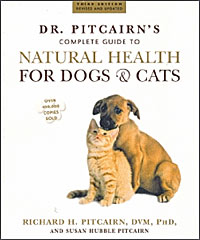
KS: You wrote the book "Complete Guide to Natural Health for Dogs and Cats", which has convinced many veterinarians about holistic medicine and homeopathy. Is such a reorientation a general trend in veterinary medicine? RP: I am very pleased about the acceptance of my book among both veterinarians and you, dear readers. Thank you for your interest and support. To date I have trained almost 500 veterinarians in homeopathy. But that is only relatively few compared to the entire profession. The most popular alternative medical approaches among veterinarians are Chinese medicine and acupuncture. Interest in homeopathy is much smaller. Most veterinarians, even those interested in other approaches, are still attached to the mindset of conventional medicine and its concept of suppression. So there is not yet a truly significant change. KS: A good veterinary homeopath is like finding a needle in a haystack. What do you recommend to pet owners seeking help for their animals? RP: We help you find a suitable homeopathic veterinarian for your animal. Especially in serious illnesses it is advisable to consult a homeopathic veterinarian. We recommend veterinarians who — as in my training programme — have been trained in the Hahnemannian tradition to become homeopaths. Definition of the problem In fact these methods are not the homeopathy that has been practised for the last 200 years. They are new variants that have been introduced in the last 20 years and in my experience are inferior and therefore not recommended. Why the methods differ Homeopathy understands symptoms as defence mechanisms of the patient that must not be suppressed as in conventional medicine. Instead a single remedy is selected that stimulates the restoration of health, so that the symptoms disappear of their own accord because they are no longer needed. Veterinarians can learn homeopathy in the way I recommend by noting this crucial difference in the understanding of disease and healing, or they can learn it in a way that corresponds more to allopathic thinking. It depends on whether the instruction can impart this understanding. Different methods 1. Homeopathy according to Hahnemann, as taught and practised for the last 200 years. A precise case history is taken; repertorisation is performed and the materia medica consulted. This is the method I recommend. 2. Homeopathy prescribed in an "allopathic" manner, where remedies are prescribed according to the same principle as in allopathic practice. Often homeopathic combination remedies are given, frequently repeated and sometimes even injected. 3. "Psycho‑homeopathy". Here no repertory is used to find the remedy, but an electronic device, a radionic instrument, a pendulum or kinesiology. The latter is sometimes called "AK" (applied kinesiology) and is performed as a muscle test on the owner's arm while they touch the animal (or hold a hair or blood sample in their hand). 4. Variations of homeopathy, partly using the same substances and similar terminology. Examples are homotoxicology and anthroposophic medicine. Despite the apparent similarity, these methods are based on different principles and a different understanding of health and disease. 5. "Eclecticism", where homeopathy is one of several treatment methods and is combined, for example, with herbal medicine, chiropractic, acupuncture and possibly even with allopathic medicines. Where this confusion comes from? Therefore I have compiled a questionnaire: Questions to identify the therapy method Questions The questions are each explained below for your use. Question 1: How do you select remedies? Do you use a repertory and a materia medica? What we want to know is whether the fundamental works are used. Be wary of mention of machines of any kind, kinesiology, pendulum or radionic devices. Intuition is good, but it works better when the principles of homeopathy underlie it and are properly understood. Question 2: Do you use devices such as Interro, electroacupuncture according to Voll (or other electronic devices), kinesiology, radionic devices or a pendulum? Question 3: Have you read Hahnemann's book "The Chronic Diseases"? Question 4: When you prescribe a remedy for chronic diseases, do you like to use antipsorics? Antipsoric remedies are those used in the treatment of chronic diseases. Many therapists do not even know what antipsoric means. Or they prescribe masses of other remedies in such cases, and that is what we want to avoid. Question 5: Do you like to choose obscure remedies to treat chronic diseases? This refers to the novel practice of avoiding remedies that have proved best over the last 200 years and instead using those that are rarely used and little known. The idea is that some remedies were overlooked and should be used more. An interesting idea, but unfortunately wrong! If the practitioner answers "yes" — keep looking! Question 6: Do you use remedies from the periodic table of elements? This is a modern method that favours the minerals of the periodic table. Most of them are unproven, and I would advise against a practitioner who works with them. Question 7: Do you take into account the theory of the kingdoms when choosing a remedy? Does the patient in your view need an animal, plant or mineral remedy — depending on the impression they make on you?
If, for example, you love horses and work with them and wear Western clothing, you will probably get "Lac equinum", horse's milk. That or a similar approach is very popular today. Of course we do not recommend such practitioners! Question 8: Do you use "new" remedies such as breast milk, chocolate, Coca‑Cola, hydrogen, placenta or human semen? I know this sounds odd! Nevertheless many homeopaths now use these strange substances that never before featured in homeopathy and whose therapeutic success is extremely doubtful. They are neither necessary nor recommended, they mess up cases and make adequate later treatment more difficult. Question 9: Do you often prescribe Carcinosinum? This question can also show whether the therapist is under the influence of modern teachers and their "new" remedies. Carcinosin is a homeopathic remedy made from breast cancer cells and is often used for all patients considered "abused and emotionally suppressed" or who hold back their feelings etc. The remedy is overused and used inappropriately. Avoid such practitioners! Question 10: Do you always prescribe only one remedy or do you give combination remedies? Do you switch between two or more remedies? Question 11: Do you work exclusively homeopathically? Or do you also provide other treatments alongside? Some therapists combine homeopathy with allopathy, Chinese medicine or acupuncture, herbal treatments or other alternative methods such as gemmotherapy, homotoxicology and the like. Homeopathy can be used simultaneously with a diet or with chiropractic (without laser and without the use of camphor), but the other listed procedures disturb the resonance. A practitioner who applies so many different therapies (eclecticism) does not concentrate enough on homeopathy and may not be sufficiently knowledgeable about it. Question 12: If you treat an animal homeopathically and it additionally needs a dental treatment (maybe a tooth must be extracted) or it contracts borreliosis or develops an infection or an abscess — would you then give antibiotics or other allopathic remedies? There are many veterinarians who offer homeopathy but do not really rely on it in "hard times", e.g. when an infection or a severe inflammatory disease occurs. The back-and-forth between homeopathy and allopathy does not work and is not good for your animal. Try to find a veterinarian who firmly believes in homeopathy and sticks to it even in apparently severe diseases. Summary KS: Thank you very much for this important information, through which we will avoid much suffering and save money. You have decades of experience in veterinary practice and have helped many animals. Thank you for sharing your knowledge with us! RP: You're welcome. I hope to convince even more veterinarians of homeopathy.
|
|||
(1) Iatrogenic diseases – diseases resulting from medical treatment (2) Animal Natural Health Center ************************************************************************** |
|||
Publisher: Homoeopathy 4 Everyon |
|||
| >> to the original article | |||