
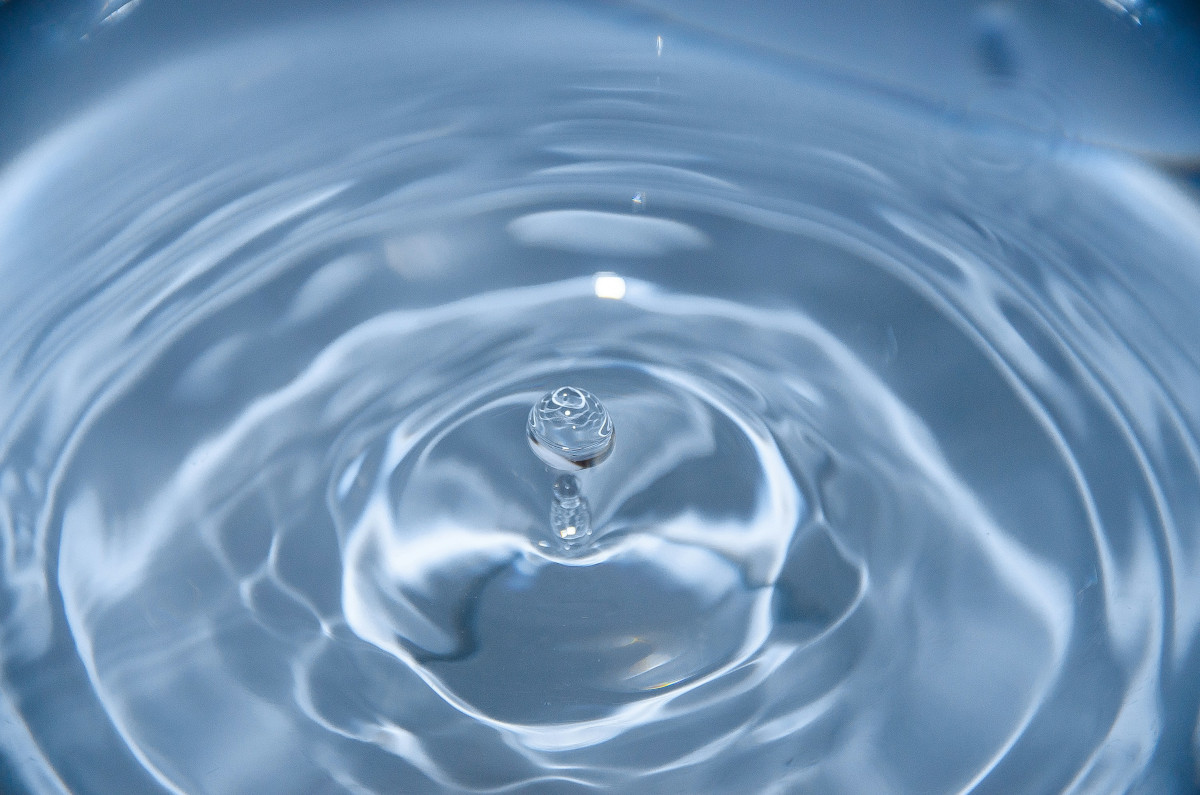
Figure 1: Hyaluronic acid is known for its ability to retain large amounts of water. However, the body's own hyaluronic acid production decreases with age.
As a component of connective tissue and joint fluid, hyaluron or hyaluronic acid performs many important functions in the body. It can bind large amounts of water, contributing to smooth, youthful-looking skin. However, with advancing age the body's own production of hyaluronic acid declines, making the signs of ageing visible and tangible. In this blog article you will learn how hyaluron affects skin and joints, what the differences are between low- and high-molecular-weight hyaluronic acid, and what to look for when buying a hyaluron product.
What is hyaluron / hyaluronic acid?
Hyaluron is a gel-like substance that is ubiquitous in the body. Hyaluronic acid is found, among other places, in connective tissue, in the eyes and in cartilage, ligaments and synovial fluid. The term "hyaluron" is derived from the Greek word "hyalos" (= "glassy") and dates from the time of the discovery of hyaluronic acid. The polysaccharide was first detected almost a hundred years ago in the vitreous body of the eye.
Due to its special property of binding large amounts of water, hyaluron is nowadays one of the most used active ingredients in the cosmetics industry. Because hyaluronic acid is often attributed anti-ageing effects, it is a common ingredient in creams, serums, tinctures and gels.
How is hyaluronic acid produced?
Basically, there are three common methods for producing hyaluronic acid. To obtain animal-derived hyaluronic acid, the substance is extracted from animal material. In the past, hyaluron was obtained, among other sources, from rooster combs, which is why the name "cockscomb extract" is still occasionally used for hyaluron today.
An alternative is biotechnological production, in which yeast proteins are fermented. The result is "vegetarian" hyaluronic acid, which is thoroughly filtered and purified after fermentation. This can significantly reduce the likelihood of allergic reactions compared with animal-derived hyaluron.
A third possible route is the production of vegan hyaluronic acid from plants or fungi such as Tremella fuciformis (snow fungus). A study also showed that Cassia angustifolia seeds are well suited for producing botanical hyaluron. [1]
What effects does hyaluron have on skin and joints?
Hyaluron is commonly known primarily for its presumed anti-ageing effect. But how does the polysaccharide actually work in the body and specifically on skin and joints? Below we have summarised some of the most important functions and properties of hyaluronic acid.
Hydrator for the skin
Hyaluronic acid rightly earns a reputation as a moisture booster: the substance is able to hold more than 1,000 times its weight in water. By binding water to the skin cells, hyaluron can help maintain or even increase the skin's moisture content. [2] Hyaluronic acid fills existing wrinkles and counteracts the formation of new ones. In this way, the visible signs of skin ageing due to moisture loss can be minimised.
Increase and maintenance of skin elasticity
It is a normal part of the ageing process that facial contours become softer and the skin in the face loses volume. Hyaluronic acid can help slow the natural loss of skin elasticity. Hyaluron firms the skin and helps it remain taut and plump for longer.
Strengthening the skin barrier
A radiant complexion depends, not least, on the health of the skin cells. By strengthening the skin barrier and effectively providing moisture, hyaluron can support a radiant complexion. As a strong antioxidant, hyaluronic acid also offers protection by neutralising free radicals in the body.
Joint health
Hyaluron is also present in the body's synovial fluid, a main component of joint fluid. Accordingly, it is frequently used to treat joint wear (osteoarthritis). Acting as a kind of "lubricant" for the joints, hyaluron can be helpful for age-related joint problems. Whether an application of hyaluron is sensible should, however, always be discussed individually with a doctor.
Wound healing
When hyaluron is applied to skin wounds, it can accelerate the wound-healing process and reduce pain. Hyaluron is able to regulate inflammatory markers and stimulate the body to form more blood vessels at the injured site. These effects of hyaluronic acid, however, can only develop satisfactorily with specialised wound-healing products. The use of cosmetic products containing hyaluron is unsuitable in this case.
Which foods contain natural hyaluron?
Foods rich in hyaluron include, in addition to fish species such as mackerel, eel or sea bream, the cartilage tissue of cattle, pigs and poultry. A particularly high hyaluron content is found in the animals' joints. [3] In plant-based foods, hyaluronic acid can be found, among other things, in potatoes, sweet potatoes, green leafy vegetables, almonds, parsley and coriander. It is interesting that hyaluron-rich foods often also contain collagen.
Low-molecular and high-molecular hyaluronic acid
Hyaluron exists in different forms and sizes. Simply put, a distinction is mainly made between low-molecular-weight and high-molecular-weight hyaluronic acid. The hyaluron found in the body is primarily long-chain hyaluron. This form has a higher molecular weight than the low-molecular form. When long-chain hyaluron is used in skin care, it forms a fine, healing and anti-inflammatory film on the skin, but it does not penetrate into the deeper skin layers.
It is different with low-molecular hyaluron: this form of hyaluronic acid penetrates deeper into the skin layers, which is why it is often used in cosmetics and skin care products. Studies have found a connection between the application of creams containing low-molecular-weight hyaluron and a significant reduction in wrinkle depth. [4]
To benefit optimally from both types of hyaluronic acid and their respective advantages, products such as the Hyaluron Serum Pure from Unimedica, which contain both forms of hyaluron, are recommended.
Hyaluron products: which one is right for me?

Figure 2: Important factors when choosing a hyaluron product are, in addition to the form of hyaluron used, the origin and the concentration of the active ingredient.
A hyaluron serum for skin care, ampoules or rather hyaluron capsules? With the variety of hyaluron products available, it is easy to lose track. Before purchasing, you should first consider what you hope to achieve with a particular hyaluron product. Especially for skin care products, it is advisable to pay attention to which form of hyaluron is included. Because it is often not apparent from cosmetics whether low- or high-molecular-weight hyaluron was used, you should, if in doubt, ask the manufacturer directly.
The origin and dosage of the hyaluron are of course also decisive. If it is important to you that the hyaluronic acid comes from a plant source, choose a vegan product such as the high-dose Hyaluron capsules from Unimedica. The hyaluronic acid used in this case is obtained exclusively by plant fermentation.
A final important question to ask before choosing a particular hyaluron product is which additional active ingredients are added. Zinc, with which the Hyaluron forte capsules from Unimedica are, among other things, enriched, can additionally support renewal and refinement of the skin's appearance through its role in cell division. Other products contain a comprehensive active-ingredient complex for the skin. In Hyaluron + Collagen comp from Unimedica, for example, you will find collagen alongside hyaluron as well as other valuable vitamins and minerals.
Possible side effects of hyaluronic acid
Because hyaluron naturally occurs in the human body, side effects are largely unknown. In rare cases, reactions of the skin or infections can occur when the active ingredient is used as an injection in a medical context. If side effects and unpleasant symptoms occur after using skin care products containing hyaluron, other factors (e.g. additional ingredients that trigger allergic reactions) are usually responsible.
Sources:
[1] Faisal Bin Rahman, Sium Ahmed, Priya Noor, Mir Md. Mahbubur Rahman, S.M. Azimul Huq, Md. Taharat Elahi Akib, Abdullah Mohammad Shohael, A comprehensive multi-directional exploration of phytochemicals and bioactivities of flower extracts from Delonix regia (Bojer ex Hook.) Raf., Cassia fistula L. and Lagerstroemia speciosa L., Biochemistry and Biophysics Reports, Volume 24, (2020). https://doi.org/10.1016/j.bbrep.2020.100805
[2] Pavicic T, Gauglitz GG, Lersch P, Schwach-Abdellaoui K, Malle B, Korting HC, Farwick M. Efficacy of cream-based novel formulations of hyaluronic acid of different molecular weights in anti-wrinkle treatment. J Drugs Dermatol. 2011 Sep;10(9):990-1000. PMID: 22052267. https://pubmed.ncbi.nlm.nih.gov/22052267/
[3] Ozaki S (2016) Food Containing Hyaluronic Acid and Chondroitin is Essential for Anti-Aging. Int J Aging Clin Res 1: 101.
[4] Pavicic T, Gauglitz GG, Lersch P, Schwach-Abdellaoui K, Malle B, Korting HC, Farwick M. Efficacy of cream-based novel formulations of hyaluronic acid of different molecular weights in anti-wrinkle treatment. J Drugs Dermatol. 2011 Sep;10(9):990-1000. PMID: 22052267. https://pubmed.ncbi.nlm.nih.gov/22052267/
igation. Br J Nutr. 2014 Jul 28. https://pubmed.ncbi.nlm.nih.gov/24804871/.
Figure 1: David Becker/unsplash.com ; Figure 2: Aaron Burden/unsplash.com

