
Often my clients tell me that they have to take medication and are struggling with unwanted side effects. Sometimes these are only mild and temporary ailments, but at other times they are serious disorders that persist longer than expected.
One example is the local treatment with cortisone ointments, commonly prescribed for inflammatory skin complaints, e.g. eczema. Many patients continue to suffer for years after the therapy from distressing 'withdrawal symptoms'. I will go into this topic in more detail later*.
Or think of women who use hormonal contraception and develop endometriosis after stopping the pill. Lifelong.
Antibiotic treatment also often has consequences for the stomach and gut; quite a few patients subsequently develop food intolerances to wheat, dairy products and many other foods.
Side effects of medications are often trivialised or not recognised at all. People do not want to accept that the medicine prescribed therapeutically has caused new symptoms.

This is where you come in. Precisely at this point you can help yourself. We must take matters into our own hands and become active.
And at this point homeopathy also plays an important role. Not only because homeopathy addresses the problem at its root, truly heals us and should routinely be prescribed, but because homeopathy can regulate many things. This includes the original disease as well as the consequences of an unsuccessful drug treatment.
Excuse me, I realise I am digressing. Let me return to my main topic: antidoting.
Given that every illness, every person and every reaction to a medicine is highly individual, it is hard to imagine that such a reaction can be stopped by administering a homeopathic remedy. Up to a point, that is exactly what is very often possible.
Take the homeopathic remedy Sulphur C30 or C200, for example.
When Dr Samuel Hahnemann, the founder of homeopathy, treated his patients in late 18th-century Germany, he usually prescribed a dose of homeopathically potentised Sulphur first.
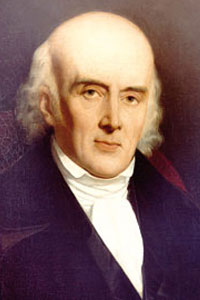 He knew that the people who came to him were usually taking many, many medicines. Then as now, doctors prescribed courses that were not always in the patients' best interests. In Hahnemann's time patients were given morphine for headaches, children received cocaine for teething pain, laudanum and mercury were also high on the list.
Not to mention bloodletting, for which I do not know of any antidote.
At this point I should mention that homeopathic remedies can also be misused.
Most people know that a homeopathic remedy, if taken incorrectly and in repeated large doses, can produce exactly the symptoms it is essentially supposed to cure. Inexperienced laypeople can certainly reach their limits here.
The solution?
Sometimes it is enough to inhale the essential oil of mint, camphor or another strongly aromatic plant. I have seen cases in which the antidoting effect began within a few minutes. Sometimes it takes several days and repeated applications (i.e. inhalation) are necessary.
One of the best homeopathic antidotes is Camphora C200. I use this remedy according to the recommendations of the Banerji protocols. That means at the start of every treatment a single dose of the remedy is given.
It is assumed that the effects of the medicines with which the patient was previously treated must first be cleared before the new, well-chosen homeopathic remedy can exert its effect.
In this sense, the treatment of a patient with chronic eczema could look as follows:
Day 1: Camphora C200, single dose. After that the remedy is not prescribed again; it is intended merely to clear the slate.
Day 2: Antimonium-c. C6, to be taken twice daily for 6–8 weeks. Afterwards the patient's reaction is analysed. (This approach has proven particularly effective for eczemas with severe itching).
Day 2: Bovista C200, to be taken every other day for 6–8 weeks. Afterwards the patient's reaction is analysed. (This approach is suitable for allergies in general).
*Would you like to learn more about withdrawal reactions from cortisone treatments? You can find detailed information at www.itsan.org. The website was put online by a dermatologist who wants to inform about the possible consequences of cortisone-containing ointments and creams.
I find the website very good, but I do not agree with every method mentioned there.
I myself was treated with cortisone ointments at the age of six weeks; for many years (until I was 13) my parents applied the ointment to the sore areas of my skin, always very carefully and sparingly. The ointment delivered what it promised: my skin no longer itched and the unpleasant red patches disappeared with each application, if only temporarily.
The ointment "helped", but each time the damage essentially became greater and it ultimately took me many years to become truly well.
I must say at this point that homeopaths have known this for more than two centuries, and for this reason I repeatedly try to introduce you to natural alternatives to the synthetically produced medicines of conventional medicine.
Forgive me if I digress at length on this topic, but homeopathy has a great deal to offer here. More than you might think.
Now I would like to be able to tell you that a dose of Sulphur C30 or Camphora C200 will rid the world of all dermatological ills, but it is not that simple, especially when the existing damage is extensive.
The treatment methods I have described should be understood as examples, not as guaranteed recipes for success. If you would like to find out more, I recommend my online course on the homeopathic treatment of skin diseases.
Do good for your skin! The free information I provide here every week may of course be passed on. To friends, acquaintances, pets, family and to all who urgently need it.
Let us heal the diseases of this world together. Step by step and always with the appropriate homeopathic remedy.
******************************
Disclaimer
Joette Calabrese is not a licenced physician and does not prescribe medications in the conventional medical sense. Joette advises on health and homeopathic matters; the client assumes responsibility for their own decisions. Homeopathy does not treat 'diseases' but represents a holistic point of view aimed at advising and informing clients. For a conventional medical diagnosis and treatment, a holistically working doctor should always be consulted in addition.
In order to make information available to a wide audience, the author may receive financial support or sponsorship. No liability is assumed for recommendations and/or links to other offers or products.
******************************
Photo: Fotolia 15562009 L © by-studio - Fotolia.com, pillenstrasse

