

Homeopathy for Plants
Pests, general:Bufo (common toad) Insect comp. Latrodectus mactans Mentha piperita Ricinus communis (in viticulture) Sambucus nigra (elder) Tanacetum vulgare (tansy) Tarantula Theridion (brown orb-weaver) CamphoraAphids:
Scale insects:Mealybugs and waxy scale:Spider mites:Caterpillars:
Whitefly:Nematodes:Slugs:Strengthening and resistance:Injuries, repotting:Fungal diseases:
Weeds:.................................................................................................................................. Reports of experiencesAconitum (for pale rust)Aconitum: Rust on roses: I read "Homeopathy in Garden and Agriculture" by V.D. Kaviraj with great interest and enthusiasm. Although I am only a small amateur gardener, I had a fantastic success with aconite for rose rust. I have never had such beautiful roses before!!
Amblyseius californicus (predatory mite)Amblyseius 6: Spider mites on lemon tree: The lemon tree stands in the house in a cool place with lots of light. In March / April 2010 spider mite webs became visible. It was sprayed with Amblyseius three times at 14-day intervals. The infested leaves died off and there was no new infestation throughout the year. Now in January 2011 a slight infestation is again noticeable and the preparation is being used once more.Amblyseius 6: White mites
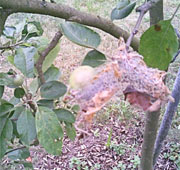
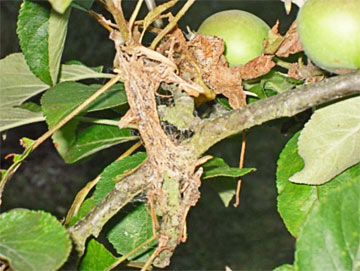
Amblyseius 6: Spider mites on apple tree
Aphidius (parasitic wasp)Aphidius 6 : Aphids Small fruit trees were grown in pots on the windowsill indoors. They got aphids on the leaves and were watered once with Aphidius. After a few days the aphids disappeared. The plum sapling remained aphid-free; on the cherry sapling they returned after some time.
Arnica montanaA cherry laurel, which we thought would not recover after transplanting (roots heavily damaged) and the severe winter, was pruned again by us and then watered once with Arnica C30. It is recovering splendidly. more information and order
|
|||||||||||||||||||||||||||||||||||||||||||||||||||||||||||||||||||||||||||||||||||||||||||||||||||||||||||||||||||||||||


|
Treatment date: |
08.06.2010 |
|
Plant: |
Tomatoes in the growing tent |
|
Location: |
Plot 95 |
|
Problem: |
Mildew infestation |
|
Analysis: |
Belladonna C30 |
|
Treatment: |
2 globules dissolved in 10 l water used as watering water |
|
Follow-up result: |
12.06. Report: mildew declining |
Aconitum/Belladonna
C30: Rust on roses
Roses already affected by rust were: one part was watered with Aconitum (3 globules in a watering can of water), one part with Belladonna and one part with plain water poured on the soil. Single application. Result: the non-homeopathically watered part largely died and must be pruned back very far. The other two parts lost the infected leaves but re-sprouted or retained the only slightly affected leaves and therefore do not need to be cut back as severely next spring. (SB)
C30: Bed roses had suffered from rust for about 10 years :
This year I watered monthly with Acon. C30 and Bell. C30 once - very large flowers, stronger plants and so far very few rust spots on the leaves.
Belladonna/Causticum
C30: Sunburn on ficus

During rearrangements our over 10-year-old ficus was put out of the shady consulting room into the full sun in the yard for 2 days last summer and promptly got a severe sunburn, from which it did not recover for several months. Almost all the leaves turned grey-white and brown and shrivelled, as can still be seen on individual leaves, and it lost over 50% of its foliage by late autumn.
It languished all winter, a picture of withered misery. Despite care hardly any new shoots appeared and we thought the tree was lost. But Belladonna C30 (a major remedy for sunburn) and Causticum C30 (a remedy for burns, dried and contracted like a tendon contracture), given once in the watering water, helped immediately where everything seemed lost. After a week the first shoots appeared in late winter, and after a few weeks it was back in the consulting room in its former splendour, even looking better than before, with fuller foliage. You can still see on individual leaves that survived the sunstroke the last pale and brown traces of its suffering.
more information and order
Bombyx (processionary caterpillar)
Bombyx 6: Caterpillars on roses
Feeding damage on rose buds by small green caterpillars. Roses were sprayed several times with Bombyx. No further feeding damage was noted and the caterpillars stayed away.
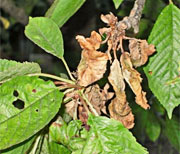
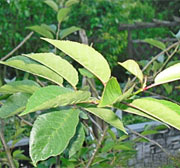
Bombyx 6: Winter moth
|
Treatment date: |
08.06.2010 |
|
Plant: |
Cherry trees |
|
Location: |
Garden |
|
Problem: |
Infestation of winter moth caterpillar |
|
Analysis: |
Bombyx processionea D6 |
|
Treatment: |
10 ml in 10 l water, watered |
|
Follow-up result: |
12.06. New leaves forming at the tips, no new infestation |
 |
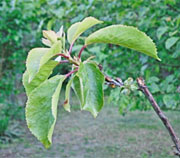 |
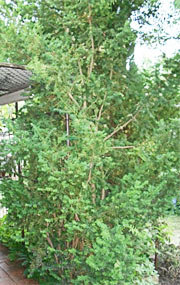
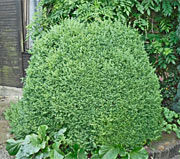
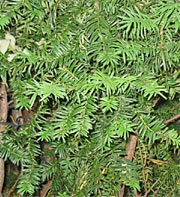
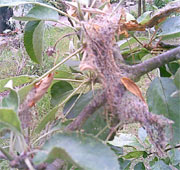
| With infestation | Sour cherry without infestation |
 |
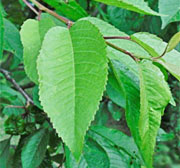 |
| Sweet cherry without infestation | Sweet cherry without infestation |
Calcium carb.
Calc.carb. D6: A rhododendron planted last autumn suffered badly during the heat spell in the summer. It always looked as if it were constantly short of water. I felt that it had not yet properly rooted in its new location. I watered it once with Calc.c. D6 (5 ml/10 l water) and since then it looks fairly stable. Let’s see how it gets through the winter and how the flowering fares next spring. I have been experimenting with homeopathic remedies in my garden for several years now and have not needed chemical agents since. There is certainly much to explore here, but I am quite sure that homeopathic remedies can be a blessing here as well.
more information and order
Calendula
Calendula 6: Pricking out young plants
After pricking out, young lettuce and tomato plants in the greenhouse were watered with Calendula D6 in the irrigation water. They recovered noticeably faster and grew vigorously.
more information and order
Camphora
Camphora 6: Ants
Several ant hills in the meadow were soaked thoroughly with Camphora and the ants disappeared completely after 1–2 days. A wooden beam at the house that was infested with ants was treated likewise and they moved away after a short time.
more information and order
Carbo vegetabilis
C30: Bamboo, outdoors, south garden, biodynamic management. Bamboo developed brown leaves after flowering - seemed done for (late summer 2008); was watered almost daily for 3 weeks with Carbo veg. dissolved in water; it re-sprouted normally in 2009.
Ornamental cherry, outdoors, showed sudden growth stop - small leaves, early leaf loss in spring 2010 and early summer 2010, heat period, but sufficient irrigation. It recovered after the same treatment in July.
Carbo vegetabilis/Arsenicum
I have experimented myself on a patio rose that threatened to die (summer). No obvious cause, but leaves yellowed and fell and buds dried up. I placed twice one globule each of Carbo vegetabilis and Arsenicum, both C30, on the soil and watered. The leaf fall stopped immediately, new leaves appeared and now new buds as well! The effect of the homeopathic remedies seems miraculous to me every time!
Chrysoperla (lacewing larva)
Coccinella and Chrysoperla 6:
Green aphids on the tips of rose shoots: Coccinella 6 was sprayed and after about 3 days no aphids were visible. Unfortunately they reappeared and a further spray with Coccinella did not help. Then I sprayed with Chrysoperla carnea and the aphids disappeared and have not returned on the treated roses for about 3 months.
Mealybugs on lilac: A lilac with heavy mealybug infestation was treated with Chrysoperla 6 (5 ml in 5 litres of water). The remedy was applied from the bucket onto the lilac with a wooden spoon. After a few days the mealybugs could be washed off with a strong jet of water, which was much easier than before. Unlike before, re-infestation was rare - only after 3–4 months was another treatment necessary, which had the same result.
more information and order
Citricum acidum
Citricum Acidum / Oxalicum Acidum
D6 against weeds: Following instructions from the book I tried Acidum Oxalicum and also Acidum Citricum, each D6, as herbicides. (3 globules, 10 L water, poured, 2x within 24 h)
Unfortunately I could not detect a reaction in the plants. I would be very grateful for an exchange of experiences.
more information and order
Coccinella
Coccinella 6: Green aphids on roses, were sprayed once on the foliage, the remainder was poured to the roots. After about 1 week the aphids disappeared.
Coccinella 6: Green aphids on rose shoot tips, sprayed 3x with decreasing dosage on days considered favourable by the planting calendar. Aphids decreased and were gone after 14 days.Coccinella 6: Whitefly on gerbera: A potted plant had a heavy infestation of whitefly. Watering with Coccinella 6 had no effect. After a single spray of the leaves all the whiteflies were dead the next day. The infestation recurred after a week, and a single spray again produced the same success.
Coccinella 6: Black aphids on blackberries, roses and cucumbers were watered and sprayed on 3 consecutive days. After a further 3 days no aphids were visible.
D6: Rose mallow indoors with aphid infestation (green) were watered once with Coccinella D6 (3 globules in 10 l water). Unfortunately no significant decline in aphids could be observed (perhaps repeated watering would have helped – although Kaviraj advises against this). (SB)
C30: Black aphids on viburnum. 3 globules in 10 l water watered once against black aphids on viburnum - it took 2 weeks, then no aphids were present. (SB)
C200: Aphids on roses. Watering of the plant. All aphids were gone within 2–3 days. Only 3 months later was it necessary to spray again, again with the same success. (GP)
Coccinella 6: Scale insects on cactus:
|
Treatment date: |
19.05.2010 |
|
Plant: |
Small cactus about 4 cm tall |
|
Location: |
Apartment |
|
Problem: |
Infestation of scale insect |
|
Analysis: |
Coccinella sept. |
|
Treatment: |
3 drops in 10 ml water |
|
Follow-up result: |
20.05. Scale insect washed off - no longer adheres |
Coccus cacti
Coccus cacti 6: Mealybugs.
Cactus (houseplant) was infested by mealybugs. It was sprayed 3 times at intervals of several days with decreasing dosage using Coccus cacti. The mealybugs decreased and were completely gone after 14 days. The treatment was carried out on days recommended in the sowing calendar.
Coccus cacti C30: Scale insects
Palm, in a botanical garden, with heavy armored scale infestation was sprayed intensively once (1 globule per 1 litre). After 6 weeks about 90% of the scale insects were dead. Their original brown colour had turned silvery, they appeared dried out and could be removed easily.
Euphorbia (houseplant) 1 globule Coccus cacti C30 was placed in the pot and then watered. So far no decline in scale insects has been observed.
Encarsia (parasitic wasp)
Encarsia 6: Infestation of whitefly on various brassicas. A treatment of 3 sprays on 3 consecutive days produced no decline in whitefly.
Encarsia 6: Whitefly on various brassicas (savoy, cauliflower + Brussels sprouts, approx. 10 plants each).
Preventative watering with Encar. 6 right at planting was largely ineffective. The plants had also received garden lime in the soil when planted.
Spraying the upper and lower leaf surfaces with Encar. about 2 days after noticing the infestation led within a week only to a slight reduction. However, the plants showed only few yellow spots and leaf deformities (= better resistance?). Then watering with homemade nettle brew -> infestation almost gone within 2 weeks. Warm + dry weather (mid-June 2010, greater Stuttgart area)
more information and order
Fungi comp. (for various fungal diseases)
A strawberry plantation at the beginning of botrytis (yellow spots on leaves) was sprayed twice within a week with Fungi comp. Despite humid weather the fungus did not spread further and did not infect the fruit (unlike other years when it spread explosively under such weather conditions).
more information and order
Fungi-No (homeopathic combination preparation)
Fungi-No was developed by a New Zealand agricultural consultant in multi-year trials in fruit and viticulture. It has proven effective against apple scab and downy mildew when sprayed preventatively before and after flowering, especially before warm rainy periods, several times. Trials are currently underway with several organic winegrowers in New Zealand, with final results due in mid-March after the wine harvest.
Helix tosta
Helix tosta 6: Slugs / Odenwald: Despite my deep trust in homeopathy as an animal practitioner, I had considerable doubts at first. I sow my vegetables on the windowsill already in winter. Later the small seedlings go into a cold frame and by that time I normally had to spread slug pellets every day just to get anything to survive. This year I tested Helix tosta. As described in the book the 1st dose was 10 ml in 10 litres water, the 2nd dose after one week 5 ml in 10 litres water and the 3rd dose another week later 2.5 ml in 10 litres water. The result was astonishing. Already after the first dose no slug was to be seen. The seedlings remained intact. Later the plants were moved outdoors and even there it stayed quiet for a long time. The slugs ate a few plants here and there but did not return the next day. Problems only occurred with the prolonged rain of recent days. Apparently the effect then dissipates more quickly. I am currently testing with a biotensor whether the plant groups need another dose once a week. I will keep you informed of the results. In the open ground I have the impression that the rate at which the dose wears off depends on the plant species and the weather. For greenhouses the remedy is ideal. I had given up on growing lettuce. Even in the greenhouse everything was always eaten. This year I started another test out of curiosity. I treated the plants as described after planting. 19 out of 20 plants survived intact and I found that convincing. We live between Heidelberg and the Odenwald, if the location is of interest to you. (JM)
Helix tosta 6: A strawberry plantation of a Bioland farm was sprayed shortly before harvest on a leaf day (sowing calendar) with Helix tosta 6 (equivalent to 500 L/ha). The slugs that normally ate almost all ripening fruits retreated to the heart of the plant and only a few inner fruits were eaten down to the core. Interestingly, many vineyard snails (with shell) appeared in the plantation and the number of slugs decreased. About 1 week later a second spray was carried out on a fruit day equivalent to 800 L/ha. This time more was sprayed into the heart of the plants. The effect was that feeding damage and slugs decreased further and the remaining specimens looked lifeless. Helix tosta 6: Plants were watered multiple times (spraying alone did not help). For arugula, which is usually heavily affected, the slugs stayed away; for parsley and marjoram it was ineffective. The remedy’s effect noticeably diminished after heavy rain and treatment had to be repeated.
Helix tosta 6: I mainly watered the strawberries with the remedy. Already the next day almost no slugs were visible and very few strawberries were eaten. After a few weeks the watering was repeated when a few slugs reappeared, and afterwards they disappeared again.
A bed planted with alternating lettuce and kohlrabi was watered with the remedy. No slug was found on the lettuce, but the kohlrabi were eaten down to the leaf ribs. No slug was seen nearby, so it is suspected that mice caused the damage to the kohlrabi, since slugs would also have eaten neighbouring lettuce plants. Kohlrabi in other parts of the garden, e.g. in the middle between two tomato rows, do not show this damage.
Beans were also watered with Helix tosta, and no slugs could be seen there either. -
Helix tosta is a complete success and I will use it again.
Helix pomatia C6 (non-roasted Roman snail, you can give it a try ...)
Various young brassicas and newly re-shooting cornflower stocks were watered.
Result: zero effect. For brassicas even an attractive effect was observed.
Weather was changeable, with occasional showers, but not very or persistently wet, approx. early August.
Helix tosta 6: Vegetable garden heavily plagued by slugs was watered and sprayed repeatedly - so far no decline in slugs has been seen.
Helix tosta 6: Lettuce was sown directly in April and covered with foil and sprayed twice with Helix tosta within a week. Under the foil slugs were visible, without causing major feeding damage. The lettuce yielded well.
Helix tosta 6: Good results with Helix tosta D6, hardly any slug damage, but only until the great heat came. Afterwards I (unfortunately) watered my beds every evening, which meant that since then slugs could no longer be deterred by Helix. Evening watering apparently created ideal conditions for the slugs. Next year I will try morning watering and of course use Helix tosta again.
Helix tosta 6: Organically farmed vegetable beds (without chemical sprays or artificial fertiliser) were watered once with Helix tosta. In the following days the slugs gradually decreased and disappeared from the beds after 1–2 weeks. Almost none were seen in the adjacent grass either.
Helix tosta 6: A few weeks ago I received the slug remedy "Helix tosta". I administered the remedy three times as directed once weekly and I must say that already after the first watering no slugs were to be seen. I can only say I am very satisfied with the remedy so far. (C.M.)
Hepar sulfuris
Hepar sulfuris C30: For fungal infestations I have been using Hepar sulfuris C30 (3 globules /10 l water) for several years with very good results. One or two applications are usually sufficient.
more information and order
Hyssopus officinalis
Hyssopus 6 on an approx. 20-year-old vine, variety unknown, but bought as one that does not need spraying. Grapes ochre-yellow-green when ripe, about 1 cm berries.
Watered once with hyssop around June/July.
Result: no diseased leaves at all, unlike previous years - despite being in the middle of conventional viticulture with intensive spraying (Neckar, Stuttgart area).
Fewer leaves overall, i.e. hardly any had to be removed this year to give the bunches light.
Bunches ripened much earlier than in previous years and were even sweet! Significantly less rot after wasp damage etc. - All this despite much dull, rainy and not particularly warm weather.
Insect. comp. (homeopathic preparation from beneficial insects)
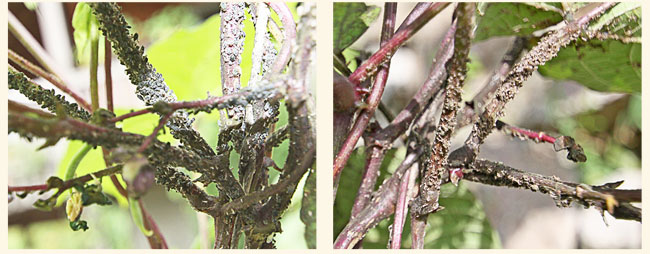
Black aphids on runner beans: Runner beans were heavily infested with black aphids. The plants were sprayed 3 times at 4-day intervals with Insect comp. and the remainder in the sprayer was used to water them. The aphids decreased from time to time and died off.
Since some beneficial insects such as Coccinella and Chrysoperla larvae eat many different pests, such as aphids, mealybugs and scale insects, as well as spider mites, thrips, whitefly, small caterpillars and beetle larvae, it will become apparent in the coming season whether this homeopathic combination remedy has such a wide spectrum of activity.
 |
|
| before | after |
Latrodectus mactans (black widow)
Latrodectus mactans 6: Roses - buds and flower stems were densely covered with green aphids. Sprayed once with Latrodectus in sunny weather (dosage 1 ml per 1 litre) - after 3 days the aphids were dried out; they looked silvery and translucent.
more information and order
Ledum
Ledum D6: Aphids: Briefly my (first) experience in the homeopathic treatment of plants: severe and recurring aphid infestation (green aphids, a few black) on a rue - beneficial insects had no lasting success. 3 globules Ledum D6 dissolved in approx. 300 ml water and the plant was watered with it in small amounts over several days. At first more frequently, then decreasing. After about 1 week no aphids could be found and the condition has held for 4 weeks now.
more information and order
Ocimum (basil) for tomatoes
Ocimum 6: Every 2–3 weeks, depending on the condition of the plants, I spray the plants with 10 ml per 1 litre of water: lettuce and strawberries with Helix tosta, kohlrabi with Camphora against ants and now also the tomato seedlings with Ocimum basil 6. The tomatoes are doing well so far, only occasionally a brown leaf. But that is still normal for this time, as in recent years my tomatoes were affected by late blight only very late.
Ocimum 6: Tomatoes received Ocimum 6 in the watering water every 3 weeks. The preparation was vigorously shaken in a lid glass with water beforehand and then added to the watering can. The tomato plants remained healthy and yielded well. Only at the very end did some fruits show slight late blight. In the previous year the foliage was affected, resulting in a total crop loss.
Salicylicum acidum
Sal. acid C30: Aphids (dark) on bush beans (about 15 plants) and runner beans (about 10 plants), both already accompanied by ants.Infestation still limited to individual stem branches, but there the aphids were densely clustered (unfortunately no photos - next time).
Application of Sal-ac C30, approx. 10 globules dissolved in 1/2 litre water and plants sprayed with this (not just the infested spots, but the whole plant, upper and lower leaf surfaces sprayed).
Time of application: early evening
Weather hot + dry (June/July 2010, greater Stuttgart area)
Effect: strong decline within 2 days! However, earwigs increased on the beans (they don't harm). Since after about 3–4 days the previously unaffected (and untreated) bush beans on the other side of the bed also got aphids, these were treated again and the previous ones were treated again where some aphids remained: infestation disappeared completely and has been OK for about 3 weeks without further treatment or other measures.
more information and order
Shellac
Shellac 6: Scale insects on kiwi berries (potted plant, outdoors) were watered and sprayed twice within 1 week when heavily infested with scale. The scale insects decreased and their caps split open.
more information and order
Symphytum (comfrey)
Symphytum: broken branches
I am always amazed how well breaks in branches heal with Symphytum. I clean the broken branch, remove all leaves and treat it with Symphytum. After some time the break heals together again.
Tanacetum vulgare (tansy)
Tanacetum 6: Rhynchaenus weevils on rhododendrons - severely weakened plants (sparse shoots, leaves turned brown, rolled up, sparse flowering) were watered 3 times at intervals of 3–4 days with decreasing dosage (1 watering can per plant). About 14 days after the start of treatment an astonishing surge in vigour began; the plants are now thriving and bursting with vitality. Occasionally there are still nibbled leaves from the beetles - here spraying is now being tried to see if they can be driven away.
Tanacetum 6: Rhynchaenus weevils: Leaf feeding on an evergreen perennial with leathery leaves and yellow flowers (name unknown). Was sprayed twice at 14-day intervals. No effect could be observed that led to a reduction in further feeding damage.more information and order
Thuja
Thuja 6: Houseplant with spider mite infestation
Elephant-foot plant had severe spider mite infestation. Dead leaves were cut off; newly emerging leaves were again infested. The plant was watered once with Thuja 6, spider mites disappeared after a few days.
D6: Houseplants with scale insect infestation
Watered repeatedly with Thuja in the irrigation water (quantity and dosage unknown)
within 2 days no movement was visible – after 14 days all the scale insects were dead. (SB)
Thuja 6: Curl disease: Peach tree with affected leaves is sprayed and watered; after 14 days watered again. Diseased leaves fall off and the new shoots remain healthy.
C200: Curl disease on peaches
Red peach tree with pathological changes (reminiscent of large, ugly warts) on the leaves, 4 globules dissolved in water and used to water the roots - shortly afterwards normal development and an abundant peach harvest. (SD)
C30: Caterpillars on currants: 3 globules in 10 l water watered once against caterpillars on currants - after a week no further feeding problems were observed. (SB)
D6: Leaf miner moths: These critters have left their marks in the leaves of my gaura in past years; the leaves then looked like parchment and with heavy infestation the plants died. This year I watered once at first detection of infestation with Thuja D6 (5 ml/10 l water) and the problem was gone.
more information and order
Tropaeolum (nasturtium)
Tropaeolum 6: On a 30-year-old Swiss pine that had heavy mealybug infestation, a single spray and one watering with Tropaeolum D6 (5 ml/10 l water) worked excellently (after about 1 week).
more information and order
Zincum metallicum
Zincum C200: for frost damage
A hibiscus (approx. 2 years old) in an apartment was accidentally exposed briefly on a winter day to very cold outside air, so that the leaves were damaged and subsequently hung completely limp and lifeless. The plant was treated with Zincum C200, i.e. 3 globules dissolved in water and the hibiscus was watered with it. The next morning there was not the slightest damage visible on the plant, all leaves were turgid again.
The same experiment could be repeated later. Due to a cold snap two young hibiscus plants were frosted and subsequently cut back to stubs with tiny (also frost-damaged) leaves. One plant was treated once with two globules Zincum C200 dissolved in watering water. The other plant was watered with plain water. After two days only the treated plant had recovered from its frost damage and was already forming new leaves. The other remained frost-damaged. - Interesting would be trials with other frost-sensitive plants and possibly treatment of frost-damaged fruit blossoms.
more information and order
Please send your experiences with Homeoplant by email to
info@narayana-verlag.de
 |
List of all available Homeoplant remedies |

