Cytotoxic effects of potentised medicines on breast cancer cells |
|
| By M. Frenkel, B. M. Mishra, S. Sen, P. Yang, A. Pawlus, L. Vence, A. Leblanc, L. Cohen, and P. Banerji (Int J Oncol. 2010 Feb;36(2):395-403.) | |
| Integrative Medicine in the Department of Molecular Pathology at the University of Texas, Program Unit 145, Dr. Anderson Cancer Center, Houston, TX 77030-4009, USA. frenkelm@netvision.net.il | |
|
The use of highly potentised natural substances in disease management and cancer treatment has aroused great interest but also provoked intense controversy. We conducted an in vitro study to determine whether certain remedies prescribed at a clinic in India had an effect on breast cancer cells. |
|
|
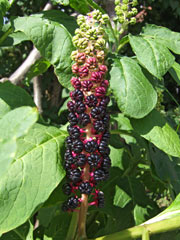
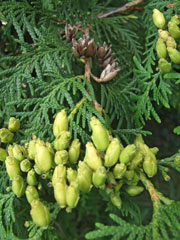
We tested four highly potentised remedies (Carcinosinum, Phytolacca, Conium and Thuja) against two human breast cancer cell lines* (adenocarcinoma MCF-7 and MDA-MB-231) and examined a cell line of normal human mammary epithelial cells (HMLE). |
|
|
In association with this, a change was observed in the activity of cell cycle regulatory proteins, including a reduction in phosphorylated Rb (human retinoblastoma protein) and an increase in the CDK inhibitor p27, which were likely responsible for the cell cycle inhibition/cell cycle arrest and for triggering the cell death cascade, as evidenced in the treated cells by activation of caspase-7 and cleavage of PARP**. |
|
|
The results demonstrate the biological activity of these natural substances when used in a potentised form. Further detailed studies with additional cell lines and animal experiments are planned to explore the clinical applicability of these active substances. -------------------------------------------
|
|
| Original article | |
|
|
|