
COVID-19: New Wave 2021
An analysis of symptoms, treatment strategies and prophylaxis
27.04.2021
Update on homeopathic remedies for the current wave
Translated from English by Dr Manish Bhatia - English original article
Disclaimer: This article is intended to stimulate discussion among professional homeopaths. It is not an instruction for taking homeopathic remedies outside professional care. If you have symptoms suggestive of COVID-19, you should get tested and consult your doctor or homeopath.
The first wave of COVID-19 in India peaked in September 2020 at almost 100,000 new cases per day. Afterwards the curve began to flatten and fell to about 12,000 cases per day by January 2021. For a country the size of India with its high population, these figures were relatively low. Large parts of the country appeared COVID-free and we hoped we had finally overcome the pandemic.
In March 2020 (Coronavirus Covid-19 and Homeopathy) I published my first assessment of COVID-19 symptoms and the indicated homeopathic remedies. At that time I argued that Bryonia had a very close relationship to this illness. I wrote several updates to this article up to September 2020 on current research findings and clinical experience. Over the past year Bryonia alba proved to be a very reliable remedy with excellent reports from around the world and even a study approved by the ICMR (Indian Council for Medical Research) confirming an efficacy of 75%.
In March 2021 a new wave of the viral illness began with multiple mutations spreading at breakneck speed. We now have almost 250,000 cases per day and localized lockdowns are being imposed in some places.
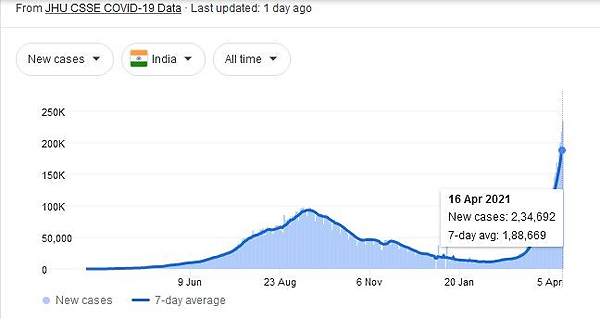
The current wave has not yet peaked, but I would like to share my findings and clinical experience early in the hope that it will be useful to the homeopathic community.
This COVID-19 wave is different
Last year the following symptoms were particularly common:
- Moderate, not very high fever, which in most cases lasted no longer than two to four days. Only in a few cases did the fever persist longer.
- Dry mouth with increased thirst
- Aches and pains in the limbs
- Loss of taste and smell
- Dry cough
The current COVID-19 wave appears with the following new symptoms:
- Usually high and prolonged fever is observed, accompanied by shivering
- Dry mouth, but less thirst
- Headaches (more common than in the last wave)
- Conjunctivitis
- Irritated throat; feels like a throat infection
- Productive cough with expectoration
- Hearing problems such as tinnitus and hearing loss
Many other symptoms vary in intensity and frequency. These include:
- Diarrhoea and cramps
- Discolouration of toes and fingers
- Dizziness
- Nausea and vomiting
- Aphthae etc.
Based on my previous clinical experience and repertorisation of the symptoms, I believe that the following remedies will be indicated in the current wave:
Belladonna and Hepar sulphuris
I think that Belladonna will be useful in most cases at the onset of symptoms and with high fever. Hepar sulphuris helps at the moment a productive cough sets in, provided the symptoms fit.
Let us look more closely at these two remedies and compare them with some other remedies that may also be considered.
Belladonna
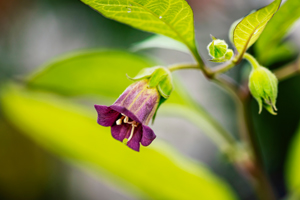
- Suddenness is one of the main characteristics of this remedy. All complaints come in attacks and suddenly and also disappear just as suddenly. The attacks themselves give the picture of a life-threatening situation with great intensity.
- Mucus production in the nose and throat is reduced; consequently there is a dry mouth and a dry, painful throat.
- No sweating; as a consequence of reduced heat radiation through the skin there may be skin redness or warm, blotchy skin.
- Body temperature is elevated.
- The pupils are dilated; consequently they are particularly sensitive to light (photophobia).
- Heart rate is increased.
- Patients tend to be easily startled.
- With Belladonna headaches the face is flushed and the head is very hot.
- A Belladonna fever comes on suddenly, rises high, is very inflammatory and is intermittent. Accompanying symptoms are a hot head and cold extremities or a hot head with coldness in the back. The face is flushed and hot, skin and mouth are dry. The patient, however, is not thirsty.
- Headaches and limb pains are usually throbbing and shooting.
- Craving for lemon or lemonade.
- Discharges of Belladonna are usually hot, e.g. urine, menstrual flow etc.
- Worse from anything that stimulates, such as light, noises, shock, movement etc.
Hepar sulphuris
- Sensation in the throat as if a fishbone, splinter or plug were stuck there; can also be a rough feeling in the throat. Stitches in the throat that shoot into the ear when coughing; when turning the head. Hawking of mucus. Pressing and constricting sensation in the throat.
- Cough: dry, hoarse cough; always provoked when a body part is cold or uncovered, by eating (or drinking) cold foods and beverages; by crying, speaking, walking. Loose, suffocating, resembling croup cough; barking, < cold drinks or mornings; dry, like from a feather.
- Expectoration: weakness with much rattling in the chest; cannot expectorate; becomes tighter in cold air; thick, yellow.
- Sensitivity, pain and tickling in the larynx with redness are indications for Hepar.
- On the mental plane Hepar people are among the difficult patients; they are critical and look dissatisfied.
- In the later stages of pneumonia, when dyspnoea is more marked, Ant-tart or Carbo-veg may also be indicated.
- Aggravation: cold air; outdoors. When undressing and uncovering. From touching the affected body region. When lying on the painful side; at night.
- Amelioration: by warmth. Being covered. In damp, wet weather.
Aconitum
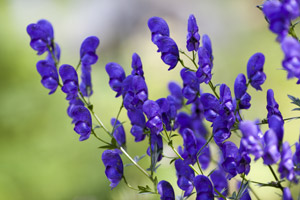
- Aconitum cures cases that come on suddenly; they correspond to the acute, congestive form with high fever, high arterial blood pressure, burning thirst, dry skin, anxiety and restlessness. The cough is dry and painful. Key symptoms include:
- Anxious facial expression. Fear and restlessness (DD: Ars), sudden onset (DD: Bell). Attacks occur after chilling by cold, dry wind or during a cold snap. Also after sweating.
In Aconitum and Belladonna the disease begins suddenly and the fever is high. In the differential diagnosis note that with Aconitum anxiety, restlessness and thirst are greater than with Belladonna.
Other remedies that may be considered are Gelsemium, Bryonia and Arsenicum album.
Bryonia is characterised by a slow onset of symptoms. The mucous membranes are dry and thirst is great. Dry or productive cough with stabbing pains.
With Gelsemium there is pronounced dizziness. The patient is sluggish, as if in a fog, and weak. No thirst.
Arsenicum album has little thirst, but is nervous, anxious and restless. The weakness is disproportionate to the presenting symptoms.
Read more about these and other remedies here: Coronavirus Covid-19 and Homeopathy
For fever accompanied by diarrhoea/stomach symptoms consider Baptisia, Lachesis, Ocimum sanctum, Acidum phosphoricum, Camphora and Arsenicum album.
Dosage
Dosage recommendation: C30 or C200, to be taken every two hours at the onset. Once symptoms subside, doses can be given less frequently. Generally, potency and dosing should be matched to the severity of the symptoms and the patient’s vital force. There is no standardized recommendation for administration.
Further reading
Detailed remedy pictures for all remedies can be found in Leading Symptoms of our Materia Medica by Constantin Hering.
Homeopathic Therapeutics/Pneumonia by Samuel Lilienthal
Homeopathic Materia Medica with Repertory by S.R. Phatak
Materia Medica for the Homeopathic Practitioner by Henri Voisin
Coronavirus Covid-19 and Homeopathy
An analysis of the symptom picture in confirmed cases with consideration of possible homeopathic remedies for treatment and prophylaxis
4 March 2020
Translated from English by Dr Manisha and Dr Manish Bhatia - English original article
Note: Important new information can be found at the end of the article!
The current epidemic (2019–2020) of the coronavirus Covid-19 originating in Wuhan, China, has led to a panic of such magnitude that it is disproportionate to the fatality of this infection. As if increasing fear were not enough, people – especially in cities where new cases are reported – are stocking up on food, medicines, masks and disinfectants. This means these products are no longer available for those who truly need them.
Alternative suggestions for treatment and prophylaxis are also circulating in the media and homeopathy appears particularly promising in terms of prophylactic measures. Especially on Facebook, WhatsApp and other social media, recommendations for homeopathic strategies are passed on. Remedies most frequently mentioned include Arsenicum album, Gelsemium, Influenzinum, Mercurius and Argentum nitricum. The Indian government has officially declared Arsenicum album as a possible prophylactic for the coronavirus. [i]
The problem with most of these recommendations is that they are not based on the actual symptoms of affected patients. Fortunately, we now have a large amount of epidemiological, clinical and laboratory data available published in peer-reviewed journals. From these data we can draw reasonable conclusions about which homeopathic remedies are relevant for this wave of infection.
This article presents a detailed analysis of the symptom pictures observed in corona-infected patients. I have broken down these symptom pictures according to the guidance of the Organon, consulting the repertory and materia medica, and worked out the remedy groups that may be indicated based on scientific criteria.
First, I would like to contribute an analysis of the facts to dispel common myths about the coronavirus and to calm this unusual global state of fear.
Myth: The coronavirus is invariably lethal in all infected people.
No. If you compare the fatality rate (what percentage of infected people die from it) of Covid-19 with deaths from past epidemics or even ordinary influenza, you will find that most people infected with the coronavirus do not die from it.
|
Infection/Epidemic |
Fatality (deaths) |
|
|
|
|
Ebola |
25–90% |
|
Avian influenza – H5N1 |
50% |
|
SARS |
9.6% |
|
Dengue |
1% |
|
Coronavirus Covid-19 |
1–2% |
|
H1N1 influenza (swine flu) |
0.03–0.06% |
|
Measles |
2% |
|
Seasonal influenza |
0.01% |
In China the fatality of Covid-19 is about 2.5%, but with improved diagnostics and greater awareness treatment and prognosis have advanced considerably. Most people who die from this disease are older than 50 or suffer from a comorbid condition, e.g. asthma, COPD, diabetes etc. For reasons we do not yet understand, children under 18 years are usually NOT affected by Covid-19. Children who do become infected typically have only a mild, flu-like course. [ii] Parents of young children therefore need not worry unnecessarily.
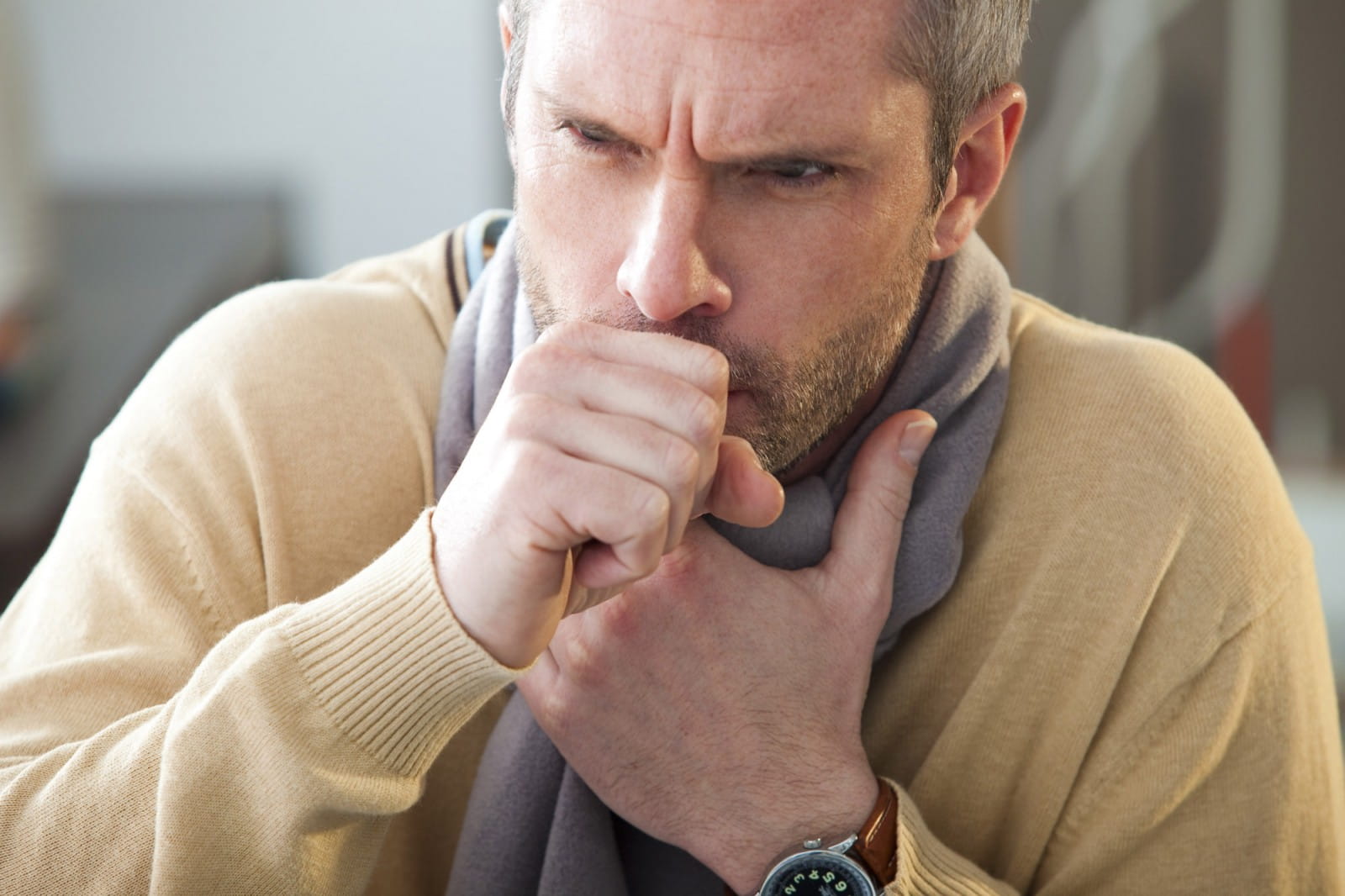
Known symptoms of infection with Coronavirus Covid-19
According to the WHO [ii]:
Symptoms of COVID-19 are non-specific; the clinical picture can range from asymptomatic to severe pneumonia and death. As of February 2020 and based on 55,924 laboratory-confirmed cases, typical signs include: fever (87.9%), dry cough (67.7%), fatigue (38.1%), sputum production (33.4%), shortness of breath (18.6%), sore throat (13.9%), headache (13.6%), myalgia or arthralgia (14.8%), chills (11.4%), nausea or vomiting (5.0%), nasal congestion (4.8%), diarrhoea (3.7%), haemoptysis (0.9%) and conjunctival congestion (0.8%).
Typically people infected with COVID-19 show first symptoms on average 5–6 days after exposure, including mild respiratory symptoms and fever. The average incubation period is therefore 5–6 days, with a range of 1–14 days.
Most patients have a mild disease course and recover fully. In approximately 80% of laboratory-confirmed cases the disease is mild to moderate, including patients with and without pneumonia. In 13.8% of cases the disease is severe (dyspnoea, respiratory rate 30/minute, blood oxygen saturation 93%, PaO2/FiO2 ratio <300 and/or lung infiltrates >50% of the lung field within 24–48 hours) and in 6.1% critical (respiratory failure, septic shock and/or multiple organ dysfunction/failure).
One study showed that the most common early symptoms were fever (59 [73%] patients) and dry cough (48 [59%] patients). Other non-specific symptoms were dizziness (2 [2%] patients), diarrhoea (3 [4%]), vomiting (4 [5%]), headache (5 [6%]) and general weakness (7 [9%]). [vi]
Another study showed that the commonest symptoms were fever (98%), cough (77%) and breathing difficulties (63–65%). Of 52 critically ill patients, fever developed in 6 (11%) only 2–8 days after the onset of initial symptoms related to SARS-CoV-2 infection. The median time from symptom onset to radiological confirmation of pneumonia was 5 days (IQR 3–7). The median time from symptom onset to ICU admission was 9.5 days (7.0–12.5). [iii]
|
Fever |
51 (98%) |
|
Cough |
40 (77%) |
|
Dyspnoea |
33 (63.5%) |
|
Muscle pain |
6 (11.5%) |
|
Malaise |
18 (35%) |
|
Runny nose |
3 (6%) |
|
Joint pain |
1 (2%) |
|
Chest pain |
1 (2%) |
|
Headache |
3 (6%) |
|
Vomiting |
2 (4%) |
Another study found the following symptoms: fever (82 [83%] patients), cough (81 [82%] patients), shortness of breath (31 [31%] patients), muscle pain (11 [11%] patients), confusion (9 [9%] patients), headache (8 [8%] patients), sore throat (5 [5%] patients), rhinorrhoea (4 [4%] patients), chest pain (2 [2%] patients), diarrhoea (2 [2%] patients) and nausea and vomiting (1 [1%] patient). Imaging showed 74 (75%) patients with bilateral pneumonia, 14 (14%) patients with multiple patchy and ground-glass opacities and one patient (1%) had a pneumothorax. 17 (17%) patients developed acute respiratory distress syndrome. Of these, 11 (11%) deteriorated rapidly and died of multiple organ failure. [iv]
The illness seems to begin with fever followed by a dry cough.
After about a week shortness of breath may develop, with about 20% of patients requiring hospitalisation.
An unusual feature appears to be that COVID-19 infection is rarely accompanied by a runny nose, sneezing or sore throat (these symptoms were observed in only about 5% of patients). [v]
Pathological findings in patients with Coronavirus Covid-19
A large proportion of patients have bilateral lung involvement, with lesions mainly in the periphery and subpleural with diffuse distribution.
The predominant pattern among observed changes was: bilateral (64 [79%] patients), peripheral (44 [54%] patients), undefined (66 [81%]) and ground-glass opacity (53 [65%]), with predominant involvement of the right lower lobe (225 [27%] of 849 affected segments). [vi]
Leucocytosis was found in 26 (32%) patients, lymphocytopenia in 54 (67%) patients. C-reactive protein and serum amyloid A were elevated in most patients. [v]
Homeopathy for Coronavirus Covid-19 infection
The homeopathic principle of treatment states that a remedy can cure a disease if it produces, in a healthy person under a homeopathic proving, signs and symptoms similar to those observed in the disease.
In epidemics one seeks, based on the symptoms shown by affected patients, a remedy generally suitable for that situation, the genius epidemicus. This specific remedy can be administered to all affected members of the population for that particular epidemic. The genius epidemicus can change from year to year depending on whether the symptoms of the disease itself change. Not only the symptoms themselves but also the order and intensity of specific symptoms can influence which homeopathic remedy is indicated.
Based on the epidemiological and clinical studies conducted so far we can confirm the following symptoms that our homeopathic remedy should cover:
Fever
Feeling cold/chills
Dry cough
Pneumonia
Shortness of breath
Tightness in the chest
Determining the genius epidemicus
The following description of the steps to identify the genius epidemicus is technical. Non-medical readers may skip the following sections and continue with the section ‘Which homeopathic remedy should I take for the coronavirus?’.
Order of symptoms
Ideally the suitable remedy should cover the symptom ‘dry cough with fever’. We have many remedies that treat a dry cough following a cold. These remedies are not indicated here. Other remedies that we use for allergic dry cough will also not work in this case.
Missing symptoms
We see that most patients do not have a runny nose or that a runny nose appears relatively late. Therefore acute rhinitis with flowing discharges should not be part of the picture of the remedy sought.
Imaging findings
From imaging (CT) it can be assumed that the lower lobes are usually involved; most lesions are peripheral, near the pleura, and the right side is more often affected.
So we are looking for a right-sided remedy that has a course of symptoms from right to left, affects the lower lobes and causes pneumonia involving the pleura (pleuropneumonia).
CT findings also show that most patients do not have lung cavities or bleeding. Remedies with these symptoms are very likely not indicated.
Translating symptoms into repertory rubrics
Possible rubrics from the Complete Repertory:
[Complete] [Chest] Inflammation: Lungs, Pneumonia: Weakness, with:
[Complete] [Cough] Dry cough: Fever: during:
[Complete] [Chest] Tightness:
[Complete] [Chill, shivering] Heat: from:
[Complete] [Chest] Inflammation: Lungs, Pneumonia: Lower lobes:
[Complete] [Chest] Inflammation: Lungs, Pneumonia: Pleuropneumonia:
[Complete] [Chest] Inflammation: Lungs, Pneumonia: right:
[Complete] [Generalities] right: left, from right to:
Of course these rubrics can be replaced or expanded by others. The goal of repertorisation should be to highlight a selection of remedies that could be curative. Then we must resort to our knowledge of the materia medica to filter the appropriate remedies.
One criticism could be that these are “ordinary” symptoms whereas homeopathic prescriptions usually rely on “unusual symptoms”. I would point out that a true simillimum generally covers both the ordinary and the unusual, striking symptoms. Many different ordinary symptoms and their specific combination is in itself unusual and unique, i.e. we can use these symptoms to work out the desired remedy group.
Results of the repertorisation (click the image to enlarge)
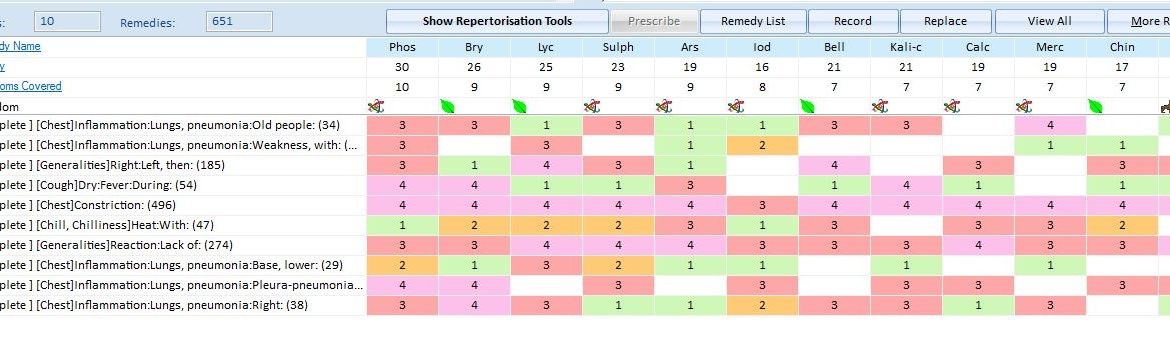
List of remedies
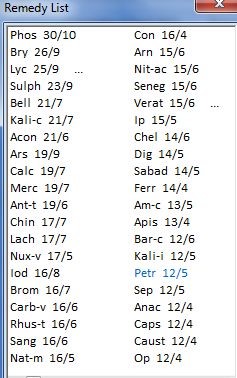
As we can see, the remedies most likely indicated include Phosphorus, Bryonia alba, Lycopodium, Arsenicum alb, Sulphur, Iodum, Belladonna, Kali carb, Mercurius, China, Lachesis, Ant tart, Chelidonium, Gelsemium etc.
Now we must consult the materia medica to filter the remedies for which the sequence and speed of symptoms fit.
The top contenders include remedies with dry cough and fever. Consider:
Aconitum, Bryonia, Ipecac, Kali carb, Phosphorus, Arsen alb, Nux vomica, Sabadilla, Lycopodium, Sulphur, Carbo veg, Lachesis, Pulsatilla etc.
In this epidemic the symptoms develop rather slowly, therefore we must exclude all remedies that have a rapid tempo, including Aconitum, Belladonna, Nux vomica, Arsen alb etc. Also remedies where a runny nose occurs right at the start are not indicated.
Applying these filters, the following remedies remain from the repertorisation:
Bryonia, Phosphorus, Lycopodium, Mercurius, Kali carb.
These remedies seem to cover lateralisation, sequence and tempo of symptoms quite well.
Phosphorus and Mercurius can be excluded because they are known to be indicated in cases with bleeding and pneumonias with cavitations. They may help in a few cases.
Of all the remedies considered, Bryonia covers the initial symptoms best. I believe this remedy can also be used very well prophylactically.
The season also speaks for Bryonia, because we know it works particularly well on warm days with cold nights. We are currently in this transitional phase after winter.
The remedy that covers the later symptoms best is Lycopodium. It can be assumed to be indicated in cases where patients develop pneumonia.
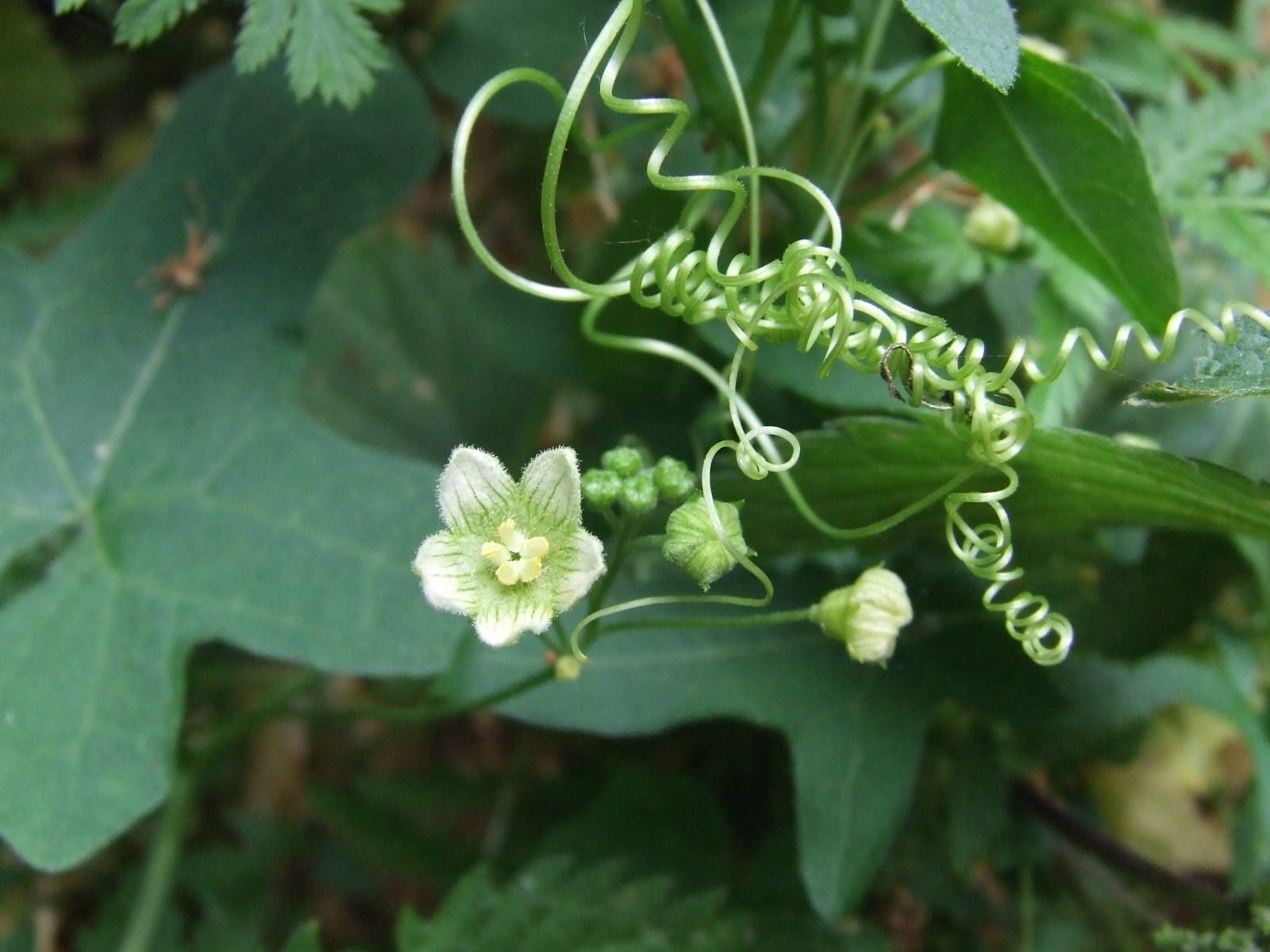
Respiratory symptoms for Bryonia from Phatak’s Materia Medica
Cough: DRY, HARD, VERY PAINFUL, at night, as if from the stomach; must sit up to cough; worse from eating and drinking. Need to take a deep breath but cannot, or it provokes cough. Sputum: rusty, streaked with blood; or tenacious, sticky. Bronchitis. Asthma. Pneumonia. SHARP STITCHES IN THE CHEST or at the right scapula, worse from deep breathing and coughing. Pleurisy. Cough on entering a warm room. Hugs the chest or presses on the sternum when coughing.
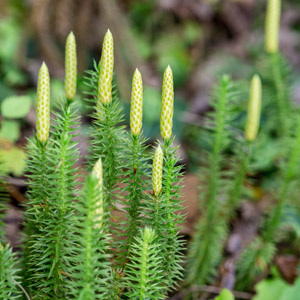
Respiratory symptoms for Lycopodium from Phatak’s Materia Medica
Desires fresh air, but catches cold from it. Short, rattling breathing, worse lying on the back. Cough: dry, tickling cough, annoying irritating cough; in weak, emaciated boys; day and night; deep and hollow sounding; as if from sulphur fumes; worse going downhill; with emaciation; worse from empty swallowing, from stretching the neck; from deep breathing. Expectoration: salty; greenish-yellow mucus clumps; also foul-tasting. Unhealed pneumonia. Brownish-yellow patches on the chest. Lung abscess; tuberculosis. Difficult breathing due to hydrothorax and/or hydropericardium, with nasal flaring. Tightness of the chest with burning.
Lycopodium is also a complementary remedy to Bryonia.
Detailed remedy pictures for both remedies can be found in Leading Symptoms of our Materia Medica by Constantin Hering.
Both remedies are polychrests; further individualising symptoms should be considered before prescribing.
Further reading
Homeopathic Therapeutics/Pneumonia by Samuel Lilienthal
Homeopathic Materia Medica with Repertory by S.R. Phatak
Which homeopathic remedy should I take for the coronavirus?
If you live in a region not yet affected by the coronavirus, you should not take anything for now.
Based on my analysis (see above) I believe that Bryonia alba C6 or C30 can be taken well for prophylaxis. It should be taken once daily (only in regions where the population is affected), until the days get warmer and the epidemic (hopefully) subsides. If you have a patient with flu-like symptoms, you can give the remedy in potencies C6 or C30 every six hours.
For patients with tightness in the chest and dyspnoea the remedy of choice is likely Lycopodium C30.
My suggestions for possibly indicated remedies were developed from the available data. Homeopathic therapy, however, requires much deeper individualisation. Clinical experience with the homeopathic treatment of Coronavirus Covid-19 may lead us to other remedy groups over time.
I do not recommend self-medication. You can show this article to your homeopath and support him/her with this information when selecting the appropriate remedy.
If you believe you may have contracted the coronavirus, please contact your local public health authority immediately.
If you have a flu-like cold and wish to be treated homeopathically, please consult a professional homeopath.
For questions, suggestions or feedback on this article you can contact me at manish@hpathy.com.
Postscript
After the publication of this article I received several responses from Hong Kong and Macao. Homeopaths there have used Bryonia, Gelsemium and Eupatorium with good results. One case in Spain was successfully treated with Argentum nitricum C9, Rumex crispus C5 and Allium cepa C9. These are the only data I have so far from regions directly affected by the coronavirus.
Postscript II
I have just received very helpful materials from Dana Ullman. They come from the Chinese Pharmaceutical Association and are directed at hospital staff (pharmacists and pharmaceutists). They list many first-hand data and clinical details of actual cases from China. The described clinical pictures/cases were divided into four groups. [My comments are in brackets].
Group A: Mild course – no respiratory complaints. [Remedies such as Gelsemium, Eupatorium and Bryonia seem indicated].
Group B: Moderate course – with respiratory complaints such as cough and fever. A characteristic symptom mentioned in the documents is the pale or pale-red tongue of the patients. The cough is either dry or with scanty yellow expectoration. The throat is also dry. [Remedies such as Bryonia, Ant tart, Ars alb and Phosphorus seem indicated].
Group C: Severe course – with dyspnoea. According to the report patients at this stage have a red or yellow-furred tongue. The patient must wheeze on movement. [Remedies such as Lycopodium, Pyrogenium, Lachesis, Bryonia and Ars alb seem indicated].
Group D: Critical course – with respiratory failure, cyanosis and collapse. A characteristic symptom at this stage is a purplish tongue. Movement worsens, patients are restless and sweat with cold extremities. [Remedies such as Merc-sol, Lachesis, Ars alb, Hydrocyanicum acidum, Camphora and Carbo veg could be helpful at this stage].
Postscript III
I have received some information from Iran and the symptom picture there appears somewhat different. Many patients there complain of headaches, especially frontal headaches, with fever. For this scenario Dr Sunirmal Sarkar suggests the remedy Polyporus. In Iran there are numerous patients who succumb suddenly and almost without symptoms. I know two internationally renowned homeopaths who are supporting our colleagues in Iran in the treatment of Covid-19 cases. Both have independently found that Camphora seems to fit best in Iran. We hope to receive more data from our valued colleagues shortly.
Postscript IV
Jiuan Heng wrote to me with some helpful thoughts and suggestions for dealing with the corona pandemic. In homeopathic treatment the patient’s mental state is paramount. The following points may be considered in treating patients with extreme fear or even panic about this disease:
Fear of infection – Health authorities give advice on how to minimise risk, e.g. do not press lift buttons with your fingers. In the USA we are told not to touch our faces. Is it still safe to travel? Is it safe to go to the office? In Singapore we were sprayed with antibacterial disinfectant in a restaurant before we could sit down.
Stockpiling, hoarding – in Singapore I saw photos of empty supermarket shelves. The photos were taken in China and Hong Kong. Now my clients tell me cars queue outside big discount stores and the shelves are literally bought out. I heard the same last weekend from waitresses at a Chinatown restaurant. They had some time to chat due to lack of customers.
Also among the currently most demanded (and often sold out) items are respiratory masks, disinfectants, antibacterial wet wipes, alcohol and protective covers for thermometers. (Mind – desire, craving – more than they need)
Mistrust – is the passenger who coughs on the bus infectious? Are the classmates who have just returned from a school trip perhaps carriers of the virus? [No one says anymore where they have travelled!] There are anecdotal reports of people avoiding anyone who sneezes or coughs.
Racist prejudice – I am not sure where to find this in the repertory. This epidemic has unleashed much anger and suppressed resentment, leading to public attacks on Chinese citizens and people who look Chinese or Asian.
Conspiracy – You have probably heard many conspiracy theories yourself. These arise from a feeling of isolation, from feeling cut off.
Fear of poverty – the predominant, instinctive response in East Asia is about economic loss: “How will this affect the economy? What will happen to my job/my business?” The economic effects of SARS are still vividly remembered. People who are now in positions of power in business and politics were young adults seeking their first job when SARS struck Asia 17 years ago. Now it is sweeping around the globe, literally affecting all industries and the USA is currently affected for the first time.
Due to the mental symptoms and the affinity of this disease to the lungs and possibly the stomach, I suggest that in addition to Bryonia we seriously consider Arsenicum album as the genus epidemicus.
Postscript V
Stephen Gallagher pointed out to me that in 1833 there was a very similar epidemic with influenza-like symptoms. The details of this disease are described in Dr Jacob Jeanes’ book “Homeopathic Practice of Medicine”:
Another kind of catarrhal fever is the influenza which prevailed at the beginning of 1833; it differed considerably in appearance from ordinary influenza and led to much more dangerous sequelae. For where the chest was affected, phthisis almost invariably followed an attack of influenza and recovery was rarely to be expected. In most cases the attacks were sudden, in only a few cases gradual in onset, and an unusual weakness accompanying the catarrhal symptoms, with heaviness and soreness of the limbs, especially the lower extremities, distinguished the disease from all other affections of this kind. These limb complaints were often accompanied by headache and a tendency to vomiting; frequently at the same time with throat pain and some hoarseness. The nasal obstruction increased very rapidly and was accompanied by severe, tearing pains in the forehead and facial bones, with a feeling of pressure in the remainder of the head, giddiness, tearing pains in the ears, etc.
Frequent smelling of camphor seemed to suppress the disease, but after a few days it returned in full force. If pleural inflammation was present, Nux v. always proved very useful after Aconitum had been given first. Mercurius, given daily or every other day, proved highly reliable in treating this disease, or even extinguishing it in the bud, especially when, with severe complaints of the head, throat and chest, there was a dry, convulsive cough that was slowly loosening. If the trachea was much irritated or inflamed so that acute and violent pain almost prevented speech and the voice was greatly changed, frequent smelling of Phosphorus 30 proved useful.
If you have information or data about the current corona pandemic, please write to me at manish@hpathy.com
-----------------------------------------------------------------------------------------------------
[i] https://pib.gov.in/PressReleasePage.aspx?PRID=1600895
[ii] Report of the WHO-China Joint Mission on Coronavirus Disease 2019 (COVID-19). https://www.who.int/docs/default-source/coronaviruse/who-china-joint-mission-on-covid-19-final-report.pdf
[iii] Yang X, Yu Y, Xu J, Shu H, Xia Ja, Liu H, et al. Clinical course and outcomes of critically ill patients with SARS-CoV-2 pneumonia in Wuhan, China: a single-centre, retrospective, observational study. Lancet Respir Med. 2020.
[iv] Chen N, Zhou M, Dong X, et al. Epidemiological and clinical characteristics of 99 cases of 2019 novel coronavirus pneumonia in Wuhan, China: a descriptive study. Lancet 2020. Epub January 30, 2020.
[v] https://www.worldometers.info/coronavirus/coronavirus-symptoms/
[vi] Shi H, Han X, Jiang N, et al. Radiological findings from 81 patients with COVID-19 pneumonia in Wuhan, China: a descriptive study. The Lancet. Published online February 24, 2020. DOI: https://doi.org/10.1016/external icon S1473-3099(20)30086-4.
Dr (Mrs) Manisha Bhatia
BHMS, MD (Hom), CICH (IACH, Greece)
Associate Professor & HoD, SKH Medical College, Jaipur
Consultant, Asha Homeopathy
Director, Homeopathy for Everyone
Dr Manish Bhatia
BHMS, BCA, M.Sc. Homeopathy (UCLAN, UK), MD (Hom)
Associate Professor, SKH Medical College, Jaipur
Consultant, Asha Homeopathy
Director, Hpathy Medical Publishers
Dr Manish Bhatia received the prestigious APJ Abdul Kalam State Level Teacher’s Award in 2016. He gives seminars in Europe, America and Australia and webinars can be booked.
He is author of “Lectures on Organon of Medicine” Vol. I & II (available in English, Bulgarian and German), which are approved by the Central Council of Homeopathy, India, as teaching material. He is editor of “The Fireside Book of Homeopaths’ Tales” and co-author of “Homeopathy and Mental Health Care: Integrative Practice, Principles and Research”.
----------------------------------------------------------------------------------------------------------------------------------

----------------------------------------------------------------------------------------------------------------------------------
Sources: https://www.doctorbhatia.com/treatment/coronavirus-covid-19-symptoms-homeopathic-remedies-for-treatment-and-prophylaxis/?v=3a52f3c22ed6
https://www.doctorbhatia.com/treatment/an-update-on-homeopathy-remedies-for-the-current-wave-of-covid-19/
Photo: Shutterstock_1625661736, 1432885568, 1485013931 Copyright: Kimberly Boyles, Tim2473, Image Point Fr, 1643947495 by Andrii Vodolazhskyi,301154939 by Victor Komissar, 1668357202 on Fabrizio Guarisco,

