
Figure 1: Chlorophyll is not only indispensable for plant photosynthesis. Humans can also benefit from the many positive properties of this valuable plant pigment.
Chlorophyll is best known as the pigment that gives plants their green colour. However, the plant dye is not only essential for photosynthesis but also offers numerous health benefits. How exactly chlorophyll acts in the human body and which foods are particularly rich in chlorophyll are explained in this blog article. In addition, you will find helpful information on the main applications of the "green blood" as well as guidance on the correct intake and dosing of chlorophyll preparations.
Chlorophyll: The essential green plant pigment
Many people first come across chlorophyll in biology lessons when photosynthesis is on the curriculum. This term refers to the process by which plants, algae and certain bacteria convert light energy into chemical energy. During photosynthesis, carbon dioxide (CO2) and water (H2O) are converted into sugar (glucose) and oxygen (O2) with the help of sunlight. Chlorophyll plays a crucial role in this vital biological process: the plant compound is able to absorb light energy and transmit it within the plant. Because of its key role in energy production, chlorophyll is essential for the plant.
As a component of green vegetables and leafy greens, chlorophyll is also highly important for human nutrition. However, increasing industrial processing of food means that today only small amounts of chlorophyll are usually consumed through the diet. Given the many positive properties of the "green elixir", it is therefore worthwhile to pay attention to the consumption of chlorophyll-rich foods. In addition, chlorophyll can be taken as a dietary supplement.
Chlorophyll a, chlorophyll b, chlorophyllin: What is the difference?
When researching chlorophyll, several terms quickly appear that can sometimes cause confusion. Among them, chlorophyll a and chlorophyll b are frequently mentioned. But what do these terms actually mean and how do they differ? It is important to understand that both chlorophyll a and chlorophyll b are forms of chlorophyll. Chlorophyll a absorbs mainly yellow and red light, whereas chlorophyll b primarily absorbs blue to violet light. The chlorophyll forms also have slightly different chemical structures, which account for the different absorption spectra.
Chlorophyllin is a semi-synthetic derivative of the natural chlorophyll found in plants. It is produced by replacing the magnesium naturally present in chlorophyll with a copper ion or other metal ions. As a semi-synthetic form, chlorophyllin is water-soluble and UV-stable, unlike natural chlorophyll. Because it is easier to process, chlorophyllin is often used by the food industry (for example as a colourant).
How does chlorophyll act in the human body?
When it comes to the effects of chlorophyll on the human organism, its antioxidant potential is particularly noteworthy.[1] This can help protect body cells from damage caused by free radicals and from chronic diseases such as cardiovascular disease or cancer. Studies have also shown that chlorophyll can prevent the entry of certain viruses into body cells. A 2020 study demonstrated that chlorophyll can strongly inhibit Enterovirus A71 (EV-A71).[2] Enteroviruses can cause respiratory infections, febrile illnesses and neurological complications, among other conditions. In addition to its antioxidant and antiviral properties, chlorophyll also has antibacterial, detoxifying and anti-inflammatory effects.[3]
From detoxification to bad breath: Important applications of chlorophyll
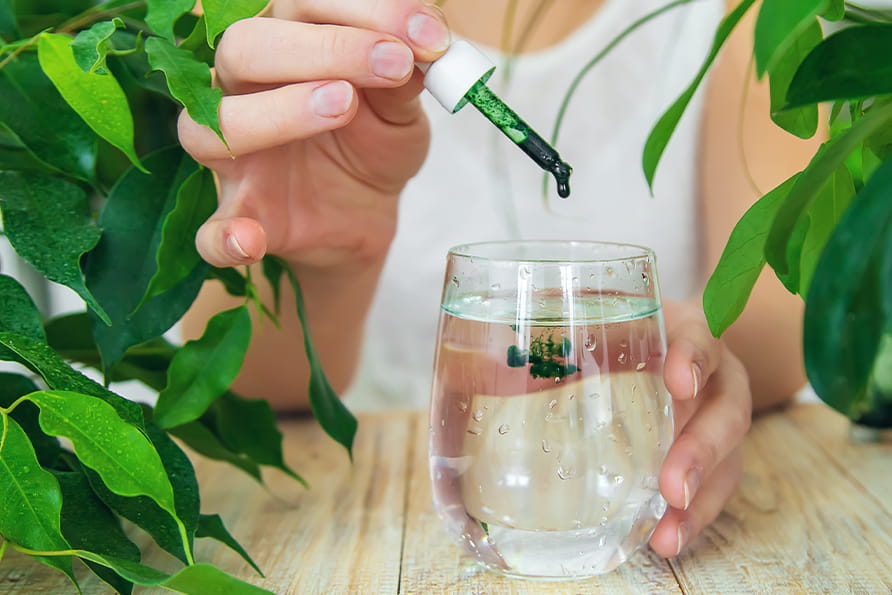
Figure 2: Due to its antioxidant, antiviral and anti-inflammatory properties, chlorophyll can have positive effects on many health complaints.
Chlorophyll has a wide spectrum of action and is therefore used for numerous complaints. The compound's contribution to blood formation and the body's detoxification processes is considered particularly relevant. We present these and other important applications below and explain how chlorophyll exerts its specific effects in each case.
Blood formation
It is not surprising that chlorophyll is also referred to as "green blood". After all, its chemical structure closely resembles that of the blood pigment haemoglobin. While chlorophyll gives plant sap its green colour, the pigment haem in haemoglobin gives human blood its red colour. Both pigments contain a ring-shaped molecule known as a porphyrin ring. However, whereas chlorophyll has a magnesium atom at the centre of the porphyrin ring, haem contains an iron atom.
Although chlorophyll itself does not contain iron, the compound can help raise ferritin levels. In an animal study with anaemic mice, administration of chlorophyll led to an increase in both haemoglobin and ferritin levels.[4] This result can be explained by the fact that chlorophyll, while not providing iron, supplies other important substances required for haemoglobin formation. This relationship has also been demonstrated in human studies. As early as 1936, Dr Arthur Patek showed that green foods high in chlorophyll, when combined with iron, increase the amount of haemoglobin in a person's blood more rapidly than iron supplements alone. If you suffer from iron deficiency or anaemia, it is therefore advisable to combine iron supplementation with a chlorophyll preparation.
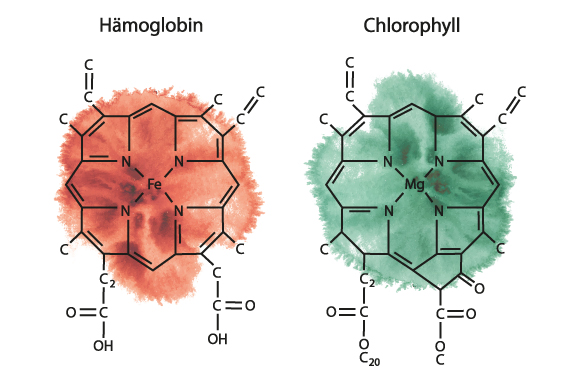
Figure 3: Plant chlorophyll and human haemoglobin have a similar structure. The difference lies in the centre of the porphyrin ring: chlorophyll contains a magnesium atom there, while haemoglobin contains an iron atom.
Protection against toxins and detoxification
The intake of chlorophyll or chlorophyllin is often recommended for detoxification and to support the liver. Indeed, the compound can bind various toxins including mould toxins (aflatoxins), dioxins, hydrocarbons and heavy metals. Bound to chlorophyll, these harmful substances are then excreted in the stool and thus neutralised. Through its antioxidant properties, chlorophyll also protects the liver — our important detoxification organ — from damage caused by oxidative stress.
Body odours
Chlorophyll has also proven effective in combating body and stool odours — for example in incontinence or with an ostomy. People suffering from foul-smelling flatulence or sweat odour may find that a chlorophyll-rich diet or taking chlorophyll preparations helps to reduce unpleasant body odours. This was shown in a study in elderly people: the 62 participants initially took 100 milligrams of chlorophyllin three times daily for ten days and then 100 milligrams twice daily for six months. The intake was free of side effects and was able to significantly reduce body and stool odours in many of the subjects.[5] Chlorophyll is also frequently used to combat bad breath, often in the form of specialised mouthwashes.
Immune system and wound healing
Blood fulfils a variety of vital functions in the body. In addition to transporting oxygen, hormones and nutrients, blood also plays an important defensive role. By producing antibodies, it can fend off pathogens and infections. Leukopenia is characterised by a lack of white blood cells and is generally associated with a high susceptibility to infection. In a study with patients with leukopenia, administration of copper chlorophyllin led to a marked increase in leukocytes in the blood.[6] Independently of this, chlorophyll can contribute to an intact immune system by supporting healthy blood formation, as already described.
As an antioxidant with anti-inflammatory properties, chlorophyll can also accelerate wound healing.[7] It is suspected that the compound can stimulate the formation of new cells and thus promote tissue regeneration. For this reason, water-soluble chlorophyllin is a common ingredient in medical ointments intended to support the healing of wounds and ulcers.
Skin problems
On social media, chlorophyll drops are often touted as a miracle cure for radiant, clear skin. Whether chlorophyll is truly effective for skin problems has not yet been sufficiently proven by studies. However, a small study with 24 women suggests that chlorophyll may improve acne and reduce visible signs of skin ageing.[8] In the study, the skin of 24 women with mild to moderate acne was treated twice daily with a liquid preparation of sodium copper chlorophyllin. After eight weeks, among the 21 participants who completed the study, both acne and signs of skin ageing had significantly decreased.
In another small study with ten women whose facial skin showed mild UV-induced damage, an eight-week application of chlorophyllin also had positive effects on sun-damaged skin.[9] In both studies, the use of chlorophyllin was free of side effects.
Which plant foods are particularly rich in chlorophyll?
To increase chlorophyll intake through diet, green vegetables should be included regularly on the menu. As a rule of thumb: the darker the food, the higher the chlorophyll content. The following foods and food groups are particularly high in natural chlorophyll:
- Green vegetables and leafy greens (e.g. kale, spinach, broccoli, green peas)
- Green grasses (e.g. wheatgrass, barley grass)
- Fresh herbs (e.g. parsley, basil, alfalfa, coriander, nettle)
- Algae and cyanobacteria (e.g. chlorella, spirulina)
- Fruits and berries (e.g. kiwi, lime, avocado, green apple)
When preparing them, bear in mind that chlorophyll is not heat-stable. From a temperature of around 40°C the compound begins to change structurally. At around 70°C chlorophyll is completely denatured and loses its function.[10] It is therefore advisable to prepare chlorophyll-containing foods cold (e.g. in smoothies or juices). Dressings and gazpachos can also be enriched with barley- or wheatgrass powder, fresh herbs and green vegetables to add an extra portion of chlorophyll.
Dietary supplements with chlorophyll: What to watch for
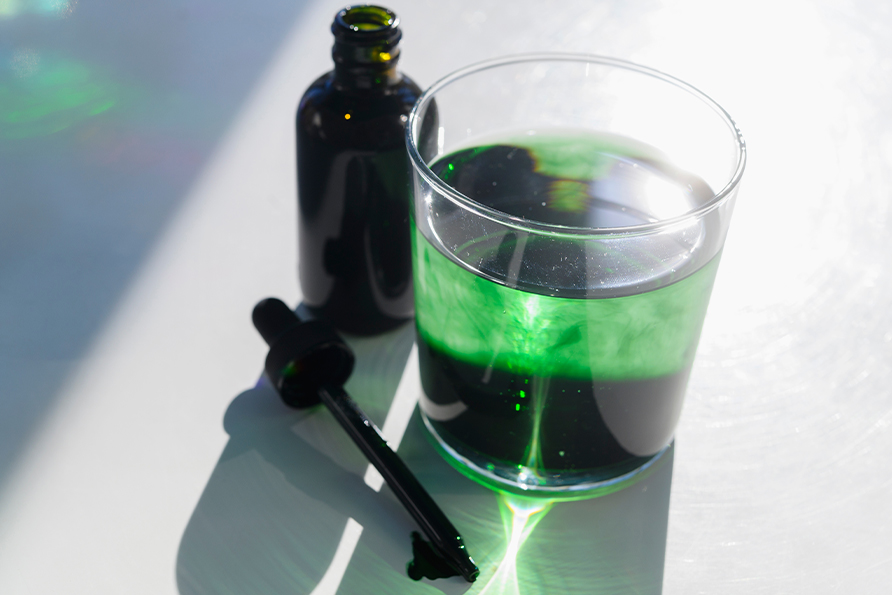
Figure 3: When buying a chlorophyll-containing preparation, you should pay attention, among other things, to the type of chlorophyll contained and to certified organic origin.
If you find it difficult to obtain sufficient chlorophyll from your diet alone, or if you have an increased need for chlorophyll for other reasons, appropriate dietary supplements are often a good choice. Chlorophyll preparations are available, among other forms, as drops, tablets and powders.
When buying chlorophyll drops in particular, make sure that the product you choose contains natural chlorophyll without unnecessary additives. Natural chlorophyll from alfalfa by Unimedica contains 66.6 milligrams of natural chlorophyllin per daily dose from gentle extraction. Alfalfa is a traditional crop that, in addition to chlorophyll, contains other valuable constituents including numerous vitamins (e.g. vitamins A and C, B vitamins), minerals (e.g. calcium, magnesium, iron), eight essential amino acids and secondary plant compounds. Liquid chlorophyll is very light-sensitive. To avoid nutrient loss, chlorophyll drops should therefore always be bottled in dark glass and stored cool and protected from light.
If you opt instead for a chlorophyll-containing powder such as barleygrass or spirulina powder, look for high quality and organic origin. The vegan, cold-pressed organic barley grass juice powder from Unimedica is raw-food quality and comes from certified organic cultivation. Also popular are chlorophyll-containing active ingredient compositions designed for a specific application. The Blood Formation* Complex from Unimedica is a unique composition of chlorophyll, the mineral iron, the trace element copper, vitamins (C and B-group) and valuable plant constituents. The capsules were created to support normal blood formation and regeneration. The Liver* Complex from Unimedica, in turn, contributes to the maintenance of normal liver function with choline and is characterised by a broad nutrient combination including minerals, L‑glutathione, high-quality plant constituents and vitamins.
How to take and dose chlorophyll correctly
How often and in what dosage chlorophyll should be taken depends, among other things, on the purpose of use and the general state of health. A common daily dose is 10 to 30 drops of liquid chlorophyll, which can be taken divided over the day. Chlorophyll capsules and tablets usually contain doses of 50 to 300 milligrams of chlorophyllin per unit. Doses above 300 milligrams should only be taken after consulting a doctor. In general, it is advisable to consult your doctor and have an individual appropriate daily dose recommended.
Although chlorophyll is generally considered safe and low in side effects, rare cases of digestive complaints or allergic reactions may occur. Yellowish, blackish or greenish discolouration of urine or stool due to the pigment is also possible but harmless. If you react sensitively to chlorophyll, it may help to take the preparation with meals or to reduce the dose.
Biography
Katharina Korbach regularly writes blog posts on medicinal plants and natural active ingredients for Narayana Verlag. She began to be interested in language early on and to write her own literary texts. A serious illness during her A-levels prompted an intensive engagement with health and nutrition topics that continues to this day. After repeated failures of conventional medical treatments, she decided on a more self-effective, naturopathic therapeutic approach. A plant-based diet was an important key on her healing journey.
Katharina studied Cultural Studies (B.A.) and Applied Literary Studies (M.A.). In 2022 she published her debut novel “Sperling” with Berlin Verlag. Today she lives in Berlin as a freelance author, medical editor and lecturer. In her free time she prefers to spend time with friends or at barre training. She also loves travelling and trying new vegan recipes.
[1] Rabie Khattab, Erin Goldberg, Lin Lin, Usha Thiyam. Quantitative analysis and free-radical-scavenging activity of chlorophyll, phytic acid, and condensed tannins in canola, Food Chemistry, Volume 122, Issue 4. 2010. https://www.sciencedirect.com/science/article/abs/pii/S0308814610003742.
[2] Liu Z, Xia S, Wang X, Lan Q, Li P, Xu W, Wang Q, Lu L, Jiang S. Sodium Copper Chlorophyllin Is Highly Effective against Enterovirus (EV) A71 Infection by Blocking Its Entry into the Host Cell. ACS Infect Dis. 2020 May 8. https://pubmed.ncbi.nlm.nih.gov/32233455/.
[3] Subramoniam A, Asha VV, Nair SA, Sasidharan SP, Sureshkumar PK, Rajendran KN, Karunagaran D, Ramalingam K. Chlorophyll revisited: anti-inflammatory activities of chlorophyll a and inhibition of expression of TNF-α gene by the same. Inflammation. 2012 Jun. https://pubmed.ncbi.nlm.nih.gov/22038065/.
[4] Suparmi, Suparmi & Sampurna, Sampurna & C.S, Nur & Ednisari, Alvenia & Urfani, Galuh & Laila, Iqrommatul & Saintika, Heavin. Anti-anemia Effect of Chlorophyll from Katuk (Sauropus androgynus) Leaves on Female Mice Induced Sodium Nitrite: Pharmacognosy Journal. 2016. https://www.phcogj.com/sites/default/files/10.5530pj.2016.4.10.pdf.
[5] Young RW, Beregi JS Jr. Use of chlorophyllin in the care of geriatric patients. J Am Geriatr Soc. 1980 Jan. https://pubmed.ncbi.nlm.nih.gov/7350215/.
[6] Gao F, Hu XF. Analysis of the therapeutic effect of sodium copper chlorophyllin tablet in treating 60 cases of leukopenia. Chin J Integr Med. 2005 Dec. https://pubmed.ncbi.nlm.nih.gov/16417778/.
[7] LAM CR, BRUSH BE. Chlorophyll and wound healing; experimental and clinical study. Am J Surg. 1950 Aug. https://pubmed.ncbi.nlm.nih.gov/15425708/.
[8] Jiang LI, Hino PD, Parker L, Stephens TJ, Mccook J, Gotz V. Efficacy and Tolerability of an Acne Treatment Regimen with Antiaging Benefits in Adult Women: A Pilot Study. J Clin Aesthet Dermatol. 2018 Jun. https://pmc.ncbi.nlm.nih.gov/articles/PMC6011872/.
[9] Sigler ML, Stephens TJ. Assessment of the safety and efficacy of topical copper chlorophyllin in women with photodamaged facial skin. J Drugs Dermatol. 2015 Apr. https://pubmed.ncbi.nlm.nih.gov/25844615/.
[10] Lípová L, Krchnák P, Komenda J, Ilík P. Heat-induced disassembly and degradation of chlorophyll-containing protein complexes in vivo. Biochim Biophys Acta. 2010 Jan. https://pubmed.ncbi.nlm.nih.gov/19712665/
Figure 1: boommaval/shutterstock.com; Figure 2: Tatevosian Yana/shutterstock.com; Figure 3: Narayana Verlag GmbH; Figure 4: moon phase photo/shutterstock.com

