
by Piotr Stach
I would like to describe here my first therapeutic experience using the Sankaran method in the treatment of a patient.
After attending the autumn seminar in Poznan last year, I was captivated by this approach. Sankaran’s convincing way of presenting the precise, targeted and repeatable selection of remedies, his explanation of the miasms and the systematics of remedies in relation to the kingdoms and sub-kingdoms, all illustrated by highly interesting cases of healed patients, persuaded me to continue studying this method and to test it in practice.
Attending the seminar was the first step – the next was acquiring the VitalQuest computer programme; I did not have to wait long for the first successes in my practice.
My patient had already been under homoeopathic treatment for some time and had responded very well to Natrium muriaticum. She had also been in psychotherapy for a long time because of marital problems.
She says her problems were caused by childhood trauma.
Patient (P): “... as for my sadness: I’m a sad, melancholic type, very introverted and closed. I find it difficult to show my feelings. It’s a black hole of despair that I can’t escape from ...”
Since being in psychotherapy she has experienced boundless grief.
P.: “... It still happens that I fall into that hole, but now I know how to get out again. I have difficulties relating to other people. I like being alone, and for a while I’m fine with it, but then I feel miserable.
In conflict situations I can’t stand up for myself. I raise my voice only in extreme situations. When there is an argument I am tense; I must pull myself together, only then can I interrupt my husband’s monologue. I give up and listen submissively, and eventually I prefer to isolate myself and read my books. Books and films replace reality for me. I can only show my anger passively – I’m hurt, I feel offended, and I withdraw completely; I don’t want to talk. It’s hard for me to overcome my emotional blockages, to express my feelings and to voice my opinion.
I didn’t complete my studies; I wasn’t self-confident enough.
My way of coping with stress is eating.
My grief comes from realising that as a child I did not receive the most important thing from my mother: unconditional love. If you wanted to avoid punishment at home in my family, you had to hide your feelings, otherwise you were punished for crying. You had to be polite and quiet and follow instructions. My father drank, and my mother abused us physically and emotionally. I was six months old when my mother sent me to my grandmother. I was brought up by both of them: by my mother and my grandmother. I had no emotional contact with either. At my grandmother’s I grew up with animals.
As a schoolchild I often had bronchitis and pneumonia and developed bronchiectasis. I spent a lot of time in a sanatorium, where I was not really ill – there I felt safe. I often received parcels.
I like sweets, dark chocolate, coffee and salty foods.
I avoid the sun; I don’t feel comfortable in hot weather.
I used to suffer from acne, cold sores on the lips, constipation and painful menstruation.
One day she had spotting and pain in the vagina. An ultrasound showed a fibroid of 1.0 cm diameter. The patient was overwhelmed by panic and feared cancer.
After taking Natrium muriaticum she became calmer, and the vaginal pain decreased by 50%. At that time she began to dream a recurring dream: abandoned children, always girls, wandering alone and getting lost. She feels helpless, and the next day she looks for these children.
Although she took Natrium muriaticum, some further problems occurred which she attributed to a tick bite. She suspected Lyme disease, and her suspicion was reinforced by the fact that her husband and son also suffered from similar symptoms.
She was admitted to hospital and treated with antibiotics. Extensive tests ruled out Lyme disease, and we met again at her follow-up appointment, where I tried to apply my newly learned Sankaran method.
P.: “... I have a slightly elevated TSH, and T3 and T4 are at the lower end of the normal range. Euthyrox 50 was prescribed daily, and since then my physical condition has improved, but in the last three days my mood and energy have been noticeably worse.
I feel as if I have depression. I have no desire to do anything, I have to force myself to do everything. I feel no joy anymore, only inner sadness, nothing makes me happy. Life is dull, I feel nothing at all. I feel as if I am broken into pieces, and I can’t bring myself to do anything.
When I realised I did not have multiple sclerosis, I was disappointed that I was not seriously ill. I thought it would be wonderful to be ill and to need attention and care, and now I have to continue functioning as an efficient machine...”
P.S.: What does “broken into pieces” mean?
P.: “... I see no meaning in my life, in my activities. I find it hard to put everything together, to give it meaning. Natrium brought slight improvement, but it could not change my inner self ...”
She tells me about her recurring dream and emphasises that it clearly reflects her current situation and feelings.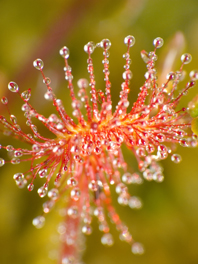
Dream: “Bus stop, last night it was a taxi rank – I am in such places; I want to flee, but there is no way out. I don’t know where to buy a ticket, and where to get on. I have the feeling of being trapped and cannot escape. I walk around with a dark feeling of being lost and helpless. The feeling of being trapped is very strong. I am desperate because I can’t get out of the station; I am totally devastated.”
P.S.: “Please tell me a little more about the feeling of being trapped in a trap!”
P.: “It is pure despair; I feel unhappy, hopeless and defeated. I think I should make some changes in my life, but I am not able to. I feel lost, I can’t find my own way in my current situation.
“The only possible decision seems to be to divorce my husband. That would free me from this feeling. However, there are some open questions: will I manage without him, and what about the child who is very emotionally attached to his father? Would it be a good solution in the long run? I don’t know, I have many ambivalent feelings and thoughts. The strongest is the fear of the psychological consequences; will I be able to bear the stress and responsibility?
I feel as if I am trapped in my life.
It is becoming increasingly clear to me that my husband will never change: I will either remain stuck in this situation, or I must leave him, there is no other option.
A trap – I cannot decide to leave him, and I am dissatisfied with the way I live.
It is an inner conflict, the question whether I should separate and live my own way, or stay and fight for my family.
It is a struggle; I would have to fight, but I don’t feel like fighting. It is a “no-win” situation.”
Case analysis
When analysing the case history I concentrated on the patient’s sensations in her dream. She emphasised that her dream reflects her current state. There is a lot of energy in her dreams. I performed the analysis with Sankaran’s computer programme, VitalQuest. The programme makes it possible to call up all the patient’s case-history data or selected parts or just individual sentences and words. I selected the following statements of the patient:
Feeling of being trapped
Feeling of abandonment
Feeling of helplessness and despair because she sees no way out.
In the first step the programme shows the percentage probability of the kingdom in which the remedy is to be found. In my case:
Plant kingdom 58%, Miasms 23%, Animal kingdom 17%.
Patient characteristics that belong to the plant kingdom: strong feelings, sensitivity: “I feel offended, I can’t bear it.” In the sensations she expresses there are no themes from the animal kingdom such as rivalry, struggle for survival, attractiveness, sexuality or aggressor and victim.
So I could narrow my search to the plant kingdom. In the next section the programme displays the plant orders, and among them the Nepenthales / carnivorous plants with the highest percentage. The main remedies in this order are Drosera and Sarracenia.
Keywords for the carnivorous plants that the patient expresses:
trapped
No way out
Cannot escape
Now it was time to identify the patient’s miasm.
She previously often suffered from bronchitis and pneumonia. Today she says she feels weak; she feels oppressed and believes that her weakness is exploited. This mainly concerns the relationship with her husband. These are characteristics of the tubercular miasm.
According to the Sankaran method the remedy must lie at the intersection between the order and the miasm.
In the Nepenthales the remedy for tuberculosis is Drosera.
Drosera belongs to the group of “sticky trap” plants. Bright colours and sweet nectar lure unsuspecting insects. The tentacles on the leaves secrete a sticky juice that traps the insects; they are gradually digested enzymatically and eventually absorbed by the plant.
Follow-up
Three weeks later: “I feel inner peace and no longer oppressed. My feelings have subsided. Small problems that I would previously have viewed as huge now seem much more tolerable. I am beginning to see more positive than negative. Life is no longer dull.
“Two weeks ago I had a big argument with my husband, and I ‘put everything on the line.’ My husband is beginning to change, and I have more understanding for him.
Previously I focused on the bad, now I try to find the right balance.”
“Dreams?”
“Nothing special, the bus station dream has not returned.
Recently I have begun to enjoy the sea and the sun, and I feel wonderful. Now I can no longer bear the mountains, which I used to like so much.”
One year later: the patient’s depressions have not returned, and her marriage is back on track. With the correct remedy she recovered quickly and permanently.
Photos
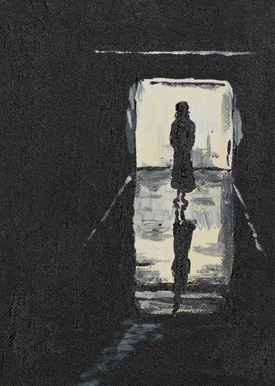
oil painting illustrating the silhouette of a girl in a corridor © shutterstock.com / Shots Studio
Sundew (Drosera rotundifolia) lives on bogs and it catches prey © shutterstock.com / scaners3d
Categories: Cases
Keywords: sensation method, black hole of despair, emotional abuse, bronchitis, pneumonia, trapped, inner conflict.
Remedy: Drosera
This article was published on www.interhomeopathy.com

