
Case study 1
A 16-year-old girl.
The appointment with me was ostensibly made because the girl twisted her knee during sport and it is swollen. However, the parents are more worried about their daughter's social behaviour.
At home she behaves completely normally; she is lively and talks a lot. But as soon as she has to act outside the family circle she shuts down. She has no friends because she cannot maintain contact with others. If someone gets in touch with her, she cannot call back, let alone arrange to meet.
She can handle superficial contacts relatively well, but as soon as it becomes personal or closer she seems not to understand and tries to escape the situation. She also lies to avoid close contact and does everything to avoid showing herself or revealing anything about herself. Close friendships thus become impossible and she is increasingly isolated. She is bullied at school and therefore no longer wants to go there. She learned to speak late, has cognitive deficits and attends a special school.
Swimming is her great passion. She is a talented swimmer and could even take part in competitions. For a year she has had a coach, however, who does anything but support her. She reports that her coach shouts at her and that she believes she is the only one he shouts at. She cannot stand shouting. She used to train almost every day; today she only goes swimming twice a week and would actually like to stop altogether. Her fitness and performance have accordingly declined. She claims that none of this bothers her, which is not true. She does not dare to admit openly what is going on, although she would like a new coach. Because of swimming her knee is now also swollen and reddened, and it hurts quite a lot. The parents had actually wanted to consult a homeopath a long time ago because of their daughter's difficult social behaviour and are now taking the swollen knee as an occasion for treatment. They had to persuade their daughter to come to the appointment.
Recently the girl has been feeling very tired. She often falls asleep on the sofa at 4 pm. She goes to bed at 9:30 pm but despite her tiredness wakes again at 1:30 am (usually disturbed by her father's coughing). She falls asleep again at around 3:30 am and starts the next morning utterly exhausted.
During the pregnancy the mother had to undergo frequent examinations at the gynaecologist; no reason for this was ever given. Shortly before the birth the gynaecologist told the mother that the back of her unborn child was closed. He seemed very relieved. Two days after the delivery the mother had bleeding and there was a stillbirth of a second child. The foetus had apparently been dead for some time.
Analysis
This is clearly a girl with a serious developmental disorder, evident from the delayed maturity of the spine, the slow development of speech and the cognitive difficulties. Taking into account the girl's lack of self-confidence and her fear of unfamiliar situations, at this point we would probably prescribe Baryta, Nat mur or Silicea. Because she was unable to form a deeper relationship with her environment, which points to stage 3 of the periodic table, I thought of the remedies Borax and Boron. Boron affects early development, growth and a person's cognitive abilities, which confirmed the choice of remedy in this case. The combination of boron and the related sodium (her difficulties in making contact suggested a sodium pattern) led me to prescribe Borax.
Response
Fairly early on – within the first two weeks after taking the remedy – she experienced a marked surge of energy: she was no longer tired and slept well. A month later the mother described her daughter as a different person: she enjoys going to school because she is no longer bullied there. She becomes more sociable, arranges to meet friends, seems to feel comfortable with them and for the first time in her life goes out at weekends. She now opens up more and no longer shows the avoidance behaviour of before. The cognitive problems are still present, though not as severe as before. When things become too complicated she still withdraws. But she now perseveres longer and is no longer unsettled by a challenge. Swimming no longer seems as important to her; it had been the only way she could express herself. She now prefers to go out with her friends. Eighteen months after the administration of Borax she is still doing well and the remedy has not had to be repeated so far.
Case study 2
A 7-year-old girl.
She comes because she is very insecure. Whenever she does not know how to handle a situation she loses control of herself: she trembles all over, all her muscles stiffen, she begins to cry and becomes inaccessible. The only thing that helps then is to leave her alone and take her to her mother. With children she does not know she is initially shy, then becomes very bossy and reacts in the same way when she cannot get her own way. She cannot relate to other children on an equal footing. She gets on much better with adults, in whose  presence she behaves like a little troublemaker.
Anything that moves can trigger an epileptic-like attack in her: above all electronic toys in shopping centres; fast cycling ("Don't ride so fast, Mum."); dark rooms; car washes; strangers who approach her too quickly; animals; water (the shower or water in general on her head); loud noises (even when these are merely announced); seesaws and other equipment in playgrounds; unfamiliar stairs; lifts and slides. She prefers to be at home, i.e. in the house ("I miss my home very much.").
She has difficulty with vision. The optician says she cannot process the images she sees correctly. Before she had her glasses she often twisted her neck in a movement reminiscent of torticollis so she could see better. On the motor level and especially in play she is rather clumsy, wooden and stiff and becomes tense quickly.
She complains of stomach pains that are worse when she is upset and when she drinks something cold. She does not eat much and has an aversion to milk, tea and water. Meat and bread are the best tolerated. Apple juice gives her diarrhoea.
She often sweats on her head during sleep. Previously she found getting up difficult and often cried when doing so. That has improved now. At 5 pm she always has a low point. As a baby she often had a cri encephalique and cried frequently in her first year of life. The grandmother reports that her mother was the same as a child, although not so severe.
Analysis and responses
She was treated by me once before at the age of four. She was brought because of her stomach pains and had clear Lycopodium symptoms. Lycopodium helped very well, but when the remedy was given for the fourth time it no longer had any effect. The same happened with Aurum; it caused mouth ulcers. That pointed to Borax, which produced a marked improvement, particularly in the motor complaints and social behaviour. Borax worked better here than Lycopodium.
Discussion
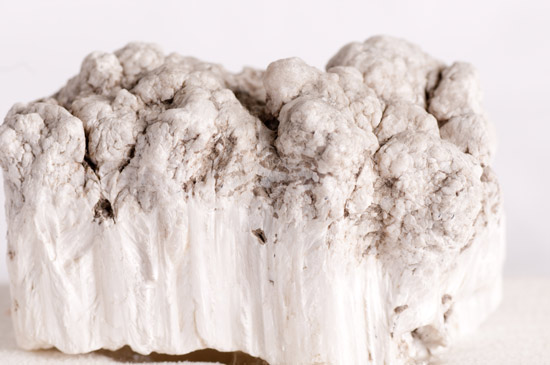
Borax has long had a good reputation in the treatment of developmental disorders in children, which is confirmed by recent biochemical findings on the effect of boron on developmental processes. The essence of the Borax picture, however, has never emerged clearly. Through Jan Scholten's work on the periodic table of the elements and many successful case studies, the importance of the element boron for the treatment of dissociative disorders has become clearer. Boron is an important remedy for situations in which a person is overwhelmed by impressions from their environment and risks losing their identity. Sodium and sodium salts have difficulties maintaining relationships. When a dissociative personality disorder develops in connection with avoidance behaviour, boron and sodium can under certain circumstances complement each other very well; see Borax.
********************************
Category: Cases
Keywords: Borax, behavioural disorder, element
Remedy: Borax
Original article: Interhomeopathy.org

