

Figure 1: The mineral clay bentonite can detoxify the digestive tract by removing heavy metals such as lead, mercury, cadmium and aluminium.
The volcanic mineral bentonite has the ability to bind contaminants in the body effectively and gently eliminate them. Accordingly, it is frequently used for cleansing the intestinal tract and to relieve the liver and kidneys. In which other areas the healing clay is used and how an intestinal cleanse with bentonite works are explained in this blog article. You will also find helpful tips and guidance on choosing a suitable bentonite product as well as information on administration, dosage and possible side effects.
What is bentonite?
Bentonite is a finely powdered clay mineral formed from volcanic ash. The name derives from the small town of Fort Benton in Montana, USA, where the rock powder was first discovered. There are many other bentonite deposits worldwide, with larger quantities located in the USA, China and Uruguay.
Bentonite formed through the weathering of volcanic ash and consists of different clay minerals. Compared with ordinary clay, it has an internal surface area up to 300 times greater and moreover carries a negative electrical charge. This means that bentonite has an extremely high adsorptive capacity for contaminants.
With a proportion of up to 95%, montmorillonite is one of the main components of bentonite. Montmorillonite is a very soft layered silicate composed mainly of aluminium, silicon, sodium, calcium, magnesium and crystal water. Due to its outstanding swelling capacity, montmorillonite-bentonite can absorb six to seven times its dry weight in liquid.
When taken orally, bentonite forms a natural montmorillonite gel protective film that gently and soothingly coats the gastric and intestinal mucosa. For this reason, a detox cure with bentonite is particularly recommended for people with sensitive mucous membranes.
How does bentonite work and what are common applications?
Depending on how bentonite is used, the volcanic mineral can have detoxifying, protective or nourishing effects, among others. Read on to find out in which areas the healing clay is used and how it exerts its effects in detail.
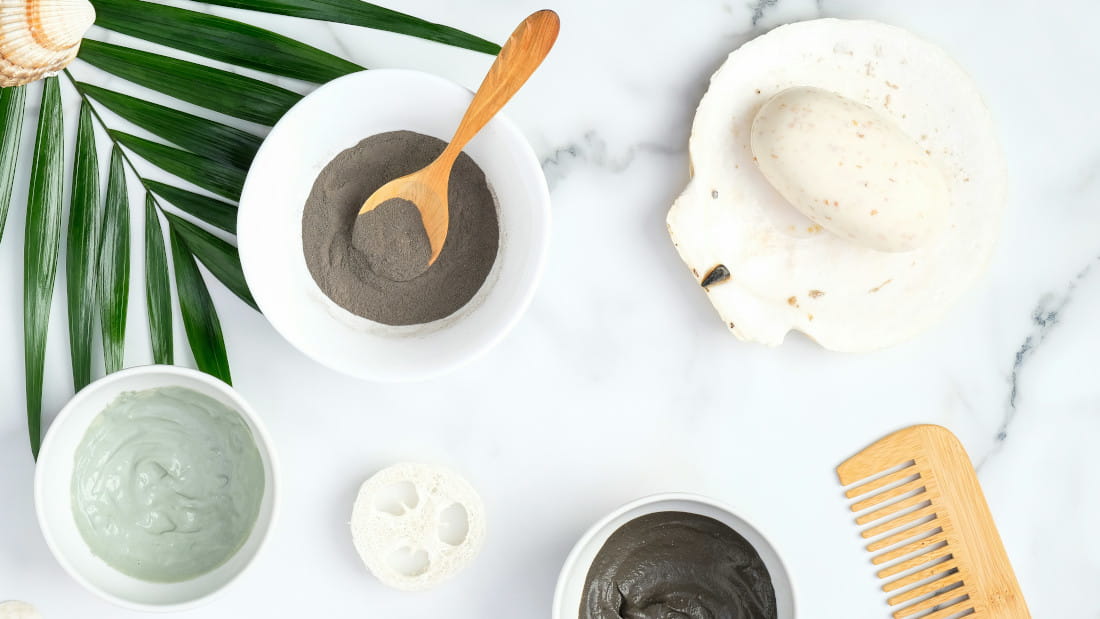
Figure 2: Bentonite is not only used for intestinal cleansing. The healing clay can also be applied to relieve the liver and kidneys and in skincare.
Detoxifying function
Bentonite is often attributed detoxifying properties. The volcanic mineral carries a predominantly negative ionic charge. When it comes into contact with a substance that carries a positive ionic charge, bentonite attracts and holds it. In the gastrointestinal tract, bentonite can bind contaminants such as aluminium, mercury, cadmium and lead like a sponge. Before these harmful toxins burden the metabolism, they are naturally excreted with the stool via the bowel.
So far, however, there are no concrete human studies confirming bentonite's detoxifying effect. Animal studies have demonstrated its detoxifying potential and the ability to eliminate heavy metals. In goldfish whose livers and kidneys had been damaged by cadmium poisoning, organ damage could be remedied by adding bentonite to their feed. [1]
Protection against various toxins
Bentonite acts like a shield against certain toxins and can prevent them from spreading through the body and causing harm. Mould toxins, so-called aflatoxins, can be carcinogenic and damaging to organs even at low concentrations of only a few micrograms. [2] Herbicides such as the highly toxic paraquat, used in coffee and banana cultivation in the tropics, can also cause severe organ damage and, in the worst case, death.
Bentonite is capable of absorbing toxins such as aflatoxins, herbicides and plant toxins and eliminating them quickly. Protection against radioactivity is also possible, which is why bentonite is even used in nuclear waste repositories. After the Chernobyl nuclear disaster in 1986, montmorillonite-bentonite was used in Germany and Austria as a feed additive for farm animals to reduce radioactive contamination in meat and milk. [3]
Relief for liver, kidneys and intestines
Normally, the liver and kidneys are the organs responsible for detoxification in the human body. By binding contaminants such as heavy metals as well as toxins and metabolic waste already in the intestine, bentonite can prevent these substances from entering the bloodstream and spreading through the body.
The potential contribution of bentonite to overall intestinal health should not be underestimated either. The intestinal mucosa is usually one of the first contact points for contaminants that are ingested with food or formed during digestion. If bentonite is present, these substances are bound before they reach the intestinal mucosa. This allows the intestine to continue its important functions of processing food and absorbing nutrients and vital substances unhindered.
Skincare to combat blemishes
Bentonite can be taken orally but is also applied externally. Bentonite clay is often used to make cosmetics and skincare products for impure skin. Bentonite is said to remove excess sebum from the skin while stimulating blood circulation. If you want to mix a facial mask yourself, simply mix bentonite powder with water and apply it to the skin. After leaving it on for several minutes, the mask should be thoroughly rinsed off.
How does intestinal cleansing with bentonite work?
One of the most common reasons for taking bentonite is the desire to detoxify the intestinal tract. But how exactly should such an intestinal cleanse ideally be carried out? Experts recommend a bentonite course lasting 40 days. If you wish to extend the use beyond this period, you should discuss it with your doctor. Long-term continuous intake of bentonite is clearly not recommended.
To intensify the cleansing function of the healing clay, bentonite is often taken together with psyllium husk powder. Mixed with water, this can be drunk once or twice daily as a shake for intestinal regeneration. In general, it is advisable to start a bentonite cleanse with a low dose. This allows tolerance to be tested initially and the dose can be increased if necessary.
Further information on dosage and administration of bentonite
The appropriate dosage of bentonite depends not only on the intended use but also on individual tolerance. In any case, when taking bentonite powder or bentonite capsules, follow the manufacturer's instructions. With bentonite powder it is common to start with a daily dose of a slightly heaped teaspoon (3 g) of powder mixed into about 250 ml of water. After gradually introducing it, the application can be increased if needed to up to three teaspoons per day.
The optimal timing of bentonite intake also depends on the chosen product. In some cases, it is recommended to take bentonite with a meal, while other products should be taken on an empty stomach, about 30 minutes before a meal. It is important to take bentonite only with water and not to combine it with alcoholic, caffeinated or acidic drinks. The time interval to medication intake should be at least 2 hours.
Tip: If you are drinking bentonite as a shake and want it to be lump-free, a blender, hand blender or shaker can be very helpful when preparing it!
What is the difference between bentonite and zeolite?
Anyone exploring detoxification will sooner or later come across another active substance besides bentonite: zeolite. Both bentonite and zeolite are volcanic minerals and are considered the methods of choice for comprehensive internal cleansing due to their strongly detoxifying and contaminant-binding properties. The essential difference between the two clays lies in their mineralogical structure: whereas zeolite has a crystalline lattice structure, bentonite is a layered rock.
Because bentonite and zeolite mutually reinforce and complement each other in their contaminant-binding effects, they are considered a powerful detox duo and are often combined in products. The ZeoBent MED powder from Unimedica, for example, contains 80% pure clinoptilolite zeolite powder and 20% montmorillonite-bentonite to intensify the detox application.
How to find the right bentonite product
If you decide to use bentonite, you should pay special attention to a few aspects when purchasing. First ensure that the bentonite you choose is an approved medical device. Pharmaceutical quality is indicated by the CE marking on the product packaging.
Furthermore, the purity of the bentonite used is crucial. The montmorillonite content should be as high as possible to achieve optimal effect. For instance, the BentonitMed® powder from Unimedica consists of 100% pure montmorillonite-bentonite. Because the particle size of the bentonite grains affects its absorption capacity, ensure that these are neither too coarse nor too fine. An ideal granulation is in the nanometre range, between 0 and 100 nanometres.
Possible side effects of bentonite
If you take bentonite at the recommended dosage and not continuously, no unpleasant side effects are to be expected. However, first-time users and especially during the initial phase of intake may occasionally experience constipation. Very rarely, symptoms such as stomach pain, bloating or nausea occur, which are usually the result of overdosage of bentonite or insufficient fluid intake during use.
Sources:
[1] European Food Safety Authority. Scientific Opinion on the safety and efficacy of bentonite as a technological feed additive for all species. July 2012.
[2] Phillips TD et al. Reducing human exposure to aflatoxin through the use of clay: a review. Food Addit Contam Part A Chem Anal Control Expo Risk Assess. 2008.
[3] Voigt G. Chemical methods to reduce the radioactive contamination of animals and their products in agricultural ecosystems. Sci Total Environ. Sep 1993.
Photos: Unsplash: Daniil Silantev, Getty Images

