
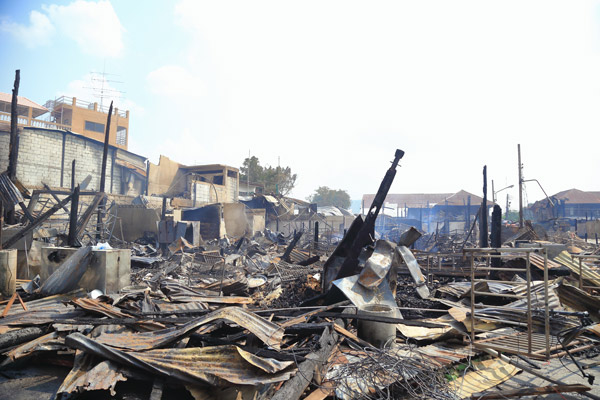
One of my staff members lived in Houston during the devastating Hurricane Katrina.
She told us how the emergency services infrastructure had been completely destroyed. It wasn't simply that people had to go without power for months; substations literally blew up and electrical boxes went up in flames. Fresh food became scarce.
The worst affected, however, was the fresh water supply — no power meant no water.
People's access to routine medical care was disrupted in many ways and led to an increase in acute illnesses — from sinusitis of unknown cause and dehydration to staphylococcal infections and other skin conditions such as boils and MRSA.
Mosquitoes became a plague and the accompanying insect bites were severe. Uncontained sewage became a serious problem. And the clean-up after the hurricane caused injury-related infections in contaminated water to soar. Numerous reports suggested that non-infectious rashes were also occurring more frequently.
Allergens such as mould became a major problem and people not wearing protective masks often developed serious upper respiratory conditions.
In a devastating event like this, despite everything — and as was again confirmed by public authorities in this case — gastrointestinal illnesses caused by contaminated water predominate.
This week my new course on the homeopathic emergency kit begins. It was originally prompted by 9/11 and has grown more comprehensive over the years.
After the tragedy of 9/11 many of my students asked me what they could do to protect their families homeopathically. I researched extensively in the homeopathic emergency literature, studied the relevant sections in Dr Frederick Schroyens' Synthesis Repertory and read the treatment protocols of the many homeopathic physicians who gathered ample experience in this field during the American Civil War and the two World Wars. Dr Dorothy Shepherd's book is a good source.
Shortly after 9/11 I attended a postgraduate course in classical homeopathy in Toronto. One requirement for participating in this course was full-time employment in a homeopathic practice with at least five years' professional experience. Most of the participants were established homeopathic physicians, complementary therapists (of whom I am one), nurses, midwives and pharmacists.
We all met in Toronto to learn from one of the world's best homeopathic physicians, Dr Ramakrishnan. He had travelled from India and the participants came from afar as well — Ireland, Pakistan, Colombia, Israel, the Netherlands and Iran.
Many of them live in countries where different diseases are treated than in the US. I was therefore very curious and asked each participant about their experience in homeopathic emergency medicine, either as sole therapy or in conjunction with conventional approaches. I documented and carefully archived the answers.
I knew I would one day pass this valuable information on to my family and my students.
The treatment protocols of my homeopathic colleagues (and, more than ten years later, those of the Banerjis) have in recent years become a focal point of my work.
However, there were questions I considered urgent for which I had not yet found answers: What would I do if my neighbourhood were contaminated with anthrax? Or with a plague pathogen? Radioactive contamination? What about the consequences of a war or a natural disaster for which there are no treatments, or where they are not accessible? What about electric shocks, impalement injuries, shock and frostbite?
The amount of information I gathered on these topics was enormous. So I began to compress the numerous protocols so that my students could handle as many emergency situations as possible, whether everyday incidents or exceptional events.
You may not need the following information right now, or you may never have to use the protocols. In any case, it is worth being prepared in order to act correctly. I have personally benefited from it.
The following protocol has helped me and my husband on many of our trips to India whenever our stomachs and bowels were upset:
- Veratrum album C200 in combination with Cuprum met 6, taken every few hours, or whenever the diarrhoea is very severe.
This approach is part of the Banerji protocols, which I had the opportunity to learn personally from Dr Pratip Banerji. If there is a lot of mucus in the stool and the stool becomes bloody (dysentery), the following protocol should be applied:
- Ipecac C30 in combination with Merc. Sol. C6, taken in the same manner as above.
Hurricane Katrina, 9/11, the many natural disasters and the suffering in Syria and other parts of the world are wake-up calls that should shake us to the core. By now it should be clear that we must prepare for the things that are to come.
Homeopathy has now existed for over 200 years and has been clinically validated worldwide. Numerous data confirm the effectiveness of this method of treatment and it has withstood many critical attacks. It is the ultimate treatment for emergencies.
It is greater than those who speak ill of it. In other words: Homeopathy knows what it's about.
*****************************
Copyright: http://joettecalabrese.com/blog/disasters-diarrhea-dysentery/

