
The 10 Most Important Acupressure Points and How to Use Them
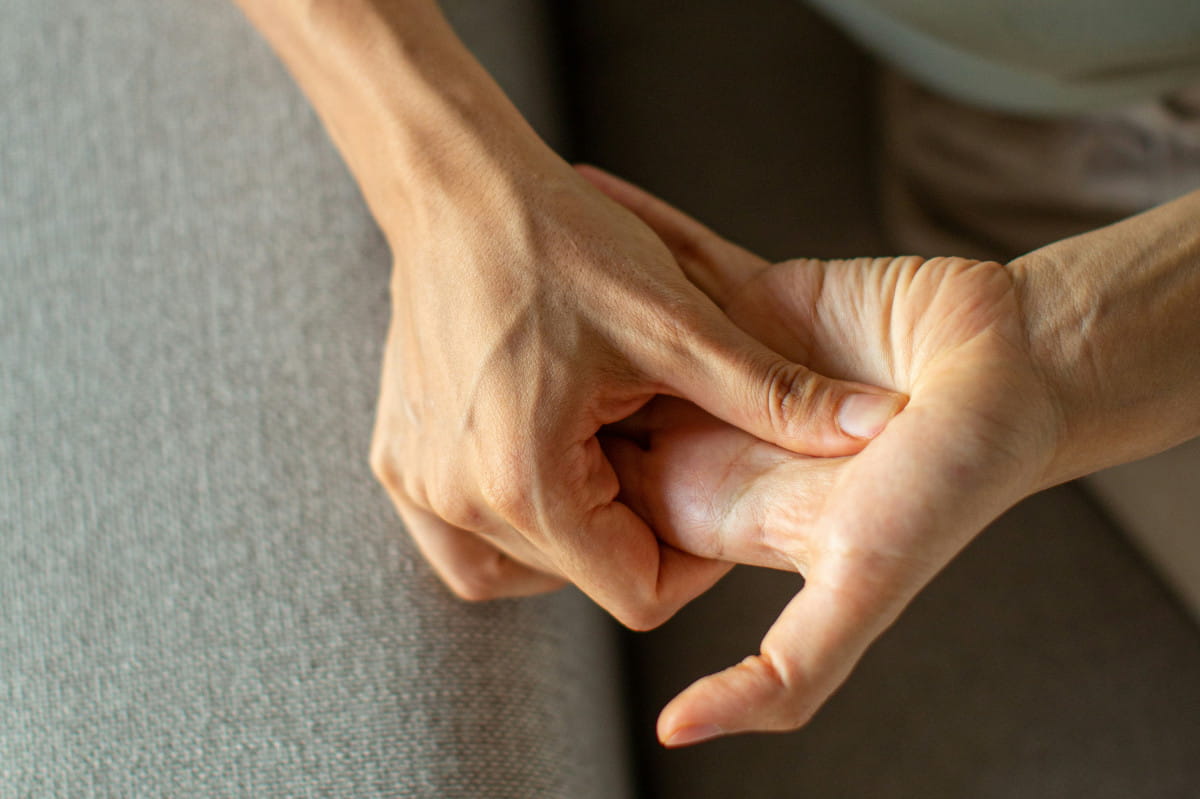
It is an ancient technique that has proven itself for more than 2,000 years in Traditional Chinese Medicine: acupressure. What is its secret, how does it work and how can you apply the main points in everyday life? Dive into the world of an intuitive healing art.
What is acupressure? The main principles before you start
In the West this ancient healing art is often ridiculed. Nevertheless: if something has stood the test of time for over 2,000 years, there may be more depth to it than initially assumed. Acupressure is an important component of Traditional Chinese Medicine (TCM) and goes far beyond simply pressing randomly on points on the body.
TCM is based on a finely structured system, which divides the body into energy pathways with various qualities. For the Western, materialist mind this is not necessarily tangible, because energy is not visible. That does not mean it does not exist — after all, electricity is not visible either!
Acupressure is based on the energy flow of Qi, the general life energy of Traditional Chinese Medicine (TCM). Qi moves through the body along fine conduits. Each organ is assigned its own conduit. In TCM the organ is not regarded solely as a functional unit, but as something that has its own energy quality and, when out of balance, can influence the whole person in character and personality.
For example, the liver is associated with qualities related to active doing in life. If this active doing is blocked, it can lead to frustration. That is why the emotion anger is attributed to the liver. In a TCM treatment this imbalance is resolved via the associated liver-energy meridian. While acupuncture uses a needle to set a physical electrical impulse (De-Qi — depending on needle technique), acupressure uses pressure, mindfulness and awareness techniques.
The basis of acupressure: life energy & Qi
In the healing art of Traditional Chinese Medicine the human being is viewed differently than in Western medicine. It is a holistic perception of the human being, closely connected with nature and the universe. This goes far beyond the scientific explanatory model: whereas Western medicine long relied exclusively on mechanical, physical or chemical explanations, the body-mind aspect plays an important role in the holistic system of Traditional Chinese Medicine. (See Dr Wagner, Acupressure. Healing Brought to the Point)
According to TCM, the human being is permeated by life energy — Qi. This flows like a river through its riverbed along energy pathways.
Qi can, for example, be blocked by too much stress, grief, worry, poor diet, lack of sleep or lack of exercise and lead to symptoms in the body.
Acupuncture and acupressure address these issues. Both techniques can mobilise Qi, dissolve stagnations, tonify or sedate. When the energy flows again, the blockage is removed. Think of a river in nature: once the dam is removed, stagnation can no longer be maintained. Everything is then in flow.
The meridian system of TCM is an ancient system, whose origins are no longer precisely known. The earliest records are found in the Huang Di Nei Jing, the classical textbook of the Yellow Emperor on Chinese medicine. It dates from the fifth to the third centuries BCE. Here the meridians and the effects of acupuncture points are described in great detail. (See Achim Eckert, The Tao of Acupressure and Acupuncture. The Psychosomatics of the Points)
In the Indian tradition too there are conduits known as nadis. These go back to wise seers who probably brought this system into being through direct insight. These seers were called rishis. Even though the origins are no longer officially known, the system was passed from teacher to student and has thus endured over many millennia.
The established system of the 12 meridians
Why are there twelve meridians that, according to Traditional Chinese Medicine, traverse the body?
There are six Yin and six Yang meridians that run along the body surface but also inside the body and are associated with the qualities of the respective Yin or Yang organs, in the broader context with earth and heaven, body and mind. It is always about the balance between two polarities, for example rest and movement, tension and relaxation.
Yin organs are organs that store and regulate energy, such as kidneys, liver, heart, spleen and lungs.
Yang organs, on the other hand, are more involved with dynamic processes of transforming “impure” substances into pure ones, as occurs in metabolic processes. The Yang organs in TCM are gallbladder, stomach, small and large intestine and the bladder.
Each organ in turn has its own energy qualities, its “own” Qi that circulates through the body and is closely connected with both the inner and the outer world. Therefore, external stimulation can influence the specific energy quality of a Yin or Yang organ.
Thus, for example, liver-Yin can be tonified or kidney-Yang strengthened. Stimulation is always performed according to the person’s current needs. Depending on where the individual imbalance is, energetic treatment is applied. For instance, the balance between a Yin and a Yang organ may be disturbed — then a rebalancing of Yin and Yang is sought. A meridian along its course may be in excess or deficient, in which case balance is restored directly on the meridian. Another treatment principle is the five elements theory, also known as the five phases of transformation.
Balancing Yin and Yang: the first principle of acupressure treatment
Correcting imbalances: While conventional medicine often treats symptoms, in an acupressure treatment the person is assessed with regard to their energetic constitution. One examines which imbalances exist between the Yin and Yang organs. This can be determined, for example, by pulse diagnosis, facial and tongue diagnosis or concretely via an anamnesis of physical symptoms. Thus, headaches are assigned to either the gallbladder or the kidney depending on their type and manifestation and are treated with different acupressure points. This shows how differentiated TCM views and treats the person and their energetic condition.
“When one of the two forces dominates the other, an imbalance arises in which the person does not feel well and, as a result, becomes ill. Acupressure can help to rebalance the forces, because it can effectively harmonise the flow of energy.”
Dr Wagner, Acupressure. Healing Brought to the Point
Everything is in flux: “Healthy” and “ill” are not fixed states in Traditional Chinese Medicine but phases of transition that can be influenced. Yin and Yang are cyclical in nature and can transform into each other (day and night). Yin and Yang are always relative to each other.
Excess and deficiency: the second principle of acupressure treatment
The excess-deficiency principle is one of the most important in acupressure treatment. Along an energy meridian it is assessed whether it is in excess or deficiency. You recognise deficiency when palpation gives a feeling of too much softness. You recognise excess when, in contrast, there is too much tension or even swelling.
An entire channel can be affected by excess or deficiency, but individual points on the channel can also show these states. It is important to consider the person’s overall constitution holistically. Excess types are hard to miss or ignore; they are often loud and under pressure. Deficiency types, by contrast, can disappear invisibly in a group like a wallflower.
Application tip for practitioners:
Excess and deficiency are treated with their respective opposite counterparts. Deficiency needs intensive, activating acupressure, while excess requires a sedating technique.
The five elements: the 3rd principle of acupressure treatment
Another principle that supports a good acupressure treatment is the five phases of transformation. These are the five elements wood, fire, earth, metal and water, which transform into one another.
Each element is associated with organs and their qualities. If a phase of transformation is out of balance, it affects all the other elements and can lead to physical complaints. It is the task of the acupressure practitioner to diagnose the causes of weakness states or energy stagnations in the phases of transformation and restore balance.
With the help of the five-elements theory, also called the five phases of transformation, you can recognise the relationships between organs, sense organs, elements, meteorological and psychological factors as follows:
- Liver/Gallbladder = Wood = Eye, anger, wind, wood, spring, green, nerves, sour
- Heart/Small Intestine = Fire = Tongue, joy, heat, fire, summer, red, vessels, bitter
- Spleen/Stomach = Earth = Mouth/Lips, (over)thinking, dampness, earth, yellow, muscle nourishment, sweet
- Lung/Large Intestine = Metal = Nose, grief, dryness, metal, autumn, white, skin/hair, pungent
- Kidney/Bladder = Water = Ear, fear, cold, water, winter, black, bones/teeth, salty
(See Tenk. Instant Relief with Acupressure)
The most important points for an acupressure treatment
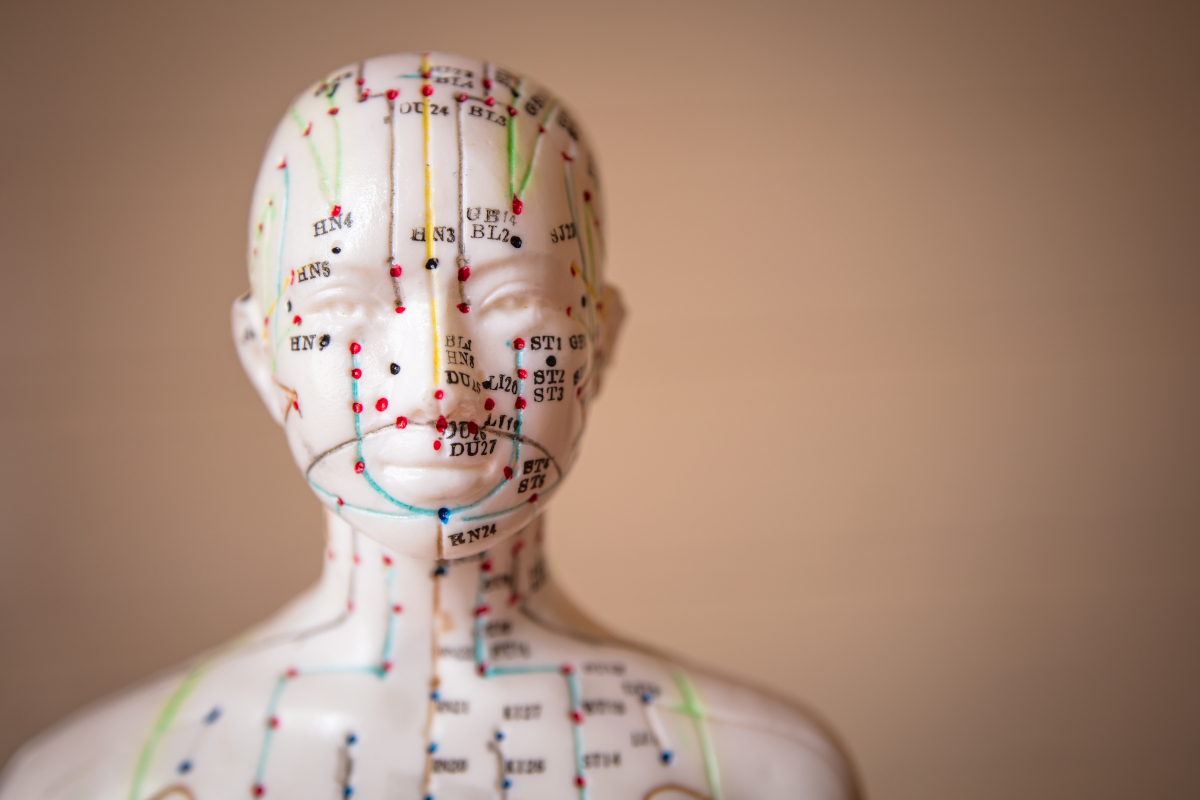
On the twelve main meridians there are more than 2,000 acupuncture points! You do not need to know them all. For an acupressure treatment select those with the greatest sphere of influence — depending on which principle (Yin/Yang, excess/deficiency, five phases) you are working within. Through these points you can influence potential energy blockages in the meridians. Even knowledge of a few points can achieve a great deal!
For emergency treatment you should know these three acupressure points
Should an emergency occur such as an accident/shock, fainting, seizure/epilepsy, febrile convulsions, it is helpful to know these acupressure points:
- The Main shock point for accidents, unconsciousness, epileptic seizure and febrile convulsions is on the extraordinary vessel = Lg 26 under the nose one third down and two thirds up from the upper lip.
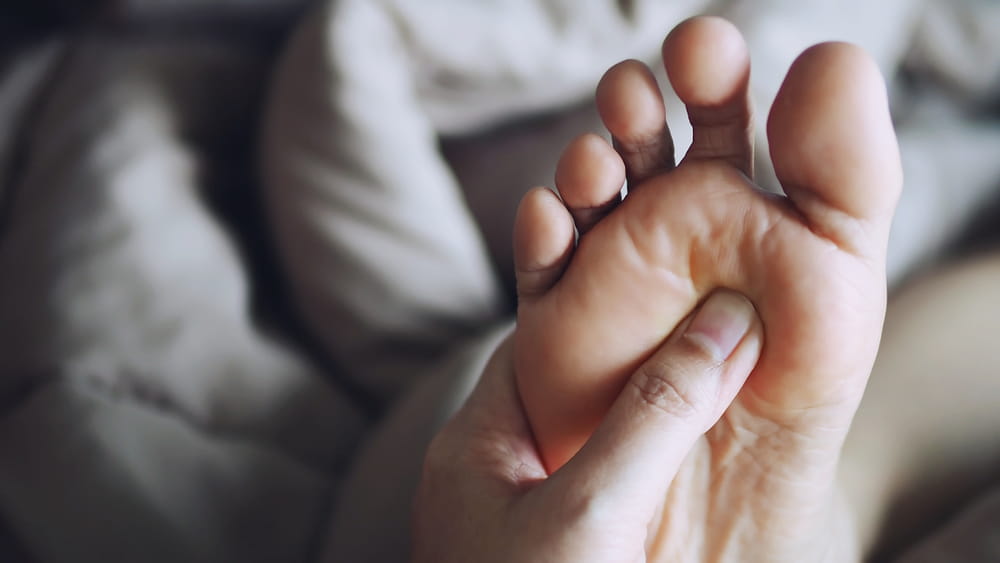
- Ni 1 can be used in a supine patient as an alternative point — Ni 1 can also be pressed firmly with the fingernail. Ni 1 is located on the sole of the foot one third from the toe base and two thirds from the heel.
- All starting and ending points of the meridians on the fingers and toes can be used as shock points!
The ten most effective acupressure points
Acupressure — unlike acupuncture — gets by with relatively few points. There are points that act more calming and points that are more strengthening and tonifying.
|
Point name |
Translation |
Meridian |
Indications according to Ma Danyang |
|
Zusanli (Stomach channel) |
“Three Miles” |
ST-36 |
abdominal swelling, cold stomach, bowel noises, diarrhoea, swollen leg, aching knee or calf, injury from cold, weakness or emaciation, parasites, ageing |
|
Neiting |
“Inner Courtyard” |
ST-44 |
chills in hands and feet, aversion to loud voices, skin rashes, sore throat, constant yawning, toothache, intermittent fever without appetite |
|
Quchi |
“Crooked Pond” |
LI-11 |
paresis, sore throat, abdominal pain, vomiting, diarrhoea, immune stimulation |
|
Hegu |
Joining Valleys |
LI-4 |
headaches with a swollen face, malaria-induced fever, burning then cold, tooth decay, nosebleeds, lockjaw and inability to speak |
|
Weizhong |
Middle Equilibrium |
BL-40 |
lumbago, especially when severe and radiating up the back, muscle soreness that cannot extend, rheumatism that recurs irregularly, knee stiffness |
|
Taichong |
Supreme Rushing |
LR-3 |
sudden seizures and cramps, swollen throat or swollen chest, both feet unable to walk, all kinds of hernias, cloudy veil before the eyes, aching lower back |
|
Kunlun (Bladder channel) |
Kunlun Mountains |
BL-60 |
cramps and pain in the coccyx, breathing difficulties, feeling of fullness in the chest |
|
Yanglingquan (Gallbladder channel) |
Yang Hill |
GB-34 |
swollen knee with numbness, one-sided pain in cold, inability to lift the foot, sitting or lying down as an old and weak person |
|
Tongli (Heart channel) |
Penetrating Inward |
HT-5 |
stabilises the heart Qi |
|
Lieque |
Narrow Defile |
LU-7 |
migraine, whole body listlessness with wandering pains, phlegm that accumulates continuously above or in lockjaw
|
(See study)
For LI-11 and HT-5 see Claudia Focks. Chinese Medicine Guide
If you would like to delve deeper into the spectrum of effects of individual points, we recommend the following books:
- Eckert. The Tao of Acupressure and Acupuncture. The Psychosomatics of the Points
- Tenk. Instant Relief with Acupressure
- Dr Wagner. Acupressure. Healing Brought to the Point
Treatment with acupressure: how it works
Whereas acupuncture uses needles, an acupressure treatment applies pressure with the hand or individual fingers. You can treat acupressure points with rhythmic pulses, by holding or by firm pressure, but also with mindful, loving touch. The inner attitude and intention of the practitioner are always decisive.
Where energy is lacking, acupressure adds energy; where there is too much, it sedates. Where there is stagnation, it restores flow. Remember: with acupressure you set impulses — sometimes less is more. It is always about perceiving the other person and responding very mindfully to their needs with your treatment.
For treatment good knowledge of the acupressure points and a careful diagnosis are important. It is recommended that a point be pressed, held or massaged for a total of 5 seconds up to 2 minutes (strong pressure = calming, gentle stimulation = activating).
To locate points the old Chinese unit of length cun is generally used: 1 cun corresponds to the width of a thumb.
“The warmth and the flow of energy you can feel when you rest a finger on an acupuncture point for a while consists of several components.”
Achim Eckert. The Tao of Acupressure and Acupuncture. The Psychosomatics of the Points
When can you treat with acupressure?
Acupressure for pain and fatigue
Acupressure is often used for pain in general, neuropathies, back pain, painful labour contractions, migraine, depression, anxiety disorders and insomnia, but also for tiredness and exhaustion or COVID-19 (See study). Successes have also been demonstrated for pain therapy with acupressure, specifically for pain associated with cancer (See study). Acupressure can reduce pain intensity (See study). For many women acupressure is also helpful: studies have shown that acupressure can reduce menstrual symptoms, the severity and duration of menstrual pain, distress and anxiety (See study).
Acupressure for sleep problems
Modern scientific investigations in China and the West show that acupressure and acupuncture operate via a complex mechanism of action. It has been shown that acupressure helps with sleep problems (See study).
Acupressure for psychological disorders
Acupressure can also help with depression. A study shows that acupressure had a significant positive effect on reducing depression severity compared with sham acupressure and can serve as an adjunct to conventional treatment (See study).
All these investigations have helped place acupuncture and acupressure on a solid scientific footing.
Disclaimer:
For patients with severe cardiovascular diseases acupressure massage techniques are not suitable, as their existing complaints may temporarily worsen after the massage. In pregnancy an experienced therapist should be consulted, as some points should not be stimulated in expectant mothers.
Figure 1: Hrant Khachatryan/shutterstock.com ; Figure 2: JCLobo/shutterstock.com ; Figure 3: Boontoom Sae-Kor/shutterstock.com

