
Okoubaka as a principal remedy for the travel first-aid kit and as a remedy for the side-effects of chemotherapy.
Gastrointestinal upset in poisoning and from unfamiliar food – an example of how different approaches to knowledge of remedies can complement one another.
Ulrich Welte
How ethnobotanical experience, clinical observation and Scholten’s new plant theory usefully complement each other to form a new remedy picture can be seen in the bark of the Okoubaka tree, Okoubaka aubrevillei.
Originally the powdered bark of the Okoubaka tree was valued by the indigenous peoples of West Africa for poisonings and syphilis. This tree was taboo and was only to be used by medicine men. From 1970 the remedy also found many supporters in Europe and the USA in potentised form, mostly in low and medium potencies from D2 to C30. In 1972 Magdalena Kunst published the first account in the AHZ.[1] It is commonly regarded as a new Nux vomica, i.e. a remedy for food poisoning with irritability. Jean Lionel Bagot provides a finer differentiation in his subsequent remedy picture.
Veronica Carstens, an excellent clinical observer, valued the remedy highly for gastrointestinal upsets while abroad. For this reason the Carstens-Stiftung commissioned a double-blind, placebo-controlled trial, which, however, did not produce a convincing result.[2] The reason is probably that a study design suited to clinical effects of a chemical drug may be unsuitable for investigations into the recognition of a new homeopathic remedy picture, because subtle observations are lost again in the statistics and, if at all, may only be weakly detectable with much larger numbers of subjects. Good homeopathic trials remain a hard-to-verify art. Often the participation of a single good prover is more informative than many other subjects who cannot assess themselves well, mistake projections of their own ideas for remedy effects, or do not notice finer symptoms. In our view the clinical experience of a critically thinking, finely observing physician such as Dr Carstens speaks in favour of the use of the remedy in the given context.
Numerous other observations by outstanding clinicians also support this, for example the sensitive physician J. L. Bagot. He added the remedy to his highly recommended book “Cancer and Homeopathy” in the third edition[3] after extensive clinical use for chemotherapy side-effects convinced him of its excellent effect. The following remedy picture is taken from that book.
Okoubaka aubrevillei
A new remedy for the side-effects of chemotherapy
By Jean Lionel Bagot
This new homeopathic source substance was first described in 1972 by the German physician M. Kunst. The remedy is available in all German pharmacies from the mother tincture up to C200.
Traditional use
The bark of the Okoubaka tree is regarded in Africa as an ideal antidote for all food-related (spoilt food), infectious (gastroenteritis) or toxic poisonings. Medicine men also use it to keep away evil spirits, giving the plant magical aspects and a symbolic cleansing function.
Homeopathic application
1. Infectious or toxic food poisonings (insecticides, nicotine...)
2. Consequences of infectious diseases (late sequelae of influenza, tropical diseases, toxoplasmosis, childhood diseases)
3. Prophylaxis of traveller’s gastroenteritis and food intolerance
Materia Medica
By summarising the existing publications I have been able to compile a Materia Medica for this remedy (Hirschberg U. 2015, Teut M. 2013, Riley D.S. 2012, Boericke W. 2008).
Aetiology
Consequences of poisoning, food poisoning, intolerance to medicines, nicotine poisoning, food allergy, viral infections, tropical or childhood diseases
Characteristic symptoms
Nausea relieved by warm food or drinks
General action
Cerebral region (irritability, anger, psychasthenia), digestive tract (nausea, stomach pain, diarrhoea) and skin (itching, eczema)
Mental signs
Irritability, anxiety, discouragement with a feeling of being incompetent and fear of lack; memory loss, confusion and difficulty concentrating; headaches, migraine and attacks of dizziness
Head
Headache during nausea, feeling as if the brain is clouded, pressing pain at the temple from left to right
Ear
Middle ear inflammation with polyps
Nose
Inflammation of the nasal mucosa and itchy allergic conjunctivitis
Mouth
Painful aphthae on the tongue and on the inner edge of the lower lip; foul breath; white-coated tongue, tooth imprints visible; dry mouth with papery taste; lips and mucous membranes itch after eating; swelling and bleeding of the gums; pharyngitis
Face
Redness, dryness and burning sensation of the face; herpes labialis.
Stomach
Nausea improved by eating, with headache, and worse at the thought of food; craving for warm food and drink; stomach pain with burning, worse at night, better from warm drinks; sensation of weight on the stomach.
Abdomen
Bloating and flatulence, worse in the evening; pain like a pressure of a fist in the right hypochondrium; diarrhoea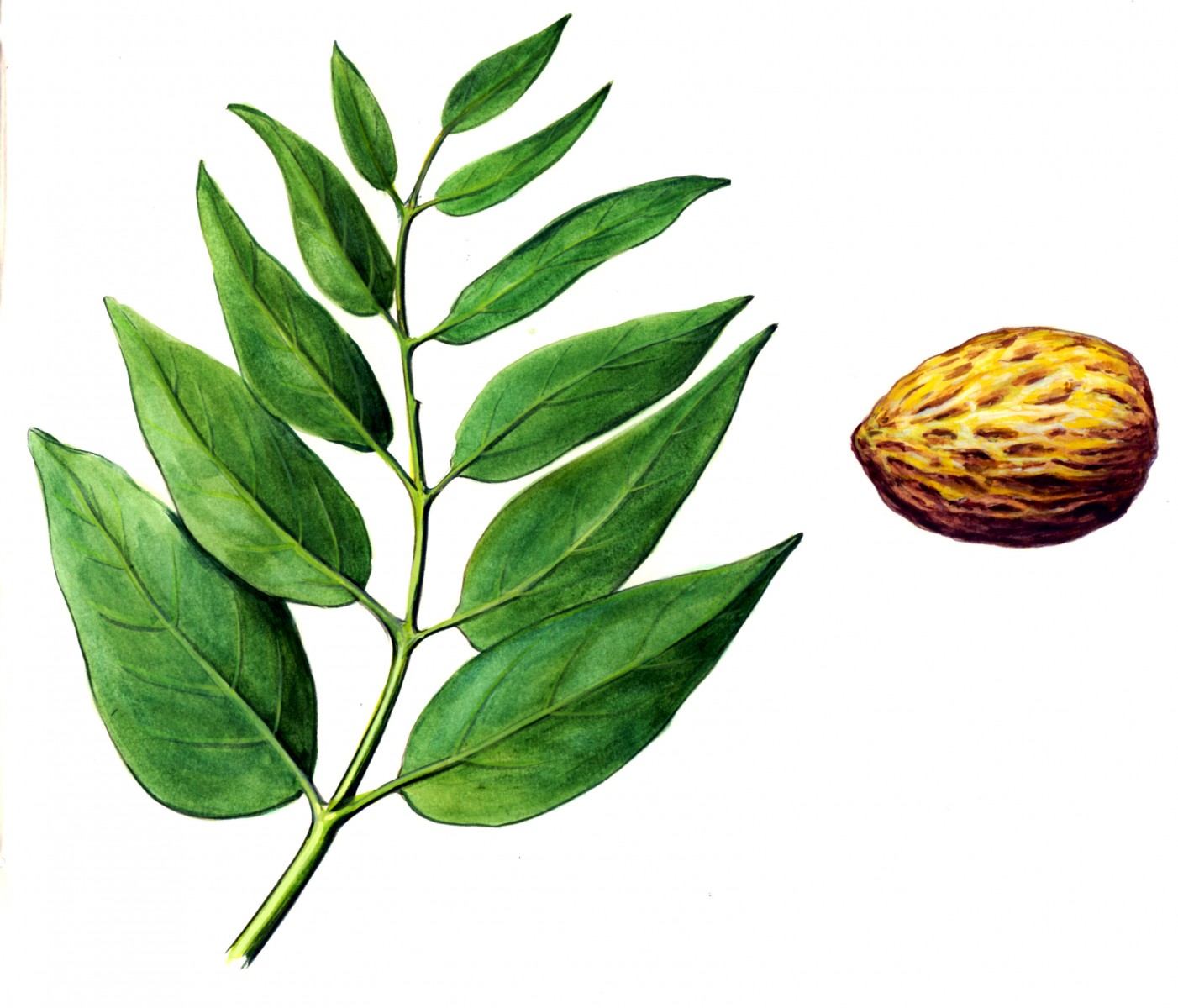
Extremities
Heaviness and burning muscle pains, better from warmth
Skin
Rash and eczema following poisoning; dryness of the skin, roughness and excoriations; allergic itching with bloody scratch wounds
General symptoms
Sensitivity to cold; exhaustion with irritability and a feeling of powerlessness; asthenia and apathy despite long sleep; difficulty keeping the eyes open during the day
Sensations
Clouded sensation in the head, feeling as if the brain is pressed towards the right temple, sensation of sand in the eyes, dry and burning constricting sensation in the throat, sensation of a stone in the stomach, sensation of a hand around the stomach, sensation of pressure on the sternum and tightness of the chest; heaviness and pain
in the muscles
Aggravation
At the thought of food, after eating, on waking, in the morning, from toothbrushing; before menstruation, when lying on the left side
Amelioration
From warm drinks and food, warmth in general and stretching
Desires and aversions
Craving for warm food; craving for warm drinks
Main clinical indications
Preventive for traveller’s gastroenteritis, toxic or allergic food intolerance
Therapeutic for nausea, vomiting, diarrhoea in food poisoning, allergy in the digestive tract, poisoning by pesticides or other poisons; heavy metal poisoning; ENT or food allergies; gluten intolerance; intolerance to medicines in the digestive tract
Preventive dosage: five C6 globules, twice daily.
Therapeutic: five C6 globules hourly, then at wider intervals depending on improvement.
Comparative remedies
Arsenicum album, Nux vomica, Lycopodium, Rhus toxicodendron, Bryonia
On account of its numerous digestive symptoms and the aetiology “consequences of poisoning” one could consider Okoubaka to be the Nux vomica of the 21st century. Contributing to this are the irritability, anger alternating with discouragement, and allergic inflammation of the nasal mucosa. Nevertheless Okoubaka is closer to Arsenicum album than to Nux vomica.
Symptoms for differentiation
However, neither of the two large polychrests covers all the symptoms of Okoubaka. Symptoms such as nausea improved by warm drinks, vomiting improved by very hot water, nausea on waking in the morning and nausea when brushing the teeth are found neither in Arsenicum album nor in Nux vomica. In this way the difference can be recognised.
In oncology
A new, very interesting remedy for supportive treatment
Interestingly many symptoms of the remedy correspond to the consequences of chemotherapy.
• Aetiology: consequences of poisoning
• Irritability (side-effect of cortisone treatment)
• Feeling of fatigue and powerlessness (accompanying effect of tiredness after chemotherapy)
• Attention disorders and a feeling of a clouded brain (major side-effect of chemotherapy on memory function)
• Headaches (side-effect of antiemetics)
• Conjunctivitis with tearing due to dry eyes (corneal toxicity of chemotherapy)
• Redness and a painful hot sensation in the face (side-effect of taxanes and cortisone treatment)
• Aphthae and taste disturbance with white-coated tongue and tooth imprints (oral mucosal mycosis due to immune suppression)
• Nausea, inflammation of the gastric mucosa, bloating and diarrhoea (toxicity of the gastric mucosa from chemotherapy)
• Eczema and rash (side-effects of docetaxel)
Personal experience
I prescribe Okoubaka with good results when Nux vomica does not help nausea; it is the most important alternative to Nux vomica.
The aetiology “consequences of poisoning” predisposes it to systematic preventive prescription against the side-effects of chemotherapy according to the following scheme:
OKOUBAKA C6, 5 globules 2–3 times daily, on the day before, during and after each course of chemotherapy.
Conclusion
The usual indication for Okoubaka remains the prevention and treatment of food poisoning, poisonings and travel diarrhoea, however it is also of great use in supportive treatment to prevent and alleviate the side-effects of chemotherapy.
The two main features one should certainly remember are “consequences of poisoning” and “nausea and digestive disturbance, improved by warm drinks and food”.
A new slant gives the existing remedy picture the botanical assignment according to Jan Scholten. [4]
 The Okoubaka tree belongs to the sandalwood family, Santalaceae, whose botanical assignment is still debated. Scholten refers to the Prometheus provings and sees in them
a) qualities of the silver series (art, creativity, communication of ideas and knowledge; relation to the nervous system).
b) Furthermore many members of the order Santalales have semi-parasitic properties, particularly known from the mistletoe family which also belongs to this order. In the vicinity of the Okoubaka forest giants, which reach up to 40 m, other plants often die off.
Without going into the details of the assignment according to Scholten’s plant code, these two characteristics are valuable to us. The partially parasitic property is reproduced by a behaviour implying belonging while being foreign and exploiting others. Or, in the positive variant, smoothing out others’ faults in order to become better oneself. They are often insecure, but greedy and jealous. The sensation is that of a splinter.
Okoubaka aubrevillei (Code 655.74.05)[5] is known for food poisonings abroad or after consuming foreign food, whether accidental or intentional. One recognises the theme of absence (Phase 7) from one’s own culture (silver series).
Complaints during stays abroad, in foreign countries.
What follows is a detailed materia medica according to the head-foot schema, which also shows other features like those of Bagot, but that would go beyond our scope. It can be found on the blog of the Autor, Qjure: http://www.qjure.com/remedy/okoubaka-aubrevillei-0
Important for us in the context of our article is that the known indication of food poisoning receives a slightly different nuance through the botanical assignment. The remedy concerns staying in a foreign culture whose living conditions, including nutrition, are so different that they alone, by their foreign character, cause intolerances. That is more than just a poisoning phenomenon. One can also interpret the indication of side-effects in chemotherapy in this way: the chemotherapeutics are foreign to the body and are recognised and fought as such, with the corresponding intolerances.
A short case from our own practice with retrospective application of the plant theory
A slim, refined young man comes for sinusitis and nasal polyps. A few months earlier he had also suffered a sudden hearing loss with subsequent tinnitus. He appears refined and smiling, but somehow cunning, sly, perhaps vindictive. Now that he has the floor, he expands on things and speaks at length. At first he thrusts his hands grandly on his hips and then hides them behind his back for a long time.
He speaks sullenly of an atmosphere of distrust: everyone backstabs everyone else. He seeks support in the family but does not find it. Nevertheless he feels homesick when he is away from home for work. He is a technical designer and has high standards of himself and others but little assertiveness; he thinks he has to put on a show to assert himself, but no one follows him. In the club he uses the chairmanship in his department to mercilessly set others up to fail because they should also be doing something, not just him alone; he always has to do everything alone, no one helps. His wife says, however, that this is because he always interferes and thinks he knows better, and therefore eventually no one wants to do anything. His favourite colours are blue and red, the colours of realists: 15C and 8C.
Kalium bichromicum helps him for a long time for the nose, but does not heal. Tabacum 200 also helps somewhat, his morbid distrust lessens a little. Until one day an ENT colleague gives him Okoubaka aubrevillei D6, which works excellently for 5 months, better than Kali-bi, even on the tinnitus. He continues taking the remedy on his own because he notices it does him good. For this reason we give him Okoubaka C200. With that he does well for over a year, and there is peace in the family. He now stands by his wife, the distrust is gone.
Thus our first true Okoubaka case came to us not from our own insight but through the help of a colleague. The poisoned atmosphere fits well with this remedy. In hindsight one also recognises numerous hints of Jan Scholten’s botanical allocation. For readers who have already studied his plant systematics, here is briefly the allocation of characteristics in the form of Scholten’s plant code:
Refined, tinnitus: silver series 655, not iron series 644 like Kali-bi (potassium and chromium are both elements of the iron series). Distrust, no one wants anything to do with him: Phase 7, being excluded, 655.7. Grandiose, high demands, the boss: Subphase 4, i.e. 655.74. The observation that the high potency C200 also removed the distrust and he now stands by his wife and no longer wants to set anyone up to fail indicates Stage 12. The partial success of Tabacum, a Solanaceae in Stage 12, also points to this stage of greatest distrust. Thus the botanical code of the remedy would be 655.74.12.
Those seeking a simple introduction to this new method are well served by the handy book by Martin Jakob: “Wie die Pflanzentheorie funktioniert!” [6]
[1] Okoubaka, a new homeopathic remedy, M. Kunst. AHZ 1972; 217(3): 116-121
https://www.thieme-connect.com/products/ejournals/abstract/10.1055/s-2006-935641
[2] “Homeopathic drug proving of Okoubaka aubrevillei: a randomised placebo-controlled trial.” Teut et al, 2013. https://www.ncbi.nlm.nih.gov/pubmed/23561008
[3] “Krebs und Homöopathie”, J.L. Bagot, third expanded edition. Narayana Verlag 2015. https://www.narayana-verlag.de/Krebs-und-Homoeopathie-Jean-Lionel-Bagot/b13336
[4] See in the author’s book “Wunderbare Pflanzen”, published by Narayana Verlag 2015.
[5] Details of the plant code can be found in Jan Scholten’s “Wunderbare Pflanzen”, Narayana Verlag 2015.

