|
Observation N., born 11 September 2009 (40th week of pregnancy), weight: 3250 g, length: 50 cm, head circumference: 34 cm. |
|
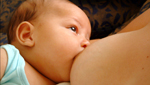
“Natural” birth without epidural anaesthesia. The birth took place in a clinic, but with a private midwife trained for natural births, who used the clinic’s facilities as an independent midwife. N. was breastfed. Pregnancy: Second pregnancy following a miscarriage at 13 weeks’ gestation, cause unknown. Both parents wanted this pregnancy. However, the mother was very anxious and had difficulty not with the pregnancy itself but with the associated bodily changes: weight gain, nausea, vomiting and exhaustion. Additionally, during the eighth month of pregnancy two very unpleasant symptoms occurred: an almost untreatable pruritus gravidarum (itching in the last trimester — with a known tendency to atopic dermatitis) and right-sided sciatica, which an osteopath had treated unsuccessfully. The child’s father (a craftsman) is very attentive and suspicious. Towards his partner he is rather submissive and tolerates her moods and outbursts of anger. Her sexual behaviour is peculiar; pregnancy did, however, slightly increase her sexual desire, which she describes as weak, yet she does not allow her partner to be close to her: “I cannot bear the thought of being touched by him.” The father comes from an old Breton family with many known cases of asthma, eczema, hay fever, etc. Consultation The parents came to my consultation with their child on 12 November 2009. The baby had gained almost 2 kg in two months. She is sturdy, alert, smiles and is very sociable. I note mild hypertension, an oddly stiff back and a barely noticeable stiffness of the neck on the left. The parents had seen an osteopath but refuse to continue treatment with him because he nearly broke her neck during a manipulation; I agreed readily. N. had (after contact with a cousin) a purulent conjunctivitis, which was successfully treated with a few Homeoptic® eye drops. Her skin is largely in a normal condition, only a few atopic spots are visible, some lesions in the skin folds and small dirty-looking patches on the face, calves and forearms. Otherwise everything seems in order. Catastrophe For three months I heard nothing. At the end of February N. spent four days in hospital, in the paediatric ward of the University Hospital in Nantes Centre. She was admitted because of a superinfection of a generalised eczema, weight loss (almost one kilo in three weeks), intense itching, and severe insomnia. Possibly the mother had had a paronychia, which could have led to infection of N.’s eczema. In the hospital an extensive diagnostic work-up was carried out:
One day the parents came to my practice completely distraught with N.: what had happened? “It is as if all her energy, her entire strength and even her soul had left her body.” Examination N. is indeed malnourished. She appears frightened, “curled up”, withdrawn into herself and covered with a foul-smelling eczema. During the consultation I manage a few times to elicit a smile and to “uncurl” her (she stands up). The parents are surprised to see her so revived. I later heard from the hospital paediatrician that she reacts “more lively” when the mother is not present. The parents did not follow the hospital’s prescriptions. The mother refused the lactose-free diet and the treatment with cortisone ointment. Both parents refused to take her to the dermatologist at the paediatric clinic. I provisionally agreed with them on the following diet: Prescription: Follow-up/Discussion When I reviewed my notes on N. several points stood out:
Acidum nitricum (re-actualisation of the experience of fetal separation/death — fear of death — phenomenon of merging/rejection) produced a fleeting “placebo effect”. I saw N. again on 1 March. Only minimal improvement from the “placebo” and the proposed dietary change had occurred (no weight gain). Now Lac humanum / Lac maternum comes to mind. Prescription: Mother: Lac humanum 1M, single dose Discussion
Follow-up In the following week spectacular changes occurred: N. returned to her cheerful mood and zest for life, and 80% of the eczema disappeared. She gained weight rapidly: 700 g in ten days. On 1 June N. returned to the practice: she is now a happy, healthy baby with normal growth and dry skin (ichthyosis), which, however, is not itchy. The mother has regained her self-confidence. I see no need for a repeat dose of Lac maternum.
|
||
Materia Medica Lac humanum Source: breast milk from a single donor |
 |
|
Summary: People are constantly searching for their individual self, yet belong to groups to which they must conform. They are the only mammals confronted with the fear of death throughout their entire lives. They do everything in their power to escape this fear — or display reckless behaviour as an antidote. For Lac humanum it is: “Me or the others” (Sankaran). One must kill the other in order to survive oneself. The issues of Lac humanum become particularly apparent in adolescence (self-identity in relation to the group). Lac maternum Source: mixture of breast milk from nine different donors at various lactation stages, including colostrum.
Causa The child incarnates during its intrauterine life. This “incarnation” is, however, still incomplete at birth, and breastfeeding is a natural continuation of this process. Hence the “religion” of breastfeeding, where many mothers meet for communal breastfeeding; “La Leche Liga (1)” is the church of this new religion! The parents’ fear of the new task and responsibility is directly connected with this situation. The Lac maternum baby (according to Patricia Le Roux) Skin symptoms predominate: above all eczemas with intense itching. “The skin is the last frontier of the physical body; it is in direct contact both with the outside world and with the neuro-sensorial and psychic inner world.” All pathological manifestations concerning the merging or separation of mother and child are expressed on the skin. The newborn must develop its “ego”, achieve separation from the mother and hold its own in the external world. Allergies have their rightful place in this process, as they represent the rejection of foreign, potentially pathogenic elements:
Lac humanum and Lac maternum are probably the fundamental remedies for all allergic diseases. Practical hints for paediatrics Newborns: eczema, sleep disorders, situations where the child is unwanted, breastfeeding errors. Children and adolescents: regressive behaviours, feelings of abandonment, school phobias, slowness +++, escapism from reality, craving for extreme sensations, e.g. via drugs, dangerous activities, etc. Adults: loss of drive to perform, withdrawal from reality; dreamer who starts many things but finishes nothing. References Murphy, Materia Medica |
||
Categories: General |
||
|
||
| (1) La Leche Liga offers experience sharing for breastfeeding mothers and organises so-called “nursing gatherings”. La Leche Liga breastfeeding counsellors share the joy of breastfeeding, but they also share the worries and needs of breastfeeding mothers, as every counsellor is herself a mother and has nursed her child for an extended period. | ||