
Interview with Dr. Sigrid Kruse
by Heidi Brand & Anne Devillard
Excerpt from the book "THE PIONEERS OF HOMEOPATHY IN THE 21st CENTURY"
by Heidi Brand & Anne Devillard
For more than 200 years the homeopathic system of healing has repeatedly demonstrated its effectiveness in treating countless chronic and acute cases. Nevertheless, proponents of conventional medicine and academic circles often do not regard homeopathy as an efficient medical therapy based on precise healing laws. These days it is increasingly disparaged in public as an unscientific method. What homeopathy can accomplish at the bedside and how effective collaboration between practitioners of different therapies can be practised is shown in the following interview with Dr.Sigrid Kruse, specialist in paediatrics, which—together with 15 other interviews—was published in the book by Heidi Brand and Anne Devillard "THE PIONEERS OF HOMEOPATHY IN THE 21st CENTURY".

Dr. Kruse has worked since 1995 at the Dr von Haunerschen Children's Hospital at the University Hospital of Munich and heads the homeopathy division there. The Hauner Children's Hospital is considered one of the most renowned university children's hospitals in Europe and, under the leadership of Prof. Dr Christoph Klein, is exemplary in paediatric research aimed at improving therapy for acute and chronic childhood illnesses.
Sigrid Kruse is currently the only homeopathic physician in Germany who provides homeopathic supportive treatment to patients at a university children's hospital, both on an outpatient and inpatient basis. She gives lectures across Europe and organises the "Ring Lecture: Homeopathy" at the Ludwig-Maximilians-Universität (LMU) Munich. Since 2002 she has also organised the annual international symposium "Homeopathy in Clinic, Practice and Research", which serves the dialogue between conventional and homeopathic doctors. Furthermore, she introduces medical students to homeopathy as part of an elective and gives them as well as physicians the opportunity to experience practical homeopathy at the bedside.
Dr Kruse, with your help it has for the first time been possible to integrate homeopathy as a complementary therapy into a university clinic. What are the main focuses of your work? Which illnesses do you primarily treat or support homeopathically?
At the university clinic there are three areas: patient care, research and teaching. For us homeopathy is a part of modern medicine. Therefore we must attend to all three areas and do justice to them.
With regard to patient care, inpatient children form a major focus. Here I am called in for homeopathic consultations and go to the ward where I am needed. A consultation is a patient-related consultation of one physician by another. This has now become as natural as consultations in allergology, gastroenterology or neurology. The specialist simply comes to the ward when requested. I am now called to all wards. The main areas are neonatology, oncology, paediatric surgery, but also the intensive care units.
Once a week I am on consultation at Klinikum Großhadern. There is a paediatric intensive care unit. The paediatric cardiology unit is also based there, where children with heart disease who require surgery or are awaiting a transplant are treated. Paediatric neurology is also located there, where children with brain tumours or after traumatic brain injury are treated. Another ward is the paediatric palliative care unit, where we also provide supportive homeopathic care.
I am also often called when children are very restless, for example when infants cry a lot. No one in paediatrics likes to give sedatives because of possible side effects. Homeopathy is also used to alleviate the side effects of conventional therapy. In oncology—when a child, for example, has leukaemia—chemotherapy of course is carried out. A supportive homeopathic therapy can help reduce side effects so that the child tolerates the chemotherapy better.
With homeopathy we can repeatedly reduce the need for drugs and help contribute to children being discharged home earlier. Those are pleasing additional effects.
What role does diagnosis play for you as a homeopathic physician?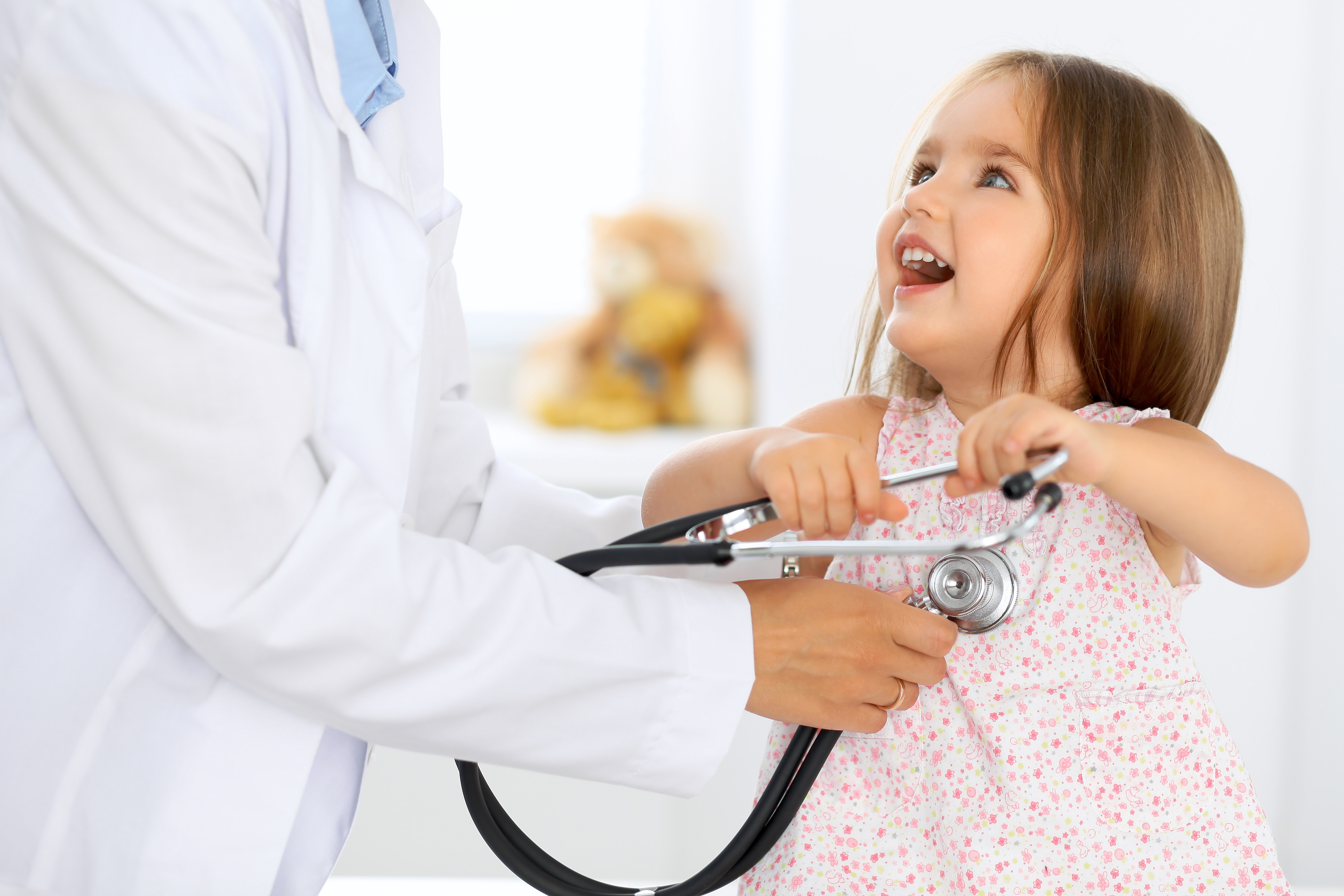
Before you start treating at all, it is important to make a diagnosis and to consider whether homeopathy should be used in this case. The aim is always to find the best possible therapy for the child together. That is why I regard diagnostics as essential and the most important thing before we treat homeopathically.
Then I examine the child, take an anamnesis (case history) with the mother or father and the child, and consider: "How can I best treat this homeopathically?" In further steps I distinguish whether it is an acute or a chronic condition. For acute cases I like to prescribe according to the well-established indication based on the complete local symptom. For chronic illnesses I of course take a detailed case history and then prescribe a homeopathic remedy based on the totality of symptoms and according to the constitution and diathesis of the patient. According to the teaching of Prof. Dr Mathias Dorcsi, founder of the "Vienna School of Homeopathy", the diatheses roughly correspond to Hahnemann's three miasms: Psora, Sycotic and Syphilitic.
Besides the inpatient area you also work in the emergency outpatient department. How is homeopathy used there as a complementary medicine?
I am pleased to be able to use homeopathy here, for example in viral infections. Fortunately we are becoming increasingly restrained with antibiotics. They are only used when truly indicated, namely for bacterial infections. Many children come to the emergency department with viral infections, and here I am grateful to have homeopathy as a treatment option. With the help of the complete local symptom an individually appropriate remedy can be found quickly in the emergency department for viral infections.
Impressive results
Could you tell us about cases—without breaching confidentiality—that have especially stayed with you and show what homeopathy as a complementary therapy in the university clinic is capable of?
I am still impressed by children with grade three intracranial haemorrhages, in whom we conventionally cannot do much causally. These brain bleeds repeatedly occur in premature infants, often not at the time of birth but on the third or fourth day of life. We had the case of Ludwig, a twin born at 23 weeks who developed bilateral brain haemorrhages and a lung bleed on the third day of life. The child had to be resuscitated.
The prognosis for children with a grade three brain haemorrhage is not particularly good. Statistically they have a seven to ten percent chance of developing normally. The others suffer moderate to severe developmental disorders.
Together with Ludwig's parents it was discussed whether further intensive measures should be taken. Resuscitation was continued and Ludwig stabilised.
After he had passed the critical phase he developed a post-haemorrhagic hydrocephalus. This kind of water-on-the-brain that occurs after a bleed is something we see repeatedly. For this reason he was transferred to our Dr von Haunerschen Children's Hospital. And because we had already treated several infants with grade three brain haemorrhages supportively with homeopathy, the head of neonatology brought me in.
After a detailed case history with the mother we began treatment. It was a truly impressive situation. The child showed a slowed heart rate while feeding. Ultrasound clearly showed enlarged cerebral ventricles. The little boy also had a bulging fontanelle, indicating quite high intracranial pressure. Because of this pressure his head was growing by about one centimetre a day, so urgent action was needed.
We then began homeopathic treatment. He received Arnica C200 on two consecutive days. The placement of an external drainage to relieve the brain was already scheduled, but an emergency came in during the night and our surgeons were very busy. As Ludwig's condition had stabilised, the surgery was postponed until the next day. After taking Arnica C200 the slowed heart rate disappeared, the fontanelle softened, the situation eased and the operation was postponed to the following day—until we then saw no need to place a drainage urgently.
We continued to treat Ludwig while he remained with us with Latrodectus C12 (black widow). His brother was also transferred to us as he had pulmonary problems initially. The wonderful thing was that Ludwig's condition under Latrodectus C12—and indeed under the entire treatment—stabilised so much that he and his brother could be discharged home a week before their calculated due date. We then continued treatment with Helleborus niger C6 (black hellebore). That was several years ago now.
At Christmas I always received a letter from the parents. The two boys started secondary school. Ludwig is very athletic and has now completed his schooling, which was not expected after a start with bilateral brain haemorrhages. Our radiologist is also very surprised at this positive course when he looks at the ultrasound images today.
Because for grade three intracranial haemorrhage in a preterm or newborn we conventionally have few therapeutic options and mostly must wait and optimally support the children's development only with physiotherapy and occupational therapy, a supportive homeopathic therapy is worth trying. We were able to confirm this in an observational study with 18 affected children. Fortunately this condition is not very common. But when it does occur, homeopathy gives us an opportunity to influence it positively.
Yes, that is very important to me. I always offer it. Since many children have complex illnesses, I maintain telephone contact with parents if they live further away. And if they have an appointment in our specialised outpatient clinic, we coordinate so that we can see each other. That makes good collaboration possible. That is a very impressive example! Do you continue the treatment on an outpatient basis after the children you have supported homeopathically are discharged, if the parents wish?
Homeopathic teaching for students
You work at the bedside and in addition university education of medical students is very important to you. We know that compared with 20 or 30 years ago, fewer young people choose to study homeopathy.
Yes, that is true. There is a shortage of new practitioners. Since 2010 I have been, together with Dr Joachim Siebenwirth, a lecturer for the compulsory elective subject Homeopathy for students at LMU Munich. What is meant by a compulsory elective? Students can choose an elective subject, and once they have chosen it attendance is compulsory. At the end of the course, at the end of the semester, they take an exam and receive a certificate. We offer such a compulsory elective both to pre-clinical students at the very beginning of their studies, once a week, and as a weekend course from Friday to Sunday for clinical students at the end of their studies. They have the same number of hours as the pre-clinical students. It is therefore very intensive, compact and practically oriented.
At the start of the course the students are asked why they chose homeopathy. About one third answer: "I was given globules as a child." Another third say: "I am very sceptical, one reads a lot of negative things about homeopathy, but I don't want to finish my studies without having dealt with it." I find that very positive. These students are rather critical towards homeopathy. But when we ask them after the first day: "What has impressed you so far?", they answer: "The realisation of how complex homeopathy is and how precisely one must work!" They would never have imagined how meticulous one has to be and what all plays a role. Such a weekend therefore changes the students' perspective. They simply get a different idea of what homeopathy is, instead of only having the negative and often incorrect aspects presented in the press.
My wish would be that every medical student in Germany would have the opportunity to spend a weekend intensively studying homeopathy at the universities. Then we would certainly have different doctors. But we are working to intensify this.
The homeopathy ring lectures
You organise the so-called "Ring Lecture: Homeopathy" at Ludwig-Maximilians-Universität Munich. What characterises this lecture series?
Homeopathy, as a scientific and social phenomenon, is more than ever at the centre of interest but also under criticism. With the ring lectures, aimed at students in medical training as well as already practising doctors, we want to advance the debate in science and the public in a factual way. The lecture series is offered across university disciplines.
Each year a different focus is chosen. In 2017, for example, the topic was: "What research exists on homeopathy?" At twelve sessions high-calibre international speakers—from Germany, Austria, Sweden, Great Britain, Switzerland and the Netherlands—presented and discussed all relevant areas of research on homeopathy. Both randomised, controlled double-blind studies and meta-analyses were presented. In addition, results from independently repeated experiments from basic research into homeopathy were shown, which examined the effects of homeopathic remedies on plants.
Homeopathy in clinic, practice and research
You are also a founding member of the "Association for the Promotion of Medical Homeopathy in Children's Hospitals", known as "Globulus e. V." What is the aim of this association?
"Globulus e. V." was founded in 2000 by the paediatrician Dr Mira Dorcsi-Ulrich when the start-up funding from the "Carstens Foundation" for the pilot project "Homeopathy in Paediatrics" was coming to an end. Since 2001 "Globulus e. V." has, together with LMU Munich, organised the International Symposium "Homeopathy in Clinic, Practice and Research", which takes place annually at the Dr von Haunerschen Children's Hospital. In 2017 it was held for the 16th time. It has thus become a real tradition.
At this symposium it is our concern to promote dialogue between conventional and homeopathic doctors. Each year a topic is presented, such as acute infections or allergies. First, the respective disease is presented by a medical expert with the necessary diagnostics and the various therapeutic options so that we are up to date. Then a homeopathic physician presents his experiences with this disease in order to seek the best therapy for each child in joint dialogue. This dialogue is the great strength and the special feature of the symposium. Here we experience an exchange to learn from each other and to jointly find the best possible care for every child.
Measures against antibiotic resistance
At the 2016 International Symposium the topic of acute infections was addressed ...
Yes, it was about the multi-resistant germs, which are clearly increasing. They represent a huge problem because it is becoming increasingly difficult to treat them successfully with antibiotics. Here in the children's clinic, and I greatly appreciate this, antibiotics are only prescribed when there is a clear indication. This is certainly due to Prof. Dr Johannes Hübner, head of the Department of Paediatric Infectiology at the Hauner Children's Hospital. It is his great concern to always critically question the use of antibiotics and to use them when indicated, namely for bacterial and not viral infections. In bacterial meningitis, for example, they are a blessing; they are life-saving. Previously, especially in general practice, antibiotics were used much more carelessly: if a child had a fever for longer, it immediately received an antibiotic. We are now much more restrained. That is very important to slow the development of multi-resistant germs so that we can continue to use antibiotics as a great help for the children who really need them.
I would very much like us to further intensify our collaboration in this area and to consider or integrate homeopathy as a therapy recommendation. Fortunately, progress is being made here.
The "self-healing effect" of homeopathy
What would you consider the greatest advantage of homeopathy as supportive treatment for children and in the university children's hospital?
The integration of homeopathy into children's hospitals and generally into university hospitals broadens our options to treat gently and without harmful side effects. I consider that very important. It is a specific stimulus and regulation therapy with which we try to support the body's self-healing powers and bring the organism back into balance. Thus homeopathy can be a building block on the shared path to the best possible therapy for the child.
Our neurologist said a nice sentence: "We meet at the bedside of the sick child and then decide together what is best." There is much between heaven and earth that we do not understand, but the decision is made at the sick child's bed as to what we should do and what is indicated.
With a newborn with a brain haemorrhage you cannot then speak of placebo!
Placebo is a comprehensive term. We often say it offhand, but placebo is much more than placebo. Placebo works with every therapy, regardless of the form used. We still know far too little about it. Prof. Harald Walach, guest professor at Witten/Herdecke University, suggested in his blog to rename the term "placebo effect" to "self-healing effect". I actually find that very nice. Thus homeopathy can give an impulse to self-healing, i.e. cause a self-healing effect. Since the word "placebo" now has a negative connotation, I find the term "self-healing effect" a good idea. What could be better than stimulating the body's self-healing effect through one's therapy, whether by an appropriate word, the right globules or a certain treatment method?
Experiencing the effect of homeopathy oneself
Absolutely! Now we come to the last question: Classical homeopathy ...
I prefer to call it single-remedy homeopathy ...
... Single-remedy homeopathy has been subject to great controversy in recent years and has been the target of negative press. On the other hand, surveys by health insurers show it is more in demand than ever. After more than 200 years it is still relevant. Why do you think it is basically timeless?
The beauty of homeopathy is that it is free of any ideology. It is simply a method of healing to treat sick people. I value that highly. You do not need to believe in it or hold a particular conviction to apply it, as is the case with other therapies. And it has proven itself with patients for more than 200 years! Sick people feel what does them good and want to continue to use it. The public is our greatest support! Without the parents of the sick children I would not have stayed here for so long. Because they ask for it, having had good experiences. We often have seriously ill children and limited therapeutic options. In such a desperate situation parents are very grateful when another therapeutic possibility is used. The parents are therefore our greatest supporters! Because they have repeatedly experienced the effects of homeopathic remedies—on themselves, on their children, on their pets. Experiencing the effect of homeopathy oneself convinces far more than anything else. I believe only a few people come to homeopathy through theory. Most come through personal experience, even in situations where they did not expect much.
It is always a challenge to find the exactly right remedy, so we never fall into a boring routine with homeopathy. Every patient is unique, special, and for each patient we must find precisely what fits—that brings immense joy!
The full interview can be read in: "The Pioneers of Homeopathy in the 21st Century" by Heidi Brand & Anne Devillard. Conversations with among others Jan Scholten, Massimo Mangialavori, Heiner Frei, Alok Pareek, Frederik Schroyens, Rajan Sankaran ...
----------------------------------------------------
New born baby boy resting in mothers arms: Shutterstock_663728050_Copyright KieferPix
Rear view of students raising hands with teacher in college lecture hall: Shutterstock_697698286_Copyright vectorfusionart
Escherichia coli also known as Ecoli bacteria health science concept: Shutterstock_1231846009_Copyright Ezume Images
Doctor examining a little girl by stethoscope: Shutterstock_508217206_Copyright Andrei_R

