Skip to main content Skip to search Skip to main navigation
Please feel free to contact us via our order hotline:
07626 974 9700
(Mon-Fri 8am-8pm, Sat 8am-12pm)

Homeopathy courses in India

News

Homeopathy International

Homeopathy courses in India

By Neha Chawla


The history of homeopathy in India
Homeopathy arrived in India in 1810, when some German doctors and missionaries reached Bengal. These missionaries began distributing homeopathic remedies.


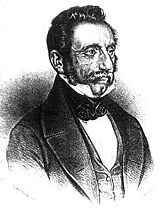
John Martin Honigberger

John Martin Honigberger

Dr John Martin Honigberger was the first to bring homeopathy and Hahnemann's name to India. The ruler of Punjab at the time, Maharaja Ranjit Singh, was impressed when he cured his favourite horse of its terrible leg ulcers. In 1835 Honigberger went to Paris and met Samuel Hahnemann. He then purchased large quantities of homeopathic medicines from Hahnemann’s pharmacist Lehmann of Köthen. On his subsequent visit to India in 1839 he treated Maharaja Ranjit for vocal cord paralysis and oedema. Later Dr Honigberger went to Calcutta and opened a practice there. Through royal patronage homeopathy was able to take root in India.


The current situation of homeopathy in India
At present there are about 186 homeopathic medical training institutions in India. Approximately 35 are state universities; the remainder are private colleges. Homeopathy has become the third most popular form of treatment in India, after allopathy and Ayurveda. There are an estimated quarter of a million homeopaths in India, and almost 10,000 new homeopaths are added each year. The legal status of homeopathy in our country is comparable to that of conventional medicine.
Homeopaths treat their patients by stimulating the body's self-healing powers with natural remedies. This type of treatment is based on the idea of 'like cures like' and means that substances that cause certain symptoms in large amounts can be used in very small doses to heal or alleviate those same symptoms.
Homeopaths recognise that body, mind and emotions are inseparable and closely connected. On this basis homeopaths seek natural remedies that match both the physical and psychological symptoms of the patient. A homeopath can treat complaints ranging from headaches, fever and stress to arthritis and eczema. Their treatment is based not only on the physical symptoms but also on the patient's lifestyle and emotional issues.


How does one become a homeopath?
Training in homeopathy is offered at undergraduate level or alternatively after a first academic degree. The first possible qualification in this field is the Bachelor of Homeopathic Medicine and Surgery (BHMS). The BHMS degree can be obtained at 118 training institutions affiliated to various universities. The prerequisite for admission to such a course is an academic school-leaving qualification, preferably with biology as a chosen subject. As with any other medical degree, homeopathy training lasts five and a half years and includes a compulsory internship year.
Places on BHMS courses at various universities can be obtained through a 'Central Indian Entrance Examination'. Additionally, a three-year postgraduate course, which begins after the first academic degree, leads to the qualification 'Doctor of Homeopathic Medicine' ('Homy'). Applicants for a postgraduate course must hold a BHMS degree.


National Institute Of Homeopathy Kolkata

National Institute of Homoeopathy in Kolkata

To ensure a high standard of homeopathic education and research, the Indian government established the 'National Institute of Homoeopathy' in Kolkata as a model institution.


Career prospects for homeopaths

There are many employment opportunities for homeopaths, both in India and abroad. A homeopathic doctor can, for example, be appointed as a government medical officer or work in a private homeopathic hospital. One can open a private practice or deal in homeopathic medicines. In addition, homeopathic doctors can work in the pharmaceutical industry in the manufacture of homeopathic medicines. A homeopathic doctor can also work as a lecturer or professor in a homeopathic training institution or university, or be involved in research.


Courses_NationalInstitute_Kolkata

Lecture at the National University for Homeopathy


Where are courses and trainings offered?
Bachelor's and master's degrees in homeopathy are offered by many Indian colleges and universities such as the 'National University for Homeopathy' in Kolkata; the 'University of Health Sciences' in Vijayawada; and the 'Rajiv Gandhi University of Health Sciences' in Bangalore.


There are further institutions such as the 'Yerala Homoeopathic Medical Education and Research Centre' in Bombay, the 'Venutai Yashwantrao Chavan' University for Homeopathy and the Homeopathic Hospital with medical college in Vengurla; the 'Vasundhra Raje Homeopathy University' with an associated hospital in Gwalior; and the 'Swami Vivekananda Homeopathy University' in Bhavnagar.

Income
The starting salary for fully trained doctors in government homeopathic hospitals is Rs.8,000. Professors and lecturers at a homeopathic university earn more than Rs.8,000 per month. In private practice income depends entirely on your own commitment and the reputation of your practice.

Rs. 8,000 correspond to approximately €116 (1 € = approx. Rs. 68.961)


von Narayana Verlag